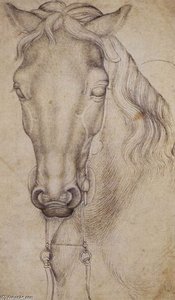
Портрет Пизанелло

Картины Пизанелло: 30 самых известных работ, взгляд галереи

Обновлено Октябрь 2026 · рейтинг на основе нашего показателя популярности (количество поисковых запросов, посещений и заказов для каждой работы) · 31 работ Пизанелло в нашем каталоге

Вкратце

По мнению экспертов галереи, самой известной картиной Пизанелло является Sigismondo Pandolfo Malatesta, Lord of Rimini (1445), оригинал которой находится в Фонд Калуста Гулбенкяна, Лиссабон. Alfonso V of Aragon, King of Naples and Sicily (1449) и Apes (from The Artist S Sketchbook). Drawing. Louvre Museum, Paris (1430) завершают трио, которое узнает каждый. Из 31 работ Пизанелло в нашем каталоге ниже представлены 30 самых известных: каждая из них является оригиналом с указанием года создания, музея и уникальных особенностей.

1395 – 1455, Пиза International gothic Больше всего работ: Фонд Калуста Гулбенкяна

Топ-10 картин художника Пизанелло в галерее

1
Sigismondo Pandolfo Malatesta, Lord of Rimini (1445) работы Пизанелло

Sigismondo Pandolfo Malatesta, Lord of Rimini

1445 · Bronze · Фонд Калуста Гулбенкяна, Лиссабон

A Portrait of Regal Dignity: Pisanello's Coin Depiction of Sigismondo Malatesta The bronze coin bearing the portrait of Sigismondo Pandolfo Malatesta, Lord of Rimini, stands as a testament to Antonio di Puccio Pisano’s extraordinary artistic vision—a figure who bridged the gap between the opulent International Gothic style and the nascent Renaissance. More than just a depiction of a nobleman, this miniature masterpiece encapsulates the spirit of its time, reflecting the…

2
Alfonso V of Aragon, King of Naples and Sicily (1449) работы Пизанелло

Alfonso V of Aragon, King of Naples and Sicily

1449 · Bronze · Фонд Калуста Гулбенкяна, Лиссабон

The bronze surface holds the likeness of Alfonso V of Aragon, King of Naples and Sicily, as he appears in a moment of quiet, regal authority. Created about 1449, this portrait by Pisanello captures the sovereign in profile, a style that echoes the ancient coins of a bygone era. The king wears a crown that rests firmly upon his head, signaling his dominion over his realms. His features are rendered…

4
Vittorino Rambaldoni, called Da Feltre, humanist and teacher (1446) работы Пизанелло

Vittorino Rambaldoni, called Da Feltre, humanist and teacher

1446 · Bronze · Фонд Калуста Гулбенкяна, Лиссабон

A single bronze coin holds the weight of a man’s gaze. Within its circular edge, the face of Vittorino Rambaldoni emerges from the metal, etched with the precision of a late Gothic hand. He wears a plain hat and a simple robe, his features marked by a lean, grizzled texture. A faint, bemused smile rests upon his lips, caught in the permanent stillness of cast copper alloy. The artist used…

5
Sketches of the Emperor John VIII Palaeologus, a Monk, and a Scabbard (1438) работы Пизанелло

Sketches of the Emperor John VIII Palaeologus, a Monk, and a Scabbard

1438 · Ink On Paper

In the delicate dance of pen and ink, we find a profound moment frozen in time from the year 1438. Pisanello, a master who stood at the threshold between the ornate elegance of the International Gothic style and the burgeoning humanism of the Renaissance, presents us with his Sketches of the Empero John VIII Palaeologus, a Monk, and a Scabbard. This work is not merely a drawing; it is a…

Картины художника Пизанелло, в рейтинге с 11 по 30

Знаменитые картины Пизанелло по периодам творчества

Сюжеты, которые вдохновляли Пизанелло

Четыре темы, которые чаще всего встречаются в этих оригиналах, каждая из которых представлена своим лучшим образцом.

Музеи, в которых хранятся оригиналы работ Пизанелло

8 музеев, в которых находится большинство картин со страницы.

Музей Город Работы Пизанелло Картины из этого списка
Фонд Калуста Гулбенкяна, ЛиссабонФонд Калуста Гулбенкяна Лиссабон 6 Sigismondo Pandolfo Malatesta, Lord of Rimini, Alfonso V of Aragon, King of Naples and Sicily, Vittorino Rambaldoni, called Da Feltre, humanist and teacher
Kupferstichkabinett, БерлинKupferstichkabinett Берлин 2 A Boar Hunt with Hounds and Two Naked Men, Two male figure studies and St Peter
Национальная галерея, ЛондонНациональная галерея Лондон 2 The vision of Saint Eustace, NG London, Apparition Of The Virgin To Sts Anthony Abbot And George. Panel. 47 X 29 Cm. National Gallery, London, Uk
Альбертина, ВенаАльбертина Вена 1 Allegory of Luxuria (recto), c. 1426
Национальный археологический музей, МадридНациональный археологический музей Мадрид 1 Medal of Filippo Maria Visconti, 3rd Duke of Milan\n\nObverse
Accademia Carrara, БергамоAccademia Carrara Бергамо 1 Portrait Of Leonello D Este. Tempera On Wood. 28 X 19 Cm. Accademia Carrara, Bergamo, Italy
Castelvecchio Museum, ВеронаCastelvecchio Museum Верона 1 Madone_a_la_caille
Палаццо Дукале, МантоваПалаццо Дукале Мантова 1 Trophy scene

Пизанелло, одна знаковая картина в десятилетие

Произведения по десятилетиям

Выберите десятилетие, чтобы увидеть шедевр, определяющий его.

Картины Пизанелло: ответы галереи

Какая картина Пизанелло является самой известной из всех?Узнать ответ

Sigismondo Pandolfo Malatesta, Lord of Rimini (1445), Фонд Калуста Гулбенкяна, Лиссабон. Далее следуют Alfonso V of Aragon, King of Naples and Sicily (1449) и Apes (from The Artist S Sketchbook). Drawing. Louvre Museum, Paris (1430).

Сколько лет было Пизанелло, когда была завершена работа Sigismondo Pandolfo Malatesta, Lord of Rimini?Узнать ответ

50 лет: Sigismondo Pandolfo Malatesta, Lord of Rimini датируется 1445 годом, а Пизанелло родился в 1395.

Какие 10 лучших картин принадлежат Пизанелло?Узнать ответ

Sigismondo Pandolfo Malatesta, Lord of Rimini, Alfonso V of Aragon, King of Naples and Sicily, Apes (from The Artist S Sketchbook). Drawing. Louvre Museum, Paris, Vittorino Rambaldoni, called Da Feltre, humanist and teacher, Sketches of the Emperor John VIII Palaeologus, a Monk, and a Scabbard, Horses. Pen On Paper. 20 X 16.5 Cm. Louvre Museum, Paris, Study Of Horse Heads. Pen On Paper. 29 X 19 Cm. Louvre Museum, Paris, The Luxury. Drawing. Graphische Sammlung Albertina, Vienna, Austria, Portrait of the Emperor Sigismund, parchm и Portrait Of Emperor Sigismund Of Luxembourg. Tempera On Vellum Stuck On Wood. 64 X 49 Cm. Kunsthistorisches Museum, Vienna, Austria. В рейтинге выше указаны год создания и музей для каждой работы.

Сколько работ создал(а) Пизанелло?Узнать ответ

В нашем каталоге представлено 31 работ Пизанелло, созданных в период с 1420 по 1449.

Где висят самые известные оригинальные работы Пизанелло?Узнать ответ

В основном в Фонд Калуста Гулбенкяна (Лиссабон), Kupferstichkabinett (Берлин) и Национальная галерея (Лондон). В таблице выше перечислены все музеи.

Когда Пизанелло создал свои самые известные картины?Узнать ответ

В 1430s: 13 из 30 работ на этой странице были созданы в этот период, Apes (from The Artist S Sketchbook). Drawing. Louvre Museum, Paris из них.

Какие из самых известных работ Пизанелло являются наиболее ранними и наиболее поздними?Узнать ответ

На этой странице самая ранняя работа датирована The Luxury. Drawing. Graphische Sammlung Albertina, Vienna, Austria (1420), а самая поздняя — Alfonso V of Aragon, King of Naples and Sicily (1449).

К каким сюжетам Пизанелло обращался чаще всего?Узнать ответ

Renaissance (6), Portraits (5) и Portrait (4) в 30 работах на этой странице.

В какой технике чаще всего работал(а) Пизанелло?Узнать ответ

Bronze, для 6 из 30 работ на этой странице.

С каким направлением связан Пизанелло?Узнать ответ

International gothic, судя по оригиналам на этой странице.

Какие оригинальные работы Пизанелло хранятся в Фонд Калуста Гулбенкяна?Узнать ответ

Sigismondo Pandolfo Malatesta, Lord of Rimini, Alfonso V of Aragon, King of Naples and Sicily и Vittorino Rambaldoni, called Da Feltre, humanist and teacher: в коллекции Фонд Калуста Гулбенкяна, Лиссабон находится 6 работ со страницы.

Пизанелло: художник

Pisanello - Antonio di Puccio Pisano (1395–1455)

Antonio di Puccio Pisano, commonly known as Pisanello, stands as a pivotal figure in bridging the gap between the opulent International Gothic style and the burgeoning Renaissance. Born around 1380/1395 in Pisa—though his early years were spent in San Vigilio sul Lago—Pisanello’s life was marked by artistic exploration and patronage, leaving an indelible mark on Italian art history.

His formative training likely occurred under the tutelage of Stefano da Verona, absorbing Veronese painting traditions. However, it was his apprenticeship with Gentile da Fabriano that cemented his stylistic trajectory, instilling in him a profound appreciation for meticulous observation and lavish ornamentation—qualities that would characterize his subsequent oeuvre.

  • Early Life & Training: Pisanello’s birthplace fostered an environment conducive to artistic development. His early training under Stefano da Verona instilled a foundational understanding of Veronese painting techniques.
  • Influence of Gentile da Fabriano: The collaboration with Gentile da Fabriano proved transformative, shaping his aesthetic sensibilities and emphasizing the importance of detail and opulent decoration.
  • Travels & Commissions: Pisanello embarked on extensive journeys throughout Italy, securing commissions from prominent courts—Florence, Verona, Ferrara, Mantua, Milan, Rimini, and Naples—demonstrating his versatility as an artist and cementing his reputation as a court painter.

Masterpieces and a Distinctive Style

Pisanello’s artistic output is fragmented by loss and misattribution, yet it reveals a remarkable talent for blending diverse influences into a uniquely personal vision. His magnum opus, *Saint George and the Princess of Trebizond*, executed as a fresco in Verona’s Church of Sant'Anastasia, exemplifies his mastery of narrative composition and textural richness.

*The Vision of Saint Eustace,* signed “Antonius Pisanus,” showcases a harmonious blend of Gentile da Fabriano’s refinement and Stefano da Verona’s stylistic nuances. Beyond these celebrated works, *Madonna of the Quail*, created as part of Nicolò di Brenzoni’s funeral monument, underscores his skill in conveying emotion and capturing likeness.

  • Saint George and the Princess: This fresco is considered Pisanello's masterpiece due to its intricate detail, vibrant colors, and masterful depiction of courtly life.
  • The Vision of Saint Eustace: Demonstrates a harmonious blend of Gentile da Fabriano’s style and Stefano da Verona’s influence.
  • Madonna of the Quail: Exemplifies Pisanello's ability to convey emotion and capture likeness effectively.

Influences and Artistic Development

Pisanello’s artistic journey wasn’t solely defined by formal training; it was shaped by a constant dialogue with the art of the past and present. Gentile da Fabriano undoubtedly influenced his early style, prioritizing detail and lavish ornamentation.

Stefano da Verona likely contributed to his formative stylistic development, grounding him in Veronese tradition. Interestingly, some scholars suggest connections to Paolo Uccello—a shared fascination with horses—evident in Pisanello’s drawings and paintings.

  • Gentile da Fabriano: His mentor instilled a profound appreciation for detail and opulent decoration.
  • Stefano da Verona: Provided foundational stylistic grounding rooted in Veronese painting traditions.
  • Paolo Uccello: Shared fascination with horses, reflected in Pisanello’s drawings and paintings.

Historical Significance and Lasting Legacy

Pisanello's place in art history is secure as a pioneer of portrait medals—a genre that would become immensely popular among Italian nobility and beyond. His work embodies the crucial transition from Gothic to Renaissance aesthetics, blending meticulous observation with refined ornamentation.

He was celebrated in his own time by poets like Guarino da Verona and esteemed by humanist scholars who recognized his exceptional talent. Despite the loss of many of his paintings, Pisanello’s surviving drawings and medals continue to inspire awe and admiration—a testament to the enduring allure of a world caught between tradition and innovation.

  • Portrait Medallions: Pioneered this genre, establishing it as a prominent form of artistic expression.
  • Renaissance Aesthetic Synthesis: Successfully blended meticulous observation with refined ornamentation—defining the aesthetic sensibilities of his era.