


1


Обновлено Ноябрь 2026 · рейтинг на основе нашего показателя популярности (количество поисковых запросов, посещений и заказов для каждой работы) · 60 работ Peter Jacob Horemans в нашем каталоге
Вкратце
Из всех оригинальных работ, оставленных Peter Jacob Horemans, самой известной является Portrait of Frau Heigl (1738) из коллекции Баварские государственные живописные коллекции, Мюнхен. Сразу за ними следуют Kitchen Still Life with Coffee Drinker (1765) и Musical Still Life with Horn Player (1765). В нашем каталоге представлено 60 работ Peter Jacob Horemans; галерея сохранила 58 самых почитаемых в мире произведений, каждое из которых сопровождается датой создания, информацией о музее и своей историей.


 The Smoker1764 · Баварские государственные живописные коллекции
12
 Hunting Still Life with Hunter1765 · Баварские государственные живописные коллекции
13
 Hunting Still Life with Hunter1765 · Баварские государственные живописные коллекции
14
 Kitchen Interior with Beer Drinker1765 · Баварские государственные живописные коллекции
15
 Kitchen Still Life with Female Figure Counting Money and Parrot1760 · Баварские государственные живописные коллекции
16
 Still Life with Violinist1763 · Баварские государственные живописные коллекции
17
 The Tailor's Workshop1759
18
 Still life with a distinguished gentleman1762 · Баварские государственные живописные коллекции
19
 Fruit still life with a female figure drinking wine1764 · Баварские государственные живописные коллекции
20
 Kitchen still life with female figure and parrot (An allegory of feeling)1760 · Баварские государственные живописные коллекции
21
 Shoemakers-shop1759
22
 Still Life with Female Figure1770 · Баварские государственные живописные коллекции
23
 Kitchen Still Life with Female Figure and Parrot1771 · Баварские государственные живописные коллекции
24
 Court Musician Felix Reiner with Bassoon1774 · Баварские государственные живописные коллекции
25
 Court Musician with Violin (Johann Georg Holzbogen)1774 · Баварские государственные живописные коллекции
26
 Still Life "The Treasurer"1773 · Баварские государственные живописные коллекции
27
 Kitchen Still Life with Female Figure and Parrot1771 · Баварские государственные живописные коллекции
28
 Portrait of District Administrator Josef Heigl1768 · Баварские государственные живописные коллекции
29
 Spring (Johanna de Lasence Having Coffee in the Garden)1767 · Баварские государственные живописные коллекции
30
 Self-portrait in the artist's atelier1766 · Баварские государственные живописные коллекции
31
 Bildnis eines Silberdieners1772 · Баварские государственные живописные коллекции
32
 Portrait of court sculptor Roman Anton Boos (1730-1810) in his studio next to a bust of elector Maximilian III1766 · Баварские государственные живописные коллекции
33
 Hunting a wild boar1773 · Национальный музей в Варшаве
34
 Hunting with falcons1773 · Национальный музей в Варшаве
35
 Picnic in the park1776 · Lenbachhaus
36
 Concert in the garden1776 · Lenbachhaus
37
 Still Life with Plucked Chicken1764 · Баварские государственные живописные коллекции
38
 Still Life with Pork Knuckle and Squirrel1765 · Баварские государственные живописные коллекции
39
 Still Life with Dead Partridge1764 · Баварские государственные живописные коллекции
40
 Still Life with Fish1765 · Баварские государственные живописные коллекции
41
 Still Life with Pork Knuckle and Parrot1765 · Баварские государственные живописные коллекции
42
 Still Life with Fruit1765 · Баварские государственные живописные коллекции
43
 Still Life with Dead Lamb1765 · Баварские государственные живописные коллекции
44
 Still Life with Dead Hare1764 · Баварские государственные живописные коллекции
45
 Still Life with Fruit1765 · Баварские государственные живописные коллекции
46
 Still Life with Kitchen Utensils and Plucked Chicken1765 · Баварские государственные живописные коллекции
47
 Still Life with Kitchen Utensils and Dead Partridge1765 · Баварские государственные живописные коллекции
48
 Still Life with Lobster1765 · Баварские государственные живописные коллекции
49
 Still Life with Lobster1766 · Баварские государственные живописные коллекции
50
 Still Life with Grapes and Apples1768 · Баварские государственные живописные коллекции
51
 Fruit Still Life1770 · Баварские государственные живописные коллекции
52
 Still Life with Crabs1766 · Баварские государственные живописные коллекции
53
 Fruit Still Life1768 · Баварские государственные живописные коллекции
54
 Fruit Snack1770 · Баварские государственные живописные коллекции
55
 Still Life with Fruit and Dead Birds1771 · Баварские государственные живописные коллекции
56
 Still Life with Fruit and Dead Birds1771 · Баварские государственные живописные коллекции
57
 A Musical Gathering at the Court of the Elector Karl Albrecht of Bavaria1730 · Метрополитен-музей
58
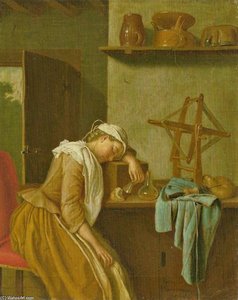 Schlafendes KüchenmädchenБаварские государственные живописные коллекции
4 музеев, в которых находится большинство картин со страницы.
| Музей | Город | Работы Peter Jacob Horemans | Картины из этого списка |
|---|---|---|---|
 Баварские государственные живописные коллекции |
Мюнхен | 51 | Portrait of Frau Heigl, Kitchen Still Life with Coffee Drinker, Musical Still Life with Horn Player |
 Национальный музей в Варшаве |
Варшава | 2 | Hunting a wild boar, Hunting with falcons |
 Lenbachhaus |
Мюнхен | 2 | Picnic in the park, Concert in the garden |
 Метрополитен-музей |
Нью-Йорк | 1 | A Musical Gathering at the Court of the Elector Karl Albrecht of Bavaria |
Выберите десятилетие, чтобы увидеть шедевр, определяющий его.

Portrait of Frau Heigl (1738), Баварские государственные живописные коллекции, Мюнхен. Далее следуют Kitchen Still Life with Coffee Drinker (1765) и Musical Still Life with Horn Player (1765).
38 лет: Portrait of Frau Heigl датируется 1738 годом, а Peter Jacob Horemans родился в 1700.
Portrait of Frau Heigl, Kitchen Still Life with Coffee Drinker, Musical Still Life with Horn Player, Still Life with Female Figure with Flowers, Still Life with Elegant Lady, Still Life with Fruit and Female Figure, The Soup Eater, Still Life with Female Figure with Beer Glass, Still Life with Female Figure и Musical Still Life with Male Figure. В рейтинге выше указаны год создания и музей для каждой работы.
В нашем каталоге представлено 60 работ Peter Jacob Horemans, созданных в период с 1730 по 1776.
В основном в Баварские государственные живописные коллекции (Мюнхен), Национальный музей в Варшаве (Варшава) и Lenbachhaus (Мюнхен). В таблице выше перечислены все музеи.
В 1760s: 36 из 58 работ на этой странице были созданы в этот период, Kitchen Still Life with Coffee Drinker из них.
На этой странице самая ранняя работа датирована A Musical Gathering at the Court of the Elector Karl Albrecht of Bavaria (1730), а самая поздняя — Picnic in the park (1776).
Portrait of Frau Heigl, Kitchen Still Life with Coffee Drinker и Musical Still Life with Horn Player: в коллекции Баварские государственные живописные коллекции, Мюнхен находится 51 работ со страницы.