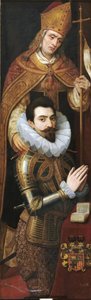
Портрет Отто ван Веен

73 самых известных картин Отто ван Веен, каждая из которых уникальна

Обновлено Ноябрь 2026 · рейтинг на основе нашего показателя популярности (количество поисковых запросов, посещений и заказов для каждой работы) · 74 работ Отто ван Веен в нашем каталоге

Вкратце

The Last Supper (1592) — это самая популярная картина Отто ван Веен; оригинал находится в Собор Богоматери (Onze-Lieve Vrouwekathedraal), Антверпен. Затем взгляд переходит на Portrait of Alessandro Farnese (1545-1592) (1585) и Portrait of Alexander Farnese (1545-1592) (1592). Из 74 работ Отто ван Веен в нашем каталоге эти 73 являются самыми известными: каждая из них — уникальный оригинал с указанием года создания, музея и причины ее бессмертия.

1556 – 1629, Лейден Baroque Больше всего работ: Баварские государственные живописные коллекции

Топ-10 картин Отто ван Веен глазами галереи

1
The Last Supper (1592) работы Отто ван Веен

The Last Supper

1592 · Oil On Canvas · Собор Богоматери (Onze-Lieve Vrouwekathedraal), Антверпен

To stand before this monumental depiction of The Last Supper is to be enveloped in an atmosphere thick with profound significance and hushed drama. It is more than merely a painting; it is a frozen moment of ultimate human reckoning, a tableau vivant capturing the solemnity of Christ’s final meal with his apostles. The sheer scale of the work, measuring an imposing 350 by 2247 centimeters, speaks to its monumental…

2
Portrait of Alessandro Farnese (1545-1592) (1585) работы Отто ван Веен

Portrait of Alessandro Farnese (1545-1592)

The portrait of Alessandro Farnese is a highly ornate Mannerist miniature, rendered in oil heightened with gold on a copper support. The composition is hierarchical and symmetrical, centering an oval portrait of the subject within an elaborate, sculptural golden frame. Alessandro is depicted in a three-quarter view, wearing a white ruff collar and detailed armor. Behind him, a dark background is speckled with golden stars, suggesting a celestial or divine…

3
Portrait of Alexander Farnese (1545-1592) (1592) работы Отто ван Веен

Portrait of Alexander Farnese (1545-1592)

Alexander Farnese, Duke of Parma, is captured in a formal bust-length portrait that emphasizes his status through the language of military regalia. He faces the viewer's right but directs his gaze forward, establishing a direct connection with the observer. The composition relies on the sharp contrast between a dark, indistinct background and the luminous details of his attire. A bright white lace ruff frames the face, while a crimson silk…

4
The Conspiracy of Claudius Civilis and the Batavians in the Schakerbos (1606) работы Отто ван Веен

The Conspiracy of Claudius Civilis and the Batavians in the Schakerbos

1606 · Oil · Рейксмюзеум, Амстердам

In The Conspiracy of Claudius Civilis and the Batavians in the Schakerbos, Otto van Veen captures a pivotal moment of insurrection. The scene depicts the revolt of the Batavians against the Romans during AD 69 and 70. Here, Claudius Civilis is gathered with his supporters around a meal in the forest under the cover of night. It is a moment of quiet tension, where the oath of Civilis is taken…

5
After the Fall of Vetera Castra Claudius Civilis has his hair cut while his son shoots some prisoners (1606) работы Отто ван Веен

After the Fall of Vetera Castra Claudius Civilis has his hair cut while his son shoots some prisoners

1606 · Oil On Panel · Рейксмюзеум, Амстердам

After the Fall of Vetera Castra Claudius Civilis has his hair cut while his son shoots some prisoners by Otto van Veen, executed about 1606, belongs to the series De Bataafse Opstand. This collection of twelve paintings was commissioned by the Dutch parliament, the States General, in 1613. The work functions as a visual record of the Batavian revolt against Roman forces during AD 69 and 70.

6
Saint Paul before proconsul Felix of Caesarea (1602) работы Отто ван Веен

Saint Paul before proconsul Felix of Caesarea

The oil on panel painting titled Saint Paul before proconsul Felix of Caesarea was executed by the artist Otto van Veen. This work dates to 1602. The composition is presented on a vertical plane with dimensions measuring 253 × 101 cm. The physical surface of the panel supports the layers of pigment that form the figures and the architectural setting.

7
The Charity of Saint Nicholas of Myra (1606) работы Отто ван Веен

The Charity of Saint Nicholas of Myra

The Charity of Saint Nicholas of Myra is an oil painting by Otto van Veen. Created around 1606, the work captures a moment of divine intervention during a period of scarcity. The scene depicts the saint performing a miracle to aid a suffering population. Specifically, it portrays St. Nicholas miraculously multiplying corn-sacks unloaded from boats in the harbor to provide for the people of Myra during a famine.

9
The Calling of Zacchaeus who is Sitting in a Fig Tree (1606) работы Отто ван Веен

The Calling of Zacchaeus who is Sitting in a Fig Tree

In "The Calling of Zacchaeus who is Sitting in a Fig Tree" by Otto van Veen, a profound spiritual encounter unfolds amidst a dense, moving crowd. Painted about 1606, the scene captures the exact moment of divine calling, freezing a pivotal instant of recognition and redemption. The biblical narrative of Zacchaeus comes alive as the viewer witnesses the intersection of the earthly and the divine. High above the bustling assembly,…

10
Jan Miraeus, Bishop of Antwerp (1611) работы Отто ван Веен

Jan Miraeus, Bishop of Antwerp

A single light source strikes the subject from the upper left, carving a face out of the surrounding gloom. Jan Miraeus sits in a quiet, heavy stillness. His skin possesses the pale, matte texture of fine porcelain, contrasting sharply against the deep, velvety burgundy of his clerical attire. The shadows cling to the right side of his features, tracing the lines of a life spent in contemplation and command. There…

Знаменитые картины Отто ван Веен, с 11 по 73

11Portrait of Albrecht VII, Archduke of Austria (1559-1621) (1596) работы Отто ван ВеенPortrait of Albrecht VII, Archduke of Austria (1559-1621)1596 · Музей истории искусств 12The Mystic Marriage of St. Catherine (1589) работы Отто ван ВеенThe Mystic Marriage of St. Catherine1589 · Королевские музеи изящных искусств Бельгии 13Carrying of the Cross (1592) работы Отто ван ВеенCarrying of the Cross1592 · Баварские государственные живописные коллекции 14Christ on the Mount of Olives (1592) работы Отто ван ВеенChrist on the Mount of Olives1592 · Баварские государственные живописные коллекции 15Presentation of Jesus in the Temple (1592) работы Отто ван ВеенPresentation of Jesus in the Temple1592 · Баварские государственные живописные коллекции 16Triumph of the Catholic Church (1592) работы Отто ван ВеенTriumph of the Catholic Church1592 · Баварские государственные живописные коллекции 17Justitia and Pax (1592) работы Отто ван ВеенJustitia and Pax1592 · Баварские государственные живописные коллекции 18Flagellation (1592) работы Отто ван ВеенFlagellation1592 · Баварские государственные живописные коллекции 19Birth of Christ (1592) работы Отто ван ВеенBirth of Christ1592 · Баварские государственные живописные коллекции 20Assumption of Mary (1592) работы Отто ван ВеенAssumption of Mary1592 · Баварские государственные живописные коллекции 21Visitation of Mary (1592) работы Отто ван ВеенVisitation of Mary1592 · Баварские государственные живописные коллекции 22Pentecost (1592) работы Отто ван ВеенPentecost1592 · Баварские государственные живописные коллекции 23Crowning with Thorns (1592) работы Отто ван ВеенCrowning with Thorns1592 · Баварские государственные живописные коллекции 24Martyrdom of Saint Andrew (1592) работы Отто ван ВеенMartyrdom of Saint Andrew1592 · Баварские государственные живописные коллекции 25Triumph of the Catholic Church (1592) работы Отто ван ВеенTriumph of the Catholic Church1592 · Баварские государственные живописные коллекции 26Triumph of the Catholic Church (1592) работы Отто ван ВеенTriumph of the Catholic Church1592 · Баварские государственные живописные коллекции 27Triumph of the Catholic Church (1592) работы Отто ван ВеенTriumph of the Catholic Church1592 · Баварские государственные живописные коллекции 28Triumph of the Catholic Church (1592) работы Отто ван ВеенTriumph of the Catholic Church1592 · Баварские государственные живописные коллекции 29Coronation of Mary (1592) работы Отто ван ВеенCoronation of Mary1592 · Баварские государственные живописные коллекции 30Ascension of Christ (1592) работы Отто ван ВеенAscension of Christ1592 · Баварские государственные живописные коллекции 31Christ on the Cross (1592) работы Отто ван ВеенChrist on the Cross1592 · Баварские государственные живописные коллекции 32The Twelve-Year-Old Jesus in the Temple (1592) работы Отто ван ВеенThe Twelve-Year-Old Jesus in the Temple1592 · Баварские государственные живописные коллекции 33Triumph of the Catholic Church (1592) работы Отто ван ВеенTriumph of the Catholic Church1592 · Баварские государственные живописные коллекции 34The Resurrection (1592) работы Отто ван ВеенThe Resurrection1592 · Баварские государственные живописные коллекции 35The Lamentation over Christ (1590) работы Отто ван ВеенThe Lamentation over Christ1590 36The Last Supper (1592) работы Отто ван ВеенThe Last Supper1592 · Королевская академия изящных искусств Сан-Фернандо 37The Lamentation of Christ with Angels (1589) работы Отто ван ВеенThe Lamentation of Christ with Angels1589 · Augustiner Museum 38During a Famine in Myra Saint Nicholas Saves the People (1606) работы Отто ван ВеенDuring a Famine in Myra Saint Nicholas Saves the People1606 · Королевский музей изящных искусств Антверпена 39The Judgement of Zaleucus (1607) работы Отто ван ВеенThe Judgement of Zaleucus1607 · Институт искусств Чикаго 40Allegory of the Temptations of Youth (1595) работы Отто ван ВеенAllegory of the Temptations of Youth1595 · Национальный музей Швеции 41Xantippe Dousing Socrates (1607) работы Отто ван ВеенXantippe Dousing Socrates1607 42Lycurgus Demonstrares the Importance of Education (1607) работы Отто ван ВеенLycurgus Demonstrares the Importance of Education1607 43Portrait of "Count Hendrik van den Bergh (1573-1638)" on canvas by Otto van Veen, circa 1618 (1618) работы Отто ван ВеенPortrait of "Count Hendrik van den Bergh (1573-1638)" on canvas by Otto van Veen, circa 16181618 44Brinno Raised upon the Shield, Otto van Veen, 1600 - 1613 (1613) работы Отто ван ВеенBrinno Raised upon the Shield, Otto van Veen, 1600 - 16131613 · Рейксмюзеум 45The Batavians Surround the Romans at Vetera, Otto van Veen, 1600 - 1613 (1613) работы Отто ван ВеенThe Batavians Surround the Romans at Vetera, Otto van Veen, 1600 - 16131613 · Рейксмюзеум 46The Batavians Defeating the Romans on the Rhine, Otto van Veen, 1600 - 1613 (1613) работы Отто ван ВеенThe Batavians Defeating the Romans on the Rhine, Otto van Veen, 1600 - 16131613 · Рейксмюзеум 47The Peace Negotiations between Julius Civilis and the Roman General Cerialis, Otto van Veen, 1600 - 1613 (1613) работы Отто ван ВеенThe Peace Negotiations between Julius Civilis and the Roman General Cerialis, Otto van Veen, 1600 - 16131613 · Рейксмюзеум 48The Adoration of the Magi and The Presentation in the Temple (1624) работы Отто ван ВеенThe Adoration of the Magi and The Presentation in the Temple1624 49The Persian women (1629) работы Отто ван ВеенThe Persian women1629 · Музей истории искусств 50The Artist Painting, Surrounded by his Family (1584) работы Отто ван ВеенThe Artist Painting, Surrounded by his Family1584 · Лувр 51The Last Supper (1670) работы Отто ван ВеенThe Last Supper1670 · Баварские государственные живописные коллекции 52The Calling of Matthew (1606) работы Отто ван ВеенThe Calling of Matthew1606 · Королевский музей изящных искусств Антверпена 53Emblem (1607) работы Отто ван ВеенEmblem1607 · Koninklijke Bibliotheek 54Distribution of Herring and White Bread during the Siege of Leiden (1574) работы Отто ван ВеенDistribution of Herring and White Bread during the Siege of Leiden1574 · Рейксмюзеум 55The Conference of the Gauls at Reims, Otto van Veen, 1600 - 1613 (1613) работы Отто ван ВеенThe Conference of the Gauls at Reims, Otto van Veen, 1600 - 16131613 · Рейксмюзеум 56Valentinus Taken Prisoner, Otto van Veen, 1600 - 1613 (1613) работы Отто ван ВеенValentinus Taken Prisoner, Otto van Veen, 1600 - 16131613 · Рейксмюзеум 57A Nocturnal Banquet, Otto van Veen, 1600 - 1613 (1613) работы Отто ван ВеенA Nocturnal Banquet, Otto van Veen, 1600 - 16131613 · Рейксмюзеум 58The Batavians Besiege the Roman Army Regiments at Vetera, Otto van Veen, 1600 - 1613 (1613) работы Отто ван ВеенThe Batavians Besiege the Roman Army Regiments at Vetera, Otto van Veen, 1600 - 16131613 · Рейксмюзеум 59The Romans nearly Overpower the Army of Julius Civilis through the Treachery of a Batavian, Otto van Veen, 1600 - 1613 (1613) работы Отто ван ВеенThe Romans nearly Overpower the Army of Julius Civilis through the Treachery of a Batavian, Otto van Veen, 1600 - 16131613 · Рейксмюзеум 60The Beheading of Claudius Paulus and the Capture of Julius Civilis, Otto van Veen, 1600 - 1613 (1613) работы Отто ван ВеенThe Beheading of Claudius Paulus and the Capture of Julius Civilis, Otto van Veen, 1600 - 16131613 · Рейксмюзеум 61An unknown Flemish Family (1625) работы Отто ван ВеенAn unknown Flemish Family1625 62Zijluiken van het altaarstuk van de meerseniers работы Отто ван ВеенZijluiken van het altaarstuk van de meerseniersКоролевский музей изящных искусств Антверпена 63Gemeine Jeuchts Beeldt. Allegori på ungdommens fristelser работы Отто ван ВеенGemeine Jeuchts Beeldt. Allegori på ungdommens fristelserStatens Museum For Kunst 64Alonso de Idiaquez, 1st Duke of Ciudad Real работы Отто ван ВеенAlonso de Idiaquez, 1st Duke of Ciudad Real 65Juana de Robles, Duchess of Ciudad Real работы Отто ван ВеенJuana de Robles, Duchess of Ciudad Real 66Allégorie (le Temps ) работы Отто ван ВеенAllégorie (le Temps ) 67Dispute d'Athéna et de Poséïdon работы Отто ван ВеенDispute d'Athéna et de Poséïdon 68The Dead Christ Supported by Angels работы Отто ван ВеенThe Dead Christ Supported by Angels 69On the Disposal of Wealth Illustration to Horace, Carmina III работы Отто ван ВеенOn the Disposal of Wealth Illustration to Horace, Carmina IIIFitzwilliam Museum 70Putti Enacting a Bacchanalian Scene работы Отто ван ВеенPutti Enacting a Bacchanalian SceneHam House 71Christ in the House of Mary and Martha работы Отто ван ВеенChrist in the House of Mary and Martha 72Portrait of Nicolaas Rockox работы Отто ван ВеенPortrait of Nicolaas RockoxRubens House 73Allégorie du Temps (1607) работы Отто ван ВеенAllégorie du Temps1607

Знаменитые картины Отто ван Веен по периодам творчества

Сюжеты, которые вдохновляли Отто ван Веен

Четыре темы, которые чаще всего встречаются в этих оригиналах, каждая из которых представлена своим лучшим образцом.

Музеи, в которых хранятся оригиналы работ Отто ван Веен

8 музеев, в которых находится большинство картин со страницы.

Музей Город Работы Отто ван Веен Картины из этого списка
Баварские государственные живописные коллекции, МюнхенБаварские государственные живописные коллекции Мюнхен 23 Carrying of the Cross, Christ on the Mount of Olives, Presentation of Jesus in the Temple
Рейксмюзеум, АмстердамРейксмюзеум Амстердам 13 The Conspiracy of Claudius Civilis and the Batavians in the Schakerbos, After the Fall of Vetera Castra Claudius Civilis has his hair cut while his son shoots some prisoners, Brinno Raised upon the Shield, Otto van Veen, 1600 - 1613
Королевский музей изящных искусств Антверпена, АнтверпенКоролевский музей изящных искусств Антверпена Антверпен 7 Saint Paul before proconsul Felix of Caesarea, The Charity of Saint Nicholas of Myra, The Calling of Zacchaeus who is Sitting in a Fig Tree
Музей истории искусств, ВенаМузей истории искусств Вена 3 Amazones and Skythians, Portrait of Albrecht VII, Archduke of Austria (1559-1621), The Persian women
Королевские музеи изящных искусств Бельгии, БрюссельКоролевские музеи изящных искусств Бельгии Брюссель 2 Portrait of Alexander Farnese (1545-1592), The Mystic Marriage of St. Catherine
Собор Богоматери (Onze-Lieve Vrouwekathedraal), АнтверпенСобор Богоматери (Onze-Lieve Vrouwekathedraal) Антверпен 1 The Last Supper
Лос-Анджелесский музей округа Лос-Анджелес, Лос-АнджелесЛос-Анджелесский музей округа Лос-Анджелес Лос-Анджелес 1 Portrait of Alessandro Farnese (1545-1592)
Королевская академия изящных искусств Сан-Фернандо, МадридКоролевская академия изящных искусств Сан-Фернандо Мадрид 1 The Last Supper

Отто ван Веен сквозь десятилетия: по одному уникальному оригиналу на каждое десятилетие

Произведения по десятилетиям

Выберите десятилетие, чтобы увидеть шедевр, определяющий его.

Картины Отто ван Веен: вопросы к галерее

Какая работа Отто ван Веен является самой известной?Узнать ответ

The Last Supper (1592), Собор Богоматери (Onze-Lieve Vrouwekathedraal), Антверпен. Далее следуют Portrait of Alessandro Farnese (1545-1592) (1585) и Portrait of Alexander Farnese (1545-1592) (1592).

В каком возрасте Отто ван Веен создал(а) The Last Supper?Узнать ответ

36 лет: The Last Supper датируется 1592 годом, а Отто ван Веен родился в 1556.

Какие десять картин Отто ван Веен являются самыми известными?Узнать ответ

The Last Supper, Portrait of Alessandro Farnese (1545-1592), Portrait of Alexander Farnese (1545-1592), The Conspiracy of Claudius Civilis and the Batavians in the Schakerbos, After the Fall of Vetera Castra Claudius Civilis has his hair cut while his son shoots some prisoners, Saint Paul before proconsul Felix of Caesarea, The Charity of Saint Nicholas of Myra, Amazones and Skythians, The Calling of Zacchaeus who is Sitting in a Fig Tree и Jan Miraeus, Bishop of Antwerp. В рейтинге выше указаны год создания и музей для каждой работы.

Сколько известно работ Отто ван Веен?Узнать ответ

В нашем каталоге представлено 74 работ Отто ван Веен, созданных в период с 1574 по 1629.

Где можно увидеть подлинники, созданные Отто ван Веен?Узнать ответ

В основном в Баварские государственные живописные коллекции (Мюнхен), Рейксмюзеум (Амстердам) и Королевский музей изящных искусств Антверпена (Антверпен). В таблице выше перечислены все музеи.

В какой период Отто ван Веен создал свои самые известные картины?Узнать ответ

В 1590s: 28 из 73 работ на этой странице были созданы в этот период, The Last Supper из них.

Какая из знаменитых картин Отто ван Веен была написана раньше, а какая — позже?Узнать ответ

На этой странице самая ранняя работа датирована Distribution of Herring and White Bread during the Siege of Leiden (1574), а самая поздняя — Amazones and Skythians (1629).

Какие сюжеты предпочитал Отто ван Веен?Узнать ответ

People (27), Man (18) и Woman (16) в 73 работах на этой странице.

Какими материалами чаще всего пользовался Отто ван Веен?Узнать ответ

Oil On Canvas, для 20 из 73 работ на этой странице.

К какому направлению относится творчество Отто ван Веен?Узнать ответ

Baroque и Mannerism, судя по оригиналам на этой странице.

Какие оригинальные работы Отто ван Веен можно увидеть в Баварские государственные живописные коллекции?Узнать ответ

Carrying of the Cross, Christ on the Mount of Olives и Presentation of Jesus in the Temple: в коллекции Баварские государственные живописные коллекции, Мюнхен находится 23 работ со страницы.

Отто ван Веен: портрет художника

Otto van Veen: A Bridge Between Eras – The Humanist Painter and His Legacy

Otto van Veen, a name that resonates through the halls of Flemish art history, represents a fascinating confluence of Renaissance ideals and Baroque sensibilities. Born around 1556 in Leiden, Netherlands, into a family steeped in civic leadership—his father serving as burgomaster—Van Veen’s life unfolded as a journey of shifting allegiances and artistic evolution, profoundly shaped by the turbulent religious landscape of his time. His relocation to Antwerp in 1572, driven by their Catholic faith amidst the rising tide of Protestantism, wasn't merely a geographical move; it was a pivotal moment that exposed him to the intellectual currents of the Low Countries and laid the foundation for his artistic development. This period witnessed his engagement with influential figures like Dominicus Lampsonius and Jean Ramée, individuals who nurtured his humanist sensibilities and instilled in him a deep appreciation for classical learning – qualities that would become central to his artistic practice. The subsequent journey to Rome around 1574 or 1575 proved transformative; immersing himself within the heart of the Italian Renaissance, Van Veen absorbed the stylistic nuances that would define his mature work: the elegance, the refined compositions, and the emphasis on idealized forms characteristic of Mannerism. While the precise nature of his Roman tutelage remains a subject of scholarly debate – some suggesting a period under Federico Zuccari – its impact is undeniable; he returned to the Low Countries imbued with a renewed sense of artistic purpose and a sophisticated understanding of Renaissance aesthetics.

Patronage, Pedagogy, and the Shaping of a Master

Upon his return from Italy, Van Veen swiftly established himself as a highly sought-after artist, securing a prestigious position as court painter to Alexander Farnese, Duke of Parma, governor of the Southern Netherlands, in Brussels. This patronage afforded him not only financial stability but also invaluable access to a sophisticated artistic milieu and opportunities for large-scale commissions – projects that showcased his burgeoning talent and solidified his reputation within the artistic circles of the era. He was formally recognized as a master within Antwerp’s Guild of St. Luke in 1593, a significant milestone signifying his professional standing and acceptance within the established art community. However, Van Veen's legacy extends far beyond his own paintings; it is inextricably linked to another artist – Peter Paul Rubens – with whom he shared a formative relationship. From approximately 1594 or 1595 until 1598, Van Veen served as Rubens’ teacher, imparting not just technical skills but also a rigorous classical education and a profound understanding of humanist principles. This mentorship was crucial in shaping Rubens' intellectual framework and artistic sensibilities, laying the groundwork for his future triumphs – a testament to the enduring influence of his former teacher. During this period, Van Veen continued to undertake religious commissions, adorning churches with altarpieces and chapels, demonstrating his versatility and growing reputation as a skilled and reliable artist capable of fulfilling complex and demanding projects.

Mannerist Sensibility and the Language of Emblems

Van Veen’s artistic style is firmly rooted in Mannerism, an aesthetic movement characterized by elongated figures, graceful poses, sophisticated compositions, and a refined palette. His paintings often exude an air of elegance and intellectual contemplation – reflecting his commitment to incorporating humanist themes into his work. Unlike the more grounded realism of earlier periods, Mannerist art prioritized stylized beauty and emotional intensity over strict naturalism. Van Veen’s works frequently feature figures with exaggerated proportions, dynamic gestures, and a sense of dramatic tension. He was known as a *pictor doctus* – a learned painter – and this designation reflects his dedication to integrating classical mythology, philosophy, and literature into his artistic creations. Beyond painting, Van Veen made significant contributions to the burgeoning field of emblem books—a popular genre that combined images with text to convey moral and philosophical messages. His *Quinti Horatii Flacci Emblemata* (1607), *Amorum Emblemata* (1608), and *Amoris Divini Emblemata* (1615) are prime examples of this form, showcasing his skill as both an artist and a scholar. The *Amorum Emblemata*, in particular, achieved widespread influence, serving as a model for subsequent emblem books and inspiring artists across various disciplines. Its depictions of putti enacting scenes from classical literature and mythology, accompanied by witty mottos, captured the spirit of Renaissance humanism and its fascination with love—both earthly and divine. The intricate symbolism embedded within these works demonstrates Van Veen’s deep understanding of humanist thought and his ability to translate complex ideas into visually compelling narratives.

Later Years and Enduring Influence

Even as artistic tastes began to shift towards the dynamism of the Baroque, Van Veen continued to thrive, maintaining connections with the Archdukes Albert and Isabella, though without holding a formal court appointment. A significant undertaking during this period was a series of twelve paintings depicting battles between Romans and Batavians, commissioned by the Dutch States General based on earlier engravings he had produced – a testament to his adaptability and ability to cater to diverse artistic demands. Throughout his career, Van Veen remained actively involved in Antwerp’s artistic community, serving as dean of both the Guild of St. Luke (1602) and the Romanists (1606). He came from a family with considerable artistic talent; his brother Gijsbert was an accomplished engraver, his daughter Gertruid also pursued painting, and several nephews worked as pastel artists. Otto van Veen died in Brussels in 1629, leaving behind a legacy that extended far beyond his own oeuvre. Arnold Houbraken, the renowned Dutch art historian, recognized him as the most impressive artist and scholar of his time, even featuring his portrait on the title page of his influential *De Groote Schouburgh der Nederlantsche Konstschilders en Schildersessen*. His enduring significance lies not only in his own artistic achievements but also in his pivotal role as a teacher – most notably to Peter Paul Rubens – and his contribution to the intellectual and artistic currents of his era. He stands as a compelling figure, bridging the gap between the Renaissance and Baroque periods, embodying the ideals of the humanist artist, and leaving an indelible mark on the history of Flemish painting.