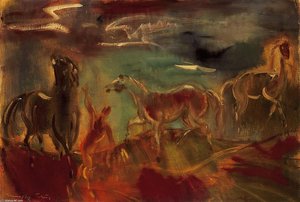
Портрет Ödön Márffy

63 самых известных картин Ödön Márffy: подборка галереи

Обновлено Ноябрь 2026 · рейтинг на основе нашего показателя популярности (количество поисковых запросов, посещений и заказов для каждой работы) · 64 работ Ödön Márffy в нашем каталоге

Вкратце

Из всех оригинальных работ, оставленных Ödön Márffy, самой известной является Peaches (1930) из коллекции Венгерская национальная галерея, Будапешт. Сразу за ними следуют Self-portrait и Woman With Lace Kerchief. В нашем каталоге представлено 64 работ Ödön Márffy; галерея сохранила 63 самых почитаемых в мире произведений, каждое из которых сопровождается датой создания, информацией о музее и своей историей.

1878 – 1959, Будапешт Impressionism Больше всего работ: Венгерская национальная галерея

10 лучших картин Ödön Márffy: выбор галереи

Подборка Ödön Márffy продолжается, с 11 по 63

Сюжеты, которые вдохновляли Ödön Márffy

Четыре темы, которые чаще всего встречаются в этих оригиналах, каждая из которых представлена своим лучшим образцом.

Музеи, в которых хранятся оригиналы работ Ödön Márffy

1 музеев, в которых находится больше всего картин со страницы.

Музей Город Работы Ödön Márffy Картины из этого списка
Венгерская национальная галерея, БудапештВенгерская национальная галерея Будапешт 3 Peaches, Self-portrait, Reclining Zdenka

Ödön Márffy по годам: оригинальные работы, определяющие каждый период

Работы Ödön Márffy, представленные в этой подборке, охватывают лишь 5 лет — с 1926 по 1930: краткий обзор карьеры, представленный по годам.

Работы по годам

Выберите год, чтобы увидеть оригиналы.

Вопросы коллекционеров о картинах Ödön Márffy

Какая работа Ödön Márffy наиболее известна?Узнать ответ

Peaches (1930), Венгерская национальная галерея, Будапешт. Далее следуют Self-portrait и Woman With Lace Kerchief.

Сколько лет было Ödön Márffy, когда была создана работа Peaches?Узнать ответ

52 лет: Peaches датируется 1930 годом, а Ödön Márffy родился в 1878.

Какие десять самых известных картин написал Ödön Márffy?Узнать ответ

Peaches, Self-portrait, Woman With Lace Kerchief, Portrait Of Endre Ady, Boats At The Balaton, Siesta, Dynamic Sefl-portrait, Rowers, Lovers On The Bench и Girl From Nyerges. В рейтинге выше указаны год создания и музей для каждой работы.

Сколько картин оставил(а) Ödön Márffy?Узнать ответ

В нашем каталоге представлено 64 работ Ödön Márffy, созданных в период с 1926 по 1930.

В каких музеях представлены шедевры Ödön Márffy?Узнать ответ

В основном в Венгерская национальная галерея (Будапешт). В таблице выше перечислены все музеи.

Каковы первые и последние известные оригинальные работы Ödön Márffy?Узнать ответ

На этой странице самая ранняя работа датирована Reclining Zdenka (1926), а самая поздняя — Peaches (1930).

Какие сюжеты Ödön Márffy выбирал чаще всего?Узнать ответ

Portraits (8), Hungarian art (8) и Flowers (5) в 63 работах на этой странице.

К какому художественному направлению относится Ödön Márffy?Узнать ответ

Impressionism и Expressionism, судя по оригиналам на этой странице.

Какие работы Ödön Márffy представлены в Венгерская национальная галерея?Узнать ответ

Peaches, Self-portrait и Reclining Zdenka: в коллекции Венгерская национальная галерея, Будапешт находится 3 работ со страницы.

Ödön Márffy: жизнь и творчество

Ödön Márffy - Hungarian Pioneer of Modern Art

Ödön Márffy, born in Budapest in 1878, stands as a cornerstone figure in the revitalization and transformation of Hungarian art at the dawn of the twentieth century. His artistic journey commenced with foundational training within Hungary’s traditional academic framework, yet it was his relocation to Paris in 1902—fueled by a generous scholarship—that irrevocably altered the trajectory of his creative life and propelled him into the epicenter of European avant-garde movements. This pivotal decision initiated an immersion into the pulsating artistic landscape of Paris, where he initially honed his skills under Jean-Paul Laurens at the Académie Julian before furthering his expertise with Fernand Cormon at the École des Beaux-Arts. These formative years instilled within him a profound appreciation for experimentation and a resolute determination to transcend conventional artistic boundaries—a spirit that would permeate his subsequent endeavors and solidify his reputation as a visionary artist.

Early Influences and Parisian Awakening

Márffy’s exposure to Parisian art was profoundly shaped by the groundbreaking canvases of Paul Cézanne, Henri Matisse, Pierre Bonnard, and Georges Braque – artists whose revolutionary techniques captivated him at Ambroise Vollard's gallery. Vollard’s establishment served as a crucible for artistic inspiration, exposing Márffy to the radical innovations that would define his aesthetic sensibilities. He famously recounted an encounter with Matisse in 1905—a meeting that underscored his engagement with the foremost champions of artistic innovation—demonstrating not merely admiration but genuine intellectual curiosity. Cézanne’s exploration of form and perspective, Matisse's bold use of color, Bonnard’s subtle tonal harmonies, and Braque’s pioneering cubist approach collectively challenged established conventions and instilled in Márffy a conviction that art could transcend mere representation to convey deeper emotional truths. This formative period wasn’t simply about adopting stylistic trends; it was about absorbing the very ethos of artistic liberation—a spirit he would carry back to Hungary, informing his subsequent artistic explorations.

The Eight: A Bold Assertion of Hungarian Modernity

Upon returning to Budapest in 1907, Márffy didn't merely replicate Parisian ideas within Hungarian borders; he actively championed a paradigm shift, becoming instrumental in the genesis of “The Eight” (Nyolcak)—a collective that irrevocably altered the course of Hungarian art history. Comprising Róbert Berény, Dezső Czignány, Béla Czóbel, Károly Kernstok, Dezső Orbán, Bertalan Pór, and Lajos Tihanyi—The Eight represented a defiant rejection of prevailing artistic orthodoxies and ushered in an era of unprecedented experimentation. Their audacious exhibitions between 1909 and 1911 served as a catalyst for public discourse and galvanized Hungarian artists to embrace modernist principles. Márffy’s involvement with The Eight wasn't merely collaborative; it was emblematic of a broader cultural movement—a concerted effort to forge a distinctly Hungarian identity amidst the surging currents of European artistic innovation.

Stylistic Evolution and Artistic Legacy

Márffy’s artistic style underwent continuous refinement throughout his career, transitioning from the vibrant hues of Fauvism—influenced by Matisse's expressive palette—to increasingly complex and constructivist forms reflecting the broader intellectual landscape of the period. Notably, he embraced the principles of Cubism alongside Braque, skillfully dissecting objects into geometric planes to convey multiple perspectives simultaneously. This stylistic evolution wasn’t driven by slavish imitation; rather, it stemmed from a profound engagement with artistic ideas—a willingness to challenge conventions and explore uncharted territories. His enduring influence can be discerned in the works of subsequent Hungarian artists who sought inspiration from Márffy's pioneering spirit. He remains revered as a champion of Hungarian modern art, whose unwavering commitment to innovation cemented his place among the most significant figures in Hungarian cultural history. His paintings continue to inspire admiration for their boldness and emotional resonance—a testament to an artist who dared to redefine artistic expression.