Портрет Мастер Матео

44 самых известных картин Мастер Матео, каждая из которых уникальна

Обновлено Октябрь 2026 · рейтинг на основе нашего показателя популярности (количество поисковых запросов, посещений и заказов для каждой работы) · 44 работ Мастер Матео в нашем каталоге

Вкратце

The disappeared façade at the end of the Camino (1211) — это самая популярная картина Мастер Матео; оригинал находится в Музей Фундации Собора Сантьяго-де-Компостела, Santiago de Compostela. Затем взгляд переходит на Base of the mullion of the Portico of Glory (1188) и Trinity of the Portico of Glory (1188). Из 44 работ Мастер Матео в нашем каталоге эти 44 являются самыми известными: каждая из них — уникальный оригинал с указанием года создания, музея и причины ее бессмертия.
1161 – 1217 Romanesque Больше всего работ: Музей Фундации Собора Сантьяго-де-Компостела

Топ-10 картин Мастер Матео глазами галереи

1
The disappeared façade at the end of the Camino (1211) работы Мастер Матео

The disappeared façade at the end of the Camino

The disappeared façade at the end of the Camino is a square format work by the sculptor Master Mateo. Created about 1211, this piece originates from the period when the artist was actively shaping the architectural identity of the Santiago de Compostela Cathedral in Spain.

2
Base of the mullion of the Portico of Glory (1188) работы Мастер Матео

Base of the mullion of the Portico of Glory

To stand before the Portico of Glory is to witness a profound shift in the language of stone. This specific base of the mullion, carved around 1188, offers a glimpse into the transition from the rigid forms of the Romanesque to a more fluid, naturalistic sensibility. Here, the stone does not merely exist; it breathes. The sculptor, Master Mateo, utilized a technique known as trabajo vivo, layering limestone to create…

3
Trinity of the Portico of Glory (1188) работы Мастер Матео

Trinity of the Portico of Glory

Divine Presence in Stone The capital features God the Father holding the Christ child upon his lap. Above them, the Holy Spirit takes form as a dove at the peak of the composition. Angels surround these central figures, carrying incense burners to complete the celestial scene. This sculptural arrangement uses the trabajo vivo technique, layering stone slabs to create textures that mimic flesh and fabric. The result is a sense…

4
Statue-column of king David (1188) работы Мастер Матео

Statue-column of king David

In the hallowed atmosphere of the Santiago Cathedral, where history and spirituality converge, stands a figure of profound majesty: the Statue-column of King David. Carved by the legendary Master Mateo around 1188, this Romanesque masterpiece is far more than a mere architectural ornament; it is a window into the soul of the twelfth century. The sculpture captures the biblical monarch in a moment of eternal resonance, seated upon a cross-frame…

5
The Glory, Central Arch, Portico of Glory (1211) работы Мастер Матео

The Glory, Central Arch, Portico of Glory

The Glory, Central Arch, Portico of Glory is a sculptural work by Master Mateo. It forms a primary component of the Portico of Glory, located at the Cathedral of Santiago de Compostela in Spain. This specific section of the portal was part of a complete three-piece set that reached its conclusion in 1211. The work is currently held at The Catedral de Santiago Foundation in Santiago de Compostela.

6
The Elders holding instruments, Central Arch, Portico of Glory (1211) работы Мастер Матео

The Elders holding instruments, Central Arch, Portico of Glory

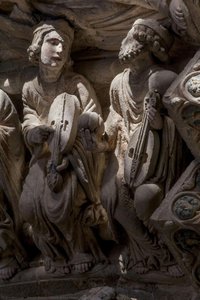
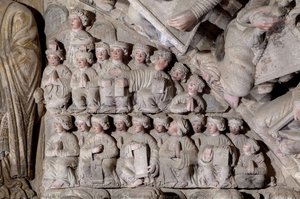
Within the sacred shadows of the Portico of Glory, a profound scene unfolds in stone. The Elders holding instruments, Central Arch, Portico of Glory emerges from the limestone, appearing as if caught in a moment of eternal preparation. This work, created by the hands of Master Mateo, brings the figures of the Apocalypse into a tangible, breathing presence. They sit amidst the radial archivolts, their bodies leaning toward one another…

8
Saint Matthew, Central Arch, Portico of Glory (1211) работы Мастер Матео

Saint Matthew, Central Arch, Portico of Glory

The stone breathes under the soft, diffuse light of the cathedral, revealing a figure caught in a moment of eternal devotion. Here, within the central arch of the Portico of Glory, Saint Matthew sits with a quiet, heavy presence. He is a winged presence, his form emerging from the granite with a startling sense of life. He leans over a desk, his knees supporting the weight of his task, as…

9
Saint Luke, Central Arch, Portico of Glory (1211) работы Мастер Матео

Saint Luke, Central Arch, Portico of Glory

The limestone relief of Saint Luke, carved around 1211, occupies a central position within the Portico of Glory at the Cathedral of Santiago de Compostela in Spain. The figure is depicted reclining on his right side, a posture that suggests both physical repose and deep introspection. In his left hand, he holds a book, while his head rests upon a lamb, a direct reference to his role as an Evangelist…

10
Arma Christi, Central Arch, Portico of Glory (1211) работы Мастер Матео

Arma Christi, Central Arch, Portico of Glory

The relief known as Arma Christi, Central Arch, Portico of Glory is a sculptural work by the artist Master Mateo. This specific piece is situated within the Central Arch of the Portico of Glory. It was created in 1211. The work is part of a larger architectural and sculptural program located at the Santiago de Compostela Cathedral in Galicia, Spain.

Знаменитые картины Мастер Матео, с 11 по 44

11Santo dos Croques of the Portico of Glory (1200) работы Мастер МатеоSanto dos Croques of the Portico of Glory1200 · Музей Фундации Собора Сантьяго-де-Компостела 12Saint Matthew (1200) работы Мастер МатеоSaint Matthew1200 · Музей Фундации Собора Сантьяго-де-Компостела 13Statues of David and Solomon (1188) работы Мастер МатеоStatues of David and Solomon1188 · Музей Фундации Собора Сантьяго-де-Компостела 14Portico de la Gloria (1168) работы Мастер МатеоPortico de la Gloria1168 · Cathedral 15Portico de la Gloria (detail) (1168) работы Мастер МатеоPortico de la Gloria (detail)1168 · Cathedral 16Portico de la Gloria (1168) работы Мастер МатеоPortico de la Gloria1168 · Cathedral 17Portico de la Gloria (detail) (1168) работы Мастер МатеоPortico de la Gloria (detail)1168 · Cathedral 18Right arch of the Portico of Glory. Iconography of the condemned (1188) работы Мастер МатеоRight arch of the Portico of Glory. Iconography of the condemned1188 · Музей Фундации Собора Сантьяго-де-Компостела 19Right arch of the Portico of Glory (1188) работы Мастер МатеоRight arch of the Portico of Glory1188 · Музей Фундации Собора Сантьяго-де-Компостела 20Left arch of the Portico of Glory (1188) работы Мастер МатеоLeft arch of the Portico of Glory1188 · Музей Фундации Собора Сантьяго-де-Компостела 21Right columns of the central arch of the Portico of Gloryh (1188) работы Мастер МатеоRight columns of the central arch of the Portico of Gloryh1188 · Музей Фундации Собора Сантьяго-де-Компостела 22Saint Marcus, Central Arch, Portico of Glory (1211) работы Мастер МатеоSaint Marcus, Central Arch, Portico of Glory1211 · Музей Фундации Собора Сантьяго-де-Компостела 23Saint John, Central Arch, Portico of Glory (1211) работы Мастер МатеоSaint John, Central Arch, Portico of Glory1211 · Музей Фундации Собора Сантьяго-де-Компостела 24Ordo Prophetarum, The counter facade, Portico of Glory (1211) работы Мастер МатеоOrdo Prophetarum, The counter facade, Portico of Glory1211 · Музей Фундации Собора Сантьяго-де-Компостела 25The Sybil, The counter facade, Portico of Glory (1211) работы Мастер МатеоThe Sybil, The counter facade, Portico of Glory1211 · Музей Фундации Собора Сантьяго-де-Компостела 26Right arch of the Portico of Glory. Iconography of the blessed (1211) работы Мастер МатеоRight arch of the Portico of Glory. Iconography of the blessed1211 · Музей Фундации Собора Сантьяго-де-Компостела 27Detail of the Elders, Central Arch, Portico of Glory (1211) работы Мастер МатеоDetail of the Elders, Central Arch, Portico of Glory1211 · Музей Фундации Собора Сантьяго-де-Компостела 28Tribune of Portico of Glory (1211) работы Мастер МатеоTribune of Portico of Glory1211 · Музей Фундации Собора Сантьяго-де-Компостела 29Angels, The Tribune, Portico of Glory (1211) работы Мастер МатеоAngels, The Tribune, Portico of Glory1211 · Музей Фундации Собора Сантьяго-де-Компостела 30Portico of Glory (1211) работы Мастер МатеоPortico of Glory1211 · Музей Фундации Собора Сантьяго-де-Компостела 31Keystones from Portico of the Glory (1211) работы Мастер МатеоKeystones from Portico of the Glory1211 · Музей Фундации Собора Сантьяго-де-Компостела 32Detail Maiestas Domini of The Portico of Glory (1211) работы Мастер МатеоDetail Maiestas Domini of The Portico of Glory1211 · Музей Фундации Собора Сантьяго-де-Компостела 33Arma Christi, Central Arch, Portico of Glory (1211) работы Мастер МатеоArma Christi, Central Arch, Portico of Glory1211 · Музей Фундации Собора Сантьяго-де-Компостела 34The Just, Central Arch, Portico of Glory (1211) работы Мастер МатеоThe Just, Central Arch, Portico of Glory1211 · Музей Фундации Собора Сантьяго-де-Компостела 35Detail of the Elders, Central Arch, Portico of Glory (1211) работы Мастер МатеоDetail of the Elders, Central Arch, Portico of Glory1211 · Музей Фундации Собора Сантьяго-де-Компостела 36Detail of the Blessed, Central Arch, Portico of Glory (1211) работы Мастер МатеоDetail of the Blessed, Central Arch, Portico of Glory1211 · Музей Фундации Собора Сантьяго-де-Компостела 37Central Arch of The Portico of Glory (1211) работы Мастер МатеоCentral Arch of The Portico of Glory1211 · Музей Фундации Собора Сантьяго-де-Компостела 38Organistrum, Central Arch, Portico of Glory (1211) работы Мастер МатеоOrganistrum, Central Arch, Portico of Glory1211 · Музей Фундации Собора Сантьяго-де-Компостела 39Drawing José Vega y Verdugo (1656-1657) Archivo de la Catedral (1657) работы Мастер МатеоDrawing José Vega y Verdugo (1656-1657) Archivo de la Catedral1657 · Музей Фундации Собора Сантьяго-де-Компостела 40Left arch of the Portico of Glory. Iconography (1188) работы Мастер МатеоLeft arch of the Portico of Glory. Iconography1188 · Музей Фундации Собора Сантьяго-де-Компостела 41Estatuas-columna de dos profetas procedentes de la desaparecida fachada exterior del Pórtico de la Gloria\n\n- Isaac (1188) работы Мастер МатеоEstatuas-columna de dos profetas procedentes de la desaparecida fachada exterior del Pórtico de la Gloria\n\n- Isaac1188 · Музей Фундации Собора Сантьяго-де-Компостела 42Rose window (1200) работы Мастер МатеоRose window1200 · Музей Фундации Собора Сантьяго-де-Компостела 43Stony choir reconstruction (1211) работы Мастер МатеоStony choir reconstruction1211 · Музей Фундации Собора Сантьяго-де-Компостела 44Lintels Central Arch of The Portico of Glory (1188) работы Мастер МатеоLintels Central Arch of The Portico of Glory1188 · Музей Фундации Собора Сантьяго-де-Компостела

Сюжеты, которые вдохновляли Мастер Матео

Четыре темы, которые чаще всего встречаются в этих оригиналах, каждая из которых представлена своим лучшим образцом.

Музеи, в которых хранятся оригиналы работ Мастер Матео

2 музеев, в которых находится большинство картин со страницы.

Музей Город Работы Мастер Матео Картины из этого списка
Музей Фундации Собора Сантьяго-де-Компостела, Santiago de CompostelaМузей Фундации Собора Сантьяго-де-Компостела Santiago de Compostela 40 The disappeared façade at the end of the Camino, Base of the mullion of the Portico of Glory, Trinity of the Portico of Glory
Cathedral, Santiago de CompostelaCathedral Santiago de Compostela 4 Portico de la Gloria, Portico de la Gloria (detail), Portico de la Gloria

Мастер Матео сквозь десятилетия: по одному уникальному оригиналу на каждое десятилетие

Произведения по десятилетиям

Выберите десятилетие, чтобы увидеть шедевр, определяющий его.

Картины Мастер Матео: вопросы к галерее

Какая работа Мастер Матео является самой известной?Узнать ответ

The disappeared façade at the end of the Camino (1211), Музей Фундации Собора Сантьяго-де-Компостела, Santiago de Compostela. Далее следуют Base of the mullion of the Portico of Glory (1188) и Trinity of the Portico of Glory (1188).

В каком возрасте Мастер Матео создал(а) The disappeared façade at the end of the Camino?Узнать ответ

50 лет: The disappeared façade at the end of the Camino датируется 1211 годом, а Мастер Матео родился в 1161.

Какие десять картин Мастер Матео являются самыми известными?Узнать ответ

The disappeared façade at the end of the Camino, Base of the mullion of the Portico of Glory, Trinity of the Portico of Glory, Statue-column of king David, The Glory, Central Arch, Portico of Glory, The Elders holding instruments, Central Arch, Portico of Glory, Voussoirs with the punishment of lust, Saint Matthew, Central Arch, Portico of Glory, Saint Luke, Central Arch, Portico of Glory и Arma Christi, Central Arch, Portico of Glory. В рейтинге выше указаны год создания и музей для каждой работы.

Сколько известно работ Мастер Матео?Узнать ответ

В нашем каталоге представлено 44 работ Мастер Матео, созданных в период с 1188 по 1211.

Где можно увидеть подлинники, созданные Мастер Матео?Узнать ответ

В основном в Музей Фундации Собора Сантьяго-де-Компостела (Santiago de Compostela) и Cathedral (Santiago de Compostela). В таблице выше перечислены все музеи.

В какой период Мастер Матео создал свои самые известные картины?Узнать ответ

В 1210s: 24 из 44 работ на этой странице были созданы в этот период, The disappeared façade at the end of the Camino из них.

Какая из знаменитых картин Мастер Матео была написана раньше, а какая — позже?Узнать ответ

На этой странице самая ранняя работа датирована Base of the mullion of the Portico of Glory (1188), а самая поздняя — The disappeared façade at the end of the Camino (1211).

Какие сюжеты предпочитал Мастер Матео?Узнать ответ

Sculpture (6), Medieval art (5) и Stone (4) в 44 работах на этой странице.

Какими материалами чаще всего пользовался Мастер Матео?Узнать ответ

Stone, для 11 из 44 работ на этой странице.

К какому направлению относится творчество Мастер Матео?Узнать ответ

Romanesque, судя по оригиналам на этой странице.

Какие оригинальные работы Мастер Матео можно увидеть в Музей Фундации Собора Сантьяго-де-Компостела?Узнать ответ

The disappeared façade at the end of the Camino, Base of the mullion of the Portico of Glory и Trinity of the Portico of Glory: в коллекции Музей Фундации Собора Сантьяго-де-Компостела, Santiago de Compostela находится 40 работ со страницы.

Мастер Матео: портрет художника

Душа величия Сантьяго

Мастер Матео, скульптор, чье имя остается окутанным тайной, несмотря на его монументальный вклад в создание Собора Сантьяго-де-Компостела, является одной из самых почитаемых фигур романского искусства в Испании. Рожденный около 1161 года в Галисии, хотя точные детали его жизни скудны, наследие Мастера Матео зиждется прежде всего на его беспрецедентном достижении: Портико де ла Глория. Это захватывающее дух архитектурное чудо доминирует на фасаде собора и воплощает в себе духовный пыл двенадцатого века. Он прославился как скульптор в эпоху, отмеченную неистовой религиозной преданностью и художественными инновациями, войдя в мир, где паломнический путь в Сантьяго уже был преображающим путешествием для тысяч душ.

Генезис его величайшего труда начался около 1188 года, когда ему было поручено руководить созданием тройного портала, который станет его magnum opus. Сам проект Собора был задуман десятилетиями ранее под покровительством короля Альфонсо VIII и подпитывался огромным религиозным значением этого места. В этом священном контексте Мастер Матео не просто вырезал камень; он вдыхал в него жизнь. Его участие в создании Портико было божественным служением, превратившим структурную необходимость в теологическое повествование, которое продолжает покорять как паломников, так и историков искусства.

Симфония в камне: техника и стиль

Скульптурный стиль Мастера Матео характеризуется поразительным реализмом, который ознаменовал глубокий отход от более ранних, жестких канонов романского стиля. В то время как его современники часто полагались на стилизованные, плоские фигуры, Мастер Матео тщательно изучал анатомию человека и сложное поведение драпировок, достигая поразительной точности в своих изображениях. Его мастерство резьбы по известняку было непревзойденным, особенно благодаря использованию техники, известной как trabajo vivo. Этот метод предполагал наслоение каменных плит для создания текстурированных поверхностей, имитирующих вид плоти и ткани, что придавало статичному материалу ощущение движения и жизненной силы.

Этот новаторский подход позволил ему преодолеть разрыв между земным и божественным. Наблюдая за его работой, можно увидеть, как искусно он использовал свет и тень для усиления глубины своих рельефов. Его способность манипулировать камнем, передавая мягкость одеяния святого или мышечное напряжение библейской фигуры, возвела его мастерство до уровня утонченности, редко встречавшегося в Средние века. Этот технический блеск гарантировал, что его фигуры были не просто символами, но осязаемым присутствием в самом входе в собор.

Портико де ла Глория: свидетельство веры

Портико де ла Глория служит высшим свидетельством художественного и духовного видения Мастера Матео. Его центральные панели изображают глубокие сцены из Евангелия — включая Рождество, Благовещение и Распятие, — выстроенные таким образом, чтобы вести зрителя сквозь священную историю. Иконография обширна и сложна, и в ней представлены:

  • Центральная арка: включает иконические фигуры, такие как Святой Лука, где замысловатая романская скульптура демонстрирует глубокий религиозный символизм.
  • Левая арка: мастер-класс испанской рельефной резьбы XII века, демонстрирующий детальные библейские повествования.
  • Правая арка: выставка изысканной красоты, демонстрирующая его способность управлять сложной архитектурной и скульптурной интеграцией.

Благодаря этим работам Мастер Матео достиг уровня исторической значимости, выходящего за рамки эпохи его рождения. Он перевел романский стиль в сторону зарождающейся элегантности готики, оставив после себя наследие, которое остается сердцебиением Сантьяго-де-Компостелы. Его работа стоит как вечный мост между средневековым сознанием и вечностью, гарантируя, что даже спустя столетия после его смерти в 1217 году, слава его каменной симфонии продолжает внушать трепет.