Портрет Лев Бакст

100 самых известных картин Лев Бакст: подборка галереи

Обновлено Ноябрь 2026 · рейтинг на основе нашего показателя популярности (количество поисковых запросов, посещений и заказов для каждой работы) · 154 работ Лев Бакст в нашем каталоге

Вкратце

Из всех оригинальных работ, оставленных Лев Бакст, самой известной является Дизайн с цветами в сетке из коллекции The Baltimore Museum of Art, Балтимор. Сразу за ними следуют Costume design for the ballet ''Cleopatra'' (1909) и Operatic costume designs (1911). В нашем каталоге представлено 154 работ Лев Бакст; галерея сохранила 100 самых почитаемых в мире произведений, каждое из которых сопровождается датой создания, информацией о музее и своей историей.

1866 – 1924, Гродно Art nouveau Больше всего работ: The Baltimore Museum of Art

10 лучших картин Лев Бакст: выбор галереи

1
Дизайн с цветами в сетке работы Лев Бакст

Дизайн с цветами в сетке

Живопись · The Baltimore Museum of Art, Балтимор

Лéon Bakst и его шедевр «Дизайн с цветами в сетке» Лéon Bakst (1866–1924) был выдающимся русским художником и дизайнером, известным своими роскошными декорациями и костюмами для балета Сергея Дягилева «Русские сезоны», который объединил модерн с восточным влиянием и совершил революцию в театральном искусстве. Его творчество стало символом эпохи и оказало огромное влияние на искусство и дизайн начала XX века. Именно этот период характеризуется бурной сменой эстетических идеалов и поиском новых…

3
Operatic costume designs (1911) работы Лев Бакст

Operatic costume designs

1911 · Painting

Operatic costume designs, created by Léon Bakst in 1911, captures a moment of theatrical movement. The work features two women in elaborate attire; one is dressed in a blue garment accented with green circles, while the other wears red. Their poses suggest a choreographed interaction, with one figure appearing to dance while holding the arm of her companion.

4
Drawing young divinity Narcisse costume, ballet Diaghilev (1911) работы Лев Бакст

Drawing young divinity Narcisse costume, ballet Diaghilev

1911 · Watercolor

The scene unfolds through Drawing young divinity Narcisse costume, ballet Diaghilev, a vision conceived by the artist Léon Bakst. This work captures a specific moment of theatrical creation from 1911. It exists as a design for the set of the ballet Narcisse, a production that first met its audience at the Théâtre de Monte Carlo in 1911. The atmosphere of the stage is shaped by the creative energy of the…

6
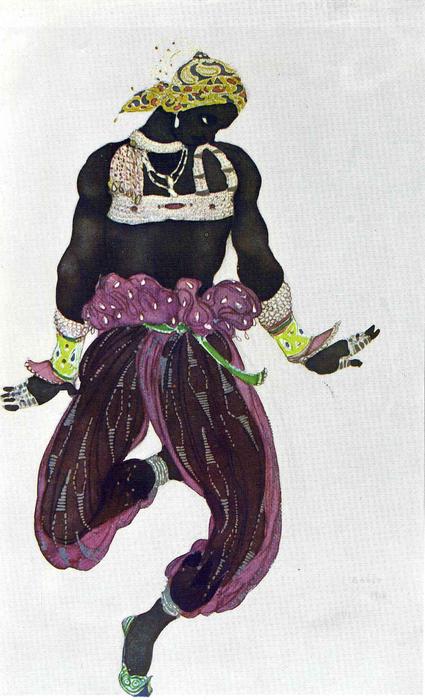
Scheherazade negre argent (1910) работы Лев Бакст

Scheherazade negre argent

1910 · Watercolor

A solitary male figure commands the space, frozen in a moment of theatrical tension. He leans into a stylized pose, his body elongated to emphasize a sense of rhythmic movement that seems to pulse even in stillness. The silhouette is defined by sharp, geometric lines—the triangular peak of a headpiece and the rectangular weight of his garments—which create a striking contrast against the dark, somber atmosphere. Every muscle and fold…

7
Scheherezade odalisque (1910) работы Лев Бакст

Scheherezade odalisque

1910 · Watercolor

The artwork titled Scheherezade odalisque was created by the artist Léon Bakst. This specific piece is a watercolor illustration produced in 1910. The work originates from a period when the artist was actively involved in the visual development of the Ballets Russes, contributing to the aesthetic language of theatrical productions such as Scheherazade.

8
The Butterfly (Costume Design for Anna Pavlova) (1913) работы Лев Бакст

The Butterfly (Costume Design for Anna Pavlova)

1913 · Gouache · Музей изящных искусств, Бостон

The Butterfly (Costume Design for Anna Pavlova) is a dynamic costume design illustration created in 1913. The composition features a central female figure captured in a mid-stride or dancing pose. She is surrounded by expansive, swirling fabric elements that suggest the wings of a butterfly. The color palette is dominated by primary colors, specifically bright yellow and deep cobalt blue, accented with orange and white.

9
Portrait of Miss Paoloff (1916) работы Лев Бакст

Portrait of Miss Paoloff

1916 · Oil

The Portrait of Miss Paoloff by Léon Bakst captures a fleeting moment of grace. In this work, the ballerina Miss Paoloff appears mid-movement, her body caught in a dynamic pose that suggests the energy of a live performance. She wears her performance attire, a tutu that seems to catch the light as she moves through the space. The scene feels suspended in time, as if the dancer has just pivoted…

Подборка Лев Бакст продолжается, с 11 по 100

11Portrait of the Marchesa Casati (1912) работы Лев БакстPortrait of the Marchesa Casati1912 12fantasy on modern costume (atalanta) (1912) работы Лев Бакстfantasy on modern costume (atalanta)1912 13The sleeping beauty eastern prince and his page (1916) работы Лев БакстThe sleeping beauty eastern prince and his page1916 14Portrait of a Lady (1917) работы Лев БакстPortrait of a Lady1917 15Mme Ida Rubinstein (1917) работы Лев БакстMme Ida Rubinstein1917 · Метрополитен-музей 16Samarkand Sultan (1922) работы Лев БакстSamarkand Sultan1922 17russian peasant woman (1922) работы Лев Бакстrussian peasant woman1922 18Dmitry Filosof portrait (1897) работы Лев БакстDmitry Filosof portrait1897 19Art open letter of Red Cross (1904) работы Лев БакстArt open letter of Red Cross1904 20supper (1902) работы Лев Бакстsupper1902 21cleopatre danse juive (1910) работы Лев Бакстcleopatre danse juive1910 22helene de sparte ida rubinstein in act iv (1912) работы Лев Бакстhelene de sparte ida rubinstein in act iv1912 23The Supper (1902) работы Лев БакстThe Supper1902 24Big Philanthropic Puppet Bazaar, St. Petersburg (1899) работы Лев БакстBig Philanthropic Puppet Bazaar, St. Petersburg1899 25Medee (Jean Anouilh) работы Лев БакстMedee (Jean Anouilh) 26Leonid Massine работы Лев БакстLeonid Massine 27Portrait of Jean Cocteau работы Лев БакстPortrait of Jean Cocteau 28Ida Rubinstein работы Лев БакстIda Rubinstein 29untitled (4764) работы Лев Бакстuntitled (4764) 30untitled (1211) работы Лев Бакстuntitled (1211) 31untitled (1495) работы Лев Бакстuntitled (1495) 32Costume Design For 'la Fée De Richesse' работы Лев БакстCostume Design For 'la Fée De Richesse' 33St. Sebastian, from ''The Martyr of St. Sebastian'' работы Лев БакстSt. Sebastian, from ''The Martyr of St. Sebastian'' 34helene de sparte costume for ida rubinstein as helene работы Лев Бакстhelene de sparte costume for ida rubinstein as helene 35Ballet Music - Introduction (Humphrey Searle) работы Лев БакстBallet Music - Introduction (Humphrey Searle) 36untitled (4724) работы Лев Бакстuntitled (4724) 37untitled (9134) работы Лев Бакстuntitled (9134) 38Costume for Nijinsky (1910) работы Лев БакстCostume for Nijinsky1910 39scheherezade odalisque (1910) работы Лев Бакстscheherezade odalisque1910 40le dieu bleu a young rajah (1911) работы Лев Бакстle dieu bleu a young rajah1911 41narcisse the nymph echo (1911) работы Лев Бакстnarcisse the nymph echo1911 42Le dieu bleu a young rajah (1911) работы Лев БакстLe dieu bleu a young rajah1911 43fantasie sur le costume moderne (1910) работы Лев Бакстfantasie sur le costume moderne1910 44Vase (self-portrait) (1906) работы Лев БакстVase (self-portrait)1906 45Scheherezade odalisque (1910) работы Лев БакстScheherezade odalisque1910 46Narcisse a youth (1911) работы Лев БакстNarcisse a youth1911 47Le dieu bleu Nijinsky in title role (1911) работы Лев БакстLe dieu bleu Nijinsky in title role1911 48loiseau de feu costume pour tamara karsavina (1910) работы Лев Бакстloiseau de feu costume pour tamara karsavina1910 49Fantasy on modern costume (1910) работы Лев БакстFantasy on modern costume1910 50scheherazade negre argent (1910) работы Лев Бакстscheherazade negre argent1910 51The Firebird, the tsarevna (1910) работы Лев БакстThe Firebird, the tsarevna1910 52loiseau de feu the firebird (1910) работы Лев Бакстloiseau de feu the firebird1910 53Narcisse -Boeotian (1911) работы Лев БакстNarcisse -Boeotian1911 54Portrait of Russian painter Filipp Andreevich Maljawin работы Лев БакстPortrait of Russian painter Filipp Andreevich Maljawin 55scheherezade scenery (1910) работы Лев Бакстscheherezade scenery1910 56le martyre de saint sebastien ida rubinstein as st sebastian (1911) работы Лев Бакстle martyre de saint sebastien ida rubinstein as st sebastian1911 57Costume Design for 'Scheherazade' (1910) работы Лев БакстCostume Design for 'Scheherazade'1910 58The Firebird, costume for Tamara Karsavina (1910) работы Лев БакстThe Firebird, costume for Tamara Karsavina1910 59scheherazade la sultane bleue (1910) работы Лев Бакстscheherazade la sultane bleue1910 60narcisse a youth (1911) работы Лев Бакстnarcisse a youth1911 61Sketch for the ballet 'La Peri', by Paul Dukas (1911) работы Лев БакстSketch for the ballet 'La Peri', by Paul Dukas1911 62Scheherazade shah shahriar (1910) работы Лев БакстScheherazade shah shahriar1910 63cleopatre greek dancer (1910) работы Лев Бакстcleopatre greek dancer1910 64Front cover of Comoedia (1909) работы Лев БакстFront cover of Comoedia1909 65loiseau de feu michel fokine as tsarevitch (1910) работы Лев Бакстloiseau de feu michel fokine as tsarevitch1910 66Scheherazade la sultane bleue (1910) работы Лев БакстScheherazade la sultane bleue1910 67cleopatre syrian dance (1909) работы Лев Бакстcleopatre syrian dance1909 68narcisse a nymph (1911) работы Лев Бакстnarcisse a nymph1911 69Le martyre de Saint Sebastien act I set design (1911) работы Лев БакстLe martyre de Saint Sebastien act I set design1911 70Le martyre de Saint Sebastien act IV set design (1911) работы Лев БакстLe martyre de Saint Sebastien act IV set design1911 71The carnival Chiarina (1910) работы Лев БакстThe carnival Chiarina1910 72narcisse bacchante (1911) работы Лев Бакстnarcisse bacchante1911 73la peri natasha trouhanova as the peri (1911) работы Лев Бакстla peri natasha trouhanova as the peri1911 74In the artist's studio (1908) работы Лев БакстIn the artist's studio1908 75la peri iksander (1911) работы Лев Бакстla peri iksander1911 76The .arnival - Estrella (1910) работы Лев БакстThe .arnival - Estrella1910 77Cleopatre danse juive (1910) работы Лев БакстCleopatre danse juive1910 78le dieu bleu nijinsky in title role (1911) работы Лев Бакстle dieu bleu nijinsky in title role1911 79Downpour (1906) работы Лев БакстDownpour1906 80Scheherazade the chief eunuch (1910) работы Лев БакстScheherazade the chief eunuch1910 81Costume design for a bacchante in 'Narcisse' by Tcherepnin (1911) работы Лев БакстCostume design for a bacchante in 'Narcisse' by Tcherepnin1911 82le dieu bleu the bride (1912) работы Лев Бакстle dieu bleu the bride1912 83Nijinsky's Faun Costume in 'L'Apres Midi d'un Faune' by Claude Debussy from the front cover of the programme for the 7th season of the 'Ballets Russes' (1912) работы Лев БакстNijinsky's Faun Costume in 'L'Apres Midi d'un Faune' by Claude Debussy from the front cover of the programme for the 7th season of the 'Ballets Russes'1912 84Design for a lady's dress (1912) работы Лев БакстDesign for a lady's dress1912 85sadko one of the chorus (1917) работы Лев Бакстsadko one of the chorus1917 86L'apres midi d'un faune, another nymph (1912) работы Лев БакстL'apres midi d'un faune, another nymph1912 87lapres midi dun faune another nymph (1912) работы Лев Бакстlapres midi dun faune another nymph1912 88le dieu bleu a pilgrim (1912) работы Лев Бакстle dieu bleu a pilgrim1912 89le dieu bleu bayadere (1912) работы Лев Бакстle dieu bleu bayadere1912 90lapres midi dun faune nijinsky as the faun (1912) работы Лев Бакстlapres midi dun faune nijinsky as the faun1912 91Le dieu bleu bayadere with peacock (1912) работы Лев БакстLe dieu bleu bayadere with peacock1912 92Daphnis and Chloe scenery for act II (1912) работы Лев БакстDaphnis and Chloe scenery for act II1912 93daphnis et chloe set design act ii (1912) работы Лев Бакстdaphnis et chloe set design act ii1912 94Les femmes de bonne humeur - set design (1917) работы Лев БакстLes femmes de bonne humeur - set design1917 95sadko the green monster (1917) работы Лев Бакстsadko the green monster1917 96le dieu bleu setting (1912) работы Лев Бакстle dieu bleu setting1912 97loiseau de feu costume (1913) работы Лев Бакстloiseau de feu costume1913 98helene de sparte act ii set design (1912) работы Лев Бакстhelene de sparte act ii set design1912 99La legende de Joseph Potiphar (1914) работы Лев БакстLa legende de Joseph Potiphar1914 100daphnis et chloe costume (1912) работы Лев Бакстdaphnis et chloe costume1912

Знаменитые картины Лев Бакст по периодам творчества

Early Modernism

1908 – 1922 · 3 работ в этом списке

Сюжеты, которые вдохновляли Лев Бакст

Четыре темы, которые чаще всего встречаются в этих оригиналах, каждая из которых представлена своим лучшим образцом.

Музеи, в которых хранятся оригиналы работ Лев Бакст

3 музеев, в которых находится большинство картин со страницы.

Музей Город Работы Лев Бакст Картины из этого списка
The Baltimore Museum of Art, БалтиморThe Baltimore Museum of Art Балтимор 1 Дизайн с цветами в сетке
Музей изящных искусств, БостонМузей изящных искусств Бостон 1 The Butterfly (Costume Design for Anna Pavlova)
Метрополитен-музей, Нью-ЙоркМетрополитен-музей Нью-Йорк 1 Mme Ida Rubinstein

Лев Бакст по десятилетиям: оригиналы, определяющие каждую эпоху

Произведения по десятилетиям

Выберите десятилетие, чтобы увидеть шедевр, определяющий его.

Вопросы коллекционеров о картинах Лев Бакст

Какая работа Лев Бакст наиболее известна?Узнать ответ

Дизайн с цветами в сетке, The Baltimore Museum of Art, Балтимор. Далее следуют Costume design for the ballet ''Cleopatra'' (1909) и Operatic costume designs (1911).

Какие десять самых известных картин написал Лев Бакст?Узнать ответ

Дизайн с цветами в сетке, Costume design for the ballet ''Cleopatra'', Operatic costume designs, Drawing young divinity Narcisse costume, ballet Diaghilev, Portrait of Boris Nikolayevich Bugaev (Andrey Bely), Scheherazade negre argent, Scheherezade odalisque, The Butterfly (Costume Design for Anna Pavlova), Portrait of Miss Paoloff и Portrait of the Marchesa Casati. В рейтинге выше указаны год создания и музей для каждой работы.

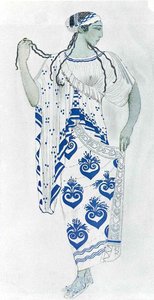
Сколько картин оставил(а) Лев Бакст?Узнать ответ

В нашем каталоге представлено 154 работ Лев Бакст, созданных в период с 1897 по 1922.

В каких музеях представлены шедевры Лев Бакст?Узнать ответ

В основном в The Baltimore Museum of Art (Балтимор), Музей изящных искусств (Бостон) и Метрополитен-музей (Нью-Йорк). В таблице выше перечислены все музеи.

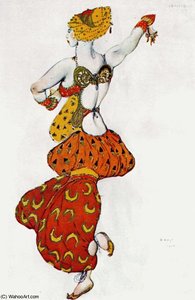
В какие годы Лев Бакст написал свои самые известные работы?Узнать ответ

В 1910s: 71 из 100 работ на этой странице были созданы в этот период, Operatic costume designs из них.

Каковы первые и последние известные оригинальные работы Лев Бакст?Узнать ответ

На этой странице самая ранняя работа датирована Dmitry Filosof portrait (1897), а самая поздняя — Samarkand Sultan (1922).

Какие сюжеты Лев Бакст выбирал чаще всего?Узнать ответ

Designs and sketches (28), Clothing (26) и Woman (9) в 100 работах на этой странице.

Какую технику чаще всего использовал(а) Лев Бакст?Узнать ответ

Watercolor, для 5 из 100 работ на этой странице.

К какому художественному направлению относится Лев Бакст?Узнать ответ

Art nouveau, судя по оригиналам на этой странице.

Лев Бакст: жизнь и творчество

Early Life and the Seeds of Artistic Rebellion

Léon Bakst, born Leyb-Khaim Izrailevich Rosenberg in 1866 within the confines of Grodno—a city then part of the Russian Empire—was not destined for a life of artistic renown from the outset. His early years were shaped by the constraints of his Jewish heritage and the societal prejudices prevalent at the time, yet it was precisely these circumstances that ultimately fueled his creative spirit. Born into a middle-class family with connections to the imperial court through his grandfather, a celebrated tailor who enjoyed patronage from Tsar Alexander III, young Leyb experienced a duality: he witnessed both the opulence of aristocratic life and the realities of marginalization within Russian society. His parents, while supportive of his burgeoning artistic inclinations, initially resisted them, viewing painting as an unconventional path for a young man. Despite their reservations, Bakst persevered, demonstrating a remarkable determination to pursue his passion. He began his artistic journey at just twelve years old, winning a drawing contest that ignited his confidence and solidified his ambition. This early success was followed by a period of rigorous training at the prestigious St. Petersburg Academy of Arts as a non-credit student—a strategic move that allowed him to supplement his education with practical experience, primarily through illustration work for books. This employment provided not only financial independence but also invaluable skills in composition, technique, and visual storytelling – all crucial elements that would later inform his groundbreaking stage designs. The decision to adopt the surname “Bakst” in 1889 was a pragmatic one, reflecting both a desire for greater career opportunities and a recognition of the potential challenges posed by his birth name within a society often marked by antisemitism. It was a calculated step taken to navigate the complexities of artistic ambition and social circumstance.

The World of Art and Embracing Modernity

Bakst’s artistic development truly blossomed with his fervent involvement in the influential “World of Art” movement, or *Mir Iskusstva*. This collective, formed in 1898, represented a radical departure from the conservative academic traditions that dominated Russian art at the time. The World of Art sought to embrace modernity, exploring diverse influences—from Japanese prints and Islamic motifs to Symbolism and early Cubist ideas—and to create an artistic environment that celebrated beauty, innovation, and social critique. Bakst quickly became a pivotal figure within this vibrant circle, collaborating closely with luminaries such as Sergei Diaghilev and Alexandre Benois, contributing significantly to the group’s eponymous periodical through his striking graphics and innovative designs. His work for *Mir Iskusstva* was characterized by a bold experimentation with color, form, and subject matter—a clear indication of his willingness to challenge established conventions. He began to incorporate elements of Orientalism into his art, drawn to the exotic patterns, vibrant hues, and rich symbolism of cultures far removed from Russia. This fascination with the East would later become a defining feature of his theatrical designs. During this period, Bakst’s artistic style evolved rapidly, reflecting the dynamic currents of the era. He moved beyond traditional portraiture, embracing a more expressive and symbolic approach—a foreshadowing of the revolutionary aesthetic he would soon bring to the stage. His work began to whisper of a new visual language, one that moved beyond strict representation toward evocative suggestion.

Revolutionizing Ballet with the Ballets Russes

The pivotal moment in Bakst’s career arrived in 1908 when he began designing sets and costumes for theatrical productions—a shift that would forever alter the landscape of stage design. His collaboration with Sergei Diaghilev's Ballets Russes proved transformative, revolutionizing theatrical aesthetics and catapulting both artists to international fame. Bakst’s designs were groundbreaking; they moved away from realistic depictions, embracing stylized forms, bold colors, and a sense of opulent fantasy. Productions like Cleopatra, Scheherazade (1910)—perhaps his most iconic work—Carnaval (1910), Narcisse (1911), and particularly L’Après-midi d’un Faune (1912) became legendary for their visual splendor. L’Après-midi d’un Faune, in particular, was a seminal work that profoundly influenced the development of ballet and stage design, establishing a new aesthetic language for the art form. He didn't merely create backdrops; he constructed immersive worlds that heightened the emotional impact of the choreography and music. The costumes were equally innovative, often incorporating exotic fabrics, shimmering embellishments, and daring silhouettes that challenged conventional notions of theatrical attire. Bakst’s designs weren’t simply decorative; they actively engaged with the narrative and musical score, creating a cohesive and unforgettable experience for the audience. His approach to costume design was particularly revolutionary—he moved beyond traditional historical accuracy, prioritizing mood, symbolism, and visual impact over literal representation.

Legacy and Enduring Influence

Léon Bakst’s legacy extends far beyond his contributions to ballet. He is rightfully considered one of the most important figures in the history of theatrical design, significantly impacting both set and costume creation for generations to come. His designs influenced not only the Ballets Russes but also a wide range of other theatrical productions around the world. Bakst’s influence can be seen in the work of numerous designers who followed in his footsteps—artists who embraced experimentation, celebrated color and form, and sought to create visually stunning and emotionally resonant stage environments. Furthermore, Bakst's designs contributed significantly to the development of the Art Deco style with their emphasis on stylized forms, rich colors, and exotic themes—a testament to his far-reaching influence on visual culture. Despite facing some criticism during his lifetime for perceived extravagance, Bakst’s work was widely celebrated, and his funeral in 1924 was attended by a remarkable gathering of prominent artists, poets, musicians, dancers, and critics—a poignant demonstration of the esteem in which he was held. Today, his artwork can be found in museums worldwide and continues to inspire through reproductions available on platforms like OriginalUniqueArt.com, ensuring that his innovative spirit and artistic vision endure for audiences around the globe. Bakst’s ability to synthesize diverse influences, embrace experimentation, and create visually stunning worlds cemented his place as a true visionary of the 20th century.