John Elwood Bundy: The Quiet Maestro of Indiana Impressionism
John Elwood Bundy (May 1, 1853 – January 17, 1933) stands as a pivotal figure in the Richmond Group—a collective of American landscape painters who championed a distinctive style rooted in observation and tonal subtlety. Born in Guilford County, North Carolina, to Quaker parents, Bundy’s formative years instilled in him a deep appreciation for simplicity and integrity that would permeate his artistic vision throughout his life. Moving to Indiana as a young boy, he honed his skills amidst the fertile landscapes of the Midwest, establishing himself as a respected educator and artist who profoundly shaped the artistic landscape of his region.
Early Life & Education: Bundy’s upbringing fostered a contemplative spirit and instilled in him a lifelong fascination with nature. Despite brief explorations into formal art training in Indianapolis—primarily under Barton S. Hays—he largely pursued self-education, immersing himself in the study of anatomy and drawing techniques.
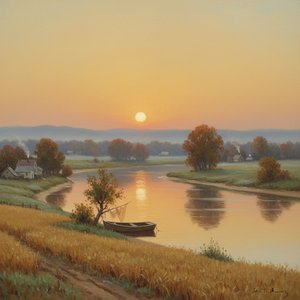
Bundy joined the Society of Western Artists in 1895, cementing his association with the Richmond Group—a movement characterized by its commitment to depicting Indiana’s landscapes with remarkable accuracy and emotional resonance. Unlike many of his contemporaries who favored bold brushstrokes and vibrant hues, Bundy championed a restrained palette and meticulous tonal gradations—techniques that prioritized capturing the nuances of atmospheric conditions and conveying the essence of natural beauty. His canvases often depict towering beech trees bathed in dappled sunlight, rendered with painstaking detail and imbued with an understated grandeur.
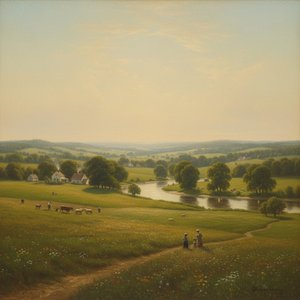
Notable Paintings: Bundy’s oeuvre includes iconic works such as “Jersey Cows,” “Lingering Snow,” and “Hillside in the Fall”—each capturing a specific Indiana vista with exceptional sensitivity. These paintings exemplify his mastery of tonal painting, demonstrating his ability to transform ordinary scenes into evocative representations of mood and emotion.
Institutional Recognition & Legacy: Bundy’s dedication to art education culminated in his appointment as professor at Earlham College, where he nurtured the artistic talents of generations of students. Furthermore, he played a crucial role in establishing the Richmond Art Museum—a testament to his unwavering belief in fostering artistic appreciation within his community.
Bundy's enduring legacy resides primarily in his portrayal of Indiana landscapes, particularly beech trees. He meticulously documented the changing seasons—spring blossoms, summer foliage, autumn hues—capturing their beauty with unwavering precision and conveying a profound connection to the natural world. His paintings are celebrated for their atmospheric depth and tonal harmony—qualities that elevate them beyond mere depictions of scenery into meditations on light, color, and the sublime.
A Continuing Influence
John Elwood Bundy’s artistic contributions continue to inspire artists today. His unwavering commitment to observation, tonal painting, and capturing the spirit of place solidified his position as “dean” of the Richmond Group—a movement that championed a distinctly American Impressionist aesthetic. His paintings reside in numerous private collections and museums across the United States—including the Haan Mansion Museum of Indiana Art, Indianapolis Museum of Art, and Indiana State Museum—ensuring that Bundy’s vision of Indiana landscapes persists as a beacon of artistic excellence.
Explore the serene landscapes of John Ottis Adams, a key American Impressionist of the Hoosier Group. Discover his Luminist style & forgotten legacy with OriginalUniqueArt.
Explore the luminous landscapes of Thomas Worthington Whittredge, a key figure in the Hudson River School and master of Luminism. Discover his captivating paintings & legacy with OriginalUniqueArt.