Портрет Джон Кромэ

54 самых известных картин Джон Кромэ, каждая из которых уникальна

Обновлено Октябрь 2026 · рейтинг на основе нашего показателя популярности (количество поисковых запросов, посещений и заказов для каждой работы) · 54 работ Джон Кромэ в нашем каталоге

Вкратце

Boys Bathing on the River Wensum, Norwich (1817) — это самая популярная картина Джон Кромэ; оригинал находится в Yale Center for British Art, Нью-Хейвен. Затем взгляд переходит на Grove Scene (1820) и Slate Quarries (1803). Из 54 работ Джон Кромэ в нашем каталоге эти 54 являются самыми известными: каждая из них — уникальный оригинал с указанием года создания, музея и причины ее бессмертия.

1768 – 1821, Норидж Romanticism Больше всего работ: Yale Center for British Art

Топ-10 картин Джон Кромэ глазами галереи

1
Boys Bathing on the River Wensum, Norwich (1817) работы Джон Кромэ

Boys Bathing on the River Wensum, Norwich

1817 · Oil On Canvas · Yale Center for British Art, Нью-Хейвен

Boys Bathing on the River Wensum, Norwich – A Reflection of Norfolk’s Soul John Crome's “Boys Bathing on the River Wensum, Norwich” isn’t merely a depiction of a picturesque riverside scene; it’s a distillation of the very spirit of Norfolk—a region steeped in tradition and celebrated for its understated beauty. Painted in 1817 during the height of the Romantic era, this landscape masterpiece encapsulates the fascination with nature that characterized…

2
Grove Scene (1820) работы Джон Кромэ

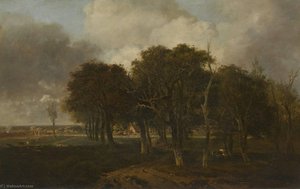
Grove Scene

1820 · Oil On Canvas · Norwich Castle Museum And Art Gallery, Норвич

A small clearing within a Norfolk forest provides the setting for this 1820 oil on canvas. Two figures stand amidst the trees, appearing as quiet observers of the landscape. Nearby, a horse grazes in the grass, contributing to the pastoral stillness of the scene. The composition uses these figures to anchor the expansive vista, establishing a connection between the human presence and the natural environment.

6
A Mountain Scene (1806) работы Джон Кромэ

A Mountain Scene

In his 1806 masterpiece, A Mountain Scene, John Crome captures a panoramic vista of East Anglian hills, a scene that serves as a profound embodiment of Romantic ideals. The composition is dominated by a substantial rock outcrop in the foreground, its rugged presence acting as a symbol of resilience and permanence against the relentless forces of time and weather. Through a skillful application of perspective, Crome draws the viewer’s gaze…

Знаменитые картины Джон Кромэ, с 11 по 54

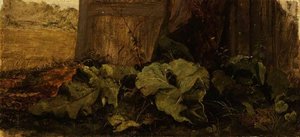
11The Beaters (1810) работы Джон КромэThe Beaters1810 · Национальная галерея Шотландии 12Yarmouth Jetty (1810) работы Джон КромэYarmouth Jetty1810 · Yale Center for British Art 13Woodland Landscape near Norwich (1810) работы Джон КромэWoodland Landscape near Norwich1810 · Yale Center for British Art 14View near Thorpe; Moonlight scene (1807) работы Джон КромэView near Thorpe; Moonlight scene1807 · Vanderbilt Museum of Art 15Hautbois Common, Norfolk (1810) работы Джон КромэHautbois Common, Norfolk1810 · Метрополитен-музей 16High Tor, Matlock (1811) работы Джон КромэHigh Tor, Matlock1811 · Fitzwilliam Museum 17Hautbois Common, Norfolk (1810) работы Джон КромэHautbois Common, Norfolk1810 18Dock Leaves (1813) работы Джон КромэDock Leaves1813 · Norwich Castle Museum And Art Gallery 19A Heath Scene: Sun after Storm (1818) работы Джон КромэA Heath Scene: Sun after Storm1818 · Национальная галерея Ирландии 20A Windmill near Norwich (1816) работы Джон КромэA Windmill near Norwich1816 21Yarmouth Harbour - Evening (1817) работы Джон КромэYarmouth Harbour - Evening1817 22The Poringland Oak (1819) работы Джон КромэThe Poringland Oak1819 23A Sandy Bank (1820) работы Джон КромэA Sandy Bank1820 · Национальная галерея Шотландии 24The Harling Gate (1817) работы Джон КромэThe Harling Gate1817 · Vanderbilt Museum of Art 25The Edge of the Forest (1821) работы Джон КромэThe Edge of the Forest1821 · Vanderbilt Museum of Art 26Landscape with Trees and Cattle (1820) работы Джон КромэLandscape with Trees and Cattle1820 27Marlingford Grove (1815) работы Джон КромэMarlingford Grove1815 28Mousehold Heath, Norwich (1820) работы Джон КромэMousehold Heath, Norwich1820 29The Fish Market, Boulogne, France (1820) работы Джон КромэThe Fish Market, Boulogne, France1820 · Norwich Castle Museum And Art Gallery 30Moonlight on the Yare (1817) работы Джон КромэMoonlight on the Yare1817 · Национальная галерея искусств 31Moonrise on the Yare ( ) (1816) работы Джон КромэMoonrise on the Yare ( )1816 32Ruined Buildings работы Джон КромэRuined BuildingsНациональная галерея Канады 33Windmill near Norwich работы Джон КромэWindmill near NorwichМузей изящных искусств 34Landscape Edge of a Wood (1820) работы Джон КромэLandscape Edge of a Wood1820 · Галерея Куртуальда 35The Lime Kiln (1806) работы Джон КромэThe Lime Kiln1806 36An Egyptian Poppy and a Water Mole (1812) работы Джон КромэAn Egyptian Poppy and a Water Mole1812 · Yale Center for British Art 37View near Weymouth работы Джон КромэView near WeymouthИнститут искусств Детройта 38A sandy hollow работы Джон КромэA sandy hollowFitzwilliam Museum 39Yarmouth Beach работы Джон КромэYarmouth BeachYale University Art Gallery 40A Barge with a Wounded Soldier работы Джон КромэA Barge with a Wounded SoldierYale Center for British Art 41Moonlight Norwich, Norfolk работы Джон КромэMoonlight Norwich, NorfolkRussell 42The Edge of the Forest работы Джон КромэThe Edge of the Forest 43Landscape with a Waterfall near Norwich, Norfolk, 1819 работы Джон КромэLandscape with a Waterfall near Norwich, Norfolk, 1819The Wilson: Cheltenham Art Gallery And Museum 44Wooded Landscape with an Oak работы Джон КромэWooded Landscape with an Oak 45The Mill работы Джон КромэThe MillNorfolk Museums 46Moonlight работы Джон КромэMoonlight 47Mousehold Heath работы Джон КромэMousehold Heath 48The Mill (after Rembrandt van Rijn) работы Джон КромэThe Mill (after Rembrandt van Rijn)Norfolk Museums 49Lane near Norwich работы Джон КромэLane near NorwichWolverhampton Art Gallery 50Landscape with a Cottage and Trees работы Джон КромэLandscape with a Cottage and TreesNorfolk Museums 51The Ploughman" (Сеятель) работы Джон КромэThe Ploughman" (Сеятель)Sheffield City Art Galleries 52Landscape with a River работы Джон КромэLandscape with a RiverSheffield City Art Galleries 53Mousehold Heath, Norwich (1819) работы Джон КромэMousehold Heath, Norwich1819 54The River Wensum, Norwich (1814) работы Джон КромэThe River Wensum, Norwich1814 · Yale Center for British Art

Сюжеты, которые вдохновляли Джон Кромэ

Четыре темы, которые чаще всего встречаются в этих оригиналах, каждая из которых представлена своим лучшим образцом.

Музеи, в которых хранятся оригиналы работ Джон Кромэ

8 музеев, в которых находится большинство картин со страницы.

Музей Город Работы Джон Кромэ Картины из этого списка
Yale Center for British Art, Нью-ХейвенYale Center for British Art Нью-Хейвен 6 Boys Bathing on the River Wensum, Norwich, Yarmouth Jetty, Woodland Landscape near Norwich
Национальная галерея Шотландии, ЭдинбургНациональная галерея Шотландии Эдинбург 4 A Mountain Scene, The Bell Inn, The Beaters
Norwich Castle Museum And Art Gallery, НорвичNorwich Castle Museum And Art Gallery Норвич 3 Grove Scene, Dock Leaves, The Fish Market, Boulogne, France
Vanderbilt Museum of Art Нэшвилл 3 View near Thorpe; Moonlight scene, The Harling Gate, The Edge of the Forest
Norfolk Museums, NorwichNorfolk Museums Norwich 3 The Mill, The Mill (after Rembrandt van Rijn), Landscape with a Cottage and Trees
Бирмингемский музей и художественная галерея, БирмингемБирмингемский музей и художественная галерея Бирмингем 2 The Way Through the Wood, View At Blofield, Near Norwich
Национальная галерея Канады, ОттаваНациональная галерея Канады Оттава 2 The Old Oak, Ruined Buildings
Fitzwilliam MuseumFitzwilliam Museum 2 High Tor, Matlock, A sandy hollow

Джон Кромэ сквозь десятилетия: по одному уникальному оригиналу на каждое десятилетие

Произведения по десятилетиям

Выберите десятилетие, чтобы увидеть шедевр, определяющий его.

Картины Джон Кромэ: вопросы к галерее

Какая работа Джон Кромэ является самой известной?Узнать ответ

Boys Bathing on the River Wensum, Norwich (1817), Yale Center for British Art, Нью-Хейвен. Далее следуют Grove Scene (1820) и Slate Quarries (1803).

В каком возрасте Джон Кромэ создал(а) Boys Bathing on the River Wensum, Norwich?Узнать ответ

49 лет: Boys Bathing on the River Wensum, Norwich датируется 1817 годом, а Джон Кромэ родился в 1768.

Какие десять картин Джон Кромэ являются самыми известными?Узнать ответ

Boys Bathing on the River Wensum, Norwich, Grove Scene, Slate Quarries, The Willow, Sheds and Old Houses on the Yare, A Mountain Scene, The Way Through the Wood, View At Blofield, Near Norwich, The Old Oak и The Bell Inn. В рейтинге выше указаны год создания и музей для каждой работы.

Сколько известно работ Джон Кромэ?Узнать ответ

В нашем каталоге представлено 54 работ Джон Кромэ, созданных в период с 1800 по 1821.

Где можно увидеть подлинники, созданные Джон Кромэ?Узнать ответ

В основном в Yale Center for British Art (Нью-Хейвен), Национальная галерея Шотландии (Эдинбург) и Norwich Castle Museum And Art Gallery (Норвич). В таблице выше перечислены все музеи.

В какой период Джон Кромэ создал свои самые известные картины?Узнать ответ

В 1810s: 22 из 54 работ на этой странице были созданы в этот период, Boys Bathing on the River Wensum, Norwich из них.

Какая из знаменитых картин Джон Кромэ была написана раньше, а какая — позже?Узнать ответ

На этой странице самая ранняя работа датирована The Willow (1800), а самая поздняя — The Edge of the Forest (1821).

Какие сюжеты предпочитал Джон Кромэ?Узнать ответ

Landscape (11), Norfolk (6) и Rural scene (4) в 54 работах на этой странице.

Какими материалами чаще всего пользовался Джон Кромэ?Узнать ответ

Oil On Canvas, для 5 из 54 работ на этой странице.

К какому направлению относится творчество Джон Кромэ?Узнать ответ

Romanticism, судя по оригиналам на этой странице.

Какие оригинальные работы Джон Кромэ можно увидеть в Yale Center for British Art?Узнать ответ

Boys Bathing on the River Wensum, Norwich, Yarmouth Jetty и Woodland Landscape near Norwich: в коллекции Yale Center for British Art, Нью-Хейвен находится 6 работ со страницы.

Джон Кромэ: портрет художника

John Crome (1768–1821) - Art UK

John Crome, affectionately known as “Old Crome” to distinguish him from his artist son, stands as a pivotal figure in British art history—a founder and leading light of the celebrated Norwich School. Born in 1768 in Norwich, Norfolk, Crome’s journey was one of remarkable self-education and dedication, rising from humble beginnings to become a respected landscape painter who captured the very essence of his beloved East Anglian countryside. His father, a weaver, instilled a strong work ethic, but it was an apprenticeship with house, coach, and sign painter Francis Whisler that first nurtured Crome’s artistic inclinations, providing him with foundational skills in design and color. This practical training proved invaluable as he began to explore his passion for depicting the natural world around him. A formative friendship with Robert Ladbrooke, a fellow aspiring artist, further fueled his development; together they sketched en plein air, honing their observational abilities and sharing a burgeoning enthusiasm for art.

Early Life and Artistic Beginnings

John Crome was born on December 22nd, 1768, in Norwich, Norfolk—a town steeped in maritime history and agricultural tradition. He descended from a family of weavers, whose livelihood depended on the intricate craft of transforming wool into textiles. This upbringing instilled within him a disciplined mindset and an appreciation for meticulous detail—qualities that would prove invaluable to his artistic pursuits. Recognizing Crome’s innate talent early on, his father encouraged him to pursue drawing lessons, securing him an apprenticeship with Francis Whisler, a skilled craftsman specializing in decorative arts. Whisler’s workshop provided Crome with hands-on experience in various techniques, including etching and gilding—skills that would broaden his artistic horizons beyond mere watercolor painting. It was during this formative period that he encountered Robert Ladbrooke, another ambitious artist who shared his passion for capturing the beauty of Norfolk landscapes. Their collaborative sketching expeditions cemented their friendship and fostered a collective commitment to observing nature with unwavering accuracy.

The Norwich School: A Regional Artistic Movement

Crome’s artistic trajectory took an extraordinary turn thanks to the generosity of Thomas Harvey of Old Catton, who possessed an impressive collection of artworks—primarily Dutch masters like Gainsborough and Hobbema—that profoundly influenced Crome's aesthetic sensibilities. Harvey’s patronage exposed Crome to groundbreaking compositional approaches and atmospheric effects, prompting him to adopt a distinctive style characterized by luminous color palettes and subtle tonal gradations. Furthermore, he benefited from the guidance of established artists such as Sir William Beechey and John Opie, who nurtured his artistic development within the broader Norwich School community—a movement that championed direct observation of nature and sought to portray Norfolk landscapes with unparalleled fidelity. In 1803, Crome spearheaded the formation of the Norwich Society of Artists alongside Ladbrooke—a bold initiative that formally inaugurated the Norwich School as a recognized force in British art. This collective endeavor solidified Crome’s leadership role and fostered an environment conducive to artistic experimentation and innovation.

Style and Technique: Embracing Dutch Influence

Crome's artistic style is undeniably rooted in the traditions of Dutch landscape painting—particularly the works of Jacob van Ruisdael and Rembrandt Hobbema. He meticulously studied these masters, absorbing their techniques for rendering light and atmosphere with remarkable precision. Unlike many of his contemporaries who favored idealized depictions of nature, Crome prioritized capturing the subtle nuances of Norfolk’s environment—the dappled sunlight filtering through ancient oaks, the misty mornings reflecting on placid rivers, and the muted hues of twilight over arable fields. His brushwork was loose yet controlled, conveying a sense of immediacy while maintaining compositional balance. He skillfully employed glazing techniques to build up layers of color, creating luminous surfaces that captured the essence of Norfolk’s distinctive light conditions. Crome's meticulous attention to detail—evident in his depictions of tree bark, foliage textures, and water reflections—underscored his unwavering commitment to representing nature with uncompromising realism.

Legacy and Recognition

John Crome’s contribution to British art history extends far beyond his artistic output. He established the Norwich School as a beacon of regional artistic identity, fostering a tradition of landscape painting that endured for generations. Despite initial skepticism from London’s artistic elite—who viewed his style as too unconventional—Crome gained widespread acclaim through thirteen exhibitions at the Royal Academy between 1806 and 1818. His paintings—primarily depictions of Norfolk landscapes—were lauded by critics and collectors alike, cementing his reputation as one of England’s foremost Romantic painters. Among his most celebrated works are *The Lime Kiln*, *Grove Scene*, and *Mousehold Heath*—each imbued with a palpable sense of tranquility and authenticity. Today, Crome's legacy lives on through the enduring beauty of his paintings—which reside in prominent museums across Britain—and through the geographical landmarks bearing his name: Crome’s Broad and Crome ward stand as lasting tributes to his artistic vision and his unwavering devotion to capturing the spirit of Norfolk. His life serves as an inspiring reminder that artistic excellence can flourish from humble origins, fueled by passion for observation and a profound connection to one's surroundings.