
1


Обновлено Ноябрь 2026 · рейтинг на основе нашего показателя популярности (количество поисковых запросов, посещений и заказов для каждой работы) · 25 работ John Burnet в нашем каталоге
Вкратце
'Handyson, a Greenwich Pensioner (b. 1757)' (1832) — это самая популярная картина John Burnet; оригинал находится в National Maritime Museum, Лондон. Затем взгляд переходит на Thomas Mathews, a Greenwich Pensioner, c.1832 (1832) и Portrait of a Greenwich Pensioner (1832). Из 25 работ John Burnet в нашем каталоге эти 20 являются самыми известными: каждая из них — уникальный оригинал с указанием года создания, музея и причины ее бессмертия.


 'Commodore' Samuel Wilkes, a Greenwich Pensioner1832 · National Maritime Museum
12
 Greenwich PensionersНациональная галерея Ирландии
13
 The Reading Lesson
14
 Joseph Miller, a Greenwich Pensioner1832
15
 Cows Drinking1817
16
 John Wilkinson, a Greenwich Pensioner1832
17
 Fish Market at Hastings
18
 The Card PlayersGuildhall Art Gallery
19
 Tam o' Shanter
20
 The Trial of Charles I (1600–1649)The National Trust For Scotland
Четыре темы, которые чаще всего встречаются в этих оригиналах, каждая из которых представлена своим лучшим образцом.
6 музеев, в которых находится большинство картин со страницы.
| Музей | Город | Работы John Burnet | Картины из этого списка |
|---|---|---|---|
 National Maritime Museum |
Лондон | 6 | 'Handyson, a Greenwich Pensioner (b. 1757)', Thomas Mathews, a Greenwich Pensioner, c.1832, Portrait of a Greenwich Pensioner |
 Национальная галерея Шотландии |
Эдинбург | 1 | An Oyster Cellar in Leith |
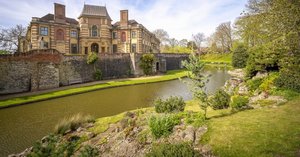 English Heritage |
Лондон | 1 | The Greenwich Pensioners Commemorating Trafalgar |
 Национальная галерея Ирландии |
Дублин | 1 | Greenwich Pensioners |
 Guildhall Art Gallery |
Лондон | 1 | The Card Players |
 The National Trust For Scotland |
Терриф | 1 | The Trial of Charles I (1600–1649) |
Долгий творческий путь в 19 лет, с 1817 по 1835: самые известные оригинальные работы John Burnet, представленные по годам.
Выберите год, чтобы увидеть оригиналы.

The Cows Drinking painting by John Burnet is a beautiful depiction of rural life, showcasing the artist's skill in capturing the serene atmosphere of the countryside. Created in 1817, this oil on canvas piece measures 39 x 57 cm and is currently housed at the Victoria and Albert Museum in the United Kingdom. A Glimpse into Rural Life The painting features three cows drinking from a stream or river, with…
Больше от 1832
 #2 Thomas Mathews, a Greenwich Pensioner, c.1832
 #3 Portrait of a Greenwich Pensioner
 #5 Joseph Brown, a Greenwich Pensioner,
 #6 Henry Harry Williams, a Greenwich Pensioner
 #8 Henry Harry Williams, a Greenwich Pensioner
 #9 Thomas Allen (1771–1838), a Greenwich Pensioner
 #10 Handyson, a Greenwich Pensioner (b.1757)
#11 'Commodore' Samuel Wilkes, a Greenwich Pensioner
#14 Joseph Miller, a Greenwich Pensioner
#16 John Wilkinson, a Greenwich Pensioner
'Handyson, a Greenwich Pensioner (b. 1757)' (1832), National Maritime Museum, Лондон. Далее следуют Thomas Mathews, a Greenwich Pensioner, c.1832 (1832) и Portrait of a Greenwich Pensioner (1832).
48 лет: 'Handyson, a Greenwich Pensioner (b. 1757)' датируется 1832 годом, а John Burnet родился в 1784.
'Handyson, a Greenwich Pensioner (b. 1757)', Thomas Mathews, a Greenwich Pensioner, c.1832, Portrait of a Greenwich Pensioner, An Oyster Cellar in Leith, Joseph Brown, a Greenwich Pensioner,, Henry Harry Williams, a Greenwich Pensioner, The Greenwich Pensioners Commemorating Trafalgar, Henry Harry Williams, a Greenwich Pensioner, Thomas Allen (1771–1838), a Greenwich Pensioner и Handyson, a Greenwich Pensioner (b.1757). В рейтинге выше указаны год создания и музей для каждой работы.
В нашем каталоге представлено 25 работ John Burnet, созданных в период с 1817 по 1835.
В основном в National Maritime Museum (Лондон), Национальная галерея Шотландии (Эдинбург) и English Heritage (Лондон). В таблице выше перечислены все музеи.
В 1832: 11 из 20 работ на этой странице были созданы в этот период, 'Handyson, a Greenwich Pensioner (b. 1757)' из них.
На этой странице самая ранняя работа датирована Cows Drinking (1817), а самая поздняя — The Greenwich Pensioners Commemorating Trafalgar (1835).
Portrait (2), Elderly man (2) и Victorian era (2) в 20 работах на этой странице.
'Handyson, a Greenwich Pensioner (b. 1757)', Thomas Mathews, a Greenwich Pensioner, c.1832 и Portrait of a Greenwich Pensioner: в коллекции National Maritime Museum, Лондон находится 6 работ со страницы.
The story of John Burnet is one of remarkable versatility, a narrative that weaves together the structural precision of architecture with the soulful intimacy of portraiture. Born in 1784 in Fisherrow, Edinburgh, Burnet was a man shaped by the disciplined aesthetics of his era. Raised in a household where classical principles were paramount—his father, George Burnet, served as the Surveyor-General of Excise—the young artist was immersed in an environment that valued both order and grandeur. This early exposure to neoclassical ideals provided the foundation for a career that would eventually bridge the gap between the decorative arts of the nineteenth century and the monumental architectural shifts of the Victorian age.
In 1806, driven by a thirst for broader horizons, Burnet relocated to London, a move that would ignite his development as a painter. It was here, amidst the vibrant artistic pulse of the British capital, that he established himself as a portraitist of significant merit. Alongside contemporaries like John Frederick Lewis, Burnet honed a meticulous technique characterized by an extraordinary attention to detail and a profound respect for his subjects. His work during this period often focused on the human condition, particularly through his evocative depictions of the Greenwich Pensioners. These portraits, such as those of Joseph Miller and John Wilkinson, are far more than mere likenesses; they are poignant windows into the lives of the lower classes during the Napoleonic era, rendered with a realism that captures both the dignity of the individual and the weight of their history.
Burnet’s prowess as a painter lay in his ability to manipulate light and shadow to evoke deep emotional resonance. In his oil on canvas works, he masterfully employed chiaroscuro, using dramatic contrasts to create a sense of volume, texture, and atmosphere. This technique allowed him to breathe life into the weathered faces of his subjects, making the wrinkles of age and the folds of worn fabric feel tangibly present to the viewer. His brushwork, while grounded in a disciplined realism, often possessed an impressionistic quality that lent a certain softness and movement to his landscapes and portraits alike.
The significance of his painted works extends beyond their aesthetic beauty; they serve as vital historical documents. Through his eyes, we witness the quiet struggles and the stoic resilience of 19th-century British life. His ability to find grandeur in the ordinary—to elevate a pensioner or a simple landscape into a subject of high art—marked him as a painter of deep empathy. This sensitivity to character and environment ensured that his artistic output remained deeply connected to the social fabric of his time, even as he embraced the more formal academic styles prevalent in London's art circles.
While his early fame was rooted in the delicate strokes of a paintbrush, Burnet’s later life saw him become a cornerstone of Scottish architectural history. The transition from the canvas to the construction site was not a departure from art, but rather an expansion of it. As part of the influential firm Burnet & Son, he contributed to a stylistic revolution in Glasgow. This era saw the emergence of what would be known as the "Burnet Baroque"—a bold, expressive architectural language characterized by monumental proportions and intricate ornamentation.
This architectural evolution was marked by several key characteristics:
Ultimately, John Burnet’s life represents a rare synthesis of the fine and applied arts. Whether he was capturing the fleeting expression of a pensioner on canvas or designing the enduring stone facades of a growing metropolis, his work remained anchored in a profound respect for structure, detail, and the human experience. His legacy continues to resonate through the historic streets of Glasgow and within the quiet, evocative halls of museums that house his intimate portraits, standing as a testament to a life dedicated to the pursuit of beauty in all its forms.