Портрет Jean Leclerc

12 самых известных картин Jean Leclerc, каждая из которых уникальна

Обновлено Ноябрь 2026 · рейтинг на основе нашего показателя популярности (количество поисковых запросов, посещений и заказов для каждой работы) · 12 работ Jean Leclerc в нашем каталоге

Вкратце

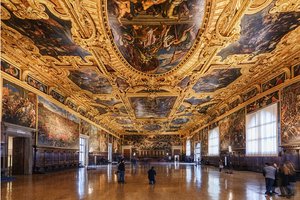
Doge Enrico Dandolo Recruiting for the Crusade (1621) — это самая популярная картина Jean Leclerc; оригинал находится в Дворец Дожей, Венеция. Затем взгляд переходит на The Resurrection of Lazarus (1622) и Saying Grace (1630). Из 12 работ Jean Leclerc в нашем каталоге эти 12 являются самыми известными: каждая из них — уникальный оригинал с указанием года создания, музея и причины ее бессмертия.

1587 – 1633, Nancy Больше всего работ: Дворец Дожей

Топ-10 картин Jean Leclerc глазами галереи

1
Doge Enrico Dandolo Recruiting for the Crusade (1621) работы Jean Leclerc

Doge Enrico Dandolo Recruiting for the Crusade

1621 · Oil · Дворец Дожей, Венеция

The scene unfolds within the grand, solemn atmosphere of the Basilica of St Mark, where the air feels heavy with the weight of impending conflict. This work, titled Doge Enrico Dandolo Recruiting for the Crusade, captures a moment of profound transition and duty. The artist Jean Leclerc brings this historical encounter to life, translating a vision into a tangible reality of color and form. Every figure in the room seems…

2
The Resurrection of Lazarus (1622) работы Jean Leclerc

The Resurrection of Lazarus

1622 · Oil On Canvas

The air in the tomb feels heavy, thick with the scent of damp earth and the stillness of the grave. A single, sharp light cuts through the gloom from the upper left, striking the pale, sickly skin of Lazarus. He emerges from the darkness, a figure wrapped in the stark white of his burial shroud. His limbs move against the weight of death, caught in a moment of sudden, jarring…

3
Saying Grace (1630) работы Jean Leclerc

Saying Grace

1630 · Oil · Wadsworth Atheneum, Хартфорд

A quiet, triangular composition centers on a round white table, anchoring a scene of domestic piety. Three figures—a woman, an older man, and a young child—are gathered in a moment of prayer before a meal. The arrangement draws the eye inward, focusing on the shared spiritual intent of the group. A single candle placed upon the table acts as the primary light source, casting deep shadows and illuminating the faces…

4
The concert работы Jean Leclerc

The concert

The scene unfolds within the quiet intimacy of The concert, a work that brings us into the private world of Jean Leclerc. This painting captures a fleeting moment of human connection, classified as genre art, where the focus rests entirely on the lived experience of its subjects. We find ourselves watching a gathering that feels both immediate and hushed, as if we have just stepped into the room where this…

Знаменитые картины Jean Leclerc, с 11 по 12

Сюжеты, которые вдохновляли Jean Leclerc

Четыре темы, которые чаще всего встречаются в этих оригиналах, каждая из которых представлена своим лучшим образцом.

Музеи, в которых хранятся оригиналы работ Jean Leclerc

3 музеев, в которых находится большинство картин со страницы.

Музей Город Работы Jean Leclerc Картины из этого списка
Дворец Дожей, ВенецияДворец Дожей Венеция 1 Doge Enrico Dandolo Recruiting for the Crusade
Wadsworth Atheneum, ХартфордWadsworth Atheneum Хартфорд 1 Saying Grace
Баварские государственные живописные коллекции, МюнхенБаварские государственные живописные коллекции Мюнхен 1 The concert

Jean Leclerc сквозь года: уникальные оригиналы каждой работы

Представленные здесь оригинальные работы Jean Leclerc, датированные примерно десятилетним периодом с 1621 по 1630, позволяют проследить эволюцию стиля год за годом.

Работы по годам

Выберите год, чтобы увидеть оригиналы.

Картины Jean Leclerc: вопросы к галерее

Какая работа Jean Leclerc является самой известной?Узнать ответ

Doge Enrico Dandolo Recruiting for the Crusade (1621), Дворец Дожей, Венеция. Далее следуют The Resurrection of Lazarus (1622) и Saying Grace (1630).

В каком возрасте Jean Leclerc создал(а) Doge Enrico Dandolo Recruiting for the Crusade?Узнать ответ

34 лет: Doge Enrico Dandolo Recruiting for the Crusade датируется 1621 годом, а Jean Leclerc родился в 1587.

Какие десять картин Jean Leclerc являются самыми известными?Узнать ответ

Doge Enrico Dandolo Recruiting for the Crusade, The Resurrection of Lazarus, Saying Grace, The concert, Doge Enrico Dandolo and the captains of the Crusade swearing their oath in Saint Mark's Basilica in Venice., Doge Enrico Dandolo and the captains of the Crusade swearing their oath in Saint Mark's Basilica in Venice.2, The locksmith, Detail of the tapestry, Virgin mary и Brussels tapestry in wool and silk. В рейтинге выше указаны год создания и музей для каждой работы.

Сколько известно работ Jean Leclerc?Узнать ответ

В нашем каталоге представлено 12 работ Jean Leclerc, созданных в период с 1621 по 1630.

Где можно увидеть подлинники, созданные Jean Leclerc?Узнать ответ

В основном в Дворец Дожей (Венеция), Wadsworth Atheneum (Хартфорд) и Баварские государственные живописные коллекции (Мюнхен). В таблице выше перечислены все музеи.

Какая из знаменитых картин Jean Leclerc была написана раньше, а какая — позже?Узнать ответ

На этой странице самая ранняя работа датирована Doge Enrico Dandolo Recruiting for the Crusade (1621), а самая поздняя — Saying Grace (1630).

Какие сюжеты предпочитал Jean Leclerc?Узнать ответ

Saints (3), People (2) и Table (2) в 12 работах на этой странице.

Какими материалами чаще всего пользовался Jean Leclerc?Узнать ответ

Oil, для 2 из 12 работ на этой странице.

Jean Leclerc: портрет художника

A Life Dedicated to Royal Vision: Jean Leclerc (1586–1633)

Jean Leclerc, a name perhaps less immediately recognizable than some of his contemporaries, nevertheless occupies a significant position within the tapestry of 17th-century French painting. Born in France around 1586 and passing away in 1633, Leclerc’s relatively short life was devoted to capturing the grandeur of the aristocracy and exploring the burgeoning interest in classical mythology—themes that resonated deeply with the evolving tastes of the French court. While biographical details remain somewhat sparse, the surviving body of his work speaks volumes about a skilled artist steeped in the traditions of his time yet possessing a distinct stylistic voice. Leclerc’s career unfolded during a period of artistic transition, bridging the late Mannerism of the Fontainebleau school with the emerging Classicism championed by figures like Nicolas Poussin, an influence clearly discernible in his compositions and approach to form.

Early Training and Artistic Development

The specifics of Leclerc's early training are not fully documented; however, it is reasonable to assume he received instruction within a Parisian workshop, likely one specializing in portraiture—a genre that would become central to his practice. The artistic climate of Paris at the turn of the 17th century was vibrant and competitive, with numerous ateliers catering to the demands of a wealthy clientele. Leclerc’s early works demonstrate a proficiency in rendering likenesses with meticulous detail, characteristic of the prevailing portrait traditions. However, even in these initial pieces, hints of a more ambitious artistic sensibility emerge—a concern for elegant composition and a subtle exploration of psychological depth beyond mere physical representation. He quickly established himself as a painter capable of capturing not just appearance but also status and personality, qualities highly valued by his patrons.

Royal Commissions and the Embrace of Mythological Subjects

Leclerc’s fortunes rose with increasing royal commissions. His talent for portraiture brought him to the attention of influential figures within the court, leading to opportunities to depict members of the nobility and even the king himself. These portraits were not simply exercises in technical skill; they served as powerful statements of social standing and political allegiance. Beyond his success as a portraitist, Leclerc also ventured into mythological painting—a genre that allowed him to showcase his mastery of anatomy, composition, and narrative storytelling. His depictions of scenes from classical literature and mythology reveal a deep engagement with the humanist ideals prevalent during the Renaissance and Baroque periods. These works were not merely decorative; they reflected an intellectual curiosity and a desire to emulate the artistic achievements of antiquity.

Influences and Artistic Style

The influence of Nicolas Poussin is particularly evident in Leclerc’s work, especially in his later compositions. Like Poussin, Leclerc favored clarity of form, balanced composition, and a restrained emotional palette. However, while Poussin often emphasized intellectual rigor and moral seriousness, Leclerc's style retained a certain degree of elegance and decorative flair—a legacy of his earlier training as a portraitist. His paintings are characterized by their harmonious color schemes, graceful figures, and meticulous attention to detail. He skillfully blended the realism of portraiture with the idealism of classical mythology, creating works that were both visually appealing and intellectually stimulating. The use of vibrant colors in tapestries like *Brussels tapestry in wool and silk* demonstrates a keen understanding of material properties and an ability to create rich textures and luminous effects.

Legacy and Historical Significance

Although Leclerc’s name may not be as widely celebrated as some of his more famous contemporaries, his contribution to French art is nonetheless significant. He played a crucial role in the transition from late Mannerism to Classicism, bridging the gap between two distinct artistic styles. His portraits provide valuable insights into the lives and personalities of the French aristocracy during the 17th century, while his mythological paintings reflect the intellectual currents of his time. Leclerc’s work embodies the elegance, refinement, and ambition that characterized the French court under Louis XIII. He left behind a legacy of skilled craftsmanship, artistic innovation, and a dedication to capturing the beauty and grandeur of his world—a vision that continues to captivate audiences today.