Henrietta Rae: A Victorian Visionary – Bridging Classical Grace and Modern Advocacy
Henrietta Emma Ratcliffe Rae, a name often whispered with a mixture of respect and quiet admiration within the annals of late Victorian art, was far more than simply a painter. She represented a courageous challenge to societal expectations, a tenacious pursuit of artistic recognition in a world largely dominated by men, and ultimately, a profound contribution to the visual language of her era. Born in London on December 30th, 1859, into a family steeped in artistic heritage – her father, James Ward, a celebrated animal painter, and her mother hailing from a lineage of accomplished sculptors – Rae’s early life provided both an environment of creative stimulation and the subtle pressure to conform to traditional roles for women. Initially steered towards musical training as a more ‘practical’ path, she soon discovered that her true passion lay not in vocal performance, but in capturing the world through brushstrokes and color. This shift wasn't merely a change of course; it was an act of profound self-determination – a declaration that would shape her career trajectory and contribute to broader shifts within the artistic landscape.
Her formal artistic education began at Queen Square School of Art, later the Royal Female School of Art, where she encountered both opportunities and limitations. While providing foundational skills, the school’s rigid structure and lack of access to life drawing sessions – deemed unsuitable for female students – presented significant obstacles. Undeterred, Rae supplemented her schooling with independent study at the British Museum, meticulously sketching from antique sculptures, a practice that would profoundly influence her later work. This dedication culminated in her acceptance into Heatherley's School of Art in 1874, marking a pivotal moment as she became one of the school’s first female pupils – a testament to her unwavering determination. Crucially, it was her relentless pursuit of admission to the prestigious Royal Academy Schools that truly defined her ambition, an endeavor requiring multiple applications and facing considerable resistance before finally succeeding in 1877. This achievement wasn't simply gaining access to a renowned institution; it symbolized a victory against prevailing societal biases and a declaration of intent.
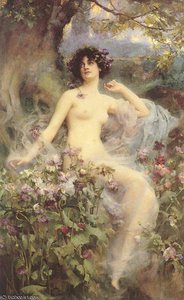
Rae’s artistic focus quickly gravitated towards classical, allegorical, and literary subjects – a deliberate choice that allowed her to explore themes of mythology, romance, and human emotion with both technical mastery and symbolic depth. Her canvases weren't mere reproductions; they were carefully constructed narratives, imbued with the spirit of antiquity and the eloquence of literature. Works like *Elaine Guarding the Shield of Lancelot* (1885), inspired by Tennyson’s poignant poem, capture a moment of quiet devotion and anticipation – a testament to her ability to translate complex emotions onto canvas. However, it is perhaps *The Lady with the Lamp* (1891) that remains her most enduring legacy. This iconic portrayal of Florence Nightingale at Scutari transcends its immediate subject matter, becoming a powerful symbol of compassion, dedication, and the vital role of women in nursing – an image that continues to resonate deeply today, embodying Victorian ideals of service and humanitarianism. The meticulous detail, the carefully rendered fabrics, and the poignant expression on Nightingale’s face all contribute to the painting's enduring power. Other notable works, such as *Eurydice Sinking Back to Hades* (1886), which garnered critical acclaim at international exhibitions in Paris and Chicago, and *Psyche at the Throne of Venus* (1894) – a monumental work featuring thirteen figures – demonstrate her mastery of composition, color, and narrative storytelling. Her style was demonstrably influenced by Alma-Tadema’s meticulous attention to detail and classical compositions, yet she infused her works with a unique sensibility that set them apart.
The path to artistic recognition for Henrietta Rae was not without its considerable challenges. The Victorian era presented significant hurdles for women artists – limited access to life drawing classes (often restricted or deemed unsuitable), pervasive societal biases, and the prevailing expectation that an artist’s primary role was decorative rather than substantive. Rae actively circumvented these restrictions through relentless dedication, seeking alternative opportunities for practice and persistently pursuing her artistic goals. Her consistent exhibition at the Royal Academy from 1881 until 1919 established her as a respected presence in the art world, while participation in exhibitions at the Grosvenor Gallery and international expositions broadened her reach and acclaim. A pivotal moment arrived in 1896 when she was elected an associate member of the Royal Academy – a remarkable achievement for a woman artist at that time, signifying a significant step forward in recognition within the established art community. Beyond this formal acknowledgement, Rae’s work consistently challenged conventional notions of femininity and artistic expression, prompting both admiration and controversy.
Furthermore, Henrietta Rae's life was marked by personal resilience and a commitment to social causes. Her marriage to Ernest Normand in 1884 – a union that further solidified her position within the art world – provided a supportive partnership, although it also presented its own complexities. She maintained her maiden name, a deliberate act of defiance against societal expectations regarding married women’s professional identities. Rae's dedication extended beyond her artistic pursuits; she was a vocal supporter of feminist causes, including women’s suffrage, actively organizing exhibitions showcasing the work of other female artists and advocating for greater opportunities within the profession. Her service on the Hanging Committee for a major public exhibition in Liverpool in 1893 further underscored her influence and expertise. Her legacy is not simply one of artistic skill; it's a testament to courage, determination, and a profound commitment to challenging the limitations imposed upon women artists during a transformative era.
Selected Works
- The Lady with the Lamp (1891)
- Elaine Guarding the Shield of Lancelot (1885)
- Eurydice Sinking Back to Hades (1886)
- Psyche at the Throne of Venus (1894)
- Sir Richard Whittington Dispensing His Charities (1900)
- Procris
- Mariana(c.1905)