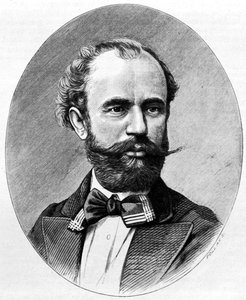
1


Обновлено Ноябрь 2026 · рейтинг на основе нашего показателя популярности (количество поисковых запросов, посещений и заказов для каждой работы) · 21 работ Geza Meszoly в нашем каталоге
Вкратце
По мнению экспертов галереи, самой известной картиной Geza Meszoly является Crossing at Szántód (1876), оригинал которой находится в Herman Ottó Museum, Miskolc. At the End of the Village (1879) и Lido (1883) завершают трио, которое узнает каждый. Из 21 работ Geza Meszoly в нашем каталоге ниже представлены 14 самых известных: каждая из них является оригиналом с указанием года создания, музея и уникальных особенностей.




Четыре темы, которые чаще всего встречаются в этих оригиналах, каждая из которых представлена своим лучшим образцом.
3 музеев, в которых находится большинство картин со страницы.
| Музей | Город | Работы Geza Meszoly | Картины из этого списка |
|---|---|---|---|
 Венгерская национальная галерея |
Будапешт | 3 | Lido, Farmstead, Bay of Lake Balaton with the Shores of Akarattya |
 Herman Ottó Museum |
Miskolc | 2 | Crossing at Szántód, Bath-house at lake Balaton |
| Ernest Zmeták Art Gallery | Нове-Замки | 1 | At the End of the Village |
Десятилетие, с 1876 по 1885, стало для Geza Meszoly целой эпохой: галерея проводит вас сквозь эти годы, шаг за шагом, от одного знаменитого оригинала к другому.
Выберите год, чтобы увидеть оригиналы.
Crossing at Szántód (1876), Herman Ottó Museum, Miskolc. Далее следуют At the End of the Village (1879) и Lido (1883).
32 лет: Crossing at Szántód датируется 1876 годом, а Geza Meszoly родился в 1844.
Crossing at Szántód, At the End of the Village, Lido, Farmstead, Bath-house at lake Balaton, Bay of Lake Balaton with the Shores of Akarattya, Portrait painter, A Barbary Or Atlas Lion, Painter и Self portrait. В рейтинге выше указаны год создания и музей для каждой работы.
В нашем каталоге представлено 21 работ Geza Meszoly, созданных в период с 1876 по 1885.
В основном в Венгерская национальная галерея (Будапешт), Herman Ottó Museum (Miskolc) и Ernest Zmeták Art Gallery (Нове-Замки). В таблице выше перечислены все музеи.
В 1879: 2 из 14 работ на этой странице были созданы в этот период, At the End of the Village из них.
На этой странице самая ранняя работа датирована Crossing at Szántód (1876), а самая поздняя — Bath-house at lake Balaton (1885).
Portraits (2), Portrait (2) и Beard (2) в 14 работах на этой странице.
Lido, Farmstead и Bay of Lake Balaton with the Shores of Akarattya: в коллекции Венгерская национальная галерея, Будапешт находится 3 работ со страницы.
Born amidst the rolling landscapes of Sárbogárd, Hungary, in 1844, Géza Mészöly emerged as a profound voice in nineteenth-century European art. His journey was one of transformation, moving from the rigid structures of legal ambition to the ethereal realms of light and atmosphere. While his early education at the Calvinist College in Debrecen provided him with a disciplined mind, it was his eventual departure for the prestigious academies of Vienna and Munich that truly ignited his creative spirit. Under the tutelage of masters like Robert Russ and Albert Zimmermann, Mészöly mastered the rigorous techniques of academic landscape painting, yet he would soon find that true artistry lay not in mere imitation of form, but in the capture of a fleeting, soulful essence.
The evolution of Mészöly’s style represents a beautiful departure from the structured traditions of his training. Upon returning to his beloved Hungary, the artist underwent a stylistic metamorphosis that would define his legacy. He moved away from the sharp, defined edges of academic realism toward a more poetic, impressionistic approach. His canvases began to breathe with a delicate, silvery light, often characterized by grayish tones and a fine, thin vapor that seemed to veil the Hungarian countryside. This mastery of atmosphere allowed him to transform ordinary vistas into dreamlike meditations on nature, where the boundaries between earth and sky dissolved into a soft, luminous haze.
Mészöly’s heart belonged to the rugged beauty of the Hungarian plains and the tranquil shores of Lake Balaton. He possessed a rare ability to find the extraordinary within the ordinary, turning his gaze toward the Tisza riverside and the reeds of Akaratty. His work was never merely about scenery; it was an intimate exploration of the human connection to the land. Through his brush, the lives of peasants and fishermen were elevated to the level of high art, depicted with a sense of idyllic peace and profound dignity. He captured the quiet rhythms of their existence—the stillness of a fisherman’s hut, the movement of shadows across a marsh—with an intimacy that resonated deeply with the burgeoning national identity of his era.
As his career progressed into the 1880s, Mészöly’s technique grew increasingly relaxed and expressive. His later works bear a striking resemblance to the atmospheric sensibilities of the French master Corot, as he abandoned meticulous detail in favor of conveying pure emotion and mood. This period marked his most significant achievement: the creation of a unique genre of Balaton life scenes that immortalized the ephemeral beauty of the region. His paintings became more than just records of geography; they were vessels for nostalgia and a celebration of the quiet, enduring spirit of the Hungarian landscape.
Though his life was tragically short, ending in 1887, the impact of Géza Mészöly remains etched in the history of Hungarian painting. He stands as a bridge between the disciplined academicism of the mid-nineteenth century and the more emotive, atmospheric movements that would follow. His ability to blend the technical precision learned in Munich and Vienna with a deeply personal, localized vision allowed him to create something entirely unique.
Today, Mészöly is remembered for several key contributions to the art world:
Through his eyes, we see a Hungary that is both grounded in its soil and elevated by its light—a world where every mist-covered reed and every quiet fisherman tells a story of timeless beauty.