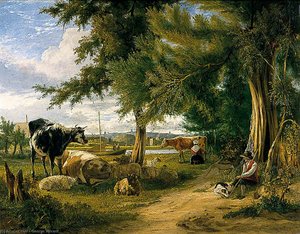
Портрет Джордж Винсент

46 самых известных картин Джордж Винсент: подборка галереи

Обновлено Ноябрь 2026 · рейтинг на основе нашего показателя популярности (количество поисковых запросов, посещений и заказов для каждой работы) · 46 работ Джордж Винсент в нашем каталоге

Вкратце

Из всех оригинальных работ, оставленных Джордж Винсент, самой известной является A View of Cheddar Gorge (1820) из коллекции Yale Center for British Art, Нью-Хейвен. Сразу за ними следуют A Harbor Scene in the Isle of Wight, Looking Towards the Needle (1824) и A View of Thames Street, Windsor (1828). В нашем каталоге представлено 46 работ Джордж Винсент; галерея сохранила 46 самых почитаемых в мире произведений, каждое из которых сопровождается датой создания, информацией о музее и своей историей.

1796 – 1832, Норидж Romanticism Больше всего работ: Yale Center for British Art

10 лучших картин Джордж Винсент: выбор галереи

Подборка Джордж Винсент продолжается, с 11 по 46

Знаменитые картины Джордж Винсент по периодам творчества

Сюжеты, которые вдохновляли Джордж Винсент

Четыре темы, которые чаще всего встречаются в этих оригиналах, каждая из которых представлена своим лучшим образцом.

Музеи, в которых хранятся оригиналы работ Джордж Винсент

5 музеев, в которых находится большинство картин со страницы.

Музей Город Работы Джордж Винсент Картины из этого списка
Yale Center for British Art, Нью-ХейвенYale Center for British Art Нью-Хейвен 3 A View of Cheddar Gorge, A Harbor Scene in the Isle of Wight, Looking Towards the Needle, A View of Thames Street, Windsor
Fitzwilliam MuseumFitzwilliam Museum 2 Loch etive, argyllshire, View In The Highlands
Felbrigg Hall, НориджFelbrigg Hall Норидж 1 River Scene with Boats
Бирмингемский музей и художественная галерея, БирмингемБирмингемский музей и художественная галерея Бирмингем 1 Landscape, Cattle Crossing a Stream
TyntesfieldTyntesfield 1 Fishing Boats in a Harbour

Джордж Винсент по годам: оригинальные работы, определяющие каждый период

Всего за одно десятилетие, с 1820 по 1828, этот период подарил миру все оригинальные работы Джордж Винсент, представленные в этой подборке: перед вами — по годам.

Работы по годам

Выберите год, чтобы увидеть оригиналы.

Вопросы коллекционеров о картинах Джордж Винсент

Какая работа Джордж Винсент наиболее известна?Узнать ответ

A View of Cheddar Gorge (1820), Yale Center for British Art, Нью-Хейвен. Далее следуют A Harbor Scene in the Isle of Wight, Looking Towards the Needle (1824) и A View of Thames Street, Windsor (1828).

Сколько лет было Джордж Винсент, когда была создана работа A View of Cheddar Gorge?Узнать ответ

24 лет: A View of Cheddar Gorge датируется 1820 годом, а Джордж Винсент родился в 1796.

Какие десять самых известных картин написал Джордж Винсент?Узнать ответ

A View of Cheddar Gorge, A Harbor Scene in the Isle of Wight, Looking Towards the Needle, A View of Thames Street, Windsor, A Harbour Scene in the Isle of Wight, Mousehole heath, norfolk, Loch etive, argyllshire, Lane scene, Castle ashby, northamptonshire, View near Norwich и View near Wroxham, Norfolk. В рейтинге выше указаны год создания и музей для каждой работы.

Сколько картин оставил(а) Джордж Винсент?Узнать ответ

В нашем каталоге представлено 46 работ Джордж Винсент, созданных в период с 1820 по 1828.

В каких музеях представлены шедевры Джордж Винсент?Узнать ответ

В основном в Yale Center for British Art (Нью-Хейвен), Fitzwilliam Museum и Felbrigg Hall (Норидж). В таблице выше перечислены все музеи.

Каковы первые и последние известные оригинальные работы Джордж Винсент?Узнать ответ

На этой странице самая ранняя работа датирована A View of Cheddar Gorge (1820), а самая поздняя — A View of Thames Street, Windsor (1828).

Какие сюжеты Джордж Винсент выбирал чаще всего?Узнать ответ

Rural landscape (9), Landscape (9) и Tranquility (5) в 46 работах на этой странице.

К какому художественному направлению относится Джордж Винсент?Узнать ответ

Romanticism и Dutch golden age, судя по оригиналам на этой странице.

Какие работы Джордж Винсент представлены в Yale Center for British Art?Узнать ответ

A View of Cheddar Gorge, A Harbor Scene in the Isle of Wight, Looking Towards the Needle и A View of Thames Street, Windsor: в коллекции Yale Center for British Art, Нью-Хейвен находится 3 работ со страницы.

Джордж Винсент: жизнь и творчество

A Norfolk Son: The Life and Art of George Vincent

George Vincent, born in Norwich in 1796, remains a compelling figure within the constellation of the Norwich School painters. His story is one interwoven with both artistic promise and personal tragedy, a narrative reflective of the challenges faced by many artists navigating the burgeoning art world of 19th-century England. The son of James Vincent, a weaver specializing in shawls, and Mary Freeman, young George experienced early loss with the passing of an older brother in infancy. This formative experience perhaps instilled within him a sensitivity that would later permeate his evocative landscapes. Educated at Norwich School, he quickly found himself immersed in a vibrant artistic milieu, forging close bonds with Frederick and John Berney Crome – sons of the pivotal John Crome, who would become Vincent’s mentor and profoundly shape his artistic trajectory. This apprenticeship was crucial; it wasn't merely technical instruction but an immersion into the very ethos of the Norwich School, alongside fellow pupils like James Stark. The influence of Dutch landscape masters, a hallmark of Crome’s own aesthetic, began to subtly infuse Vincent’s early work, hinting at the unique blend that would define his style. A brief sojourn to Paris in 1816 with John Berney Crome and Benjamin Steel broadened his horizons, exposing him to a wider European artistic context and further solidifying his appreciation for atmospheric perspective and nuanced detail. Vincent swiftly became recognized as one of the principal artists associated with the Norwich School, a group celebrated for its dedication to depicting the local landscapes of Norfolk with both realism and emotional depth. The school wasn't defined by a rigid stylistic uniformity but rather by a shared commitment to capturing the character of their surroundings – the rolling countryside, winding rivers, and dramatic coastal scen
  • Key Influences: John Crome, Dutch Landscape Painting
  • Major Themes: Norfolk Landscapes, Rural Life, Marine Scenes
  • Notable Exhibitions: Norwich Society of Artists, Royal Academy, British Institution
Vincent’s oeuvre largely consisted of these beloved Norfolk vistas, rural scenes brimming with everyday life, and evocative marine works. He possessed a keen observational eye, meticulously rendering the nuances of nature and human activity within it. His style was a fascinating synthesis: Romanticism's emotional resonance combined with the meticulous attention to detail inherited from those Dutch masters he so admired. Atmospheric perspectives, subtle color gradations, and an overall sense of tranquility characterize his paintings. He exhibited extensively throughout his career – at the Norwich Society of Artists (from 1811 until 1831), the Royal Academy, and the British Institution – steadily building a reputation for quality and sensitivity. His works weren’t grand historical narratives or allegorical statements; they were intimate portraits of a place he clearly loved, imbued with a quiet dignity and poetic sensibility.

London, Debt, and Disappearance

In 1818, Vincent relocated to London, initially enjoying patronage from wealthy clients. However, this period marked the beginning of a descent into personal and financial hardship. A marriage in 1821, followed by an imprudent purchase of a house, led to mounting debts and ultimately, his incarceration in the Fleet Prison in 1824. This was a devastating blow, yet even within the confines of prison, Vincent refused to abandon his art. He continued to paint, selling works to raise funds and maintain some semblance of independence. His resilience during this period is remarkable, demonstrating an unwavering dedication to his craft despite incredibly challenging circumstances. Upon his release in 1827, he resumed exhibiting with the Norwich Society of Artists, but his output was diminished, a shadow of its former vibrancy. The final years of Vincent’s life remain shrouded in mystery. Little is known about this period; rumors circulated regarding alcoholism and a personal “folly” that further strained relationships and exacerbated his financial woes. He seemingly disappeared from view around 1832, with speculation suggesting he may have died in Bath, though the exact circumstances surrounding his death remain uncertain.

A Lasting Legacy: Vincent’s Place in British Art

Despite a life cut short by hardship, George Vincent left an indelible mark on the landscape of British art. His contribution to defining the aesthetic of the Norwich School was significant, helping to establish its reputation for authentic and emotionally resonant depictions of Norfolk. He wasn't merely replicating scenery; he was conveying a feeling, a sense of place, a connection to the land that resonated with contemporary audiences and continues to captivate viewers today. His incorporation of Dutch landscape painting techniques brought a unique perspective to British art, emphasizing realism and atmospheric detail in a way that distinguished him from many of his contemporaries. Vincent’s story serves as a poignant reminder of the precarious existence faced by artists during this era – the constant struggle for patronage, the vulnerability to financial ruin, and the often-tragic consequences of personal demons. He remains an important figure not only for understanding the Norwich School but also for gaining insight into the broader social and artistic context of 19th-century England. His paintings are a testament to his talent, resilience, and enduring love for the landscapes that inspired him – a legacy that continues to enrich our appreciation of British art history.