Elizabeth Forbes (1859–1912): The Queen of Newlyn and the Poetic Landscape
Elizabeth Adela Armstrong Forbes (née Armstrong; 29 December 1859 – 16 March 1912) was a Canadian painter who achieved considerable renown in Britain during the Edwardian era. Her distinctive style—characterized by luminous watercolors, meticulous detail, and an unwavering focus on capturing the essence of rural life—established her as one of the foremost figures within the Newlyn Art Colony, earning her the moniker “the Queen of Newlyn.” Forbes’ artistic journey was marked by formative experiences in Canada and Europe, culminating in a profound engagement with Impressionism and Symbolism.
- Early Life and Education: Born in Kingston, Ontario, Elizabeth Armstrong received a privileged education thanks to her father's position within the Canadian government. Her upbringing instilled in her a deep appreciation for observation and artistic discipline.
- Studies Abroad: Following her father’s death, Forbes pursued her artistic ambitions abroad, initially studying at South Kensington Art School (later Royal College of Art) in London before immersing herself in the vibrant artistic milieu of Munich with J. Frank Currier and Frank Duveneck.
- The Influence of Whistler and Sickert: Her artistic development was significantly shaped by the mentorships of James Abbott McNeill Whistler and Walter Sickert, whose stylistic approaches—particularly Whistler’s emphasis on tonal harmony and Sickert’s exploration of psychological realism—became integral to Forbes' oeuvre.
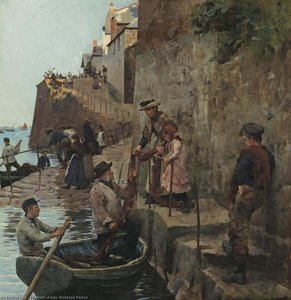
Forbes’ artistic vision found its expression primarily in watercolor and pastel landscapes depicting Cornish coastal scenes and interiors. She meticulously rendered textures and colors, striving to convey not merely visual appearances but also emotional resonance. Her paintings often depicted children engaged in everyday activities—fishing expeditions, berry picking—capturing the spirit of rural life with sensitivity and precision.
- Newlyn School: Forbes’ relocation to Newlyn in 1885 marked a pivotal moment in her artistic career. She joined forces with Stanhope Forbes to establish the Newlyn Art School, fostering a collaborative environment that nurtured emerging talent and championed the principles of plein air painting—a technique rooted in direct observation of nature.
- Notable Works: Among Forbes’ most celebrated paintings are *School Is Out*, which embodies the idyllic charm of Cornish childhood; *Blackberry Gathering*, a masterful depiction of rural labor illuminated by dappled sunlight; and *Volendam, Holland,* showcasing her ability to capture atmospheric conditions with remarkable accuracy.
Forbes' artistic legacy extends beyond her individual paintings. She played an instrumental role in shaping the Newlyn Art Colony’s aesthetic sensibilities—promoting a style characterized by tonal harmony, psychological depth, and a profound connection to the natural world. Her commitment to artistic education solidified her reputation as a visionary teacher and contributed significantly to the advancement of British painting during the Edwardian period. Elizabeth Forbes remains an enduring symbol of female creativity and artistic accomplishment within Victorian and Modern Art.
- Recognition: Forbes garnered international acclaim for her work, securing medals at the Paris International Exhibition (1891) and the World’s Columbian Exposition in Chicago (1893).
- Collections: Her paintings are housed in prominent museums across Canada, the United States, and England—a testament to their enduring artistic merit and historical significance.
Forbes' work exemplifies Victorian genre painting—a genre that sought to portray scenes of everyday life with unflinching realism and psychological insight. Simultaneously, she embraced Symbolism’s expressive language, reflecting the broader cultural currents of her time. Her unwavering dedication to capturing the beauty and complexity of the human experience cemented her place as one of Britain's most influential artists.