Портрет Эдвард Данн

52 самых известных картин Эдвард Данн: подборка галереи

Обновлено Ноябрь 2026 · рейтинг на основе нашего показателя популярности (количество поисковых запросов, посещений и заказов для каждой работы) · 52 работ Эдвард Данн в нашем каталоге

Вкратце

Из всех оригинальных работ, оставленных Эдвард Данн, самой известной является Ludlow Castle, Shropshire. Сразу за ними следуют Destroying Chinese War Junks и 'Nemesis', East India Iron Armed Steamship. В нашем каталоге представлено 52 работ Эдвард Данн; галерея сохранила 52 самых почитаемых в мире произведений, каждое из которых сопровождается датой создания, информацией о музее и своей историей.

1803 – 1882, Лондон Больше всего работ: Yale Center for British Art

10 лучших картин Эдвард Данн: выбор галереи

1
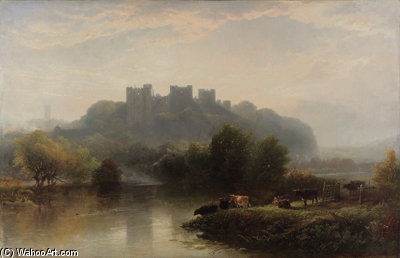
Ludlow Castle, Shropshire работы Эдвард Данн

Ludlow Castle, Shropshire

Watercolor

The scene unfolds in the quietude of the English countryside, presenting Ludlow Castle, Shropshire. This work by the artist Edward Duncan captures a moment of stillness where the weight of stone meets the softness of the natural world. The castle sits in the background, its large building rising against the skyline to command the view. It is a place where history feels present in the very air, watching over the…

2
Destroying Chinese War Junks работы Эдвард Данн

Destroying Chinese War Junks

Watercolor

In this work, titled Destroying Chinese War Junks, the artist Edward Duncan captures a specific moment of naval engagement. The scene focuses on the destruction of the Chinese war junk 'Fu Kee' by the HMS 'Sparrow Hawk'. It is a precise rendering of a maritime conflict that took place about 1864. Through his brush, Edward Duncan documents the collision of different naval traditions on the open water.

4
Spithead (1855) работы Эдвард Данн

Spithead

In this maritime watercolor, Edward Duncan captures a quiet moment at Spithead, a coastal area in Hampshire, England. Created about 1855, the work presents a serene view of the Solent's waters. The scene focuses on the interaction between the land and the sea, where several sailing vessels of varying sizes sit anchored in the shallow, calm waters near a sandy shoreline. A large wooden vessel is positioned near the coast,…

5
A Shipwreck (1865) работы Эдвард Данн

A Shipwreck

1865 · Watercolor

Edward Duncan created A Shipwreck about 1865, a work centered on the violent intersection of maritime disaster and the natural world. The subject matter focuses on a vessel caught in a tumultuous sea, a theme that highlights the inherent perils of life upon the waves. Through this depiction, the artist explores the immense power of nature and the resulting isolation of those caught in its grip. The scene captures a…

6
Sheep Feeding In A Winter Landscape работы Эдвард Данн

Sheep Feeding In A Winter Landscape

Watercolor

In Sheep Feeding In A Winter Landscape, the quietude of a frozen rural scene unfolds before us. Edward Duncan captures a moment of stillness where a flock of sheep rests upon wooden planks, their forms set against a cold, pale expanse. A man and a woman linger in the background, their presence adding a layer of human observation to the pastoral rhythm of the landscape. The scene feels suspended in…

7
The Compliments Of The Season работы Эдвард Данн

The Compliments Of The Season

Engraving

In The Compliments Of The Season, we encounter a scene of festive abundance and domestic movement. The work captures a crowded, bustling interior during a holiday gathering, where figures navigate a space filled with the energy of arrival and celebration. There is a palpable sense of merriment and slight chaos as guests enter with gifts, accompanied by dogs, creating a narrative of social connection within a detailed architectural setting. The…

8
Culver Cliff, Isle Of Wight, After The Wreck работы Эдвард Данн

Culver Cliff, Isle Of Wight, After The Wreck

Watercolor

In "Culver Cliff, Isle Of Wight, After The Wreck" by Edward Duncan, a dramatic coastal scene unfolds where the raw power of the sea meets the unyielding edge of the land. The aftermath of a shipwreck dominates the shoreline, leaving a broken vessel partially submerged in the churning water. This wreckage lies as a heavy reminder of vulnerability and destruction, a stark contrast to the environment surrounding it. On the…

9
Regatta off lowestoft работы Эдвард Данн

Regatta off lowestoft

Oil On Canvas

Regatta off lowestoft is an oil painting created by the artist Edward Duncan. This work depicts a maritime gathering near a coastline, focusing on the interaction between a crowd on a pier and the various vessels situated within a harbor. The scene captures a specific moment of social and maritime activity typical of the mid-19th century.

10
The Opening Of St. Katharine Docks работы Эдвард Данн

The Opening Of St. Katharine Docks

Watercolor

In The Opening Of St. Katharine Docks, Edward Duncan captures a bustling 19th-century harbor. The scene centers on a grand sailing vessel, its rigging detailed against the sky. This ship occupies the center foreground, a heavy presence amidst the movement of the water. Around the hull, a large gathering of people has assembled to witness the maritime activity. They form a crowd of spectators, their figures small against the scale…

Подборка Эдвард Данн продолжается, с 11 по 52

Сюжеты, которые вдохновляли Эдвард Данн

Четыре темы, которые чаще всего встречаются в этих оригиналах, каждая из которых представлена своим лучшим образцом.

Музеи, в которых хранятся оригиналы работ Эдвард Данн

3 музеев, в которых находится большинство картин со страницы.

Музей Город Работы Эдвард Данн Картины из этого списка
Yale Center for British Art, Нью-ХейвенYale Center for British Art Нью-Хейвен 2 Partridge Shooting, Pheasant Shooting
Бирмингемский музей и художественная галерея, БирмингемБирмингемский музей и художественная галерея Бирмингем 1 Spithead
Pinacoteca do Estado de São Paulo, Сан-ПаулуPinacoteca do Estado de São Paulo Сан-Паулу 1 The Opium Ships At Lintin In China

Эдвард Данн по годам: оригинальные работы, определяющие каждый период

Всего за одно десятилетие, с 1855 по 1865, этот период подарил миру все оригинальные работы Эдвард Данн, представленные в этой подборке: перед вами — по годам.

Работы по годам

Выберите год, чтобы увидеть оригиналы.

Вопросы коллекционеров о картинах Эдвард Данн

Какая работа Эдвард Данн наиболее известна?Узнать ответ

Ludlow Castle, Shropshire. Далее следуют Destroying Chinese War Junks и 'Nemesis', East India Iron Armed Steamship.

Какие десять самых известных картин написал Эдвард Данн?Узнать ответ

Ludlow Castle, Shropshire, Destroying Chinese War Junks, 'Nemesis', East India Iron Armed Steamship, Spithead, A Shipwreck, Sheep Feeding In A Winter Landscape, The Compliments Of The Season, Culver Cliff, Isle Of Wight, After The Wreck, Regatta off lowestoft и The Opening Of St. Katharine Docks. В рейтинге выше указаны год создания и музей для каждой работы.

Сколько картин оставил(а) Эдвард Данн?Узнать ответ

В нашем каталоге представлено 52 работ Эдвард Данн, созданных в период с 1855 по 1865.

В каких музеях представлены шедевры Эдвард Данн?Узнать ответ

В основном в Yale Center for British Art (Нью-Хейвен), Бирмингемский музей и художественная галерея (Бирмингем) и Pinacoteca do Estado de São Paulo (Сан-Паулу). В таблице выше перечислены все музеи.

Каковы первые и последние известные оригинальные работы Эдвард Данн?Узнать ответ

На этой странице самая ранняя работа датирована Spithead (1855), а самая поздняя — A Shipwreck (1865).

Какие сюжеты Эдвард Данн выбирал чаще всего?Узнать ответ

Water (6), Beach (6) и Sea (5) в 52 работах на этой странице.

Какую технику чаще всего использовал(а) Эдвард Данн?Узнать ответ

Watercolor, для 10 из 52 работ на этой странице.

Какие работы Эдвард Данн представлены в Yale Center for British Art?Узнать ответ

Partridge Shooting и Pheasant Shooting: в коллекции Yale Center for British Art, Нью-Хейвен находится 2 работ со страницы.

Эдвард Данн: жизнь и творчество

A Life Immersed in Watercolour: The World of Edward Duncan

Edward Duncan, born in London in 1803, wasn’t merely a painter of maritime scenes and coastal views; he was a chronicler of a changing world, a meticulous observer who translated the dynamism of the sea and the quiet beauty of the English countryside onto paper with breathtaking precision. His life unfolded during an era of immense naval power, burgeoning industrialization, and a growing Victorian fascination with landscape, all of which profoundly shaped his artistic vision. Duncan’s journey began not with a brush in hand, but as an apprentice to Robert Havell, a prominent aquatint engraver renowned for his work on Audubon's monumental “Birds of America.” This formative experience instilled within him a deep appreciation for detail and the intricacies of reproduction, skills that would later become hallmarks of his own artistic style. Studying alongside William Havell, Robert’s brother and a skilled watercolourist, further nurtured Duncan’s burgeoning talent, laying the groundwork for a career dedicated to capturing light, atmosphere, and the subtle nuances of the natural world.

From Engraving to Watercolour: A Maritime Awakening

Initially establishing his own engraving studio focused on print works for Fores of Piccadilly, Duncan's path took a pivotal turn around 1826 when he began collaborating with William John Huggins, the official artist to both King William IV and King George IV. This partnership involved engraving maritime scenes based on Huggins’ paintings – a commission that ignited within Duncan an enduring passion for marine subjects. The rhythmic sway of ships, the glint of sunlight on water, the raw power of the ocean—these elements captivated him, becoming central themes in his artistic exploration. He wasn't simply replicating images; he was interpreting them, imbuing them with his own unique sensibility and attention to detail. This connection deepened both personally and professionally when he married Huggins’ daughter, Berthia, in 1835, solidifying his place within a vibrant circle of artists and further fueling his dedication to capturing the essence of maritime life. Duncan's early works demonstrate this influence, showcasing a technical mastery honed through engraving alongside an emerging artistic voice eager to explore the expressive possibilities of watercolour. He wasn’t interested in mere representation; he sought to convey emotion—the exhilaration of a storm at sea, the serenity of a calm harbor—transforming observation into artful expression.

A Master of Technique: Precision and Atmosphere

Duncan's artistic signature lay in his painstaking attention to detail and his masterful use of transparent colours. Unlike many of his contemporaries who embraced the bolder effects of bodycolour, Duncan remained steadfastly committed to the delicate nuances achievable through layering washes of watercolour. This technique allowed him to create works that were both technically defined and remarkably fluid, capturing the shimmering surface of water and the atmospheric haze of coastal landscapes with unparalleled realism. His influences – Robert Havell’s meticulous engraving style and William John Huggins' dramatic compositions—are evident in his oeuvre. He meticulously studied the interplay of light and shadow, painstakingly blending pigments to achieve subtle gradations of tone that conveyed depth and luminosity. This dedication to craft resulted in paintings characterized by exceptional clarity and precision, yet simultaneously imbued with a palpable sense of atmosphere.

Notable Achievements & Artistic Legacy

Duncan’s prolific output—nearly 2,000 sketches and paintings were listed in sales following his death in 1882—testifies to his unwavering commitment to artistic excellence and cemented his position as one of the foremost watercolourists of his time. He exhibited extensively at the Royal Academy and the Society of British Artists, showcasing over 40 canvases and numerous watercolors that captivated audiences with their evocative depictions of coastal vistas and maritime scenes. Among his most celebrated works are “The Shipwreck” (1859), depicting a dramatic naval disaster with breathtaking accuracy; "The Life-Boat" (1860), capturing the heroic efforts of rescuers amidst perilous conditions; and “Spithead from the Isle of Wight” (1857), presenting a panoramic view of HMS Spithead, conveying both grandeur and immediacy. His landscapes, often populated with animals and farms—particularly scenes from Holland and Italy—demonstrate his versatility as an artist and underscore his profound understanding of the natural world. Edward Duncan’s legacy continues to inspire artists today, serving as a benchmark for technical skill and artistic sensitivity—a testament to a lifetime devoted to capturing beauty and conveying emotion through the medium of watercolour.