Портрет Cornelis Lelienbergh

29 самых известных картин Cornelis Lelienbergh, каждая из которых уникальна

Обновлено Ноябрь 2026 · рейтинг на основе нашего показателя популярности (количество поисковых запросов, посещений и заказов для каждой работы) · 31 работ Cornelis Lelienbergh в нашем каталоге

Вкратце

Still Life with Game Birds (1670) — это самая популярная картина Cornelis Lelienbergh; оригинал находится в The Holburne Museum, Бат. Затем взгляд переходит на Still life with hare and black rooster (1659) и Dead Game Birds (1653). Из 31 работ Cornelis Lelienbergh в нашем каталоге эти 29 являются самыми известными: каждая из них — уникальный оригинал с указанием года создания, музея и причины ее бессмертия.

1626 – 1676, The Hague Больше всего работ: Рейксмюзеум

Топ-10 картин Cornelis Lelienbergh глазами галереи

1
Still Life with Game Birds (1670) работы Cornelis Lelienbergh

Still Life with Game Birds

1670 · Oil On Canvas · The Holburne Museum, Бат

Still Life with Game Birds is an oil on canvas work by Cornelis Lelienbergh. Executed in 1670, the painting belongs to the Dutch Golden Age tradition of specialized still life. The artist, Cornelis Lelienbergh, was a prominent figure in the 17th-century Netherlands, known for his meticulous attention to the textures of feathers and organic matter.

2
Still life with hare and black rooster (1659) работы Cornelis Lelienbergh

Still life with hare and black rooster

1659 · Oil On Canvas · Рейксмюзеум, Амстердам

A vertical arrangement defines this 1659 oil on canvas, where the remnants of a hunt are positioned against a dark, indistinct background. A wooden stick leans diagonally against a rustic table, supporting a dead hare that hangs by its limbs. On the table surface, a dark, deceased rooster lies alongside various vegetables. The lighting originates from a single side source, casting deep shadows and creating a sense of three-dimensional depth…

Знаменитые картины Cornelis Lelienbergh, с 11 по 29

Сюжеты, которые вдохновляли Cornelis Lelienbergh

Четыре темы, которые чаще всего встречаются в этих оригиналах, каждая из которых представлена своим лучшим образцом.

Музеи, в которых хранятся оригиналы работ Cornelis Lelienbergh

8 музеев, в которых находится большинство картин со страницы.

Музей Город Работы Cornelis Lelienbergh Картины из этого списка
Рейксмюзеум, АмстердамРейксмюзеум Амстердам 3 Still life with hare and black rooster, Still Life with Black Rooster and two Rabbits, Cornelis Lelienbergh, 1659, Still Life with Woodpecker and Snipes, Cornelis Lelienbergh, 1655
Баварские государственные живописные коллекции, МюнхенБаварские государственные живописные коллекции Мюнхен 2 Dead Game Birds, Dead Rooster
Национальный музей Швеции, СтокгольмНациональный музей Швеции Стокгольм 2 Still Life with Doves Hanging from an Iron Hook, Still Life with Parrot and Snipes, Cornelis Lelienbergh, 1655
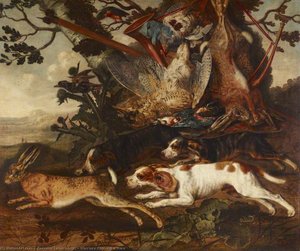
Национальный Траст, КембриджНациональный Траст Кембридж 2 Harriers Chasing a Hare, Spaniels Chasing a Hare
The Holburne Museum, БатThe Holburne Museum Бат 1 Still Life with Game Birds
Музей Бойманса-ван-Бёунхина, РоттердамМузей Бойманса-ван-Бёунхина Роттердам 1 Dead Hare and Birds
Gemäldegalerie, БерлинGemäldegalerie Берлин 1 Still life with a brass pail
Национальный музей искусства, архитектуры и дизайна, ОслоНациональный музей искусства, архитектуры и дизайна Осло 1 Game

Cornelis Lelienbergh сквозь десятилетия: по одному уникальному оригиналу на каждое десятилетие

Произведения по десятилетиям

Выберите десятилетие, чтобы увидеть шедевр, определяющий его.

Картины Cornelis Lelienbergh: вопросы к галерее

Какая работа Cornelis Lelienbergh является самой известной?Узнать ответ

Still Life with Game Birds (1670), The Holburne Museum, Бат. Далее следуют Still life with hare and black rooster (1659) и Dead Game Birds (1653).

В каком возрасте Cornelis Lelienbergh создал(а) Still Life with Game Birds?Узнать ответ

44 лет: Still Life with Game Birds датируется 1670 годом, а Cornelis Lelienbergh родился в 1626.

Какие десять картин Cornelis Lelienbergh являются самыми известными?Узнать ответ

Still Life with Game Birds, Still life with hare and black rooster, Dead Game Birds, Dead Rooster, Dead Hare and Birds, Still life with a brass pail, Still Life with Doves Hanging from an Iron Hook, Still Life with Black Rooster and two Rabbits, Cornelis Lelienbergh, 1659, Still Life with Woodpecker and Snipes, Cornelis Lelienbergh, 1655 и Still Life with Parrot and Snipes, Cornelis Lelienbergh, 1655. В рейтинге выше указаны год создания и музей для каждой работы.

Сколько известно работ Cornelis Lelienbergh?Узнать ответ

В нашем каталоге представлено 31 работ Cornelis Lelienbergh, созданных в период с 1652 по 1670.

Где можно увидеть подлинники, созданные Cornelis Lelienbergh?Узнать ответ

В основном в Рейксмюзеум (Амстердам), Баварские государственные живописные коллекции (Мюнхен) и Национальный музей Швеции (Стокгольм). В таблице выше перечислены все музеи.

В какой период Cornelis Lelienbergh создал свои самые известные картины?Узнать ответ

В 1650s: 8 из 29 работ на этой странице были созданы в этот период, Still life with hare and black rooster из них.

Какая из знаменитых картин Cornelis Lelienbergh была написана раньше, а какая — позже?Узнать ответ

На этой странице самая ранняя работа датирована Still life with a brass pail (1652), а самая поздняя — Still Life with Game Birds (1670).

Какие сюжеты предпочитал Cornelis Lelienbergh?Узнать ответ

Animals (4), Feathers (3) и Life (3) в 29 работах на этой странице.

Какими материалами чаще всего пользовался Cornelis Lelienbergh?Узнать ответ

Oil On Canvas, для 3 из 29 работ на этой странице.

Какие оригинальные работы Cornelis Lelienbergh можно увидеть в Рейксмюзеум?Узнать ответ

Still life with hare and black rooster, Still Life with Black Rooster and two Rabbits, Cornelis Lelienbergh, 1659 и Still Life with Woodpecker and Snipes, Cornelis Lelienbergh, 1655: в коллекции Рейксмюзеум, Амстердам находится 3 работ со страницы.

Cornelis Lelienbergh: портрет художника

A Glimpse into the World of Cornelis van Lelienbergh

Cornelis van Lelienbergh, a name perhaps less immediately recognizable than some of his Dutch Golden Age contemporaries, nevertheless occupies a significant and fascinating niche within the pantheon of 17th-century artists. Born in the Netherlands in 1626, Lelienbergh’s life coincided with a period of unprecedented artistic flourishing, a time when the newly independent Dutch Republic embraced realism, portraiture, and landscape painting with remarkable fervor. While biographical details remain somewhat sparse – a common challenge for artists outside the very highest echelons of fame – his surviving works offer compelling insights into his skill, stylistic development, and the world he inhabited. He died in 1676, leaving behind a legacy that continues to captivate art enthusiasts today.

Early Life and Artistic Training

The specifics of Lelienbergh’s early training are not fully documented, but it is reasonable to assume he began his artistic journey within the established guild system prevalent in Dutch cities. The Netherlands at this time was a hotbed of specialized painting schools and workshops, each with its own distinct approach. It's likely that he apprenticed under a local master, honing fundamental skills in drawing, composition, and color mixing before specializing in portraiture and landscape—the genres for which he would become known. The influence of Flemish painters is strongly apparent in his work, suggesting potential exposure to their techniques either through direct study or the circulation of paintings within the robust art market of the Low Countries. This connection to Flanders is particularly notable in his handling of light and texture, as well as a certain psychological depth present in his portraits.

A Master of Portraiture and Landscape

Lelienbergh’s artistic output primarily centered around two key areas: portraiture and landscape painting. His portraits are not grand statements of power or status, but rather intimate depictions of individuals from the middle classes – merchants, scholars, and members of prosperous families. He possessed a remarkable ability to capture not just physical likeness, but also something of his sitters’ inner character. His landscapes, often featuring serene scenes of Dutch countryside, demonstrate a keen observation of nature combined with a sophisticated understanding of atmospheric perspective. These are not idealized visions; they reflect the actual topography and light conditions of the Netherlands, imbued with a quiet sense of realism. He frequently incorporated figures into his landscapes, adding narrative elements and a human scale to the vastness of the natural world.

Influences and Stylistic Development

The artistic climate of the Dutch Golden Age was one of constant exchange and innovation. Lelienbergh’s work reveals influences from several prominent painters. The aforementioned Flemish tradition, particularly artists like David Teniers the Younger, is evident in his detailed rendering of figures and genre scenes. He also shows an affinity for the works of Pieter de Molyn, a contemporary known for his elegant portraits and refined technique. However, Lelienbergh was not merely an imitator; he synthesized these influences into a distinctive style characterized by its subtle color palette, meticulous brushwork, and psychological sensitivity. Over time, his landscapes became increasingly sophisticated, moving beyond simple topographical representations to explore the emotional impact of light and atmosphere. His ability to balance realism with a poetic sensibility sets him apart.

Legacy and Historical Significance

While Lelienbergh may not be as widely celebrated as Rembrandt or Vermeer, his work offers valuable insights into the lives and values of 17th-century Dutch society. His portraits provide a glimpse into the burgeoning middle class, while his landscapes celebrate the beauty and tranquility of the Netherlands countryside. Today, his paintings are held in prominent museum collections, including the Museum Smidt Van Gelder in Knokke-Heist, Belgium, where they continue to be studied and admired. His contribution lies not in groundbreaking innovation, but in a masterful execution of established genres, imbued with a quiet dignity and psychological depth that resonates with viewers centuries later. The enduring appeal of his work speaks to the timeless power of realistic representation and the human desire to capture moments of beauty and meaning in art.
  • Known for portraits & landscapes
  • Flemish influence is apparent in his handling of light.
  • His paintings are held in prominent museum collections, including Museum Smidt Van Gelder.