Портрет Christopher Pearse Cranch

34 самых известных картин Christopher Pearse Cranch, каждая из которых уникальна

Обновлено Октябрь 2026 · рейтинг на основе нашего показателя популярности (количество поисковых запросов, посещений и заказов для каждой работы) · 34 работ Christopher Pearse Cranch в нашем каталоге

Вкратце

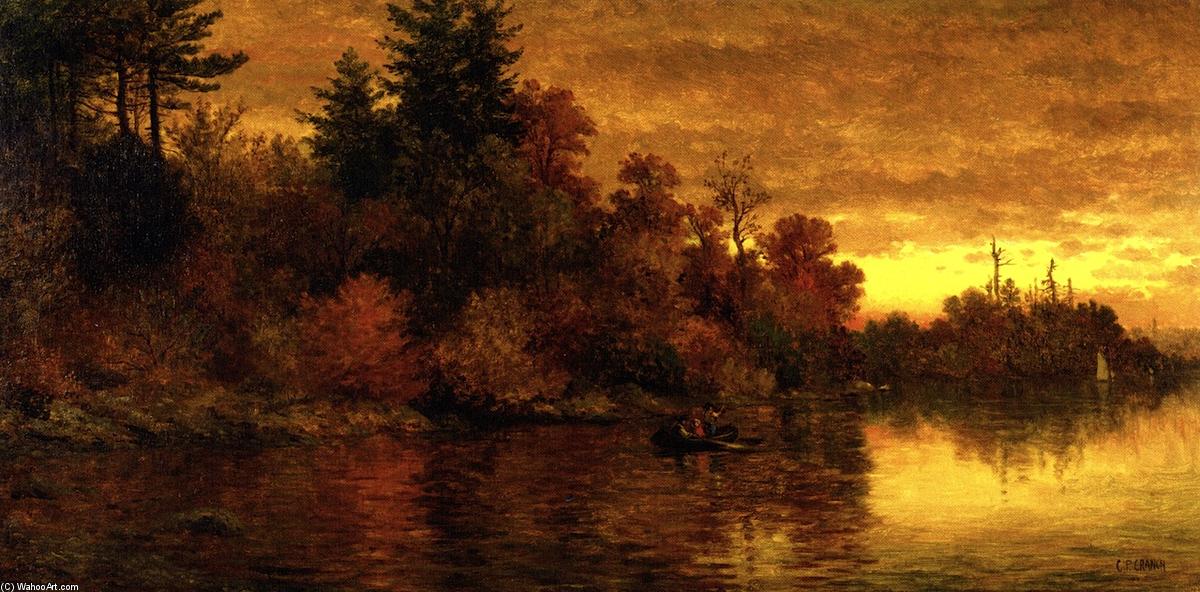
River Running between Pastures (1850) — это картина Christopher Pearse Cranch, которая привлекает больше всего взглядов. Затем взгляд переходит на Sunset Landscape и View on the Catskill River (1846). Из 34 работ Christopher Pearse Cranch в нашем каталоге эти 34 являются самыми известными: каждая из них — уникальный оригинал с указанием года создания, музея и причины ее бессмертия.

1813 – 1892, Columbia Hudson river school Больше всего работ: New York Historical Society

Топ-10 картин Christopher Pearse Cranch глазами галереи

1
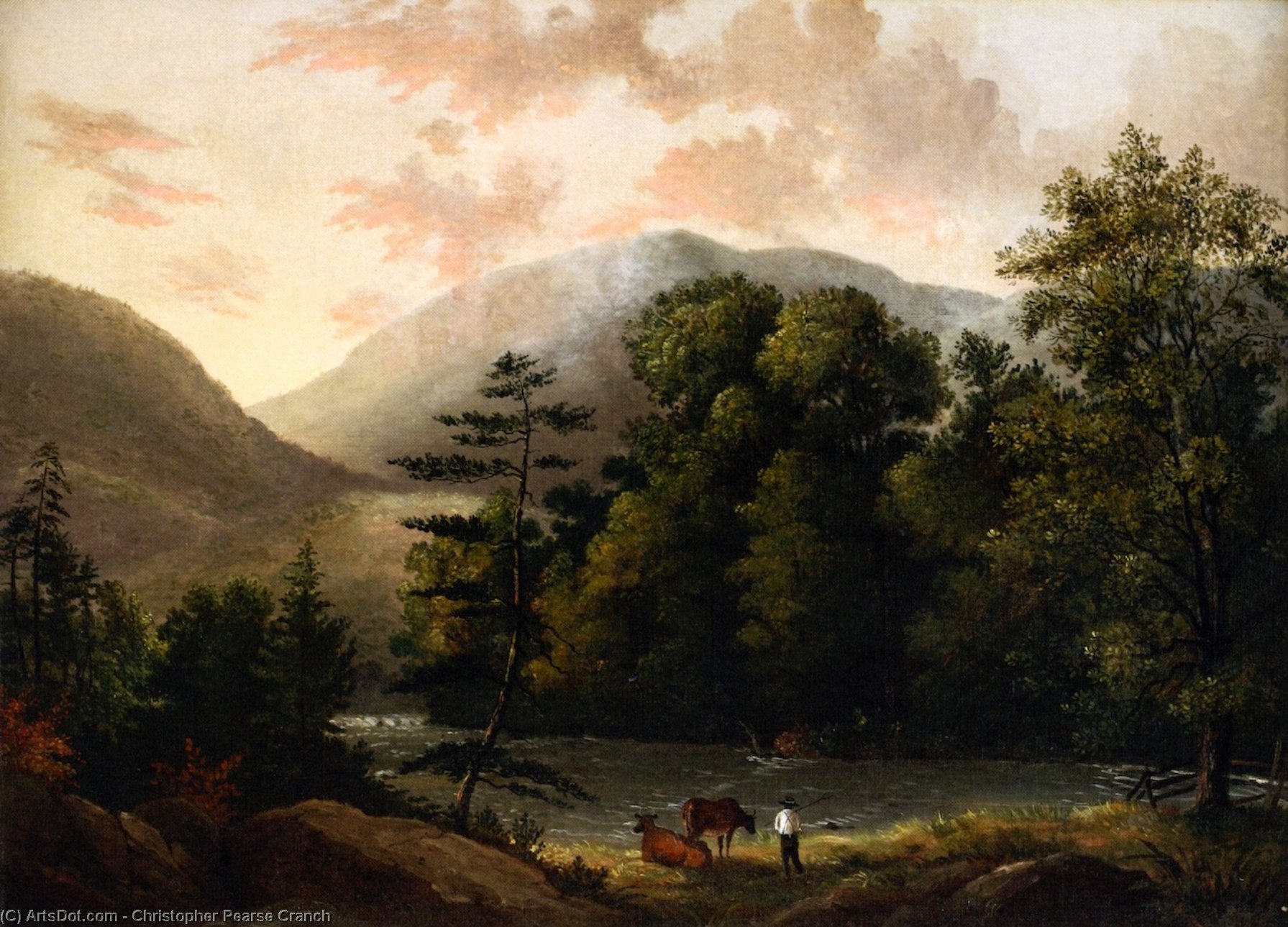
River Running between Pastures (1850) работы Christopher Pearse Cranch

River Running between Pastures

1850 · Oil

A river carves a path through a lush valley, flanked by dense, green foliage. In the distance, mountains rise against the horizon, framing a scene of quiet pastoral life. Along the riverbanks, cows graze peacefully, while horses move through the landscape. A solitary figure stands near the center, observing the movement of the water or tending to the livestock. The composition captures a moment of stillness within the natural world.

Знаменитые картины Christopher Pearse Cranch, с 11 по 34

Сюжеты, которые вдохновляли Christopher Pearse Cranch

Четыре темы, которые чаще всего встречаются в этих оригиналах, каждая из которых представлена своим лучшим образцом.

Музеи, в которых хранятся оригиналы работ Christopher Pearse Cranch

5 музеев, в которых находится большинство картин со страницы.

Музей Город Работы Christopher Pearse Cranch Картины из этого списка
New York Historical Society, Нью-ЙоркNew York Historical Society Нью-Йорк 2 View on the Catskill River, Landscape
Addison Gallery of American Art, МассачусетсAddison Gallery of American Art Массачусетс 1 Sunset Landscape
Fogg Art Museum, КембриджFogg Art Museum Кембридж 1 View on the Hudson
Национальная галерея искусств, ВашингтонНациональная галерея искусств Вашингтон 1 Castle Gondolfo, Lake Albano, Italy
Музей изящных искусств, БостонМузей изящных искусств Бостон 1 San Pietro in Castello, Venice

Christopher Pearse Cranch сквозь десятилетия: по одному уникальному оригиналу на каждое десятилетие

Произведения по десятилетиям

Выберите десятилетие, чтобы увидеть шедевр, определяющий его.

Картины Christopher Pearse Cranch: вопросы к галерее

Какая работа Christopher Pearse Cranch является самой известной?Узнать ответ

River Running between Pastures (1850). Далее следуют Sunset Landscape и View on the Catskill River (1846).

В каком возрасте Christopher Pearse Cranch создал(а) River Running between Pastures?Узнать ответ

37 лет: River Running between Pastures датируется 1850 годом, а Christopher Pearse Cranch родился в 1813.

Какие десять картин Christopher Pearse Cranch являются самыми известными?Узнать ответ

River Running between Pastures, Sunset Landscape, View on the Catskill River, Rome, Man with Two Cows, Landscape with Fishermen and Artist Sketching, Tivoli, East of Rome, Mountain Landscape, View on the Hudson и Landscape. В рейтинге выше указаны год создания и музей для каждой работы.

Сколько известно работ Christopher Pearse Cranch?Узнать ответ

В нашем каталоге представлено 34 работ Christopher Pearse Cranch, созданных в период с 1844 по 1885.

Где можно увидеть подлинники, созданные Christopher Pearse Cranch?Узнать ответ

В основном в New York Historical Society (Нью-Йорк), Addison Gallery of American Art (Массачусетс) и Fogg Art Museum (Кембридж). В таблице выше перечислены все музеи.

В какой период Christopher Pearse Cranch создал свои самые известные картины?Узнать ответ

В 1850s: 13 из 34 работ на этой странице были созданы в этот период, River Running between Pastures из них.

Какая из знаменитых картин Christopher Pearse Cranch была написана раньше, а какая — позже?Узнать ответ

На этой странице самая ранняя работа датирована Man with Two Cows (1844), а самая поздняя — McIntyre Mountain (1885).

Какие сюжеты предпочитал Christopher Pearse Cranch?Узнать ответ

Landscape (13), Italy (10) и Sunset (4) в 34 работах на этой странице.

К какому направлению относится творчество Christopher Pearse Cranch?Узнать ответ

Hudson river school, судя по оригиналам на этой странице.

Какие оригинальные работы Christopher Pearse Cranch можно увидеть в New York Historical Society?Узнать ответ

View on the Catskill River и Landscape: в коллекции New York Historical Society, Нью-Йорк находится 2 работ со страницы.

Christopher Pearse Cranch: портрет художника

The Transcendental Vision of Christopher Pearse Cranch

In the rich tapestry of nineteenth-century American culture, few figures embody the era's intellectual and aesthetic synthesis as gracefully as Christopher Pearse Cranch. Born in 1813 in Columbia, Maryland, into a distinguished legal family, Cranch was destined for a life where the boundaries between the spiritual and the material would perpetually blur. While his early path led him toward the pulpit and the rigorous study of theology at Harvard Divinity School, his soul remained deeply tethered to the visual world. This unique duality—the disciplined mind of a Unitarian minister paired with the observant eye of an artist—allowed him to approach the canvas not merely as a surface for depiction, but as a medium for profound philosophical inquiry.

Cranch’s creative identity was profoundly shaped by his proximity to the Transcendentalist movement. As a contemporary and participant in Ralph Waldo Emerson’s inner circle, he breathed the same intellectual air that celebrated the divinity found within nature. His involvement with Emerson’s transcendental club provided him with a conceptual framework that would forever inform his landscapes. To Cranch, a waterfall or a morning mist was not just a meteorological event; it was a manifestation of the sublime, a visible sign of the underlying spiritual unity of the universe. This connection to the Hudson River School ethos allowed his work to transcend mere topographical accuracy, reaching instead for an emotional and spiritual resonance that mirrored the era's optimism and reverence for the American wilderness.

A Multifaceted Legacy of Art and Letters

The brilliance of Cranch lay in his refusal to be confined to a single discipline. He was a true Renaissance man of the American nineteenth century, weaving together a legacy that spanned painting, poetry, and prose. His literary contributions were as diverse as they were impactful, ranging from the whimsical charm of his "Huggermugger Books"* for children to the sophisticated, contemplative verses found in publications like Emerson’s Dial. This versatility extended into the realm of visual satire, where his caricatures for Harper's Weekly demonstrated a keen wit and an ability to capture the social nuances of his time.

In his paintings, Cranch achieved a delicate balance between the grandiosity of the landscape tradition and a more intimate, impressionistic sensitivity. His works, such as "Landscape with Waterfall" and his evocative depictions of Venice, reveal an artist capable of capturing both the rugged majesty of the New World and the luminous, atmospheric light of the Old. Through his brush, one can trace the evolution of a man who sought to translate the intangible truths of his faith into the tangible beauty of color and form.

The historical significance of Christopher Pearse Cranch resides in his role as a bridge between eras and ideologies. He stood at the intersection of:

  • Theological Thought: Bringing the moral depth of Unitarianism to the visual arts.
  • Literary Innovation: Contributing to the development of American prose and poetry through both scholarly essays and imaginative children's tales.
  • Artistic Tradition: Enhancing the Hudson River School tradition with a uniquely transcendentalist perspective on the natural world.

Ultimately, Cranch’s life serves as a testament to the power of integrated thought. He did not see art and intellect as opposing forces, but as two halves of a single, harmonious pursuit of truth. His enduring contribution to American art remains a luminous example of how the observation of nature can become an act of profound spiritual devotion.