La Fête Dieu
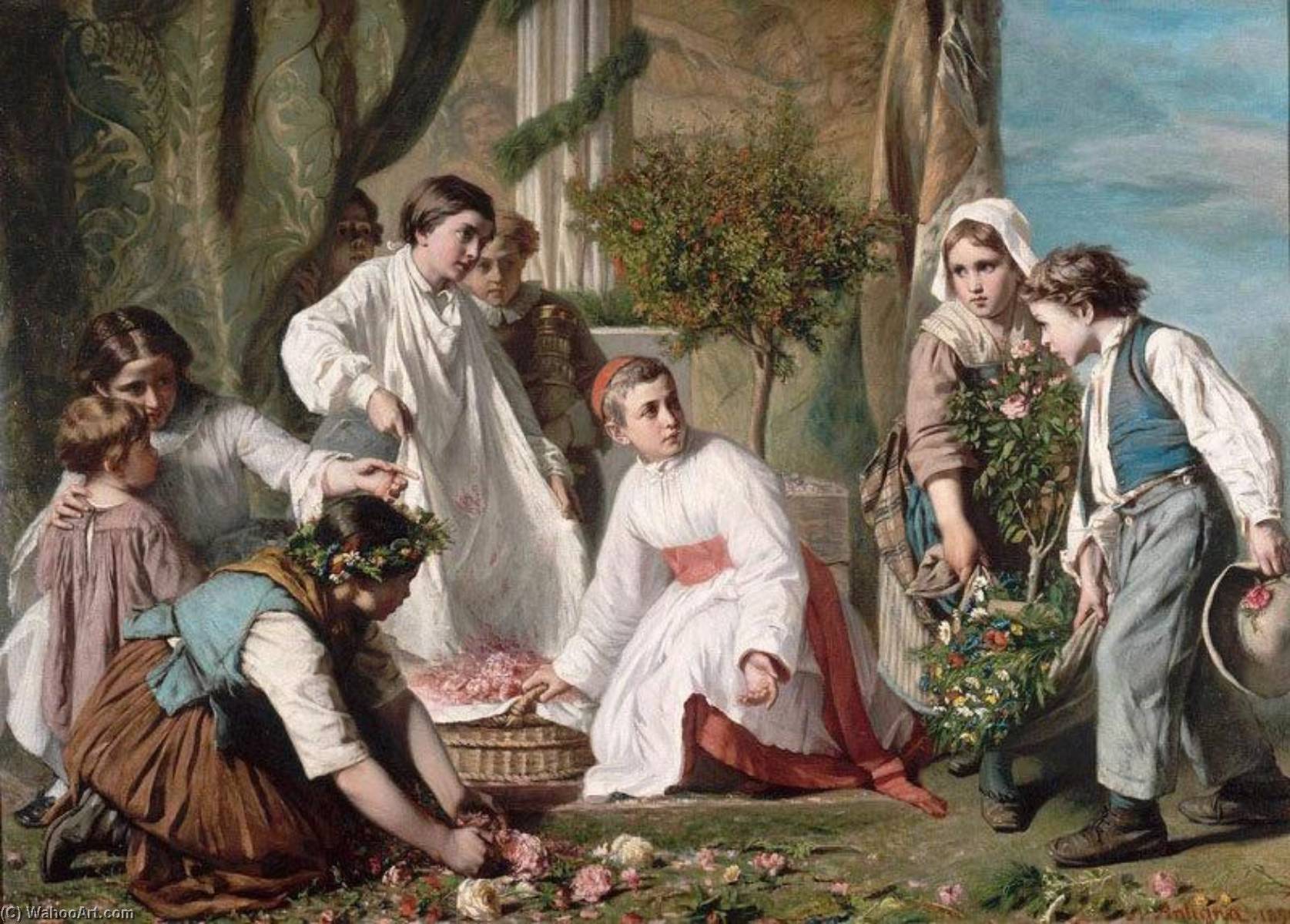
The oil on canvas titled La Fête Dieu was painted by Alexandre Antigna in 1855. This work measures 55 x 76 3/4 inches (140 x 195 cm). It captures a moment of preparation, where the weight of tradition meets the lightness of youth.
Вкратце
Из всех оригинальных работ, оставленных Александр Антьеня, самой известной является La Fête Dieu. Сразу за ними следуют The Lightning (1848) и L'Eclair. В нашем каталоге представлено 21 работ Александр Антьеня; галерея сохранила 21 самых почитаемых в мире произведений, каждое из которых сопровождается датой создания, информацией о музее и своей историей.
The oil on canvas titled La Fête Dieu was painted by Alexandre Antigna in 1855. This work measures 55 x 76 3/4 inches (140 x 195 cm). It captures a moment of preparation, where the weight of tradition meets the lightness of youth.
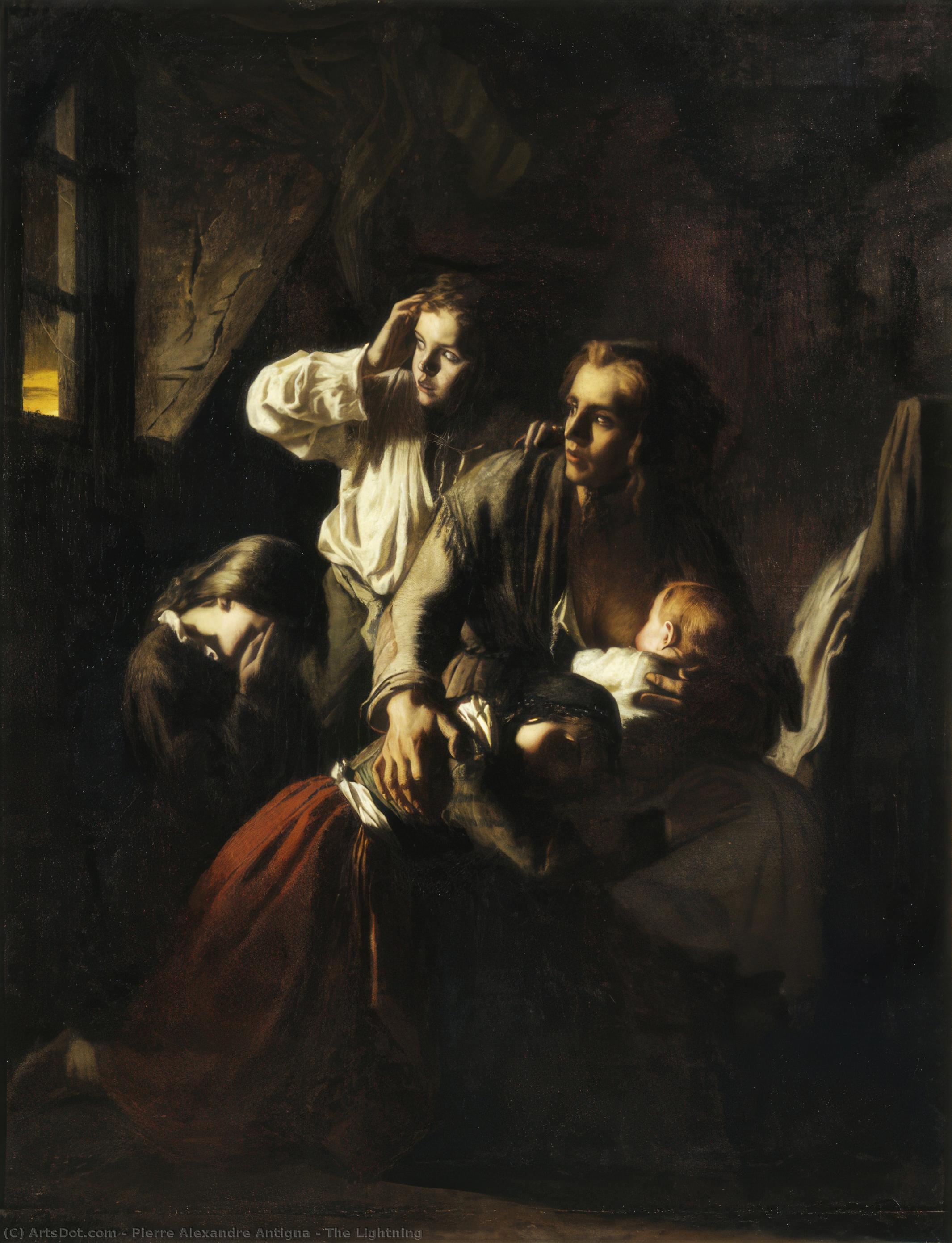
“The Lightning,” painted in 1848 by the French artist Pierre Alexandre Antigna, is more than just a depiction of a family huddled together during an electrical storm; it’s a poignant meditation on vulnerability, familial love, and the raw power of nature. Antigna, a key figure in Parisian Realism, masterfully captures a fleeting moment of intense emotion within a dimly lit interior, drawing the viewer into a scene brimming with both…
The oil on canvas titled L'Eclair was painted in 1848. This tableau captures a singular moment of tension. Alexandre Antigna, born in Orléans, France, in 1817, rendered the scene with a steady hand. The pigment settles into the weave of the fabric, holding a fragment of a storm within its fibers.
The air feels heavy with the scent of dry hay and sun-warmed earth as a group of children whirl in a rhythmic circle. They move through a wide, rural landscape, their small figures caught in a moment of pure, uninhibited joy. The composition pulls the eye into a continuous loop, following the sweep of outstretched arms and the swirling motion of colorful skirts. Reds, blues, and whites flash against the…
The sketch depicts a young girl captured in mid-stride, her body leaning slightly forward into the direction of her movement. She is positioned off-center to the right, creating a sense of momentum as she walks. Her head is tilted downward, eyes fixed upon an open book held in her outstretched hands. The figure is rendered from the mid-thigh upward, focusing the viewer's attention on the interaction between her posture and…
The light falls from the upper left, casting soft shadows across a gathering of Aragonese people. They sit upon weathered stone steps, framed by the deep green of a grapevine. A woman holds an infant, her chemise a bright white against the earthy tones of the scene. Beside them, a young boy cradles a musical instrument, his small hands poised in a moment of stillness. The air feels heavy with…
This oil painting presents a close-up portrait of a young girl, focusing tightly on her head and hands. The subject is positioned in a direct, eye-level view, her chin resting upon her hands in a pensive posture. A headscarf wraps around her face, creating organic folds that frame her features. The lighting originates from the upper left, casting shadows across her face and highlighting the specific expression in her eyes.…
A solitary woman rests in a dimly lit, rustic interior, her form surrendered to sleep. Positioned slightly to the left of center, she is balanced by the large, circular silhouette of a spinning wheel to the right. The composition is vertical, drawing the eye to the heavy, nocturnal atmosphere of the room. Deep, earthy tones of umber and sienna dominate the space, creating a sense of profound stillness. A sharp…
The oil painting titled Gypsy Girl presents a quiet, heavy moment captured on canvas. This work is the creation of Alexandre Antigna, an artist who emerged from the city of Orléans, France. Born in 1817, Antigna brings a specific, focused gaze to the subjects he encounters, often finding the weight of existence in the faces of those living on the margins of society.
is an oil on canvas by the French painter Alexandre Antigna. The work presents a nude female figure wading into a body of water. This central subject is situated within a dense forest setting, where the natural environment forms a dark, enveloping backdrop around the form.
Четыре темы, которые чаще всего встречаются в этих оригиналах, каждая из которых представлена своим лучшим образцом.
6 музеев, в которых находится большинство картин со страницы.
| Музей | Город | Работы Александр Антьеня | Картины из этого списка |
|---|---|---|---|
| Париж | 2 | The Lightning, L'Eclair | |
| Орлеан | 2 | Aragonese of Anso, The Fire | |
| Limoux | 1 | Circle of children | |
| Вустер | 1 | Head of a Girl | |
| Saint-Brieuc | 1 | The sleeping spinner | |
| Гент | 1 | Gypsy Girl |
Выберите десятилетие, чтобы увидеть шедевр, определяющий его.
“The Lightning,” painted in 1848 by the French artist Pierre Alexandre Antigna, is more than just a depiction of a family huddled together during an electrical storm; it’s a poignant meditation on vulnerability, familial love, and the raw power of nature. Antigna, a key figure in Parisian Realism, masterfully captures a fleeting moment of intense emotion within a dimly lit interior, drawing the viewer into a scene brimming with both…
The air feels heavy with the scent of dry hay and sun-warmed earth as a group of children whirl in a rhythmic circle. They move through a wide, rural landscape, their small figures caught in a moment of pure, uninhibited joy. The composition pulls the eye into a continuous loop, following the sweep of outstretched arms and the swirling motion of colorful skirts. Reds, blues, and whites flash against the…
The light falls from the upper left, casting soft shadows across a gathering of Aragonese people. They sit upon weathered stone steps, framed by the deep green of a grapevine. A woman holds an infant, her chemise a bright white against the earthy tones of the scene. Beside them, a young boy cradles a musical instrument, his small hands poised in a moment of stillness. The air feels heavy with…
La Fête Dieu. Далее следуют The Lightning (1848) и L'Eclair.
La Fête Dieu, The Lightning, L'Eclair, Circle of children, Girl striding out reading a book, Aragonese of Anso, Head of a Girl, The sleeping spinner, Gypsy Girl и Miroir des bois. В рейтинге выше указаны год создания и музей для каждой работы.
В нашем каталоге представлено 21 работ Александр Антьеня, созданных в период с 1848 по 1872.
В основном в Музей Орсе (Париж), Musée des Beaux-Arts (Орлеан) и musée Petiet de Limoux (Limoux). В таблице выше перечислены все музеи.
В 1850s: 3 из 21 работ на этой странице были созданы в этот период, Circle of children из них.
На этой странице самая ранняя работа датирована The Lightning (1848), а самая поздняя — Aragonese of Anso (1872).
Woman (8), Children (4) и Girl (4) в 21 работах на этой странице.
Oil On Canvas, для 15 из 21 работ на этой странице.
Romanticism, судя по оригиналам на этой странице.
The Lightning и L'Eclair: в коллекции Музей Орсе, Париж находится 2 работ со страницы.
В самом сердце XIX века во Франции, в эпоху, определяемую глубокими социальными потрясениями и сменой художественных парадигм, Жан Пьер Александр Антьеня проявил себя как живописец с беспрецедентным уровнем эмпатии. Рожденный в Орлеане в 1817 году, он начал свой творческий путь с традиционных пейзажей своей юности, формируясь под бдительным руководством местного художника Франсуа Сальмона. Однако зов Парижа оказался непреодолимым. Поступив в престижную Национальную высшую школу изящных искусств в 1837 году, Антьеня погрузился в мир академической строгости, обучаясь у таких мастеров, как Себастьян Норблен де ла Гурден и прославленный Поль Деларош. Эти ранние годы были отмечены сосредоточенностью на религиозных сюжетах и формальном портрете, что соответствовало устоявшимся стилистическим канонам той эпохи.
Тем не менее, истинная метаморфоза души Антьеня произошла не в позолоченных залах академии, а в тенистых, узких улочках острова Сен-Луи. Живя среди бедных кварталов Парижа, художник стал свидетелем суровой, неприкрашенной борьбы городского люда. Это глубокое соприкосновение с человеческими лишениями послужило катализатором, уводящим его от идеализированной религиозной иконографии к суровому, непоколебимому реализму. К моменту, когда Революция 1848 года охватила Францию, Антьеня полностью принял стиль, стремящийся запечатлеть всю тяжесть бытия. Его полотна начали пульсировать тяжелым бременем и тихой стойкостью тех, кто оказался на обочине общества, воплощенных через фактурную технику мазка и эмоциональную глубину, которая покорила внимание парижского Салона.
По мере развития карьеры художественное видение Антьеня вышло за пределы городских границ Парижа. Движимый ненасытным любопытством к человеческому состоянию и миру природы, он отправился в обширные путешествия по суровым ландшафтам Бретани и ярким просторам Испании. Эти странствия позволили ему соединить свое социальное сознание с зарождающимся натурализмом. Около 1860 года его работы начали отражать тщательное наблюдение за природой, где атмосферные качества ландшафта стали такой же важной темой, как и люди, населяющие его. Будь то передача драматического напряжения шторма или тихого достоинства сельского рабочего, его техника оставалась неразрывно связанной с чувством глубокого сострадания.
Его мастерство было официально признано французским государством, когда в 1861 году он был удостоен ордена Почетного легиона — веха, закрепившая его статус среди значимых фигур своего поколения. Даже когда его стиль эволюционировал в сторону более натуралистичных изображений, ядром его творчества оставалось исследование уязвимости и силы. Значимые произведения, такие как Молния, демонстрируют эту дуальность: семья, сбившаяся в кучу во время электрического шторма, служит пронзительной медитацией о семейной любви посреди ужасающей мощи природы. Используя свет, тень и текстуру импасто, Антьеня не просто рисовал сцены; он улавливал саму суть выживания.
Историческая значимость Александра Антьеня заключается в его способности преодолеть разрыв между романтическим чувством и реалистической правдой. Он не просто наблюдал за бедностью; он наделил ее достоинством, которое бросало вызов социальным иерархиям той эпохи. Его жизнь, завершившаяся в Париже в 1878 году, оставила после себя наследие, служащее жизненно важным визуальным свидетельством XIX века во Франции. Его влияние прослеживается в том, как он использовал следующие элементы для возвышения своих героев:
Сегодня Антьеня помнят не просто как живописца сцен, но как сострадательный голос своей эпохи, художника, который заглянул в темноту городской борьбы и нашел в ней неугасимый свет человеческого духа.