Introduction to Alexander Milne Calder
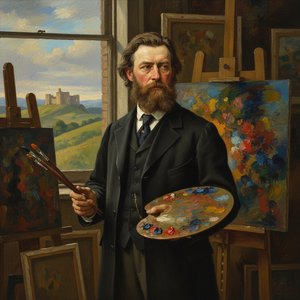
Alexander Milne Calder (MILL-nee) was a Scottish-American sculptor born in Aberdeen, Scotland, on August 23, 1846. He is best known for his architectural sculpture of Philadelphia City Hall and both his son, Alexander Stirling Calder, and grandson, Alexander ‘sandy’ Calder, became significant sculptors in the 20th century. His artistic journey began with a formative influence from his father, John Rhind, a sculptor who instilled in him an early appreciation for stone carving during his childhood years. Calder attended the Royal Academy in Edinburgh where he honed his skills and studied alongside fellow artists, shaping his understanding of classical sculpture traditions. He subsequently moved to London and collaborated on monumental projects like the Albert Memorial, demonstrating his versatility and ambition as a craftsman.- Early Life and Education: Calder’s upbringing in Aberdeen instilled in him a passion for art from a young age, nurtured by his father's expertise in stone carving.
- Royal Academy Training: His studies at the Royal Academy provided him with foundational knowledge of sculpture techniques and artistic principles.
- London Collaborations: Calder’s involvement in projects like the Albert Memorial showcased his ability to execute large-scale architectural sculptures.
Notable Works
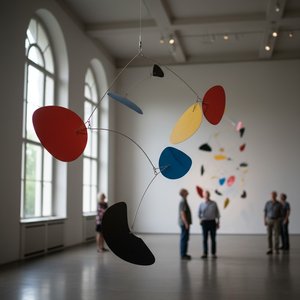
Calder's legacy rests upon a remarkable collection of sculptural achievements, most notably Philadelphia City Hall. This ambitious undertaking demanded meticulous planning and execution by over 250 artisans, spanning two decades—a testament to Calder’s dedication and vision. The centerpiece of the hall is William Penn, a colossal bronze statue that embodies grandeur and commemorates Pennsylvania's founding figure. Beyond monumental sculptures, Calder explored kinetic art with his mobiles – suspended sculptures propelled by air currents—introducing an element of chance and movement into artistic expression. His exploration of this medium was greatly influenced by Marcel Duchamp, who coined the term "mobile" to describe these captivating artworks.- Philadelphia City Hall: Calder’s monumental sculpture transformed Philadelphia's skyline, representing a pinnacle of architectural artistry.
- William Penn Statue: This imposing bronze statue honored Pennsylvania’s heritage and showcased Calder’s mastery of sculptural technique.
- Kinetic Art – Mobiles: Calder pioneered kinetic sculpture with his mobiles, incorporating movement and chance into artistic creation—a groundbreaking contribution to the art world.
Legacy and Influence
Alexander Stirling Calder and Alexander ‘sandy’ Calder followed in their father's footsteps as accomplished sculptors, perpetuating a family tradition of artistic innovation. Calder’s influence extended beyond his own creations, inspiring subsequent generations of artists and shaping the trajectory of modern sculpture. His works are displayed prominently in museums worldwide—including the Smithsonian American Art Museum and the Galleria Civica di Arte Moderna e Contemporanea Torino—celebrating his enduring contribution to art history. Calder's unwavering belief that “theories may be all very well for the artist himself, but they shouldn’t be broadcast to other people” underscores his commitment to artistic integrity and spontaneity.- Family Artistic Tradition: Calder’s son and grandson continued his father’s legacy as sculptors, ensuring the continuation of a distinguished artistic lineage.
- Museum Exhibitions: Calder's sculptures are showcased in renowned museums globally, commemorating his lasting impact on art history.
- Philosophical Approach to Art: Calder championed spontaneity and intuition in artistic creation, rejecting rigid theoretical frameworks.
- Father's Influence: Calder’s father imparted invaluable knowledge of stone carving, shaping his artistic sensibilities from a young age.
- Royal Academy Studies: His training at the Royal Academy provided him with foundational understanding of sculptural principles and techniques.
- International Exposure: Calder’s journeys to Paris and London broadened his artistic perspective and fostered engagement with diverse cultural traditions.
- Philadelphia City Hall: The project’s scale and complexity demanded exceptional skill and perseverance from Calder and his team, resulting in a masterpiece of architectural sculpture.
- William Penn Statue: This monumental bronze statue honored Pennsylvania’s heritage and showcased Calder's mastery of sculptural technique—a symbol of civic identity.
- Kinetic Art – Mobiles: Calder revolutionized sculpture with his mobiles, embracing movement and spontaneity as artistic principles—a transformative innovation that captivated audiences worldwide.
- Family Artistic Lineage: Calder’s son and grandson continued his father's legacy as sculptors, upholding a distinguished tradition of artistic excellence.
- Global Museum Exhibitions: Calder’s sculptures are showcased in internationally recognized museums—demonstrating their universal appeal and enduring significance within art history.
- Philosophical Commitment to Art: Calder championed spontaneity and intuition as guiding principles for artistic creation—rejecting rigid theoretical frameworks in favor of authentic expression.
Вопросы и ответы
Откуда Александр Колдер?
Александр Колдер родился в США.
Можно ли проследить использование цвета в творчестве Александр Колдер по всем его работам?
Использование цвета в работах Александр Колдер, представленных на данный сайт, можно изучить на странице Палитра художника художника.
Под какими еще именами известен Александр Колдер?
Александр Колдер также известен под именами Колдер А., Колдер Александр.