High Renaissance
St. Michael and Satan (Рафаэль Санти)
Рафаэль Санти (1483–1520) создал(а) St. Michael and Satan. Относится к направлению High Renaissance. Выполнено в технике Oil On Panel.
- Oil On Panel

 Предпросмотр

 Картина маслом ручной работы
 Поделиться
 Поделиться
 Руководство


 Скачать
 Похожие предметы
 Рентгенография
 Слайд-шоу
 Вопросы и ответы

 Статистика просмотров
St. Michael and Satan: основные сведения
- Название
- St. Michael and Satan
- Автор
- Рафаэль Санти (1483–1520)
- Дата рождения художника
- Урбино, Италия
- Техника
- Oil On Panel
- Движение
- High Renaissance
- Период
- Renaissance
- Сюжет
- christianity, mythology, angel, demon, victory, renaissance
Что изображено на St. Michael and Satan?
St. Michael and Satan: A Triumph of Renaissance Faith
The painting St. Michael and Satan by Raphael, a cornerstone of High Renaissance art, transcends mere visual representation; it embodies the spiritual fervor and intellectual ambition that defined its era. Completed in 1518 during Pope Leo X’s reign, this monumental oil on wood panel resides within the Louvre Museum in Paris, continuing to captivate audiences centuries later with its masterful execution and profound symbolism. Raphael's initial inspiration stemmed from a smaller devotional piece – St. Michael – executed around 1504 or 1505—a testament to his unwavering commitment to exploring religious themes through artistic innovation. Commissioned by Francesco Maria I della Rovere, Urbino’s heir, this miniature served as an expression of gratitude for the papal honor bestowed upon him, foreshadowing Raphael's later ambition to tackle grand narratives with unparalleled artistry.- Composition and Narrative: Raphael skillfully employs a pyramidal structure, positioning St. Michael at its apex—a deliberate choice reflecting Christian theology’s emphasis on divine majesty. Beneath him lies Satan, depicted in contorted agony, symbolizing the defeat of evil by righteous force. The dynamic diagonal lines created by the figures propel the viewer's gaze across the canvas, intensifying the dramatic tension inherent in the biblical tale.
- Color Palette and Technique: Raphael’s palette is characterized by earthy browns and blues—muted hues that convey solemnity and grandeur—contrasting sharply with Satan’s darker tones of grey and brown. His meticulous brushwork achieves remarkable textural detail, capturing the musculature of St. Michael's body and the drapery of their garments with breathtaking realism. The use of oil paint on wood allows for subtle gradations of color and ensures exceptional durability, guaranteeing that Raphael’s vision persists through time.
- Symbolism and Spiritual Significance: Beyond its aesthetic beauty, St. Michael and Satan is laden with religious symbolism. St. Michael embodies divine protection and righteousness—a warrior angel battling the forces of darkness—while Satan represents temptation and despair. The bird soaring above symbolizes hope and ascension, reinforcing the overarching message of triumph over adversity.
- Influence and Legacy: Raphael’s artistic prowess profoundly impacted subsequent generations of painters, notably Charles Le Brun at Académie royale de peinture et de sculpture, establishing a foundational aesthetic for French classicism. His meticulous attention to detail and harmonious balance continue to inspire artists today, cementing St. Michael and Satan's place as an enduring masterpiece of Renaissance art.
Further Exploration & Inspiration
Consider commissioning a high-quality reproduction of Raphael’s St. Michael and Satan for your home or studio—a tangible connection to one of the most celebrated artworks in Western history. Explore similar pieces from other masters of the Renaissance, delving into themes of faith, heroism, and artistic excellence. Visit Michaelskirche in Munich or explore the Michael C. Carlos Museum in Atlanta for immersive experiences showcasing comparable artistic traditions.St. Michael and Satan в высоком разрешении

Общественное достояние: художник умер в 1520.
Другие размеры, фрагменты и цитирование →Рафаэль Санти, St. Michael and Satan. Общественное достояние
Цифровой эксперт сверяет цвета с оригинальной картиной и ретуширует файл, сохраняя верность манере письма художника.
Купить изображение в высоком разрешенииВопросы о St. Michael and Satan
Что изображено на картине «St. Michael and Satan»?
Темы, представленные в «St. Michael and Satan», Рафаэль Санти, включают christianity, mythology, angel, demon, victory, renaissance, allegory. Вместе они раскрывают основной сюжет произведения.
Какому художнику приписывают работу «St. Michael and Satan»?
Авторство работы «St. Michael and Satan» приписывается Рафаэль Санти.
Насколько гармоничны цвета в работе «St. Michael and Satan», Рафаэль Санти?
Цвета в работе «St. Michael and Satan», Рафаэль Санти демонстрируют Discordant Palette гармонию. Гармония описывает взаимосвязь цветов между собой.
Какая ориентация у «St. Michael and Satan», Рафаэль Санти?
«St. Michael and Satan», Рафаэль Санти — это композиция в формате Tall. Перед выбором размера печати стоит проверить пропорции.
Насколько сильно цвета в произведении «St. Michael and Satan» кажутся отражающими свет?
Яркость произведения «St. Michael and Satan», Рафаэль Санти составляет Dark. Яркость определяет, какой объем света отражают цвета.
Насколько выражен контраст в работе «St. Michael and Satan», Рафаэль Санти?
Уровень контрастности «St. Michael and Satan», Рафаэль Санти составляет Statement.
О чем повествует «St. Michael and Satan» и какая атмосфера в ней царит?
На полотне «St. Michael and Satan», Рафаэль Санти запечатлены christianity, mythology, angel, demon, victory, renaissance, allegory, передающие Dramatic настроение. Сочетание сюжета и атмосферы полностью раскрывает суть произведения.
Кто создал "St. Michael and Satan" и в каком стиле выполнено это произведение?
«St. Michael and Satan» был создан Рафаэль Санти в стиле High Renaissance. Автор и направление определяют художественную традицию этого произведения.
Можно ли скачать изображение «St. Michael and Satan»?
Цифровое изображение работы «St. Michael and Satan», Рафаэль Санти доступно для скачивания на странице произведения Скачать цифровое изображение: скачивание цифрового изображения в высоком разрешении.
Об авторе, Рафаэль Санти

1483–1520, Италия
Рафаэль Санти
Жизнь и сущность Рафаэля Рафаэль, известный истории под разными именами, включая Раффаэлло Санцио, Раффаэлло Санти и Раффаэлло Санцио да Урбино, был центральной фигурой итальянского Высокого Возрождения. Его жизнь была определена двойным мастерством — в живописи и архитектуре; эта универсальность позволяла ему легко переходить от интимного масштаба портрета к монументальным требованиям папского строительства. Он родился 6 апреля 1483 года в Урбино, Италия, в мире, пронизанном интеллектуальной и художественной деятельностью. Его карьера отличалась невероятной продуктивностью, требовавшей управления огромной мастерской для удовлетворения нужд его покровителей.
Другие работы Рафаэль Санти
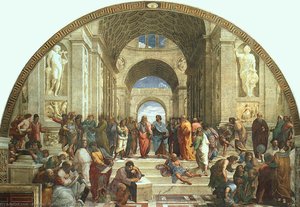 Афинская школа1511
 Сикстинская Мадонна1513
 Преображение1520
 Свадьба девы Марии1504
Эссе к произведению St. Michael and Satan
 Renaissance Visions: Exploring Themes & Techniques in 16th-Century PaintingExplore the captivating world of Renaissance painting! Discover key themes, masterful techniques & iconic artworks from Leonardo da Vinci t…
 Masterpieces of Perfection: The Top 25 Greatest Artworks by RaphaelJourney through the sublime beauty of the High Renaissance with our curated list of Raphael's top 25 masterpieces. From iconic Madonnas to …
 25 Masterpieces of the Sistine Chapel: A Journey Through Michelangelo's Divine ArtStep into the divine beauty of the Sistine Chapel. Explore 25 iconic Renaissance masterpieces by Michelangelo and beyond. From breathtaking…