High Renaissance · 1518
Jacob's Dream (Рафаэль Санти, 1518)
Рафаэль Санти (1483–1520) создал(а) Jacob's Dream. Создано в 1518. Относится к направлению High Renaissance. Выполнено в технике Fresco.
- 1518
- Fresco

 Картина маслом ручной работы
 Поделиться
 Поделиться
 Информационный лист


 Скачать
 Похожие предметы
 Слайд-шоу
 Вопросы и ответы

 Статистика просмотров
Jacob's Dream вкратце
- Название
- Jacob's Dream
- Автор
- Рафаэль Санти (1483–1520)
- Дата рождения художника
- Урбино, Италия
- Дата
- 1518
- Техника
- Fresco
- Движение
- High Renaissance
- Период
- Renaissance
- Сюжет
- biblical narrative, dream imagery, religious symbolism, angel ascension, italian renaissance, jacob's vision
Что изображено на Jacob's Dream?
A Vision of Divine Ascent: The Celestial Majesty of Raphael’s Jacob’s Dream
In the heart of the High Renaissance, amidst the intellectual fervor of Rome, Raphael Sanzio captured a moment of profound spiritual transcendence in his 1518 masterpiece, Jacob’s Dream. Originally conceived for the prestigious Loggia of the Palazzo Nuovo under the patronage of Pope Leo X, this fresco is far more than a mere biblical illustration; it is a breathtaking window into the divine. The scene breathes with the life of Genesis, depicting the patriarch Jacob as he rests upon a stone altar, caught in the liminal space between sleep and revelation. As he lies in contemplative repose, his eyes are drawn upward to witness a celestial procession: angels ascending and descending a heavenly ladder, bridging the gap between the earthly realm and the infinite heavens.
Raphael’s technical mastery is on full display through his sophisticated use of sfumato and linear perspective, techniques that lend the composition an almost palpable atmospheric depth. By subtly blurring edges and layering pigments with remarkable luminosity, he creates an illusionistic space that pulls the viewer into the dreamscape. The movement within the painting is masterfully orchestrated; the dynamic upward trajectory of the angels creates a sense of rhythmic energy, while the presence of birds circling above Jacob’s head serves as a poignant metaphor for divine messengers. Every brushstroke contributes to a sense of weightlessness and grace, making the ethereal quality of the dream feel strikingly real.
Symbolism and the Humanist Spirit
Beyond its visual splendor, Jacob’s Dream is a profound meditation on the human condition and our yearning for spiritual enlightenment. The stone altar upon which Jacob rests serves as a symbol of humility and groundedness, representing the physical world from which all spiritual aspiration begins. The ascending angels embody the movement of grace—the soul's upward climb toward God. This interplay between the heavy, terrestrial elements and the light, celestial figures reflects the core tenets of Renaissance humanism: the belief that through intellect, faith, and beauty, humanity can reach toward the divine. For the discerning collector or interior designer, this piece offers a sophisticated narrative of hope, aspiration, and the eternal search for meaning.
The emotional impact of the work lies in its ability to evoke both awe and tranquility. There is a quietude in Jacob’s slumber that invites introspection, yet the vibrant colors and intricate details of the heavenly figures stir the imagination. It is an artwork that commands presence in any space, offering a focal point of intellectual depth and aesthetic elegance. Whether viewed as a historical relic of the papal court or as a timeless symbol of spiritual journeying, Raphael’s vision remains an enduring testament to the power of art to capture the intangible essence of the soul.
Изображения в высоком разрешении: Jacob's Dream

Общественное достояние: художник умер в 1520.
Другие размеры, фрагменты и цитирование →Рафаэль Санти, Jacob's Dream (1518). Общественное достояние
Ответы на вопросы о Jacob's Dream
В каком году было создано произведение «Jacob's Dream»?
«Jacob's Dream» датируется 1518 годом. Эта дата позволяет определить место произведения в творчестве Рафаэль Санти и в контексте его эпохи.
В какой технике выполнено произведение «Jacob's Dream», Рафаэль Санти?
Техника исполнения работы «Jacob's Dream», Рафаэль Санти — Fresco. Репродукции стремятся максимально точно передать особенности этой техники.
Что изображено на картине «Jacob's Dream», Рафаэль Санти?
Темы, представленные в «Jacob's Dream», Рафаэль Санти, включают biblical narrative, dream imagery, religious symbolism, angel ascension, italian renaissance, jacob's vision, classical composition. Вместе они раскрывают основной сюжет произведения.
Является ли произведение «Jacob's Dream», Рафаэль Санти общественным достоянием?
Статус авторского права для «Jacob's Dream», Рафаэль Санти: произведение находится в общественное достояние — срок действия авторского права истёк. Это определяет, допускается ли свободное воспроизведение изображения.
Какому художнику приписывают работу «Jacob's Dream»?
Авторство работы «Jacob's Dream» приписывается Рафаэль Санти.
К какому стилю относится «Jacob's Dream»?
Художественное направление, к которому относится «Jacob's Dream», Рафаэль Санти, — это High Renaissance. Такая классификация позволяет соотнести данную работу с другими произведениями и мастерами того же периода.
К какому периоду творчества Рафаэль Санти относится произведение «Jacob's Dream»?
«Jacob's Dream» относится к Mature Period художника Рафаэль Санти.
В каком возрасте Рафаэль Санти создал(а) «Jacob's Dream»?
Рафаэль Санти было 35 лет, когда в 1518 году была создана работа "Jacob's Dream". Возраст рассчитан на основе года рождения художника, 1483.
Каков правовой статус произведения «Jacob's Dream», Рафаэль Санти с точки зрения авторского права?
Произведение «Jacob's Dream» за авторством Рафаэль Санти находится в общественное достояние — срок действия авторского права истёк. Срок действия авторского права исчисляется со дня смерти автора; Рафаэль Санти скончался(а) в 1520 году.
Об авторе, Рафаэль Санти

1483–1520, Италия
Рафаэль Санти
Жизнь и сущность Рафаэля Рафаэль, известный истории под разными именами, включая Раффаэлло Санцио, Раффаэлло Санти и Раффаэлло Санцио да Урбино, был центральной фигурой итальянского Высокого Возрождения. Его жизнь была определена двойным мастерством — в живописи и архитектуре; эта универсальность позволяла ему легко переходить от интимного масштаба портрета к монументальным требованиям папского строительства. Он родился 6 апреля 1483 года в Урбино, Италия, в мире, пронизанном интеллектуальной и художественной деятельностью. Его карьера отличалась невероятной продуктивностью, требовавшей управления огромной мастерской для удовлетворения нужд его покровителей.
Другие работы Рафаэль Санти
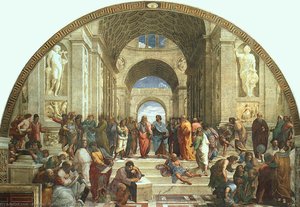 Афинская школа1511
 Сикстинская Мадонна1513
 Преображение1520
 Свадьба девы Марии1504
Эссе к произведению Jacob's Dream
 Masterpieces of Perfection: The Top 25 Greatest Artworks by RaphaelImmerse yourself in the grace of the High Renaissance. Explore 25 iconic masterpieces by Raphael, from divine Madonnas to legendary frescoe…
 High Renaissance vs. Mannerism: Harmony and the Shift to TensionMaster the shift from Renaissance harmony to Mannerist tension with our expert art analysis. Discover the evolution of Italian masterpieces…
 25 Masterpieces by Duccio di Buoninsegna: The Dawn of Sienese ArtJourney through the divine beauty of Duccio di Buoninsegna’s greatest works. From the Sienese School to Byzantine elegance, explore 25 time…