

 Примерить в интерьере
 Отправить
 Поделиться
 Подробнее
 Руководство

 Скачать
 Похожие объекты
 Рентгенография
 Слайд-шоу
 Статистика
Кофеварка


 Развернуть текст
Произведение искусства, представленное на этой странице, защищено законом об авторском праве, что исключает возможность законного создания или продажи его точной репродукции. Данная защита обеспечивается международными соглашениями, такими как Бернская конвенция и национальным законодательством, включая положения, изложенные в Закон США об авторском праве — Раздел 17.
Этот метод полностью соответствует нормам авторского права, так как он не предполагает копирования или дублирования защищенного произведения. Напротив, это творческая реинтерпретация — создание новой картины, которая вдохновлена оригиналом, но не является его точной копией.
Жикле / Арт-принты
Печать (жикле) или холст музейного качества с быстрыми сроками изготовления и широким выбором вариантов отделки. ( Заказать репродукцию ручной работы Перейти к цифровым изображениям)




P118B $10

P118H $10

P118W $10

P438Z $10

P508JH $12

P508YH $12

P805H $10

P805Z $10

P919BZ $10

P919G $10

P919XJ $10

P959ZH $10

P968JZ $12

W106C $8

W218G $10

W218JH $8

W218Y $10

W307PJ $10

W316G $10

W316PJ $8

W316Y $10

W398PJ $8

W4111J $10

W500HY $15

W500JH $15

W692G $12

W849H $8

W940BG $15

W953PJ $8




Выберите один из наших стандартных размеров, соответствующих оригинальным пропорциям произведения искусства.

Введите необходимую ширину и высоту, чтобы репродукция подошла к вашей раме или стене. При печати изображение можно только уменьшить, но нельзя увеличить больше оригинала, поэтому при выборе другого формата часть изображения может быть обрезана. Перед печатью мы отправим вам цифровой макет на утверждение. Изображение на этой странице не отображает реальную обрезку — ее можно увидеть только на макете.
Доставка по всему миру () за 2 недели вместо стандартных 4–5 недель. (22 Октябрь)

Бесплатная экспресс-доставка по всему миру

Высококачественный льняной холст

Полное страхование при транспортировке

Гарантия возврата таможенных пошлин

Гарантия точного цветового соответствия

100-дневный период возврата (только при обнаружении дефектов)

Гарантия возврата 100% средств

Скидка при заказе нескольких работ
 Вариант со стеклом доступен только для размеров менее 110 см

Кофеварка
Жикле / Арт-принты
Размер репродукции
-


Итоговая стоимость
$ 80
Описание работы: Кофеварка Майкла Грэйваса
Кофеварка Майкла Грэйваса – это выдающийся пример позднего модернизма и смелого возвращения к историческим корням в дизайне интерьера. Созданная американским архитектором и художником Майклом Грэйвсом в 1980-х годах, эта работа стала символом новой волны творчества, которая отвергала холодный функционализм прошлого ради теплоты человеческого опыта и эстетической красоты. Грэйвс был одним из самых ярких представителей архитектуры эпохи постмодернизма, который сумел объединить элементы классической орнаментации и современных технологий в гармоничное целое. Его подход к проектированию отличался глубоким пониманием истории искусства и культуры, а также умением передавать эмоции и идеи через формы и материалы.- Тема работы: Функциональный дизайн предмета быта – кофеварка.
- Стиль работы: Ардеко с элементами модернизма. Грэйвс вдохновлялся эстетикой эпохи 1920-х годов и использовал геометрические формы и симметрию для создания элегантного и запоминающегося образа.
- Техника исполнения: Фотография студийного качества с использованием мягкого рассеянного света. Это позволило добиться максимальной точности передачи цвета и текстуры объекта, подчеркнув его особенности и создавая ощущение глубины изображения.
- Символизм работы: Геометрические формы и симметрия отражают идею порядка и гармонии, а использование цвета создает эмоциональный эффект и усиливает визуальное восприятие изображения.
- Эмоциональное воздействие работы: Кофеварка Грэйваса вызывает ощущение элегантности, спокойствия и умиротворения. Она напоминает о важности красоты в повседневной жизни и вдохновляет на создание интерьера, который отражает индивидуальный стиль владельца.
Вопросы и ответы
Можно ли приобрести «Кофеварка» в виде художественной репродукции?
Чтобы заказать принт работы «Кофеварка», Michael Graves, просто перейдите на страницу заказа Художественная печать: художественная печать на хлопковом холсте или архивной холст-бумаге.
Как мне скачать изображение «Кофеварка», Michael Graves?
Для произведения «Кофеварка» доступна загрузка: на странице Скачать вы можете скачивание цифрового изображения в высоком разрешении.
Какое чувство вызывают цвета «Кофеварка», Michael Graves?
Палитра Нейтральные цвета в работе «Кофеварка», Michael Graves гармонирует с её Спокойствие эмоциональным настроем. Цвет — это один из способов, с помощью которых произведение передает чувства.
Биография художника
A Playful Rebellion: The Life and Vision of Michael Graves
Michael Graves, born in Indianapolis in 1934, emerged as a pivotal figure in late 20th and early 21st-century design—an architect who dared to challenge the austere dogma of modernism with a vibrant, often whimsical aesthetic. His journey wasn’t one of immediate rebellion, but rather a gradual evolution fueled by a growing dissatisfaction with the perceived rigidity and historical detachment of the prevailing architectural style. Initially steeped in modernist principles during his education at the University of Cincinnati and Harvard, Graves found himself increasingly drawn to the power of history, symbolism, and ornamentation—elements largely banished from the modernist lexicon. This shift wasn’t simply an aesthetic preference; it was a fundamental questioning of architecture's purpose: should buildings merely function, or should they also delight, communicate, and connect with people on a more emotional level? The seeds of this inquiry were sown during his time at the American Academy in Rome as a recipient of the prestigious Rome Prize, where he immersed himself in the rich tapestry of classical architecture. It was an experience that profoundly shaped his understanding of form, proportion, and the enduring power of architectural language.From The New York Five to Postmodern Iconoclasm
Graves’s ascent coincided with a period of significant experimentation within the architectural world. He became a key member of *The New York Five*, a group of architects—alongside Peter Eisenman, Charles Gwathmey, Richard Meier, and Robert A.M. Stern—who actively challenged modernist orthodoxy in the late 1960s and early 70s. Their work, characterized by formal complexity and a rejection of simplistic functionalism, laid the groundwork for the burgeoning postmodern movement. However, Graves’s vision extended beyond architectural boundaries. His involvement with *The Memphis Group* in the 1980s—an Italian design collective known for its boldly colored, playfully shaped furniture and objects—brought his designs to an even wider audience. This collaboration was a watershed moment, demonstrating that good design wasn't limited to buildings; it could permeate everyday life through accessible, aesthetically engaging products. It was a deliberate democratization of design, bringing artistry into the home. The influence of Robert Venturi and Denise Scott Brown’s seminal work, *Complexity and Contradiction in Architecture*, cannot be overstated. Their critique of modernist simplicity resonated deeply with Graves, encouraging him to embrace ambiguity, irony, and historical references—qualities that would become hallmarks of his style.Landmark Buildings and the Democratization of Design
Graves’s architectural portfolio is remarkably diverse, reflecting his willingness to adapt his distinctive aesthetic to a wide range of contexts. The Portland Building (1982) in Oregon remains perhaps his most iconic—and controversial—creation. Its colorful facade, adorned with oversized classical ornamentation, sparked intense debate, challenging conventional notions of what a civic building should look like. Similarly, the Humana Building in Louisville, Kentucky, is a playful and whimsical structure that incorporates exaggerated decorative elements, creating a sense of theatricality. Beyond these landmark projects, Graves demonstrated his versatility with works such as the Ministry of Culture in The Hague, Netherlands, and the Denver Public Library expansion—each showcasing his commitment to public spaces and thoughtful design solutions. But perhaps his most significant contribution was his ability to bridge the gap between high art and mass production. His collaborations with companies like Alessi resulted in iconic designs such as the 9093 Kettle, transforming a mundane kitchen object into a work of art. Further extending this philosophy, Graves partnered with Target and J.C. Penney to create affordable product lines, making stylish and well-designed items accessible to a broader audience—a truly revolutionary act that challenged the elitism often associated with design.A Legacy of Accessibility and Humanistic Design
In 2003, a life-altering event profoundly impacted Graves’s work: he suffered a partial paralysis that confined him to a wheelchair. This personal experience ignited a passionate advocacy for universal design—the principle of creating products and environments usable by all people, regardless of age, ability, or status. He recognized firsthand the challenges faced by individuals with disabilities and dedicated himself to improving healthcare environments, ensuring they were not only functional but also dignified and supportive. His later work reflected this commitment, prioritizing accessibility, comfort, and a humanistic approach to design. Throughout his illustrious career, Michael Graves received numerous accolades, including fellowships from the American Institute of Architects, the AIA Gold Medal, the National Medal of Arts, and the Driehaus Architecture Prize—testaments to his enduring influence and significant contributions to the field. He left behind a legacy that extends far beyond bricks and mortar or product designs; he challenged conventions, embraced playfulness, and championed a more inclusive and human-centered approach to design—a vision that continues to inspire generations of architects and designers today.
Michael Graves
1934 - 2015 , United States of America
Краткая справка
- Full Name: Michael Graves
- Nationality: American
- Date Of Birth: 1934
- Date Of Death: 2015
- Place Of Birth: Indianapolis, United States of America
- Notable Artworks:
- 9093 Kettle
- Coffee pot
- Portland Building
- Humana Building
- Artistic Movement Or Style: Postmodernism
- Artists Who Influenced This Artist:
- Robert Venturi
- Denise Scott Brown
- Artists Or Movements Influenced By This Artist:
- Postmodern architecture
- New Urbanism
Похожие статьи

Art Deco Masterpieces: Exploring the Era of Geometric Elegance and Modernist Luxury
Delve into the era of geometric elegance with our expert exploration of Art Deco masterpieces. Discover the history, iconic artists, and architectural marvels of this luxurious movement, and find museum-quality hand-painted oil reproductions to elevate your collection.
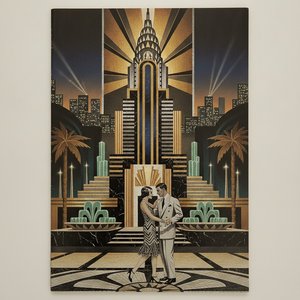
Art Deco Defined: The Glamour, Geometry, and Enduring Legacy of a Modern Icon
Explore the sophisticated world of Art Deco. Discover the history, geometric precision, and enduring glamour of this iconic 20th-century movement through an expert art-historical lens.

The Gilded Age Reimagined: Exploring the Aesthetic Principles & Enduring Legacy of Art Deco
Explore the captivating world of Art Deco! Discover its origins, defining features, cultural impact & enduring legacy. Expert insights for collectors and design enthusiasts. Shop handmade reproductions at OriginalUniqueArt.

The Architecture of Glamour: Unveiling the Timeless Geometric Elegance of Art Deco Masterpieces
Immerse yourself in the golden age of glamour. From the sleek lines of Tamara de Lempicka to the geometric soul of Erté, explore the enduring legacy of Art Deco. Discover the artistry that defined an era of luxury and modern sophistication through our expert art history guide.

The Glamour of Erté: Discovering the Art Deco Elegance and Geometric Mastery of Romain de Tirtoff
Step into a realm of perpetual elegance. Discover the visionary world of Erté, the high priest of Art Deco, and explore how his mastery of line and symmetry defined an era of unparalleled glamour and fashion sophistication through expert art history insights.
