Berlin Secession · 1900
Salome, Second Version (Ловис Коринт, 1900)
Ловис Коринт (1858–1925) создал(а) Salome, Second Version. Создано в 1900. Относится к направлению Berlin Secession. Выполнено в технике Acrylic On Canvas. Хранится в Museum der bildenden Künste в Лейпциг, Германия. Размер: 127 × 148 cm
- 1900
- Acrylic On Canvas
- 127 × 148 cm
- Museum der bildenden Künste, Лейпциг

 Предпросмотр

 Картина маслом ручной работы
 Поделиться
 Поделиться
 Информационный лист


 Скачать
 Похожие предметы
 Рентгенография
 Слайд-шоу
 Вопросы и ответы

 Статистика просмотров
Salome, Second Version вкратце
- Название
- Salome, Second Version
- Автор
- Ловис Коринт (1858–1925)
- Дата рождения художника
- Гвардейск, Россия
- Дата
- 1900
- Техника
- Acrylic On Canvas
- Размеры
- 127 × 148 cm
- Где посмотреть
- Museum der bildenden Künste, Лейпциг, Германия
- Движение
- Berlin Secession
- Период
- 19th Century
- Сюжет
- salome, herodias, dance, tragedy, execution, biblical
Что изображено на Salome, Second Version?
A Descent into Shadow and Desire: Lovis Corinth’s ‘Salome, Second Version’
Lovis Corinth's “Salome, Second Version,” painted in 1900, isn’t merely a depiction of the biblical tale; it’s a visceral exploration of power, betrayal, and the unsettling allure of darkness. This arresting canvas, currently residing within the Museum der Bildenden Künste in Leipzig, immediately commands attention with its dramatic composition and intensely expressive palette. Corinth, a pivotal figure bridging Impressionism and Expressionism, masterfully eschews traditional romanticism, instead presenting a Salome far removed from the idealized figures of earlier portrayals. Instead of a passive object of desire, she emerges as a complex, almost defiant presence – a woman caught in the throes of her own ambition and haunted by the consequences of her actions.
The painting’s genesis lies within the turbulent artistic landscape of early 20th-century Berlin. Corinth, having moved there from Munich, found himself at the heart of a vibrant, often contentious, art scene. The Secession group, with its emphasis on freedom and innovation, provided a fertile ground for his evolving style. “Salome” reflects this period’s fascination with psychological depth and emotional intensity – a departure from the polished surfaces of academic painting. Corinth deliberately chose to revisit the legend, not as a straightforward narrative illustration, but as an opportunity to delve into the character's inner turmoil and the moral ambiguity at the heart of the story.
The Dance and its Discontents: Technique and Composition
Corinth’s technique is immediately striking. He employs a bold, almost frenetic brushstroke – thick impasto applied with visible energy – that imbues the canvas with a sense of movement and urgency. The colors are rich and saturated, dominated by deep reds, purples, and blacks, creating an atmosphere of dramatic intensity. The composition itself is carefully constructed to draw the viewer into the scene. Salome, positioned centrally, dominates the foreground, her body tilted forward in a pose that suggests both vulnerability and calculated seduction. The figures surrounding her – the servant bearing the head, the watchful woman with the fan, and the shadowy men – are rendered with varying degrees of detail, contributing to the painting’s overall sense of unease and disorientation.
- Brushwork: Thick, expressive strokes create a dynamic and unsettling effect.
- Color Palette: Dominated by deep reds, purples, and blacks, evoking drama and shadow.
- Composition: Salome is centrally positioned, drawing the viewer's eye and emphasizing her role as the focal point of the scene.
Symbolism and Interpretation: A Portrait of Moral Ambiguity
Beyond the literal depiction of the biblical story, “Salome” is laden with symbolic meaning. The dance itself represents a dangerous allure – a seductive invitation to transgression. The severed head on the platter isn’t simply a gruesome trophy; it's a potent symbol of ambition and the destructive consequences of unchecked desire. Corinth deliberately avoids offering a clear moral judgment, instead presenting a complex portrait of a woman driven by both her own desires and the manipulative influence of her mother. The inclusion of the fan-bearing woman, often interpreted as Herodias, adds another layer of intrigue, suggesting a conspiracy at play – a deliberate orchestration of events that leads to John the Baptist’s demise.
Furthermore, the painting can be viewed through the lens of the burgeoning feminist movement of the time. Salome's defiant gaze and her unapologetic embrace of her sexuality challenged traditional notions of female virtue and presented a powerful image of female agency – albeit one ultimately consumed by tragedy. Corinth’s decision to portray her as a figure of both beauty and menace reflects the complex and often contradictory attitudes towards women in early 20th-century society.
Emotional Resonance: A Timeless Exploration of Human Darkness
“Salome, Second Version” continues to resonate with viewers today because it taps into fundamental human emotions – desire, betrayal, guilt, and the haunting awareness of our own mortality. Corinth’s masterful use of color, composition, and symbolism creates a painting that is both visually arresting and psychologically profound. It's not a comfortable image; it confronts us with the darker aspects of human nature and reminds us that even in moments of apparent beauty and pleasure, there can be a lurking sense of unease and impending doom. Reproductions of this powerful work offer a glimpse into Corinth’s artistic genius and provide an opportunity to contemplate the timeless themes explored within its shadowed depths.
В каком музее находится Salome, Second Version?
Museum der bildenden Künste
Лейпциг, Германия
Наследие, выкованное временем: Душа художественного сердца Лейпцига В ярком культурном ландшафте Саксонии, Германия, стоит институт, который служит гораздо большим, чем просто хранилищем шедевров; это живое свидетельство человеческой стойкости и непреходящей силы творчества. Museum der bildenden Künste (MdbK) в Лейпциге воплощает в себе семь столетий художественных поисков, сплетая повествование, охватывающее период от позднего Средневековья до самых передовых практик современности. Основанный в 1837 году как Лейпцигское художественное общество, путь музея был путем глубокой трансформации, отмеченной тенями разрушения и блеском возрождения.
 Картина «Стадии жизни» (1835) Каспара Давида Фридриха – это поразительное романтическое пейзажное полотно, изображающее спокойствие морского ландшафта, атмосферное освещение и символические темы человеческого пути. Идеально подходит для коллекционеров проКаспар Давид Фридрих, 1835
 Остров мертвых (Версия 5)Арнольд Бёклин, 1886
 БлаговещениеЭль Греко, 1610
Изображения в высоком разрешении: Salome, Second Version
Общественное достояние: художник умер в 1925.
Ловис Коринт, Salome, Second Version (1900), Museum der bildenden Künste. Общественное достояние
Ответы на вопросы о Salome, Second Version
Где сегодня можно увидеть «Salome, Second Version», Ловис Коринт?
Вы можете увидеть оригинал произведения «Salome, Second Version» в Museum der bildenden Künste, Лейпциг, Германия.
В каком году было создано произведение «Salome, Second Version», Ловис Коринт?
«Salome, Second Version», Ловис Коринт был создан в 1900 году.
В какой технике выполнено произведение «Salome, Second Version»?
Для создания «Salome, Second Version» Ловис Коринт использовал(а) технику Acrylic On Canvas. Эта техника определяет материальную природу оригинального произведения.
Каковы размеры оригинала «Salome, Second Version»?
Размер оригинала «Salome, Second Version», Ловис Коринт составляет 127 x 148 cm.
Что изображено на картине «Salome, Second Version», Ловис Коринт?
Темы, представленные в «Salome, Second Version», Ловис Коринт, включают salome, herodias, dance, tragedy, execution, biblical, figures. Вместе они раскрывают основной сюжет произведения.
Является ли произведение «Salome, Second Version» свободным от авторских прав?
Произведение «Salome, Second Version», Ловис Коринт находится в общественное достояние — срок действия авторского права истёк. Этот статус определяет правила воспроизведения изображения данного произведения.
Кто является автором работы «Salome, Second Version»?
Авторство работы «Salome, Second Version» приписывается Ловис Коринт.
К какому художественному направлению относится «Salome, Second Version», Ловис Коринт?
Художественное направление, к которому относится «Salome, Second Version», Ловис Коринт, — это Berlin Secession. Такая классификация позволяет соотнести данную работу с другими произведениями и мастерами того же периода.
К какому периоду творчества Ловис Коринт относится работа «Salome, Second Version»?
«Salome, Second Version» относится к Berlin Secession Era художника Ловис Коринт.
Об авторе, Ловис Коринт

1858–1925, Россия
Ловис Коринт
A Life Forged in Paint: The World of Lovis Corinth Lovis Corinth, born Franz Heinrich Louis on July 21, 1858, in the Prussian province of East Prussia, was a figure who embodied the dramatic shift occurring between the 19th and early 20th centuries within the art world. His life wasn’t one defined by immediate acclaim but rather a gradual evolution—a testament to relentless study, diverse influences, and ultimately, profound personal tragedy. Corinth's origins were deeply rooted in the rural landscapes of his birthplace, Tapiau, where his father worked as a tanner. This early exposure to the physicality of labor and the raw beauty of nature subtly permeated his later work, even amidst more sophisticated stylistic explorations.
Другие работы Ловис Коринт
 В скотобойне1893
 Вильгельмина с шаром1915
 Portrait of the Painter Paul Eugène Gorge1908
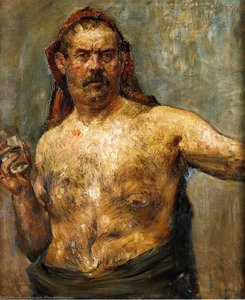 Self Portrait with a Glass1907
Эссе к произведению Salome, Second Version
 Lovis Corinth: Bridging Impressionism & Expressionism – A Study of Artistic EvolutionExplore the fascinating artistic journey of Lovis Corinth, a pivotal figure bridging Impressionism & Expressionism. Discover his evolution,…
 The Soul of the Brushstroke: Why Textured Impasto Defines the Magic of Impressionist MasterpiecesDiscover the tactile magic of Impressionism. Explore how the impasto technique breathes life into masterpieces through texture and light. E…
 Unveiling the Dreamer: The 25 Most Iconic Masterpieces by Gustave MoreauStep into the dreamlike world of Gustave Moreau. Explore 25 iconic Symbolist masterpieces, from mythic legends to opulent textures. Find in…