

 Примерить в интерьере
 Отправить
 Поделиться
 Подробнее
 Руководство

 Скачать
 Похожие объекты
 Рентгенография
 Слайд-шоу
 Q&A
Q&A Статистика
Этажерь


 Развернуть текст
Жикле / Арт-принты
Печать (жикле) или холст музейного качества с быстрыми сроками изготовления и широким выбором вариантов отделки. ( Заказать репродукцию ручной работы Перейти к цифровым изображениям)




P118B $10

P118H $10

P118W $10

P438Z $10

P508JH $12

P508YH $12

P805H $10

P805Z $10

P919BZ $10

P919G $10

P919XJ $10

P959ZH $10

P968JZ $12

W106C $8

W218G $10

W218JH $8

W218Y $10

W307PJ $10

W316G $10

W316PJ $8

W316Y $10

W398PJ $8

W4111J $10

W500HY $15

W500JH $15

W692G $12

W849H $8

W940BG $15

W953PJ $8




Выберите один из наших стандартных размеров, соответствующих оригинальным пропорциям произведения искусства.

Введите необходимую ширину и высоту, чтобы репродукция подошла к вашей раме или стене. При печати изображение можно только уменьшить, но нельзя увеличить больше оригинала, поэтому при выборе другого формата часть изображения может быть обрезана. Перед печатью мы отправим вам цифровой макет на утверждение. Изображение на этой странице не отображает реальную обрезку — ее можно увидеть только на макете.
Доставка по всему миру () за 2 недели вместо стандартных 4–5 недель. (28 Октябрь)

Бесплатная экспресс-доставка по всему миру

Высококачественный льняной холст

Полное страхование при транспортировке

Гарантия возврата таможенных пошлин

Гарантия точного цветового соответствия

100-дневный период возврата (только при обнаружении дефектов)

Гарантия возврата 100% средств

Скидка при заказе нескольких работ
 Вариант со стеклом доступен только для размеров менее 110 см

Этажерь
Жикле / Арт-принты
Размер репродукции
-


Итоговая стоимость
$ 80
Étagère: A Reflection of Rococo Elegance
The étagère, or console table, stands as a quintessential emblem of mid-nineteenth-century aristocratic interiors—a testament to refined taste and opulent display. Alexandre Roux’s masterful rendition captures this aesthetic perfectly, transporting viewers back to an era defined by lavish ornamentation and meticulous craftsmanship.
Historical Context: The Rococo Revival
Following the neoclassical dominance of earlier decades, the Rococo Revival emerged as a reaction against perceived rigidity, favoring curvilinear forms and exuberant decoration. Influenced by French Régence models—the reign of Louis XVI’s brother—artists sought to recapture the spirit of Belle Époque France, prioritizing beauty and sensory pleasure over strict geometric precision.
Artist's Technique: Mastering Wood Carving
Alexandre Roux demonstrates exceptional skill in rendering the intricate details of the wood carving. Employing glazing techniques—a method of applying thin layers of translucent pigment—he achieves remarkable luminosity and depth, highlighting the textural richness of the rosewood, chestnut, poplar, and bird’s-eye maple.
Composition & Visual Elements
The étagère dominates the frame, positioned centrally and occupying a significant portion of the visual space. The curving legs and supports guide the eye around the object, emphasizing its height and creating a dynamic interplay between horizontal and vertical lines. Subtle variations in color palette—primarily deep reds and browns accented by darker shades—contribute to the overall sense of grandeur.
Symbolism & Emotional Impact
More than just furniture, this étagère embodies the values of its time: wealth, sophistication, and an appreciation for artistic excellence. Its mirrored surface reflects light and symbolizes aspiration—a desire to elevate oneself aesthetically and socially. The piece evokes feelings of serenity and contemplation, inviting viewers to immerse themselves in a bygone era of elegance.
Connections to Other Artworks
Notably, Roux’s étagère shares stylistic similarities with the Alexander Roux étagère at the Metropolitan Museum of Art—a celebrated exemplar of Rococo Revival design. This connection underscores the widespread influence of Roux's artistic vision and its enduring appeal across generations.
Вопросы и ответы
Какое чувство передает «Этажерь», Alexandre Roux?
В работе «Этажерь» Элегантный настроение сочетается с Спокойствие эмоцией.
Можно ли увидеть «Этажерь», Alexandre Roux на своей стене перед покупкой?
Вы можете примерить работу «Этажерь», Alexandre Roux на свою стену с помощью страницы Предпросмотр в AR, используя технологию дополненной реальности на совместимом устройстве.
Откуда приезжают посетители «Этажерь», Alexandre Roux?
Страница Статистика для работы «Этажерь», Alexandre Roux содержит публичную статистику посещений: ежемесячное количество просмотров данного произведения, сравнение с наиболее популярными работами автора, а также географию посетителей.
Биография художника
Alexandre Roux: The Parisian Cabinetmaker Who Shaped American Style
Born in the heart of Paris in 1813, Alexandre Roux’s journey from a skilled craftsman to a celebrated furniture maker in New York City is a testament to ambition, talent, and an astute understanding of evolving aesthetic tastes. Initially trained within the traditional workshops of his native France, Roux’s career took a pivotal turn when he immigrated to America in 1844, establishing himself as a prominent figure in the burgeoning world of American furniture design. His legacy isn't defined by grand, revolutionary movements but rather by a consistent dedication to exquisite detail and a masterful command of the Rococo Revival style – a style that profoundly influenced the interiors of wealthy homes across the United States during the mid-19th century.
Roux’s early life instilled in him a deep appreciation for craftsmanship. While specific details about his family are scarce, it's clear he was raised within a lineage of artisans, absorbing techniques and an inherent understanding of materials. This foundation proved invaluable as he navigated the challenges of establishing a business in a new country. New York City, with its rapid growth and influx of European immigrants, presented both opportunities and competition. Roux quickly distinguished himself through his commitment to quality, utilizing premium materials like black walnut and incorporating intricate carvings that echoed the elegance of 18th-century France. His workshops became renowned for producing furniture that was not merely functional but also a statement of refined taste – a direct reflection of the Rococo Revival’s emphasis on ornamentation, curves, and luxurious finishes.
Notable Works and Artistic Style
Roux's work is characterized by an almost obsessive attention to detail. He wasn’t simply replicating historical styles; he was interpreting them with a distinctly American sensibility. His pieces often featured elaborate motifs – shells, scrolls, floral patterns – meticulously carved into the wood and finished with lustrous varnish. The “Parlor Cabinet,” perhaps his most celebrated creation, exemplifies this perfectly. This stunning piece showcases Roux's ability to seamlessly blend intricate designs with exquisite materials, creating a work that is both visually arresting and remarkably tactile. The inclusion of a bowl on one side and a mirror on the other adds an element of surprise and sophistication, demonstrating Roux’s understanding of how furniture could function as a sculptural object within a room.
Beyond the Parlor Cabinet, works like “Still Life Fish” offer further insight into Roux's artistic approach. While categorized as an oil painting, this piece reveals his keen eye for texture and light – qualities he undoubtedly translated to his furniture designs. The meticulous rendering of scales and reflections suggests a desire to capture not just the appearance but also the essence of the subject matter. This attention to realism, combined with a subtle impressionistic touch, sets Roux apart from purely academic painters.
Influence and Historical Context
Alexandre Roux’s rise coincided with a significant shift in American interior design. Following the War of 1812, there was a renewed interest in European styles, particularly those of the French monarchy. The Rococo Revival, characterized by its ornate detailing and emphasis on luxury, became immensely popular among wealthy Americans seeking to emulate the elegance of European aristocracy. Roux’s furniture played a crucial role in shaping this trend, providing a tangible link to the past while simultaneously reflecting the aspirations of the burgeoning American elite.
His work was showcased at the 1853 New York Crystal Palace Exhibition, a pivotal event that brought together innovations from across the globe. This exposure undoubtedly solidified Roux’s reputation and contributed to the growing demand for his furniture. The commission from the Astor family—a testament to his skill—further elevated his status within the American design community.
Legacy and Recognition
While Alexandre Roux may not be as widely recognized as some of his contemporaries, his contributions to American furniture design are undeniable. His pieces can be found in prestigious collections such as the Musée Baron Gérard in Bayeux, France, a testament to their enduring quality and artistic merit. The Metropolitan Museum of Art also holds an example of his work – a sideboard that provides valuable insight into his craftsmanship and stylistic choices. His influence extends beyond individual pieces; Roux helped establish a precedent for American furniture makers who sought to blend European tradition with local sensibilities, ultimately shaping the evolution of American design.
Alexandre Roux’s story is one of transatlantic ambition, artistic dedication, and a profound understanding of the power of beauty. His legacy lives on in the exquisite furniture he created – pieces that continue to inspire admiration for their craftsmanship, elegance, and enduring appeal.

Alexandre Roux
1813 - 1886 , France
Краткая справка
- Full Name: Alexandre Roux
- Nationality: French
- Date Of Birth: 1813
- Date Of Death: 1886
- Place Of Birth: Paris, France
- Notable Artworks:
- Parlor Cabinet
- Still life fish
- Artistic Movement Or Style: Rococo Revival, Victorian Furniture
Похожие статьи

The Elegance of Rococo: A Journey Through Pastel Dreams and Ornate Splendor
Embark on an elegant journey through the Rococo era. Discover the delicate beauty of pastel masterpieces, the intricate artistry of 18th-century French masters, and how this era of ornate splendor continues to inspire timeless luxury in fine art collecting.

The Rococo Aesthetic: Opulence, Rebellion & the Pursuit of Pleasure in 18th-Century Art
Explore the opulent world of Rococo art! Discover its origins, key artists like Watteau & Boucher, and lasting influence on design. Expert insights for collectors & enthusiasts.
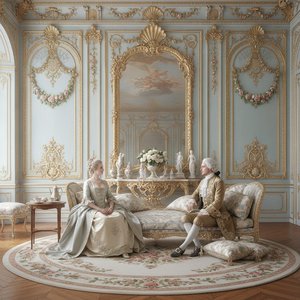
Rococo Art Guide: Elegance, Ornamentation, and the Era of Luxury
Explore the elegance of Rococo art. From Watteau to Fragonard, discover the history, aesthetics, and masters of 18th-century luxury in this expert guide for art lovers and collectors.

Rococo Art Guide: Integrating Elegant Curves and Pastel Opulence into Luxury Hotel Design
Master the Rococo aesthetic for luxury hospitality. Our expert guide explores integrating pastel palettes, ornate curves, and large-scale fine art reproductions into high-end hotel design through professional procurement and custom canvas solutions.

Топ-10 шедевров рококо: искусство, изменившее интерьеры | OriginalUniqueArt.com
Погрузитесь в мир рококо! Откройте для себя 10 шедевров искусства от Watteau, Boucher и Fragonard. Узнайте историю создания культовых картин и вдохновитесь для декора интерьера. Репродукции высокого качества на OriginalUniqueArt.com.
