

 Предпросмотр
 Поделиться
 Поделиться
 Детали произведения

 Скачать
 Похожие работы
 Рентгенография
 Слайд-шоу
Судьба Парижа
 Масло на холсте
- Настенный декор
- Baroque
 1640
1640 97.0 x 135.0 cm
 Музей Метрополитен
 Читать далее
Жикле / Арт-принт
Печать (жикле) или холст музейного качества с быстрыми сроками изготовления и широким выбором вариантов отделки. ( Купить картину ручной работы Купить изображение)




P118B $10

P118H $10

P118W $10

P438Z $10

P508JH $12

P508YH $12

P805H $10

P805Z $10

P919BZ $10

P919G $10

P919XJ $10

P959ZH $10

P968JZ $12

W106C $8

W218G $10

W218JH $8

W218Y $10

W307PJ $10

W316G $10

W316PJ $8

W316Y $10

W398PJ $8

W4111J $10

W500HY $15

W500JH $15

W692G $12

W849H $8

W940BG $15

W953PJ $8




Выберите один из наших стандартных размеров, соответствующих оригинальным пропорциям произведения искусства.

Вы можете указать свои собственные размеры, чтобы репродукция идеально подошла под конкретную раму или пространство. Если выбранный вами размер не будет соответствовать пропорциям оригинала, мы либо обрежем произведение, либо дополним изображение зеркальным отражением краев или однотонной заливкой. Перед началом производства вам будет отправлен цифровой макет для утверждения.
Пожалуйста, обратите внимание, что предварительный просмотр на экране не отображает фактическую обрезку или расширение изображения. Только макет точно покажет финальную композицию.
Несмотря на возможность заказа индивидуальных размеров, мы рекомендуем выбирать размер из предопределенного списка, чтобы сохранить оригинальные пропорции.
Доставка по всему миру () за 2 недели вместо стандартных 4/5 недель. (21 Август)

Бесплатная экспресс-доставка по всему миру

Высококачественный льняной холст

Полное страхование доставки

Гарантия возмещения таможенных пошлин

Гарантия точного соответствия цветов

Политика возврата в течение 60 дней (только при наличии дефектов)

Гарантия возврата 100% средств

Предложение оптовых скидок
 Вариант со стеклом доступен только для размеров менее 110 см

Судьба Парижа
Жикле / Арт-принт
Размер репродукции
-


Итоговая стоимость
$ 80
Описание предмета коллекционирования
Alessandro Turchi’s “Judgment of Paris”: A Baroque Symphony of Light and Myth
Alessandro Turchi (L'Orbetto), born in Verona around 1578, ascended to prominence as a sculptor and painter during the Italian Baroque era. His artistic legacy is marked by monumental figures imbued with dramatic emotion—a style he honed particularly during his tenure as head of the Accademia di San Luca in Rome from 1637 onwards. This captivating depiction of “Judgment of Paris,” completed circa 1640, exemplifies Turchi’s masterful approach to historical narrative and embodies the aesthetic ideals of his time. It's a piece that continues to resonate with viewers today due to its profound exploration of mythology and artistic innovation.- Subject Matter: The painting recounts the legendary tale of Paris, Prince of Troy, who was tasked with judging the beauty contest between Aphrodite, Hera, and Athena— goddesses vying for the affections of Helen, wife of Menelaus. This pivotal moment in Greek mythology served as inspiration for countless artistic interpretations throughout history.
- Style & Technique: Turchi’s signature style is characterized by a deliberate fusion of Caravaggism and lyrical grace. He skillfully employs sfumato—a technique perfected by Leonardo da Vinci—to achieve subtle gradations of light and shadow, creating an atmosphere of ethereal beauty and conveying deep psychological complexity. The soft modeling of figures contributes to the overall sense of realism while simultaneously elevating them beyond mere representation.
Composition & Visual Narrative
Symbolism & Emotional Impact
Historical Context
Reproductions & Inspiration
Explore a stunning hand-painted reproduction at OriginalUniqueArt.com!
Биография художника
The Enigmatic Vision of Alessandro Turchi
Alessandro Turchi, a contemporary artist whose work defies easy categorization, emerges as a compelling figure in the landscape of modern painting. While biographical details remain deliberately sparse – a choice reflective of his focus on the artwork itself rather than personal narrative – Turchi’s presence is powerfully felt through the evocative and often unsettling imagery that characterizes his oeuvre. Born in Italy (the exact year remains undisclosed), he has cultivated a practice deeply rooted in classical techniques yet boldly propelled into the realm of surrealism and psychological exploration. He continues to live and work, maintaining an intentionally low profile while his paintings gain increasing recognition for their unique blend of beauty and disquiet.A Dialogue with Tradition
Turchi’s artistic journey is marked by a profound engagement with the Old Masters. His technical proficiency is immediately apparent; he possesses a masterful command of oil painting, reminiscent of Renaissance masters like Caravaggio and Titian. However, rather than simply replicating their style, Turchi utilizes these skills as a foundation for something entirely new. He often employs chiaroscuro – the dramatic interplay of light and shadow – to create a sense of depth and emotional intensity, but his subjects are rarely historical or mythological. Instead, he populates his canvases with ambiguous figures, fragmented forms, and dreamlike landscapes that hint at hidden narratives and subconscious anxieties. This deliberate juxtaposition of classical technique and contemporary subject matter creates a fascinating tension within his work, inviting viewers to question the boundaries between past and present, reality and illusion. His paintings are not merely images; they are carefully constructed visual puzzles.Themes of Isolation and Transformation
Recurring motifs in Turchi’s paintings point towards a preoccupation with themes of isolation, transformation, and the fragility of human existence. Figures often appear alone or partially obscured, lost within vast, atmospheric spaces. The use of muted color palettes – predominantly blues, grays, and ochres – further reinforces this sense of melancholy and introspection. His landscapes are not idyllic retreats but rather desolate realms that mirror the inner turmoil of his subjects. The artist frequently depicts figures undergoing metamorphosis, their bodies dissolving into abstract shapes or merging with the surrounding environment. This exploration of physical and psychological change suggests a fascination with the fluidity of identity and the ephemeral nature of reality. While unsettling, these images are not devoid of beauty; Turchi’s masterful use of light and composition imbues even his most disturbing works with a haunting grace.Influences and Artistic Development
Identifying specific influences on Turchi's work is challenging, given the artist’s reluctance to discuss his creative process publicly. However, art historians have noted parallels between his paintings and the work of Giorgio de Chirico, particularly in their shared use of unsettling perspectives and dreamlike imagery. The Symbolist movement, with its emphasis on subjective experience and psychological symbolism, also appears to have played a significant role in shaping Turchi’s artistic vision.- Early works demonstrate a stronger adherence to classical realism, showcasing his technical skill but lacking the distinctive surrealist elements that would later define his style.
- A period of experimentation followed, characterized by bolder color palettes and more abstract compositions.
- His mature work represents a synthesis of these earlier influences, combining classical technique with contemporary subject matter and psychological symbolism.
Historical Significance and Legacy
Alessandro Turchi’s contribution to contemporary art lies in his ability to seamlessly blend tradition and innovation. He challenges viewers to reconsider the relationship between form and content, reality and illusion, and the conscious and subconscious mind. His paintings are not easily categorized; they resist simple interpretation and invite prolonged contemplation. In an era dominated by conceptual art and digital media, Turchi’s commitment to traditional painting techniques is a powerful statement in itself. While his work remains relatively under-the-radar, it has garnered increasing attention from collectors and critics alike, solidifying his position as a significant voice in the contemporary art world. His legacy will likely be defined by his unique ability to create images that are both beautiful and unsettling, inviting viewers on a journey into the depths of the human psyche. He is an artist who reminds us that true beauty often lies hidden within darkness.
Похожие статьи

Drama and Light: A Definitive Guide to the Italian Baroque Masterpieces and the Revolution of Chiaroscuro
Explore the dramatic world of Italian Baroque art. Discover how masters like Caravaggio used chiaroscuro and tenebrism to revolutionize painting through light, shadow, and profound realism. A definitive guide for history lovers and art collectors.

Барочная драма: Искусство величия в современном интерьере
Погрузитесь в мир роскоши и величия барокко! Узнайте об истории стиля, ключевых элементах интерьера и архитектуре. Вдохновляйтесь с и создайте свой неповторимый дизайн.

Italian Baroque Unlocked: High-Drama Art That Hits Hard
Dive into the high-drama world of Italian Baroque art. Discover how chiaroscuro, intense emotion, and theatrical lighting redefined aesthetics. Explore the visceral power of the Counter-Reformation through a modern lens with expert insights from OriginalUniqueArt.com.

10 Шедевров Барокко: Искусство, изменившее мир | OriginalUniqueArt.com
Погрузитесь в мир барокко! 10 шедевров Караваджо, Рембрандта и других великих художников. Узнайте историю создания культовых картин и найдите идеальную репродукцию для вашего интерьера на OriginalUniqueArt.com
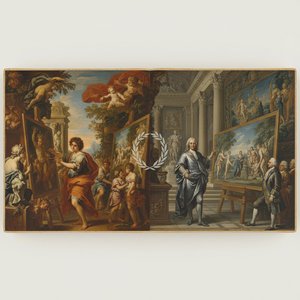
Simon Vouet: A Baroque Master's Journey from Italian Influence to French Classicism
Explore the life & art of Simon Vouet, a pivotal French Baroque painter who introduced Italian styles to France. Discover his masterpieces and lasting influence on 17th-century art.


