Портрет Рави Варма

Картины Рави Варма: 100 самых известных работ, взгляд галереи

Обновлено Ноябрь 2026 · рейтинг на основе нашего показателя популярности (количество поисковых запросов, посещений и заказов для каждой работы) · 136 работ Рави Варма в нашем каталоге

Вкратце

По мнению экспертов галереи, самой известной картиной Рави Варма является Damayanti And Hamsam (1899), оригинал которой находится в Sandeep - Gitanjali Maini Foundation, Bengaluru. Maharani Chimnabai II (1889) и Music Hath Charms (Kadambari) (1890) завершают трио, которое узнает каждый. Из 136 работ Рави Варма в нашем каталоге ниже представлены 100 самых известных: каждая из них является оригиналом с указанием года создания, музея и уникальных особенностей.

1848 – 1906, Килиманур Academic indian fusion Больше всего работ: The Raja Ravi Varma Heritage Foundation

Топ-10 картин художника Рави Варма в галерее

1
Damayanti And Hamsam (1899) работы Рави Варма

Damayanti And Hamsam

1899 · Oil On Canvas · Sandeep - Gitanjali Maini Foundation, Bengaluru

In the quietude of a sun-drenched afternoon, Raja Ravi Varma captures a scene that transcends time, inviting the viewer into a realm where myth and reality softly intertwine. Damayanti And Hamsam is not merely a painting; it is a window into the soul of Indian classical storytelling. The artwork presents a serene encounter between the beautiful Damayanti, daughter of King Bhima, and a graceful white swan, or hamsa. As she…

2
Maharani Chimnabai II (1889) работы Рави Варма

Maharani Chimnabai II

1889 · Painting · The Raja Ravi Varma Heritage Foundation, Бангалор

To stand before Maharani Chimnabai II is to be enveloped in an atmosphere of opulent grace and quiet power. Painted by the masterful hand of Raja Ravi Varma in 1889, this portrait transcends a mere depiction; it is a window into the zenith of late 19th-century Indian aristocracy, filtered through the sophisticated lens of European academic painting techniques. The subject herself commands attention—a vision of regal poise seated upon an…

3
Music Hath Charms (Kadambari) (1890) работы Рави Варма

Music Hath Charms (Kadambari)

1890 · Oil On Canvas · The Raja Ravi Varma Heritage Foundation, Бангалор

A woman sits upon a bench, her fingers poised near the strings of a sitar. She wears a traditional sari and a bindi rests upon her forehead. Around her, the world is quieted by the presence of greenery and two birds resting in the background. A clock hangs on the wall above her head, marking the passage of time in this indoor space. The scene captures a moment of focused…

4
Nair Lady With A Mirror (1894) работы Рави Варма

Nair Lady With A Mirror

1894 · Oil On Canvas · Sandeep - Gitanjali Maini Foundation, Bengaluru

This exquisite portrait, titled Nair Lady With A Mirror, invites the viewer into an intimate, almost whispered moment of personal contemplation. It captures a lady caught in the gentle ritual of grooming—the act of brushing her hair while gazing into the reflective surface before her. Raja Ravi Varma, master chronicler of everyday Indian life imbued with classical grace, has gifted us more than just a likeness; he offers a window…

5
Woman Holding a Fan (1895) работы Рави Варма

Woman Holding a Fan

1895 · Oil On Canvas · Музей Виктории и Альберта, Лондон

A woman leans against a stone balustrade, her silhouette softened by the fading light of a sunset. She wears a sari of shimmering light blue and silver, the fabric catching the glow like water under a summer moon. Her dark hair falls in fluid lines down her back, a deep contrast to the warm pinks and oranges of the sky behind her. In her hand, she holds a red fan,…

6
Shakuntala writing a love letter on a lotus leaf (1880) работы Рави Варма

Shakuntala writing a love letter on a lotus leaf

1880 · Oil On Canvas · Ашмолейский музей, Оксфорд

In the secluded shade of a forest hermitage, a woman pauses to compose her thoughts. This oil on canvas, dated between 1880 and 1885, captures Shakuntala in a moment of profound intimacy. She sits amidst lush, dark foliage, focused on a lotus leaf that serves as her parchment. Her companions observe from the periphery, their presence grounding the scene in a shared, silent experience. The composition utilizes a triangular arrangement…

7
Draupadi at the Court of Virat (1897) работы Рави Варма

Draupadi at the Court of Virat

1897 · Oil On Canvas · The Ganesh Shivaswamy Foundation, Бангалор

In the grand tapestry of Indian mythological storytelling, few moments resonate with as much profound tension and moral complexity as the scene captured in Raja Ravi Varma’s 1897 masterpiece, Draupadi at the Court of Virat. This painting serves as a breathtaking window into a pivotal moment of the Mahabharata, where the sanctity of a queen is challenged within the very halls meant to protect her. The composition centers on Draupadi,…

8
Radha in the Moonlight (1890) работы Рави Варма

Radha in the Moonlight

1890 · Acrylic On Canvas · The Ganesh Shivaswamy Foundation, Бангалор

Raja Ravi Varma's *Radha in the Moonlight*, painted in 1890, stands as a pinnacle of Indian Romanticism and a testament to his unparalleled skill in synthesizing Western academic training with deeply rooted Hindu iconography. This captivating portrait transcends mere representation; it embodies the essence of the ‘uttama nayika,’ the ideal woman figure from classical Sanskrit literature – a being of profound beauty, intelligence, and spiritual grace. The painting’s enduring appeal…

9
Махарани Травянкоре (1887) работы Рави Варма

Махарани Травянкоре

1887 · Масло на холсте · Королевская коллекция, Лондон

Перед вами не просто картина, а окно в мир роскоши и придворного великолепия конца XIX века. «Махарани Травянкоре» (Maharani of Travancore) – это шедевр Раджи Равиарма, выдающегося индийского художника, сумевшего соединить традиции европейской академической живописи с богатой культурой своей родины. Эта работа, выполненная в 1887 году, воплощает собой не только портрет знатной женщины, но и целую эпоху – период расцвета княжества Травянкоре на юго-западе Индии.

10
His Highness Chamarajendra Wadiyar X (1885) работы Рави Варма

His Highness Chamarajendra Wadiyar X

1885 · Oil On Canvas · The Raja Ravi Varma Heritage Foundation, Бангалор

To stand before this portrait is to step directly into the opulent drawing rooms and grand processions of late 19th-century Indian royalty. Depicting His Highness Chamarajendra Wadiyar X, the painting radiates an aura of inherited power and refined dignity. The subject himself is rendered with a commanding presence; his attire speaks volumes of his station, particularly the magnificent gold crown that crowns his noble brow. Every element—from the meticulously painted…

Картины художника Рави Варма, в рейтинге с 11 по 100

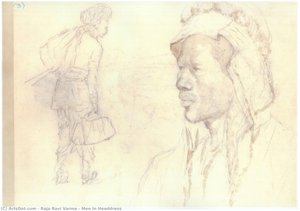
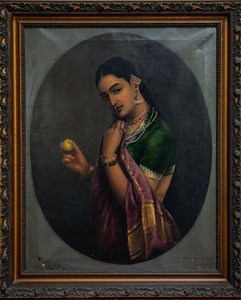
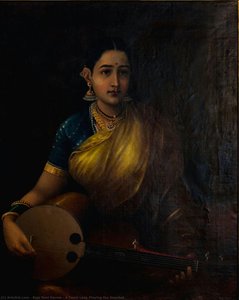
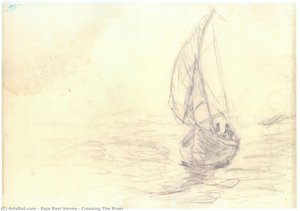
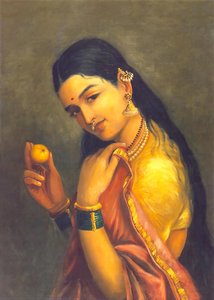
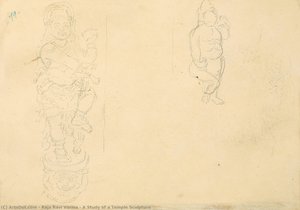
11Keechaka and Sairandhri (1891) работы Рави ВармаKeechaka and Sairandhri1891 · The Raja Ravi Varma Heritage Foundation 12Sketch Of An Unconscious Woman (1897) работы Рави ВармаSketch Of An Unconscious Woman1897 · The Raja Ravi Varma Heritage Foundation 13Bandi Balaiah Naidu (1904) работы Рави ВармаBandi Balaiah Naidu1904 · Sandeep - Gitanjali Maini Foundation 14War scene mural by C Raja Raja Varma (2018) работы Рави ВармаWar scene mural by C Raja Raja Varma2018 · The Raja Ravi Varma Heritage Foundation 15Men In Headdress (1885) работы Рави ВармаMen In Headdress1885 · The Raja Ravi Varma Heritage Foundation 16Untitled (Tilottama) (1896) работы Рави ВармаUntitled (Tilottama)1896 · The Raja Ravi Varma Heritage Foundation 17Shakuntala Patra Lekhan of Shakuntala Writing a Love Letter работы Рави ВармаShakuntala Patra Lekhan of Shakuntala Writing a Love LetterThe Ganesh Shivaswamy Foundation 18Bombay Singer (Bombay Songstress) (1893) работы Рави ВармаBombay Singer (Bombay Songstress)1893 · The Raja Ravi Varma Heritage Foundation 19Lady Making A Garland (1895) работы Рави ВармаLady Making A Garland1895 · The Raja Ravi Varma Heritage Foundation 20Sita in Ashoka Grove (1894) работы Рави ВармаSita in Ashoka Grove1894 · The Raja Ravi Varma Heritage Foundation 21The Coquette (1893) работы Рави ВармаThe Coquette1893 · The Raja Ravi Varma Heritage Foundation 22Krishna (1905) работы Рави ВармаKrishna1905 · The Raja Ravi Varma Heritage Foundation 23Shakuntala And Her Companion (1880) работы Рави ВармаShakuntala And Her Companion1880 · The Raja Ravi Varma Heritage Foundation 24Damayanti Abandoned In The Forest (1894) работы Рави ВармаDamayanti Abandoned In The Forest1894 · Sandeep - Gitanjali Maini Foundation 25Woman Holding a Fruit (1800) работы Рави ВармаWoman Holding a Fruit1800 · National Gallery of Modern Art 26A Tamil Lady Playing the Swarbat работы Рави ВармаA Tamil Lady Playing the SwarbatThe Ganesh Shivaswamy Foundation 27A Study of a Woman- possibly for Madalasa and Rutudwaja работы Рави ВармаA Study of a Woman- possibly for Madalasa and RutudwajaThe Ganesh Shivaswamy Foundation 28Тодди Тэппер (1895) работы Рави ВармаТодди Тэппер1895 · The Raja Ravi Varma Heritage Foundation 29Letter Written by Raja Ravi Varma (1906) работы Рави ВармаLetter Written by Raja Ravi Varma1906 · The Raja Ravi Varma Heritage Foundation 30Sita Bhumipravesh (1880) работы Рави ВармаSita Bhumipravesh1880 · The Raja Ravi Varma Heritage Foundation 31Юдит (1889) работы Рави ВармаЮдит1889 · The Raja Ravi Varma Heritage Foundation 32Woman Reclining On The Waterfront (1898) работы Рави ВармаWoman Reclining On The Waterfront1898 · The Raja Ravi Varma Heritage Foundation 33Maharani Lakshmi Bayi (1883) работы Рави ВармаMaharani Lakshmi Bayi1883 · Sree Chitra Art Gallery 34Laxman Shakti (1880) работы Рави ВармаLaxman Shakti1880 35Sketch Of A Lady (1890) работы Рави ВармаSketch Of A Lady1890 · The Raja Ravi Varma Heritage Foundation 36Woman At The Tap (1890) работы Рави ВармаWoman At The Tap1890 · The Raja Ravi Varma Heritage Foundation 37Bharani Thirunal Mahaprabha Amma Thampuran (1880) работы Рави ВармаBharani Thirunal Mahaprabha Amma Thampuran1880 · The Raja Ravi Varma Heritage Foundation 38Vishvamitra (1897) работы Рави ВармаVishvamitra1897 39Preparatory Sketch for Gangavatran работы Рави ВармаPreparatory Sketch for GangavatranThe Ganesh Shivaswamy Foundation 40Crossing The River (1895) работы Рави ВармаCrossing The River1895 · The Raja Ravi Varma Heritage Foundation 41Shakuntala and Sakhis (1930) работы Рави ВармаShakuntala and Sakhis1930 42Hesitation (1880) работы Рави ВармаHesitation1880 · The Raja Ravi Varma Heritage Foundation 43Waiting For The Train (1891) работы Рави ВармаWaiting For The Train1891 · The Raja Ravi Varma Heritage Foundation 44Yuvaraj Kanterava Narasimharaja Wadiyar In A Hunting Dress (1902) работы Рави ВармаYuvaraj Kanterava Narasimharaja Wadiyar In A Hunting Dress1902 · The Raja Ravi Varma Heritage Foundation 45Reverie (1900) работы Рави ВармаReverie1900 · Kerala Museum 46A Lady Holding A Fruit работы Рави ВармаA Lady Holding A Fruit 47Hanuman (1870) работы Рави ВармаHanuman1870 · The Raja Ravi Varma Heritage Foundation 48An Adaptation of the poem (1898) работы Рави ВармаAn Adaptation of the poem1898 · The Ganesh Shivaswamy Foundation 49Baby & Princess (1877) работы Рави ВармаBaby & Princess1877 · Sandeep - Gitanjali Maini Foundation 50Lady with Violin (1880) работы Рави ВармаLady with Violin1880 · The Raja Ravi Varma Heritage Foundation 51Matriarch of Harippad (1885) работы Рави ВармаMatriarch of Harippad1885 · The Raja Ravi Varma Heritage Foundation 52The Fakir (1890) работы Рави ВармаThe Fakir1890 · The Raja Ravi Varma Heritage Foundation 53A Musician (1890) работы Рави ВармаA Musician1890 · The Raja Ravi Varma Heritage Foundation 54In Conversation (1890) работы Рави ВармаIn Conversation1890 · The Raja Ravi Varma Heritage Foundation 55Muslim Men Praying (1890) работы Рави ВармаMuslim Men Praying1890 · The Raja Ravi Varma Heritage Foundation 56Woman Washing Clothes (1890) работы Рави ВармаWoman Washing Clothes1890 · The Raja Ravi Varma Heritage Foundation 57A Young Scholar (1893) работы Рави ВармаA Young Scholar1893 · The Raja Ravi Varma Heritage Foundation 58Sketch Of A Young Girl (1896) работы Рави ВармаSketch Of A Young Girl1896 · The Raja Ravi Varma Heritage Foundation 59Woman With Musical Instrument (1880) работы Рави ВармаWoman With Musical Instrument1880 · The Raja Ravi Varma Heritage Foundation 60The Gypsies Of South India (1893) работы Рави ВармаThe Gypsies Of South India1893 · The Raja Ravi Varma Heritage Foundation 61Ornate mural by C Raja Raja Varma (2018) работы Рави ВармаOrnate mural by C Raja Raja Varma2018 · The Raja Ravi Varma Heritage Foundation 62Ikkavu Thampuran (1900) работы Рави ВармаIkkavu Thampuran1900 · The Raja Ravi Varma Heritage Foundation 63Charity работы Рави ВармаCharitySree Chitra Art Gallery 64Nala And Damayanti работы Рави ВармаNala And Damayanti 65Simhika And Sairandri работы Рави ВармаSimhika And Sairandri 66Maliyali Beauty работы Рави ВармаMaliyali Beauty 67The Milkmaid работы Рави ВармаThe MilkmaidSree Chitra Art Gallery 68Maharani With Prince работы Рави ВармаMaharani With Prince 69Two figures Under an Arch работы Рави ВармаTwo figures Under an ArchThe Ganesh Shivaswamy Foundation 70Yashoda and Krishna работы Рави ВармаYashoda and KrishnaThe Ganesh Shivaswamy Foundation 71Gangawataran Sketch (1890) работы Рави ВармаGangawataran Sketch1890 · The Raja Ravi Varma Heritage Foundation 72Initial Sketch Of Gangawataran (1893) работы Рави ВармаInitial Sketch Of Gangawataran1893 · The Raja Ravi Varma Heritage Foundation 73Untitled (Damayanti) (1890) работы Рави ВармаUntitled (Damayanti)1890 · The Raja Ravi Varma Heritage Foundation 74Gypsies of South India- Preliminary Study (1893) работы Рави ВармаGypsies of South India- Preliminary Study1893 · The Ganesh Shivaswamy Foundation 75Gypsies of South India- Preliminary Study (1893) работы Рави ВармаGypsies of South India- Preliminary Study1893 · The Ganesh Shivaswamy Foundation 76A Study for Yogi Gopichand работы Рави ВармаA Study for Yogi GopichandThe Ganesh Shivaswamy Foundation 77The Maharaja of Travancore welcoming the Duke of Buckingham and Chandos (1881) работы Рави ВармаThe Maharaja of Travancore welcoming the Duke of Buckingham and Chandos1881 · The Ganesh Shivaswamy Foundation 78A Tamil Lady (1900) работы Рави ВармаA Tamil Lady1900 · The Raja Ravi Varma Heritage Foundation 79A Study of a Temple Sculpture работы Рави ВармаA Study of a Temple SculptureThe Ganesh Shivaswamy Foundation 80Mural of Horse by C Raja Raja Varma (2018) работы Рави ВармаMural of Horse by C Raja Raja Varma2018 · The Raja Ravi Varma Heritage Foundation 81Her Highness Janaki Subamma Bai Sahib of Pudukkottai (1879) работы Рави ВармаHer Highness Janaki Subamma Bai Sahib of Pudukkottai1879 · The Raja Ravi Varma Heritage Foundation 82A Parsi Couple работы Рави ВармаA Parsi CoupleThe Ganesh Shivaswamy Foundation 83Ravana Carrying Off Sita and Opposed by Jatayu (1906) работы Рави ВармаRavana Carrying Off Sita and Opposed by Jatayu1906 · The Raja Ravi Varma Heritage Foundation 84Portrait Of Gentleman работы Рави ВармаPortrait Of Gentleman 85Kerala Varma Valiya Koil Thampuran (1880) работы Рави ВармаKerala Varma Valiya Koil Thampuran1880 · The Ganesh Shivaswamy Foundation 86A Sketch of an Elephant carrying the Travancore State Emblem работы Рави ВармаA Sketch of an Elephant carrying the Travancore State EmblemThe Ganesh Shivaswamy Foundation 87Shakuntala - работы Рави ВармаShakuntala - 88Pleasing работы Рави ВармаPleasing 89Portrait Of Woman работы Рави ВармаPortrait Of Woman 90Press, 20th Century работы Рави ВармаPress, 20th Century 91Malabar Lady работы Рави ВармаMalabar Lady 92Lady In Moonlight работы Рави ВармаLady In Moonlight 93Woman With Veena работы Рави ВармаWoman With Veena 94A Study of a Man работы Рави ВармаA Study of a ManThe Ganesh Shivaswamy Foundation 95Maharana prathap singh работы Рави ВармаMaharana prathap singh 96Draupati At The Court Of Virata работы Рави ВармаDraupati At The Court Of Virata 97A Sketch of a Man Writing a Letter работы Рави ВармаA Sketch of a Man Writing a LetterThe Ganesh Shivaswamy Foundation 98The Bairagi or the Recluse работы Рави ВармаThe Bairagi or the RecluseThe Ganesh Shivaswamy Foundation 99Here Comes Papa работы Рави ВармаHere Comes Papa 100Droupathi In Virata's Palace работы Рави ВармаDroupathi In Virata's Palace

Знаменитые картины Рави Варма по периодам творчества

Сюжеты, которые вдохновляли Рави Варма

Четыре темы, которые чаще всего встречаются в этих оригиналах, каждая из которых представлена своим лучшим образцом.

Музеи, в которых хранятся оригиналы работ Рави Варма

8 музеев, в которых находится большинство картин со страницы.

Музей Город Работы Рави Варма Картины из этого списка
The Raja Ravi Varma Heritage Foundation, БангалорThe Raja Ravi Varma Heritage Foundation Бангалор 49 Maharani Chimnabai II, Music Hath Charms (Kadambari), His Highness Chamarajendra Wadiyar X
The Ganesh Shivaswamy Foundation, БангалорThe Ganesh Shivaswamy Foundation Бангалор 28 Draupadi at the Court of Virat, Radha in the Moonlight, Shakuntala Patra Lekhan of Shakuntala Writing a Love Letter
Sandeep - Gitanjali Maini Foundation, BengaluruSandeep - Gitanjali Maini Foundation Bengaluru 5 Damayanti And Hamsam, Nair Lady With A Mirror, Bandi Balaiah Naidu
Sree Chitra Art Gallery 3 Maharani Lakshmi Bayi, Charity, The Milkmaid
National Gallery of Modern Art, Нью-ДелиNational Gallery of Modern Art Нью-Дели 2 Woman Holding a Fruit
Музей Виктории и Альберта, ЛондонМузей Виктории и Альберта Лондон 1 Woman Holding a Fan
Ашмолейский музей, ОксфордАшмолейский музей Оксфорд 1 Shakuntala writing a love letter on a lotus leaf
Королевская коллекция, ЛондонКоролевская коллекция Лондон 1 Махарани Травянкоре

Рави Варма, одна знаковая картина в десятилетие

Произведения по десятилетиям

Выберите десятилетие, чтобы увидеть шедевр, определяющий его.

Картины Рави Варма: ответы галереи

Какая картина Рави Варма является самой известной из всех?Узнать ответ

Damayanti And Hamsam (1899), Sandeep - Gitanjali Maini Foundation, Bengaluru. Далее следуют Maharani Chimnabai II (1889) и Music Hath Charms (Kadambari) (1890).

Сколько лет было Рави Варма, когда была завершена работа Damayanti And Hamsam?Узнать ответ

51 лет: Damayanti And Hamsam датируется 1899 годом, а Рави Варма родился в 1848.

Какие 10 лучших картин принадлежат Рави Варма?Узнать ответ

Damayanti And Hamsam, Maharani Chimnabai II, Music Hath Charms (Kadambari), Nair Lady With A Mirror, Woman Holding a Fan, Shakuntala writing a love letter on a lotus leaf, Draupadi at the Court of Virat, Radha in the Moonlight, Махарани Травянкоре и His Highness Chamarajendra Wadiyar X. В рейтинге выше указаны год создания и музей для каждой работы.

Сколько работ создал(а) Рави Варма?Узнать ответ

В нашем каталоге представлено 136 работ Рави Варма, созданных в период с 1870 по 1906.

Где висят самые известные оригинальные работы Рави Варма?Узнать ответ

В основном в The Raja Ravi Varma Heritage Foundation (Бангалор), The Ganesh Shivaswamy Foundation (Бангалор) и Sandeep - Gitanjali Maini Foundation (Bengaluru). В таблице выше перечислены все музеи.

Когда Рави Варма создал свои самые известные картины?Узнать ответ

В 1890s: 35 из 100 работ на этой странице были созданы в этот период, Damayanti And Hamsam из них.

Какие из самых известных работ Рави Варма являются наиболее ранними и наиболее поздними?Узнать ответ

На этой странице самая ранняя работа датирована Hanuman (1870), а самая поздняя — Letter Written by Raja Ravi Varma (1906).

К каким сюжетам Рави Варма обращался чаще всего?Узнать ответ

Woman (16), Portrait (15) и Raja ravi varma (14) в 100 работах на этой странице.

В какой технике чаще всего работал(а) Рави Варма?Узнать ответ

Oil On Canvas, для 28 из 100 работ на этой странице.

С каким направлением связан Рави Варма?Узнать ответ

Academic indian fusion, судя по оригиналам на этой странице.

Какие оригинальные работы Рави Варма хранятся в The Raja Ravi Varma Heritage Foundation?Узнать ответ

Maharani Chimnabai II, Music Hath Charms (Kadambari) и His Highness Chamarajendra Wadiyar X: в коллекции The Raja Ravi Varma Heritage Foundation, Бангалор находится 47 работ со страницы.

Рави Варма: художник

The Princely Brush: Raja Ravi Varma and the Dawn of Modern Indian Painting

Raja Ravi Varma, a name that echoes through the halls of Indian art history, was more than just a painter; he was a cultural architect, a bridge between tradition and modernity. Born in 1848 within the opulent confines of Kilimanoor Palace, nestled amidst the verdant hills of Kerala, his life unfolded as a remarkable synthesis of aristocratic privilege and an incandescent creative spirit. He wasn’t merely capturing images on canvas; he was meticulously crafting a new visual language for India – one that blended the rigorous techniques of European academic painting with the deeply rooted mythology and aesthetics of Hindu art. His family's long-standing connection to the Travancore royal house, tracing back through generations of service and loyalty, provided him not only with access to unparalleled artistic training but also a profound understanding of Indian courtly life – an understanding that would profoundly shape his artistic vision. From a young age, Ravi Varma displayed an extraordinary aptitude for art, nurtured by his uncle, Raja Raja Varma, who initiated him into the world of drawing and painting, primarily within the established traditions of the Tanjore School. However, Ravi Varma’s ambition extended far beyond mere imitation; he possessed a burning desire to master techniques that would allow him to not just replicate likeness but to imbue his paintings with genuine emotion, narrative depth, and a palpable sense of human experience.

A Fusion of Worlds: Technique and Inspiration

Ravi Varma's artistic journey took an extraordinary turn when he encountered the works of European masters – particularly during his travels across India and through interactions with British officials stationed in the region. He was utterly captivated by the realism, precision, and technical mastery evident in academic painting. He diligently studied its principles: perspective, anatomy, light, and shadow—elements that were largely absent from Indian art at the time. Yet, unlike many of his contemporaries who simply adopted Western styles superficially, Varma demonstrated a remarkable ability to adapt these techniques to serve distinctly Indian subjects. His canvases transformed into vibrant stages for scenes drawn from the epic narratives of the Ramayana, the Mahabharata, and the Puranas – stories populated by gods and goddesses rendered with an unprecedented level of naturalism and psychological complexity. He didn’t merely illustrate religious tales; he breathed life into them, imbuing them with human emotion, vulnerability, and a profound sense of drama. Consider his portrayal of *Shakuntala*, for instance—a scene brimming with longing, despair, and quiet dignity. Before Varma, depictions of deities often adhered to rigid, stylized conventions, prioritizing symbolic representation over emotional resonance. Ravi Varma dared to portray them as relatable figures – beautiful, powerful, yet imbued with a palpable humanity. His mastery of oil painting, a relatively new medium in India during his time, allowed him to achieve an astonishing level of detail and luminosity—a quality that dramatically enhanced the emotional impact of his work. He meticulously studied the methods of Theodore Jensen, a Danish-born British artist who had been brought to Travancore to paint portraits for the royal family, absorbing not just the technical aspects but also the European approach to capturing light and form.

Democratizing Art: Lithographs and Public Appeal

Recognizing that his exquisite paintings were largely confined to the elite circles of royalty and art connoisseurs, Raja Ravi Varma embarked on a bold initiative to make his art accessible to a wider audience. In 1894, he established the Raja Ravi Varma Fine Arts Lithographic Press – a revolutionary step in Indian artistic history. This groundbreaking venture enabled the mass production of affordable lithographs based on his paintings, transforming them from exclusive treasures into widely distributed objects of beauty and contemplation. Suddenly, images of Hindu deities and mythological scenes were no longer restricted to temples or palaces; they adorned homes across India, becoming cherished symbols of cultural pride and religious devotion. The lithographs themselves weren’t mere reproductions; they were carefully crafted interpretations—each line, each shade, meticulously rendered to capture the essence of Varma's originals. This act of “democratizing art” had a profound and lasting impact on Indian society, fostering a broader appreciation for visual culture and shaping popular perceptions of religious iconography. It also established Ravi Varma as a truly public figure—his images becoming ubiquitous symbols of Indian identity and artistic achievement. The press itself was eventually sold to Germans due to financial difficulties, but the legacy of its innovation remained firmly entrenched in the Indian art world.

Major Achievements and Artistic Style

Ravi Varma’s artistic style can be characterized as a masterful synthesis of European academic techniques and deeply rooted Indian traditions. He seamlessly integrated elements of perspective, anatomy, and light—learned from his studies of Western masters—with the rich symbolism, vibrant colors, and narrative complexity of Hindu mythology. His paintings are renowned for their realism, naturalism, and emotional depth – qualities that were largely absent in previous generations of Indian artists. Key works such as *Hansa Damayanthi*, depicting a poignant scene from the Mahabharata, and *The Maharani of Travancore*, a regal portrait capturing both outward beauty and inner character, exemplify his extraordinary skill and artistic vision. He was also one of the first Indian artists to utilize oil paints extensively, achieving an unprecedented level of detail and luminosity in his work. Furthermore, he pioneered the use of lithography for mass reproduction, making his art accessible to a vast audience. His influence extended beyond painting; he played a crucial role in shaping modern Indian identity through his artistic representations of Hindu mythology and culture.

Historical Significance and Legacy

Raja Ravi Varma passed away on October 2, 1906, leaving behind an enduring legacy that continues to inspire artists and scholars today. He is widely regarded as the “Father of Modern Indian Art” – a title earned through his groundbreaking innovations in technique, subject matter, and accessibility. His work challenged conventional artistic norms, embraced innovation, and skillfully blended tradition with modernity. He not only transformed the landscape of Indian painting but also laid the foundation for subsequent generations of artists who sought to create a distinctly national artistic identity. Museums across India—including The Raja Ravi Varma Heritage Foundation in Bangalore and The Ganesh Shivaswamy Foundation—continue to preserve and celebrate his remarkable legacy, ensuring that his vision endures for future generations. His paintings remain powerful testaments to his genius – masterpieces that capture the beauty, spirituality, and cultural richness of India, reminding us of a pivotal moment in the nation’s artistic journey.