

1


Обновлено Ноябрь 2026 · рейтинг на основе нашего показателя популярности (количество поисковых запросов, посещений и заказов для каждой работы) · 10 работ Philips Augustijn Immenraet в нашем каталоге
Вкратце
Wooded Landscape (1650) — это самая популярная картина Philips Augustijn Immenraet; оригинал находится в Dulwich Picture Gallery, Лондон. Затем взгляд переходит на Landscape with Herders and Ruins (II) (1650) и The Repudiation of Hagar (1659). Из 10 работ Philips Augustijn Immenraet в нашем каталоге эти 10 являются самыми известными: каждая из них — уникальный оригинал с указанием года создания, музея и причины ее бессмертия.


The Repudiation of Hagar is a religious art painting by the Flemish artist Philips Augustijn Immenraet. Created before 1659, this work belongs to the tradition of Flemish culture. The composition focuses on a biblical narrative set within a landscape of monumental classical ruins. Large, crumbling Corinthian columns and broken stone fragments occupy the right side of the frame, while a large tree with twisting branches stands to the left. The…


4 музеев, в которых находится большинство картин со страницы.
| Музей | Город | Работы Philips Augustijn Immenraet | Картины из этого списка |
|---|---|---|---|
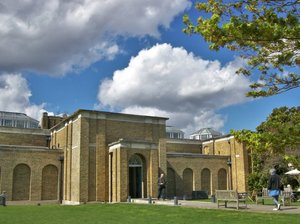 Dulwich Picture Gallery |
Лондон | 1 | Wooded Landscape |
 Музей истории искусств |
Вена | 1 | The Repudiation of Hagar |
 Musée Sainte-Croix |
Poitiers | 1 | Landscape |
 Национальный музей Швеции |
Стокгольм | 1 | Landscape with High Trees near a Ravine |
Выберите десятилетие, чтобы увидеть шедевр, определяющий его.
Wooded Landscape (1650), Dulwich Picture Gallery, Лондон. Далее следуют Landscape with Herders and Ruins (II) (1650) и The Repudiation of Hagar (1659).
23 лет: Wooded Landscape датируется 1650 годом, а Philips Augustijn Immenraet родился в 1627.
Wooded Landscape, Landscape with Herders and Ruins (II), The Repudiation of Hagar, A wooded landscape with a herder by a stream, Cartouche with floral decoration and two parrots around a landscape, Landscape with Herders and Ruins, Landscape with figures, Landscape, Landscape with a company on a bridge crossing a water fall, 1678 и Landscape with High Trees near a Ravine. В рейтинге выше указаны год создания и музей для каждой работы.
В нашем каталоге представлено 10 работ Philips Augustijn Immenraet, созданных в период с 1650 по 1678.
В основном в Dulwich Picture Gallery (Лондон), Музей истории искусств (Вена) и Musée Sainte-Croix (Poitiers). В таблице выше перечислены все музеи.
В 1650s: 6 из 10 работ на этой странице были созданы в этот период, Wooded Landscape из них.
На этой странице самая ранняя работа датирована Wooded Landscape (1650), а самая поздняя — Landscape with a company on a bridge crossing a water fall, 1678 (1678).
In the vibrant heart of the seventeenth-century Flemish Baroque, a period defined by dramatic movement and rich textures, Philips Augustijn Immenraet emerged as a painter of singular vision. Born in Antwerp in 1627 to a German immigrant piano builder, Immenraet was destined for a life steeped in the artistic traditions of his homeland. While many of his contemporaries remained tethered to the heavy, receding planes of traditional landscape composition, Immenlaret sought a different path—one marked by an infusion of light and a burgeoning sense of atmospheric depth. His early training under the landscape specialist Lucas van Uden provided him with a robust foundation in the Flemish style, yet his spirit was far too restless to be confined by established boundaries.
The trajectory of Immenraet’s career suggests a profound engagement with the wider European art scene. It is widely believed that during his formative years, he traveled through Italy, perhaps residing there between 1645 and 1655. This sojourn likely acted as a transformative catalyst, introducing him to the Italianate style characterized by sun-drenched vistas and classical clarity. Upon his return to Antwerp, he did not merely replicate what he had seen; instead, he synthesized these Mediterranean influences with the lush, wooded traditions of the North. His work began to exhibit a remarkable brightness, breaking away from the darker, more somber palettes of his predecessors and hinting at a pre-Romantic sensibility that would not fully bloom in art for decades to come.
One of the most fascinating aspects of Immenraet’s professional life was his mastery of the collaborative spirit, a hallmark of the Antwerp Guild of Saint Luke. In an era where large-scale commissions often required specialized talents, Immenraet frequently acted as the architect of the landscape, providing the sweeping vistas and atmospheric settings that served as the stage for other artists' brilliance. He would meticulously paint the terrain, while specialists were brought in to breathe life into the staffage—the small, vital figures that populate his worlds.
His compositions often featured a delicate interplay of elements:
Immenraet’s contribution to the Flemish Baroque extends beyond mere technical skill; he was a bridge between eras. By introducing a new luminosity and moving away from the rigid, oblique recession of planes, he helped pave the way for a more naturalistic and emotionally resonant approach to landscape painting. His work shares a stylistic kinship with the Sonian Forest Painters and masters like Cornelis Huysmans, yet his unique ability to capture light gives his oeuvre a distinct, almost ethereal quality.
Though he passed away in Antwerp in 1679, leaving behind a legacy of breathtaking vistas and innovative techniques, his influence endured through his pupils, including his son Andries Immenraet. Today, the works of Philips Augustijn Immenraet stand as a testament to a period of profound transition, where the structured grandeur of the Baroque began to yield to the soft, emotive light of a new, approaching era in European art.