
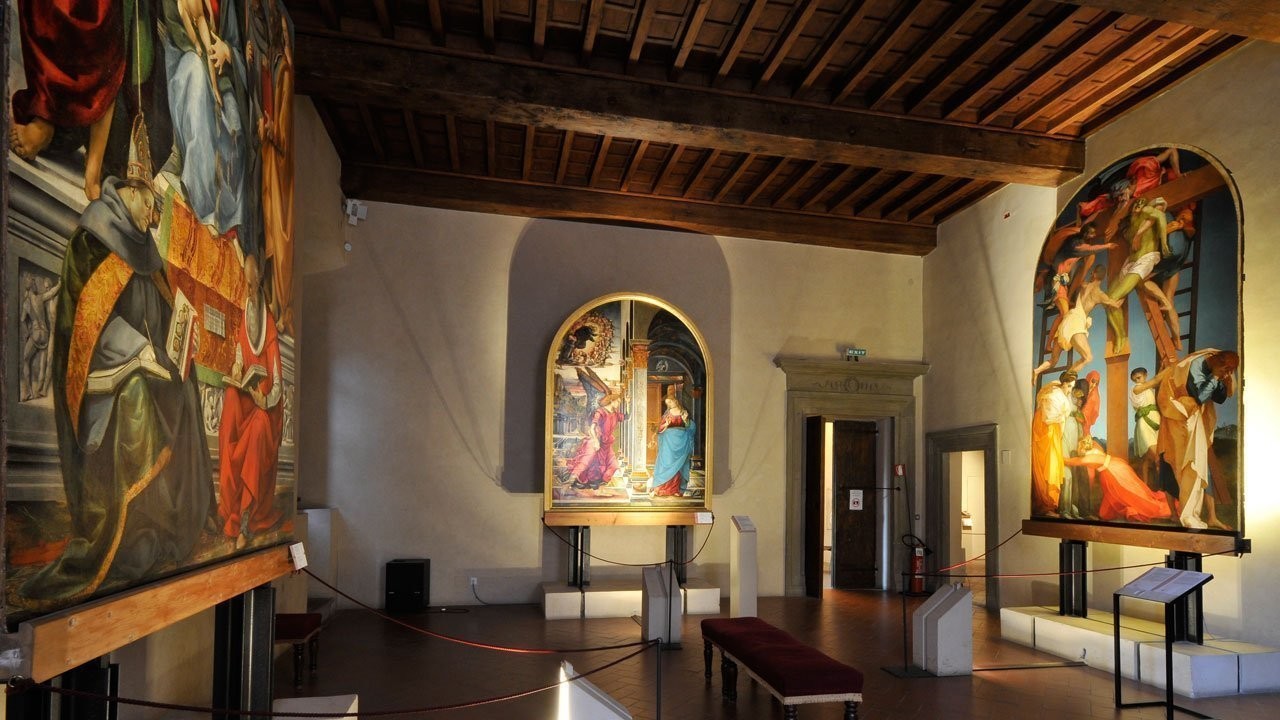
Cuprins
Detalii rapide
- Featured artists: Domenico Ghirlandaio
- Location: Volterra, Italy
- Alternate names:
- Pinacoteca e Museo Civico di Volterra
- Pinacoteca Comunale
- Picture Gallery and Civic Museum of Volterra
- Pinacoteca and Civic Museum
- Civic Museum
- Works on APS: 1
Quiz de artă
Fiecare întrebare are un singur răspuns corect.
Întrebare 1:
What is the Pinacoteca Comunale primarily known for?
Întrebare 2:
Which artist's masterpiece is prominently displayed in the Pinacoteca Comunale?
Întrebare 3:
The Palazzo Minucci-Solaini, where the Pinacoteca Comunale is located, reflects which historical periods?
Întrebare 4:
What makes the Pinacoteca Comunale unique compared to other museums?
Întrebare 5:
The Pinacoteca Comunale houses a significant collection of Etruscan artifacts, providing insight into:
Artiști expuși

Domenico Ghirlandaio
Domenico Ghirlandaio (1449-1494) a fost un pictor florentin renascentist, renumit pentru portrete realiste și scene religioase cu viața cotidiană. Admirați operele sale precum 'St. Jerome' și contribuțiile la Sistine Chapel!

Articole conexe
The Renaissance Reimagined: Art, Humanism & Cultural Transformation (14th–16th Centuries)
Explore the Renaissance! Discover key artists like Leonardo & Michelangelo, the rise of Humanism, and groundbreaking techniques such as chiaroscuro. A comprehensive guide for art enthusiasts.

Echoes of Loss: Exploring Representations of Grief Across Art History
Explore the profound history of grief in art, from Renaissance masterpieces to Baroque drama. Discover how artists captured loss, mourning & faith through powerful imagery. Expert insights at OriginalUniqueArt.
The Visceral Language of Loss: Exploring Grief's Depiction in Art History
Explore the profound history of grief in art with OriginalUniqueArt. Discover Renaissance & Baroque masterpieces depicting loss, mourning, and faith. Expert insights & handmade reproductions available.


Abonați-vă la newsletterul nostru
Rămâneți la curent cu cele mai recente știri din lumea artei, ofertele noastre exclusive și ideile de decor.
Primește 3 sugestii de artă gratuite
Spuneți-ne despre proiectul dumneavoastră, iar experții noștri în artă vă vor oferi 3 sugestii personalizate.
Not Sure Where to Start?
Let Us Curate 3 Options Just for You - Free!