Jules-Émile Zingg: A Painter of Rural Tranquility and Cézanne’s Legacy
Jules-Émile Zingg (August 25, 1882 – May 4, 1942) stands as a significant figure in French Modernist painting, remembered primarily for his evocative depictions of rural landscapes imbued with the spirit of Paul Cézanne. Born in Montbéliard, Doubs, nestled within the Jura mountains of Eastern France—the son of a clockmaker and woodcutter—Zingg’s artistic journey began early, fostering a lifelong fascination with capturing the essence of the countryside and its inhabitants. This formative experience profoundly shaped his distinctive style, characterized by meticulous observation and an unwavering commitment to conveying atmosphere and emotion.- Early Life & Artistic Beginnings: From his childhood sketching in Montbéliard, Zingg demonstrated a remarkable talent for visual representation. His initial studies focused on the craft of clockmaking—a skill that instilled precision and attention to detail—before securing a prestigious scholarship to Besançon’s Beaux-Arts school under Félix Henri Giacomotti in 1901. This formative period cemented his understanding of artistic principles and established him as an ambitious student eager to hone his skills.
- Parisian Influence & Cézanne’s Impact: Zingg’s pursuit of excellence led him to Paris, where he enrolled at the École des Beaux-Arts under Fernand Cormon. There, he encountered Paul Cézanne—a pivotal encounter that irrevocably altered his artistic trajectory. Cézanne's exploration of form and color, particularly his use of pyramidal compositions and muted palettes, profoundly influenced Zingg’s approach to painting, inspiring him to prioritize simplification and tonal harmony in his landscapes.
A Modernist Vision: Style & Technique
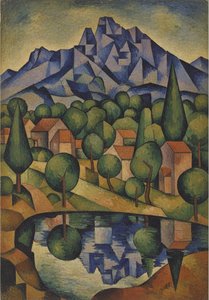
Zingg's artistic style evolved throughout his career, reflecting the broader trends of Modernism. He embraced a distinctive technique rooted in Cézanne’s principles—a deliberate reduction of forms to their essential geometric components—combined with a masterful manipulation of tonal color to create luminous and atmospheric effects. Zingg favored muted hues—often dominated by greens, blues, and browns—to convey the serenity and stillness of rural scenes. His brushstrokes were precise yet expressive, capturing subtle nuances of light and shadow that conveyed a palpable sense of place. This meticulous attention to detail distinguishes his work from more flamboyant Impressionist styles, prioritizing psychological depth over mere visual representation.- Salon Exhibitions & Recognition: Zingg gained considerable acclaim during his lifetime through participation in prominent Salon exhibitions—particularly the Salon d’Automne and Salon des Beaux-Arts—where he showcased his landscapes alongside fellow Modernist artists. His work was recognized with honors including the Chevalier de la Légion d'honneur, cementing his reputation as a respected figure within the Parisian art world.
- Collaboration & Artistic Legacy: Zingg’s artistic endeavors extended beyond individual paintings; he actively engaged in collaborative projects, notably designing tapestries for Aubusson and Gobelins factories—a testament to his versatility and commitment to disseminating artistic ideas. Furthermore, he mentored Claude Génisson, nurturing the talent of a younger artist and contributing to the continuation of Cézanne’s influence on French painting.
Notable Works & Museums Collections
Zingg's oeuvre comprises approximately 150 paintings—primarily landscapes—that reside in museum collections across France, including the Musée d’Art Moderne de Paris and the Musée Bourdelle. Among his most celebrated pieces are “La Vallée du Rhône,” “Les Prairies de Provence” and “Le Moulin à Vent.” These canvases exemplify Zingg's signature style—characterized by tonal harmony, simplified forms, and a profound sensitivity to natural light—and continue to captivate viewers with their tranquil beauty and evocative atmosphere. Retrospective exhibitions at the Musée des Beaux-Arts de Pont-Aven (1990) provided invaluable insight into Zingg’s artistic development and reaffirmed his enduring contribution to Modernist art.Concluding Reflections
Jules-Émile Zingg's legacy rests on his unwavering devotion to Cézanne’s vision—a commitment to distilling visual experience into its purest form. Through meticulous observation and masterful technique, Zingg transformed rural landscapes into canvases imbued with profound emotional resonance—a testament to the enduring power of art to capture the essence of place and time. His paintings remain treasured examples of French Modernism, inviting contemplation on the beauty of simplicity and the transformative influence of artistic inspiration.Întrebări și răspunsuri
Pot vizita un muzeu virtual al lucrărilor lui Jules-Émile Zingg?
O vizită virtuală este disponibilă: pagina Galerie 3D lui Jules-Émile Zingg prezintă lucrările artistului într-o galerie tridimensională.
Cum pot găsi lucrările lui Jules-Émile Zingg dintr-o anumită paletă de culori?
Operele lui Jules-Émile Zingg pot fi explorate pe baza paletei cromatice în pagina de După paletă de culori a artistului.
Pot studia utilizarea culorii de către Jules-Émile Zingg în toate lucrările sale?
Profilul cromatic al lucrărilor lui Jules-Émile Zingg este prezentat în pagina Genoma Paletei a artistului.