Portretul lui Wang Yuanqi

Cele 22 cele mai faimoase picturi ale lui Wang Yuanqi, o selecție de galerie

Actualizat Noiembrie 2026 · clasat în funcție de scorul nostru de popularitate (căutări, vizite și comenzi pentru fiecare operă) · 22 lucrări ale lui Wang Yuanqi în catalogul nostru

Pe scurt

Dintre toate originalele lăsate de Wang Yuanqi, cea mai faimoasă este Landscape for Zhanting (1710). Imediat după acestea urmează Wangchuan Villa (1711) și Landscape (1678). Catalogul nostru cuprinde 22 lucrări ale lui Wang Yuanqi; galeria a păstrat cele 22 pe care lumea le admiră cel mai mult, fiecare fiind prezentată împreună cu data, muzeul și povestea sa.

1642 – 1715, Taicang Cele mai multe lucrări: Metropolitan Museum of Art

Cele mai importante 10 picturi ale lui Wang Yuanqi: selecția galeriei

1
Landscape for Zhanting (1710) de Wang Yuanqi

Landscape for Zhanting

1710 · Ink

In Landscape for Zhanting, the artist Wang Yuanqi presents a vast mountain range that stretches across the entire width of the silk. Snow-capped peaks rise against the sky, their white summits catching the light amidst the rugged terrain. These mountains form a heavy, continuous boundary that defines the horizon. The scale of the landscape creates a sense of immense depth, pulling the eye through layers of stone and mist.
2
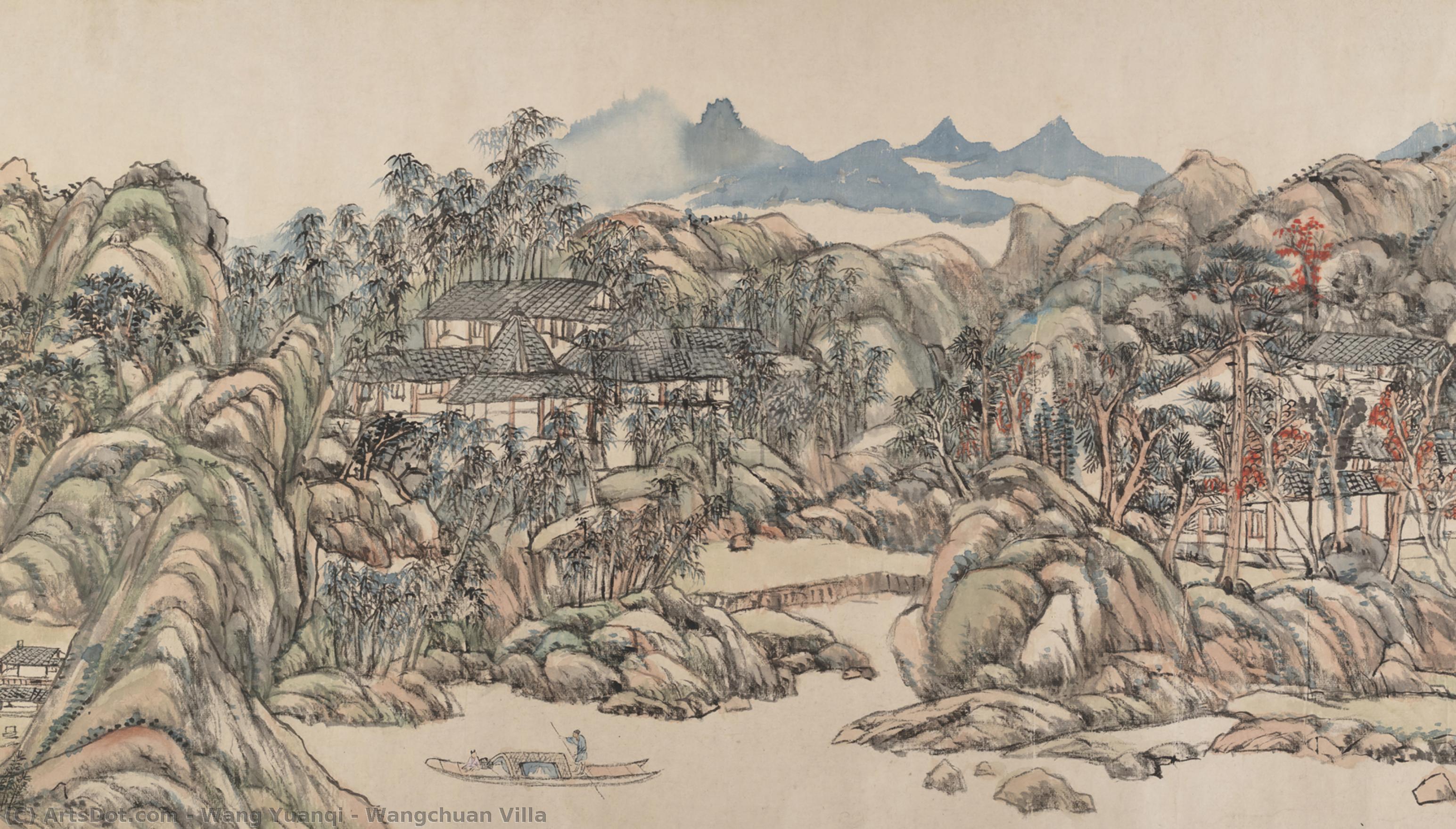
Wangchuan Villa (1711) de Wang Yuanqi

Wangchuan Villa

1711 · Ink On Paper · Metropolitan Museum of Art, New York

The handscroll titled Wangchuan Villa emerges from the brush of Wang Yuanqi, a painter who shaped the landscape traditions of the Qing Dynasty. Born in 1642 in Taicang, Jiangsu province, China, Wang Yuanqi carries the weight of a profound artistic lineage. He moves through the world of ink and color as a leading figure of the Orthodox School. His hand brings life to this specific vision of a mountain community,…

Selecția pentru Wang Yuanqi continuă, de la 11 la 22

Subiectele care i-au captivat privirea lui Wang Yuanqi

Cele patru teme care revin cel mai des în aceste opere originale, fiecare având cel mai sublim exemplu.

Muzeele care păstrează originalele lui Wang Yuanqi

Cele 8 muzee care dețin cele mai multe dintre picturile de pe această pagină.

Muzee Oraș Lucrări lui Wang Yuanqi Picturi din această listă
Metropolitan Museum of Art, New YorkMetropolitan Museum of Art New York 7 Wangchuan Villa, 清 王原祁 倣吳鎮山水圖 軸 Landscape after Wu Zhen, Landscape for Zhanting
Art Institute of Chicago, ChicagoArt Institute of Chicago Chicago 3 Landscape, Mountainous Landscape after Wang Meng, Landscape after Huang Gongwang
Cleveland Museum of Art, ClevelandCleveland Museum of Art Cleveland 2 Landscape after Ni Zan, Green Peaks under Clear Sky: After Huang Gongwang
Yale University Art Gallery, New HavenYale University Art Gallery New Haven 2 Landscape in the Style of Huang Gongwang, Landscape
Walters Art Museum, BaltimoreWalters Art Museum Baltimore 1 Free Spirits Among Streams and Mountains
Detroit Institute of Arts, DetroitDetroit Institute of Arts Detroit 1 Mountain and River Landscape
The Palace Museum, BeijingThe Palace Museum Beijing 1 Wang Yuanqi's Thatched Cottage Ten Records
National Gallery of Victoria, MelbourneNational Gallery of Victoria Melbourne 1 The Fuchun Mountians

Wang Yuanqi deceniu cu deceniu: originalul care definește fiecare

Lucrări pe deceniu

Alege o deceniu pentru a descoperi opera originală care îl definește.

Întrebări ale colecționarilor despre picturile lui Wang Yuanqi

Pentru ce operă este cel mai cunoscut Wang Yuanqi?Află răspunsul

Landscape for Zhanting (1710). Urmează Wangchuan Villa (1711) și Landscape (1678).

Ce vârstă avea Wang Yuanqi când a fost creată Landscape for Zhanting?Află răspunsul

68 ani: Landscape for Zhanting datează din 1710, iar Wang Yuanqi s-a născut în 1642.

Care sunt cele mai celebre zece picturi ale lui Wang Yuanqi?Află răspunsul

Landscape for Zhanting, Wangchuan Villa, Landscape, Mountainous Landscape after Wang Meng, Free Spirits Among Streams and Mountains, 清 王原祁 倣吳鎮山水圖 軸 Landscape after Wu Zhen, Landscape for Zhanting, Landscape after Ni Zan, Green Peaks under Clear Sky: After Huang Gongwang și Landscape after Huang Gongwang. Clasamentul de mai sus indică anul și muzeul pentru fiecare piesă.

Câte picturi a lăsat Wang Yuanqi?Află răspunsul

Catalogul nostru cuprinde 22 lucrări ale lui Wang Yuanqi, datate între 1678 și 1712.

În ce muzee sunt expuse capodoperele lui Wang Yuanqi?Află răspunsul

În principal în Metropolitan Museum of Art (New York), Art Institute of Chicago (Chicago) și Cleveland Museum of Art (Cleveland). Tabelul cu muzee de mai sus le enumeră pe toate.

În ce ani a pictat Wang Yuanqi cele mai cunoscute opere?Află răspunsul

În 1700s: 5 dintre cele 22 lucrări de pe această pagină au fost realizate atunci, fiind Landscape after Ni Zan dintre acestea.

Care sunt prima și ultima pictură originală celebră a lui Wang Yuanqi?Află răspunsul

Pe această pagină, cea mai veche lucrare datează din Landscape (1678), iar cea mai recentă este din Landscape in the Style of Huang Gongwang (1712).

Ce subiecte a ales cel mai des Wang Yuanqi?Află răspunsul

Mountains (3), Trees (2) și People (2), din cele 22 lucrări de pe această pagină.

Ce lucrări ale lui Wang Yuanqi sunt expuse la Metropolitan Museum of Art?Află răspunsul

Wangchuan Villa, 清 王原祁 倣吳鎮山水圖 軸 Landscape after Wu Zhen și Landscape for Zhanting: Metropolitan Museum of Art, New York deține 7 dintre lucrările de pe această pagină.

Wang Yuanqi: viață și operă

Wang Yuanqi: A Master of Qing Dynasty Landscape

Early Life and Education

  • Wang Yuanqi (王原祁) was born in 1642 in Taicang, Jiangsu province, China.
  • He came from a family with a strong artistic tradition; his grandfather, Wang Shimin, was a renowned painter of the early Qing dynasty.
  • Yuanqi received rigorous training in painting from his grandfather, laying the foundation for his future artistic endeavors.
  • His style name was 'Mao-ching' and his sobriquet was 'Lu-t’ai'.

Career as a Court Official

  • Wang Yuanqi rose to prominence as a court official during the Qing dynasty, beginning shortly after its establishment in 1644.
  • He served with distinction and was eventually appointed curator of the imperial collection under the Kangxi Emperor.
  • This position granted him access to a vast array of artworks, further enriching his artistic knowledge and influencing his style.
  • He remained a court official throughout his long career, balancing administrative duties with his passion for painting until his death in 1715 at age 73.

Artistic Style and Influences

  • Wang Yuanqi is considered one of the “Six Masters of the early Qing period,” also known as the ‘Four Wangs, a Wu and a Yun’.
  • He was a leading figure in the 'Orthodox School' (正统派) of Chinese landscape painting.
  • His landscapes drew inspiration from Yuan dynasty artists who moved away from the highly realistic depictions favored during the Northern Song period.
  • A key influence on his work was Huang Gongwang, particularly in the use of dry brush strokes, ink washes, and a sophisticated approach to color.
  • He skillfully integrated color patterns into his compositions, complementing abstract designs with rhythmic color flows.

Major Works and Achievements

  • Notable works include Landscape in the Style of Huang Gongwang (1711), currently held in Singapore’s Asian Civilisations Museum.
  • His rendition of Wang Wei's eighth-century hand scroll, The Wang River Villa, is housed in the Metropolitan Museum of Art, New York City.
  • Other significant paintings include “The Fuchun Mountains”, “Landscape for Zhanting” and numerous landscapes after the Four Great Yuan Masters.
  • He excelled at recreating the styles of earlier masters while imbuing his works with a unique personal touch.

Historical Significance

  • Wang Yuanqi played a crucial role in shaping the development of Chinese landscape painting during the Qing dynasty.
  • His adherence to and refinement of the Orthodox School established a standard for generations of artists.
  • He helped preserve and promote traditional artistic values while also demonstrating innovative techniques in composition and color usage.
  • His work continues to be celebrated for its technical mastery, aesthetic beauty, and historical importance within the context of Chinese art history.