A Life Illuminated by the Lens: The Enigmatic World of Vivian Maier
Vivian Dorothy Maier’s story is a profound and haunting one—a testament to an extraordinary talent hidden in plain sight, a life lived largely in the shadows until its brilliance was finally revealed. Born in New York City in 1926, her journey was shaped by constant movement, a delicate dance between America and France, experiences that instilled within her a unique perspective and a quiet observation of the world around her. This wasn’t merely a life; it was a carefully constructed lens through which she viewed humanity, capturing fleeting moments of beauty, loneliness, and resilience with an almost uncanny sensitivity. Maier's legacy isn’t just about the photographs themselves—it’s about the mystery surrounding her existence, the questions raised by her dedication to documenting the unseen corners of urban life, and the enduring power of a talent that defied conventional recognition.The Nanny’s Eye: Capturing the Soul of Chicago
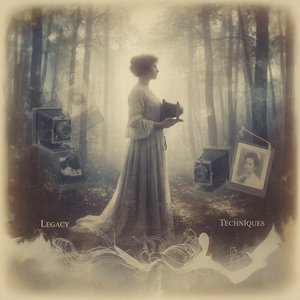
Maier's photographic career began almost accidentally, born from her role as a nanny in Chicago during the 1950s and 60s. While providing care for several families, she carried with her a Rolleiflex twin-lens reflex camera—a bulky, deliberate instrument that demanded careful consideration with every shot. This wasn’t a tool for grand pronouncements or staged portraits; it was an extension of her own quiet observation, a way to silently witness and record the rhythms of everyday life. She moved through the streets of Chicago, New York, and Los Angeles with an almost invisible presence, capturing candid moments—a child's laughter, a weary worker’s face, the geometry of urban architecture reflected in shop windows. Her photographs weren’t simply snapshots; they were imbued with a deep empathy, a recognition of the shared humanity that connected everyone she photographed. The children under her care often became unwitting participants in her artistic process, their faces and gestures captured in moments of unguarded joy and curiosity. Maier's ability to find beauty in the mundane—a discarded newspaper, a rain-slicked street, a solitary figure lost in thought—is what truly defines her style and elevates her work beyond mere documentation.A Master of Black and White: A Language of Light and Shadow
Maier’s photographic vision is most powerfully expressed through black and white film. This choice wasn't arbitrary; it was a deliberate decision to strip away the distractions of color, focusing instead on the interplay of light and shadow, texture, and form. The resulting images possess a timeless quality, evoking a sense of nostalgia and quiet contemplation. She expertly manipulated contrast, creating dramatic shadows that hinted at hidden stories and highlighting the subtle nuances of human expression. Later in her career, she experimented with color photography, but it was in black and white that her true artistry flourished—a testament to her profound understanding of composition, light, and the evocative power of monochrome. The images are not merely representations of reality; they are carefully constructed narratives, imbued with a sense of mood and atmosphere.The Unseen Archive: Rediscovering a Lost Legacy
For decades after her death in 2009, Maier’s photographs remained largely unknown to the wider world. Her life was marked by quiet anonymity, and her work was stored in a series of storage lockers, forgotten amidst the detritus of a solitary existence. It wasn't until 2008 that John Maloof, a Chicago-based writer and filmmaker, stumbled upon these lockers and began to digitize Maier’s negatives—a discovery that would ultimately transform her legacy. The images quickly gained viral recognition online, sparking intense interest in her life and work. Exhibitions followed, showcasing her photographs in museums and galleries across the globe, including the Museum of Modern Art (MoMA) in New York City and the Chicago History Museum. The documentary film *Finding Vivian Maier* further illuminated her story, bringing her hidden talent to a global audience.Influences and Enduring Significance
While Maier’s formal artistic training was largely self-directed, her early life—spent moving between America and France— undoubtedly shaped her perspective. Her exposure to the art world through her mother's acquaintance with Gertrude Vanderbilt Whitney, a prominent patron of the arts, may have sparked an initial interest in visual culture. However, Maier developed a distinctly independent voice, drawing inspiration from documentary photography and social realism while simultaneously forging her own unique style. She wasn’t simply imitating other photographers; she was creating something entirely new—a poignant and intimate portrait of American life through the lens of a quiet observer. Vivian Maier's story is a reminder that extraordinary talent can often be found in unexpected places, and that artistic recognition doesn’t always follow a conventional path. Her legacy extends far beyond the aesthetic qualities of her photographs; it lies in the mystery surrounding her life, the questions raised by her dedication to documenting the unseen corners of urban life, and the enduring power of a talent that defied conventional recognition—a testament to the beauty found in the ordinary, captured with an unwavering eye.Întrebări și răspunsuri
Unde pot vedea operele lui Vivian Dorothy Maier în ordine cronologică?
Operele lui Vivian Dorothy Maier pot fi vizualizate în ordine cronologică pe pagina Cronologia operelor de artă a artistului.
Unde pot fi găsite operele lui Vivian Dorothy Maier grupate pe palete de culori?
Pagina După paletă de culori grupează operele lui Vivian Dorothy Maier în funcție de paletele de culori.
Unde pot fi explorate operele lui Vivian Dorothy Maier organizate pe culori?
Indice Spectral lui Vivian Dorothy Maier este o pagină care organizează operele de artă ale acestuia în funcție de culoare.