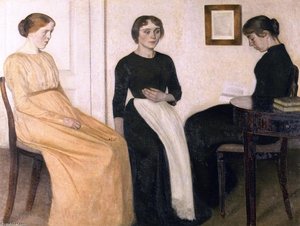
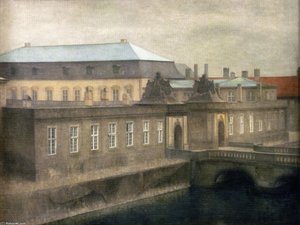
Portretul lui Vilhelm Hammershøi

Cele 100 cele mai faimoase picturi ale lui Vilhelm Hammershøi, fiecare unică în felul ei

Actualizat Noiembrie 2026 · clasat în funcție de scorul nostru de popularitate (căutări, vizite și comenzi pentru fiecare operă) · 224 lucrări ale lui Vilhelm Hammershøi în catalogul nostru

Pe scurt

Interior, Strandgade 30 (1909) este pictură lui Vilhelm Hammershøi care atrage cele mai multe priviri. După aceasta, privirea se îndreaptă către Montague Street in London (1906) și Figura unei femei (1888). Dintre cele 224 opere ale lui Vilhelm Hammershøi din catalogul nostru, acestea 100 sunt cele mai celebre, fiecare fiind o piesă unică, prezentată împreună cu anul creării, muzeul deținător și motivul pentru care aceasta rămâne memorabilă.

1864 – 1916, Copenhaga Early twentieth century realism Cele mai multe lucrări: Statens Museum For Kunst

Cele mai importante 10 picturi ale lui Vilhelm Hammershøi, prin ochii galeriei

1
Interior, Strandgade 30 (1909) de Vilhelm Hammershøi

Interior, Strandgade 30

1909 · Ulei pe panou rigid

O capodoperă a artei daneze Vilhelm Hammershøi's 'Interior, Strandgade 30' este o pictură captivantă în ulei pe panou care întrupește esența artei daneze de la începutul secolului XX. Creată în 1909, această capodoperă este o mărturie a abilității unice a lui Hammershøi de a surprinde frumusețea liniștită a viaței de zi cu zi. Tabloul este o reprezentare alb-negru a unei femei așezate pe un scaun lângă o fereastră, pierdută în…

2
Montague Street in London (1906) de Vilhelm Hammershøi

Montague Street in London

1906 · Oil On Panel · Ny Carlsberg Glyptotek, Copenhaga

To encounter Vilhelm Hammershøi’s Montague Street in London is to step into a realm where time itself seems to have paused, caught in a delicate suspension between reality and a dream. Created in 1906, this exquisite oil on panel painting serves as a profound meditation on the beauty of stillness. The scene presents an empty London street, stripped of the frantic energy typically associated with urban life. Instead, we are…

3
Figura unei femei (1888) de Vilhelm Hammershøi

Figura unei femei

1888 · Ulei pe pânză · Statens Museum For Kunst, Copenhaga

Figura unei femei de Vilhelm Hammershøi: O Simplitate Poetică În Interiorul Scandinav Figura unei femei de Vilhelm Hammershøi este o operă artistică impresionantă care surprinde esența stilului unic al artistului și atenția meticuloasă acordată detalilor. Creată în anul 1888, această pictură pe ulei pe pânză este prezentă în colecția Statens Museum for Kunst din Copenhaga, Danemarca, fiind un exemplu emblematic al esteticii nordice a sfârșitului de secol XIX. Imaginea reprezintă…

4
Interior with the Artist's Easel (1910) de Vilhelm Hammershøi

Interior with the Artist's Easel

1910 · Oil On Canvas · Statens Museum For Kunst, Copenhaga

To gaze upon Vilhelm Hammershøi’s Interior with the Artist's Easel is not merely to observe a room; it is to slip into a state of profound, almost sacred stillness. This oil on canvas, dating from 1910, captures the essence of late nineteenth and early twentieth-century Danish domestic life, yet elevates it far beyond mere genre painting. Hammershøi possessed an unparalleled gift for rendering silence visible—a palpable quietude that seems to…

5
Interior din Strandgade cu lumină în podea (1901) de Vilhelm Hammershøi

Interior din Strandgade cu lumină în podea

1901 · Ulei pe panou rigid · Statens Museum For Kunst, Copenhaga

Vilhelm Hammershøi și Serenitatea Interiorului: O Privire În Profunzime la „Interior din Strandgade cu Lumina Soarelui pe Podea” Vilhelm Hammershøi este unul dintre cei mai apreciați artiști danezi ai sfârșitului secolului XIX și începutului celui XX, cunoscut pentru stilul său minimalist și obsesia pentru iluminare și spațiu. Lucrarea sa „Interior din Strandgade cu Lumina Soarelui pe Podea”, pictată în anul 1901, reprezintă mai mult decât o simplă reprezentare vizuală; este…

6
St. Peter's Church, Copenhagen (1906) de Vilhelm Hammershøi

St. Peter's Church, Copenhagen

1906 · Oil On Canvas · Statens Museum For Kunst, Copenhaga

To gaze upon Vilhelm Hammershøi’s depiction of St. Peter's Church in Copenhagen is not merely to observe architecture; it is to enter a hushed, contemplative space suspended outside the rush of modern life. Painted in 1906, this oil on canvas captures the enduring spirit of Danish craftsmanship blended with an almost ethereal sense of stillness. The composition immediately draws the eye upward, following the vertical thrust of the steeple and…

7
Moonlight, Strandgade 30 (1900) de Vilhelm Hammershøi

Moonlight, Strandgade 30

1900 · Oil On Canvas · Metropolitan Museum of Art, New York

Moonlight, Strandgade 30 emerges from the canvas as a quiet meditation on a private world. Painted by Vilhelm Hammershøi, this oil on canvas captures the unadorned interior of the artist's own apartment in Copenhagen. The scene looks out toward a windowed loggia, where the pale light of the moon begins to settle into the room. It is a space defined by its stillness and the soft, muted tones of a…

8
Ida Hammershøi (1907) de Vilhelm Hammershøi

Ida Hammershøi

1907 · Oil On Panel

In this 1907 oil on panel painting, a woman named Ida Hammershøi sits at a table, her form positioned slightly off-center. She is captured in a moment of stillness, holding a cup and spoon as she gazes into the distance. A white cloth covers the table, providing a bright contrast to the muted tones of the surrounding space. The background remains largely undefined, composed of dark, receding shades that focus…

9
Sunbeams (also known as Sunshine. Dust Motes Dancing in the Sunbeams) (1900) de Vilhelm Hammershøi

Sunbeams (also known as Sunshine. Dust Motes Dancing in the Sunbeams)

1900 · Oil On Canvas · Ordrupgaard, Gentofte

A stillness settles over the room, a silence so heavy it feels tangible. Through a large, multi-paned window, shafts of winter sunlight pierce the dimness, cutting diagonally across the space. In these beams, tiny particles of dust dance in a slow, rhythmic motion, visible only because the light catches them in their descent. The room itself feels suspended in time, an empty interior in a 17th-century apartment in the Christianshavn…

10
Young Girl Sewing. Anna Hammershoi, the Artist's Sister (1887) de Vilhelm Hammershøi

Young Girl Sewing. Anna Hammershoi, the Artist's Sister

1887 · Oil On Canvas

In the quietude of 1888, Vilhelm Hammershøi captures a moment of domestic stillness in his work, Young Girl Sewing. Anna Hammershoi, the Artist's Sister. The scene centers on Anna Hammershøi, the artist's sister, who lived from 1866 to 1955. She sits absorbed in her task, her presence filling the space with a sense of focused, private labor. There is a weight to her concentration, a stillness that suggests the world…

Păiți celebrele picturi ale lui Vilhelm Hammershøi, de la numărul 11 la 100

11From the British Museum, Winter (1906) de Vilhelm HammershøiFrom the British Museum, Winter1906 12Four Rooms, Interior from the Artist's Home, Strandgade 25 (1914) de Vilhelm HammershøiFour Rooms, Interior from the Artist's Home, Strandgade 251914 · Ordrupgaard 13Sunshine in the Drawing Room III (1903) de Vilhelm HammershøiSunshine in the Drawing Room III1903 · Nationalmuseum 14A Greek Relief in the Louvre (1891) de Vilhelm HammershøiA Greek Relief in the Louvre1891 · Ny Carlsberg Glyptotek 15Interior tate gallery (1899) de Vilhelm HammershøiInterior tate gallery1899 · National Gallery 16Untitled (566) de Vilhelm HammershøiUntitled (566) 17Nude Female Model (1884) de Vilhelm HammershøiNude Female Model1884 · Statens Museum For Kunst 18Portrait of Young Woman, The Artist's Sister, Anna Hammershoi (1885) de Vilhelm HammershøiPortrait of Young Woman, The Artist's Sister, Anna Hammershoi1885 · Hirschsprung Collection 19Frederikke Hammershøi, the artist's mother (1886) de Vilhelm HammershøiFrederikke Hammershøi, the artist's mother1886 20Malerinden Elisabeth Wandel (1890) de Vilhelm HammershøiMalerinden Elisabeth Wandel1890 · Statens Museum For Kunst 21Ida Ilsted, the Artist's Fiancée (1890) de Vilhelm HammershøiIda Ilsted, the Artist's Fiancée1890 · Statens Museum For Kunst 22Evening in the Drawing Room. The Artist's Mother and Wife (1891) de Vilhelm HammershøiEvening in the Drawing Room. The Artist's Mother and Wife1891 · Statens Museum For Kunst 23The art historian Karl Madsen, later Director of Statens Museum for Kunst (1890) de Vilhelm HammershøiThe art historian Karl Madsen, later Director of Statens Museum for Kunst1890 · Statens Museum For Kunst 24The Painter Kristian Zahrtmann (1889) de Vilhelm HammershøiThe Painter Kristian Zahrtmann1889 · Statens Museum For Kunst 25Ida Ilsted, the Artist's Wife (1890) de Vilhelm HammershøiIda Ilsted, the Artist's Wife1890 · Nationalmuseum 26An Old Woman (1886) de Vilhelm HammershøiAn Old Woman1886 · Hirschsprung Collection 27Frederikke Amalie Hammershøi, f. Rentzmann, kunstnerens moder (1894) de Vilhelm HammershøiFrederikke Amalie Hammershøi, f. Rentzmann, kunstnerens moder1894 · Statens Museum For Kunst 28Portræt af fru Thora Bendix (Anne Victoria, f. Sundberg) (1896) de Vilhelm HammershøiPortræt af fru Thora Bendix (Anne Victoria, f. Sundberg)1896 · Statens Museum For Kunst 29Komponisten Fini Henriques (1896) de Vilhelm HammershøiKomponisten Fini Henriques1896 · Statens Museum For Kunst 30Maleren Svend Hammershøi, kunstnerens broder (1897) de Vilhelm HammershøiMaleren Svend Hammershøi, kunstnerens broder1897 · Statens Museum For Kunst 31The Artist's Wife, Ida Hammershøi, née Ilsted (1894) de Vilhelm HammershøiThe Artist's Wife, Ida Hammershøi, née Ilsted1894 · Statens Museum For Kunst 32Vilhelm Hammershøi (1895) de Vilhelm HammershøiVilhelm Hammershøi1895 33Interior with a View of an Exterior Gallery (1903) de Vilhelm HammershøiInterior with a View of an Exterior Gallery1903 34Ida in an Interior with Piano (1901) de Vilhelm HammershøiIda in an Interior with Piano1901 35Portrait of Svend Hammershøi, the Artist´s Brother (1901) de Vilhelm HammershøiPortrait of Svend Hammershøi, the Artist´s Brother1901 · Statens Museum For Kunst 36Henry Madsen (1904) de Vilhelm HammershøiHenry Madsen1904 · Statens Museum For Kunst 37J.F. Willumsen (1901) de Vilhelm HammershøiJ.F. Willumsen1901 · Statens Museum For Kunst 38Henry Madsen (1904) de Vilhelm HammershøiHenry Madsen1904 · Statens Museum For Kunst 39The Architect Thorvald Bindesbøll (1904) de Vilhelm HammershøiThe Architect Thorvald Bindesbøll1904 · Statens Museum For Kunst 40A Room in the Artist’s Home in Strandgade, Copenhagen, with the Artist’s Wife (1902) de Vilhelm HammershøiA Room in the Artist’s Home in Strandgade, Copenhagen, with the Artist’s Wife1902 · Statens Museum For Kunst 41Aften i stuen (1904) de Vilhelm HammershøiAften i stuen1904 · Statens Museum For Kunst 42Interior with a Reading Lady (1900) de Vilhelm HammershøiInterior with a Reading Lady1900 · Nationalmuseum 43A room. The corner of a room with walls painted grey-lilac, divided into panels. (1903) de Vilhelm HammershøiA room. The corner of a room with walls painted grey-lilac, divided into panels.1903 44The Coin Collector (study) (1904) de Vilhelm HammershøiThe Coin Collector (study)1904 45Interior with Ida in a White Chair (1900) de Vilhelm HammershøiInterior with Ida in a White Chair1900 46Interior with the Artist's Wife (1910) de Vilhelm HammershøiInterior with the Artist's Wife1910 · Muzeul Național de Artă, Arhitectură și Design 47Ida Hammershøi, the Artist's Wife, with a Teacup (1907) de Vilhelm HammershøiIda Hammershøi, the Artist's Wife, with a Teacup1907 · Statens Museum For Kunst 48Self-Portrait (1911) (1911) de Vilhelm HammershøiSelf-Portrait (1911)1911 49Interior with Ida Playing the Piano (1910) de Vilhelm HammershøiInterior with Ida Playing the Piano1910 · Muzeul Național de Artă Occidentală 50Self-Portrait at Spurveskjul (1911) de Vilhelm HammershøiSelf-Portrait at Spurveskjul1911 · Metropolitan Museum of Art 51Open Doors (also known as White Doors) (1905) de Vilhelm HammershøiOpen Doors (also known as White Doors)1905 52Interior, Strandgade 25 (1915) de Vilhelm HammershøiInterior, Strandgade 251915 53Interior with the Artist's Mother and Sister (1889) de Vilhelm HammershøiInterior with the Artist's Mother and Sister1889 · Nationalmuseum 54Interior, Bredgade (1911) de Vilhelm HammershøiInterior, Bredgade1911 55Interior (1899) de Vilhelm HammershøiInterior1899 · Tate Gallery 56Interior, Strandgade 30 - Vilhelm Hammershøi (2026) de Vilhelm HammershøiInterior, Strandgade 30 - Vilhelm Hammershøi2026 57Self-Portrait (1890) de Vilhelm HammershøiSelf-Portrait1890 · Statens Museum For Kunst 58Landscape in the Snow (1895) de Vilhelm HammershøiLandscape in the Snow1895 · Hirschsprung Collection 59Sunshine in the Drawing Room (Solskin i dagligstuen) (1910) de Vilhelm HammershøiSunshine in the Drawing Room (Solskin i dagligstuen)1910 · National Gallery of Canada 60Three Young Women (1895) de Vilhelm HammershøiThree Young Women1895 61Portrait of Ida, the Artist (1898) de Vilhelm HammershøiPortrait of Ida, the Artist1898 · Galeria Națională a Danemarcei 62Interior. Strandgade 30 (1906) de Vilhelm HammershøiInterior. Strandgade 301906 · Tate Gallery 63View of Refsnæs (1900) de Vilhelm HammershøiView of Refsnæs1900 64Interior with a Woman at a Sewing Table (1897) de Vilhelm HammershøiInterior with a Woman at a Sewing Table1897 · Nasjonalgalleriet 65Young Girl Pouring Tea - the Artist's Sister. (1884) de Vilhelm HammershøiYoung Girl Pouring Tea - the Artist's Sister.1884 66Study showing the back of a boy. (1884) de Vilhelm HammershøiStudy showing the back of a boy.1884 67Study of Standing Woman, Seen from Behind (1884) de Vilhelm HammershøiStudy of Standing Woman, Seen from Behind1884 68The Farm (1883) de Vilhelm HammershøiThe Farm1883 69Landscape with Barn (1883) de Vilhelm HammershøiLandscape with Barn1883 70Study drawing of plaster cast of ancient Greek Aphrodite, toss from c. 500 BC (1880) de Vilhelm HammershøiStudy drawing of plaster cast of ancient Greek Aphrodite, toss from c. 500 BC1880 71Bedroom (Interior) (1890) de Vilhelm HammershøiBedroom (Interior)1890 72View from Frederiksholms Kanal, Copenhagen. (1892) de Vilhelm HammershøiView from Frederiksholms Kanal, Copenhagen.1892 73Landscape on the Island of Falster (1891) de Vilhelm HammershøiLandscape on the Island of Falster1891 · Statens Museum For Kunst 74View of Jægersborg Allé. Gentofte, North of Copenhagen (1892) de Vilhelm HammershøiView of Jægersborg Allé. Gentofte, North of Copenhagen1892 · Statens Museum For Kunst 75Dagligstuen på Frederiksberg Allé (1887) de Vilhelm HammershøiDagligstuen på Frederiksberg Allé1887 · Statens Museum For Kunst 76Rainy summer landscape from Virum near Frederiksdal. (1888) de Vilhelm HammershøiRainy summer landscape from Virum near Frederiksdal.1888 77View of Christiansborg Castle, Late Autumn (1890) de Vilhelm HammershøiView of Christiansborg Castle, Late Autumn1890 · Statens Museum For Kunst 78Interior with Ida in a White Chair (1890) de Vilhelm HammershøiInterior with Ida in a White Chair1890 · Ordrupgaard 79Portrait of Ida Ilsted, Later the Artist's Wife (1890) de Vilhelm HammershøiPortrait of Ida Ilsted, Later the Artist's Wife1890 · Statens Museum For Kunst 80Self-Portrait (1891) de Vilhelm HammershøiSelf-Portrait1891 81Interior in Louis Seize style. From the artist's home. Rahbeks Allé (1897) de Vilhelm HammershøiInterior in Louis Seize style. From the artist's home. Rahbeks Allé1897 · Hirschsprung Collection 82Karen Bramsen (1898) de Vilhelm HammershøiKaren Bramsen1898 83Interior (1893) de Vilhelm HammershøiInterior1893 84Interior wit a Young Man Reading (1898) de Vilhelm HammershøiInterior wit a Young Man Reading1898 · Hirschsprung Collection 85Interior (1898) de Vilhelm HammershøiInterior1898 · Nationalmuseum 86Cello Player (1893) de Vilhelm HammershøiCello Player1893 87Two Figures, The Artist and His Wife (1898) de Vilhelm HammershøiTwo Figures, The Artist and His Wife1898 88Figures by the Window (1895) de Vilhelm HammershøiFigures by the Window1895 89Artemis (1894) de Vilhelm HammershøiArtemis1894 · Galeria Națională a Danemarcei 90White Doors, Strandgade 30 (1899) de Vilhelm HammershøiWhite Doors, Strandgade 301899 · Ordrupgaard 91Sunny Parlor. (1901) de Vilhelm HammershøiSunny Parlor.1901 · Alte Nationalgalerie 92The Coin Collector (1904) de Vilhelm HammershøiThe Coin Collector1904 · Muzeul Național de Artă, Arhitectură și Design 93Forstudie til "Solregn. Gentofte Sø" (1903) de Vilhelm HammershøiForstudie til "Solregn. Gentofte Sø"1903 · Statens Museum For Kunst 94Five Portraits. Study for painting in Thielska Galleriet, Stockholm (1901) de Vilhelm HammershøiFive Portraits. Study for painting in Thielska Galleriet, Stockholm1901 · Statens Museum For Kunst 95Interior with the artist's wife seen from behind. (1901) de Vilhelm HammershøiInterior with the artist's wife seen from behind.1901 96Interior with the artist's wife Ida in their home at Strandgade 30. (1905) de Vilhelm HammershøiInterior with the artist's wife Ida in their home at Strandgade 30.1905 97Dunkebakke, Frederiksværk (1904) de Vilhelm HammershøiDunkebakke, Frederiksværk1904 98Interior, Strandgade 30 (1899) de Vilhelm HammershøiInterior, Strandgade 301899 99Interior with Punchbowl (1904) de Vilhelm HammershøiInterior with Punchbowl1904 100Interior, Frederiksberg Allé (1900) de Vilhelm HammershøiInterior, Frederiksberg Allé1900

Piesele celebre ale lui Vilhelm Hammershøi, perioadă cu perioadă

Subiectele care i-au captivat privirea lui Vilhelm Hammershøi

Cele patru teme care revin cel mai des în aceste opere originale, fiecare având cel mai sublim exemplu.

Muzeele care păstrează originalele lui Vilhelm Hammershøi

Cele 8 muzee care dețin cele mai multe dintre picturile de pe această pagină.

Muzee Oraș Lucrări lui Vilhelm Hammershøi Picturi din această listă
Statens Museum For Kunst, CopenhagaStatens Museum For Kunst Copenhaga 42 Figura unei femei, Interior with the Artist's Easel, Interior din Strandgade cu lumină în podea
Nationalmuseum, StockholmNationalmuseum Stockholm 7 Sunshine in the Drawing Room III, Ida Ilsted, the Artist's Wife, Interior with a Reading Lady
Hirschsprung Collection, CopenhagaHirschsprung Collection Copenhaga 5 Portrait of Young Woman, The Artist's Sister, Anna Hammershoi, An Old Woman, Landscape in the Snow
Ordrupgaard, GentofteOrdrupgaard Gentofte 5 Sunbeams (also known as Sunshine. Dust Motes Dancing in the Sunbeams), Four Rooms, Interior from the Artist's Home, Strandgade 25, Interior with Ida in a White Chair
Muzeul Național de Artă, Arhitectură și Design, OsloMuzeul Național de Artă, Arhitectură și Design Oslo 3 Interior with the Artist's Wife, The Coin Collector
Galeria Națională a Danemarcei, CopenhagaGaleria Națională a Danemarcei Copenhaga 3 Portrait of Ida, the Artist, Artemis
Ny Carlsberg Glyptotek, CopenhagaNy Carlsberg Glyptotek Copenhaga 2 Montague Street in London, A Greek Relief in the Louvre
Metropolitan Museum of Art, New YorkMetropolitan Museum of Art New York 2 Moonlight, Strandgade 30, Self-Portrait at Spurveskjul

Vilhelm Hammershøi de-a lungul deceniilor: o piesă unică pentru fiecare

Lucrări pe deceniu

Alege o deceniu pentru a descoperi opera originală care îl definește.

Picturile lui Vilhelm Hammershøi: întrebări pentru galerie

Care este cea mai celebră operă a lui Vilhelm Hammershøi?Află răspunsul

Interior, Strandgade 30 (1909). Urmează Montague Street in London (1906) și Figura unei femei (1888).

La ce vârstă a creat Vilhelm Hammershøi Interior, Strandgade 30?Află răspunsul

45 ani: Interior, Strandgade 30 datează din 1909, iar Vilhelm Hammershøi s-a născut în 1864.

Care sunt cele mai celebre zece picturi ale lui Vilhelm Hammershøi?Află răspunsul

Interior, Strandgade 30, Montague Street in London, Figura unei femei, Interior with the Artist's Easel, Interior din Strandgade cu lumină în podea, St. Peter's Church, Copenhagen, Moonlight, Strandgade 30, Ida Hammershøi, Sunbeams (also known as Sunshine. Dust Motes Dancing in the Sunbeams) și Young Girl Sewing. Anna Hammershoi, the Artist's Sister. Clasamentul de mai sus indică anul și muzeul pentru fiecare piesă.

Câte lucrări ale lui Vilhelm Hammershøi sunt cunoscute?Află răspunsul

Catalogul nostru cuprinde 224 lucrări ale lui Vilhelm Hammershøi, datate între 1880 și 1915.

Unde pot fi vizualizate originalele celor mai faimoși Vilhelm Hammershøi?Află răspunsul

În principal în Statens Museum For Kunst (Copenhaga), Nationalmuseum (Stockholm) și Hirschsprung Collection (Copenhaga). Tabelul cu muzee de mai sus le enumeră pe toate.

În ce perioadă a creat Vilhelm Hammershøi cele mai cunoscute picturi?Află răspunsul

În 1890s: 38 dintre cele 100 lucrări de pe această pagină au fost realizate atunci, fiind A Greek Relief in the Louvre dintre acestea.

Care este cea mai veche și care este cea mai recentă pictură a lui Vilhelm Hammershøi?Află răspunsul

Pe această pagină, cea mai veche lucrare datează din Study drawing of plaster cast of ancient Greek Aphrodite, toss from c. 500 BC (1880), iar cea mai recentă este din Interior, Strandgade 25 (1915).

Ce teme prefera Vilhelm Hammershøi?Află răspunsul

Woman (23), Interior (22) și Portrait (15), din cele 100 lucrări de pe această pagină.

Cu ce materiale a pictat cel mai des Vilhelm Hammershøi?Află răspunsul

Oil On Canvas, pentru 46 dintre cele 100 lucrări de pe această pagină.

Din ce curent artistic face parte opera lui Vilhelm Hammershøi?Află răspunsul

Early twentieth century realism, judecând după originalele de pe această pagină.

Ce originale de Vilhelm Hammershøi pot vedea la Statens Museum For Kunst?Află răspunsul

Figura unei femei, Interior with the Artist's Easel și Interior din Strandgade cu lumină în podea: Statens Museum For Kunst, Copenhaga deține 31 dintre lucrările de pe această pagină.

Vilhelm Hammershøi: un portret al artistului

Liniștea Enigmatică a lui Vilhelm Hammershøi

A sta în fața unei picturi de Vilhelm Hammershøi înseamnă a păși peste un prag, într-un tărâm suspendat între memoria și vis. Opera sa posedă o liniște aproape palpabilă, o tăcere care pare să absoarbă zgomotul lumii moderne. Născut la Copenhaga în 1864, acest maestru danez a dezvoltat un limbaj vizual atât de distinct, atât de profund atmosferic, încât continuă să captiveze colecționarii și criticii și astăzi. Canvasurile lui Hammershøi nu sunt simple reprezentări ale unor încăperi sau figuri; ele sunt meditații asupra absenței, a luminii și a trecerii delicate a timpului.

Primii săi ani de viață au fost înrădăcinați în mediul cultural al Copenhagei de la sfârșitul secolului al XIX-lea, o perioadă plină de ferment artistic. Deși a navigat printre curentii artei academice, adevărata sa vocație a constând în capturarea momentelor de profundă introspecție. Dedicarea sa pentru spațiile interioare a devenit legendară, transformând decorurile domestice în scene grandioase pentru drama psihologică. Tonurile muted — griurile moi, cremurile pale, șoapta ocră duru ieșită din praf — sunt marcajele care definesc semnătura sa vizuală unică.

Stăpânirea Luminii și a Atmosferei

Brilianța tehnică ce stă la baza scenelor aparent simple ale lui Hammershøi este nimic mai puțin decât magistrală. El poseda o capacitate fără egal de a reda lumina nu doar ca pe o simplă iluminare, ci ca pe un element atmosferic tangibil în sine. În reprezentările sale ale coridoarelor goale sau ale salonelor spațios mobiledate, calitatea luminii pare să emane din interiorul vopselei, sugerând surse nevăzute și narațiuni netransmise. Această preocupare pentru atmosferă i-a ridicat opera dincolo de simpla pictură de gen; ea a devenit o explorare a stării de spirit.

Compozițiile sale prezintă adesea perspective recesive, atrăgând privitorul adânc în spațiul pictat, doar pentru ca acea adâncime să se dizolve în cele din urmă într-o ceață moale și ambiguă. Fie că portrează figuri solitare — adesea voalate sau văzute din spate — sau pur și simplu volume arhitecturale goale, sentimentul de închidere și contemplare liniștită este copleșitor. În această gestionare atentă a spațiului negativ rezidă geniul său; goliciunea însăși devine subiectul cel mai elocvent.

Simbolismul și Peisajul Interior

Arta lui Hammershøi a fost întotdeauna profund împletită cu curentul simbolist, chiar dacă nu a aderat niciodată strict la dogma mișcării. Picturile sale îi invită pe spectatori într-un spațiu al ambiguității. Figurile, atunci când sunt prezente, par adesea detașate de împrejurimi sau pierdute în gânduri, sugerând o viață interioară mult mai bogată decât cea reprezentată pe pânză. Există un sentiment omniprezent de frumusețe melancolică — o dorință sublimă care vorbește despre experiențe umane universale: singurătatea, memoria și trecerea timpului.

Unii cercetători au interpretat opera sa ca pe un jurnal vizual al propriului său peisaj emoțional, o retragere într-un mediu controlat de artă atunci când lumea exterioară se dovedea a fi prea zgomotoasă sau complexă. Repetiția motivelor — perdeaua, scaunul gol, vederea îndepărtată prin fereastră — conferă întregii sale opere o calitate ritualică, sugerând că aceste momente de liniște erau ancore necesare împotriva fluxului existenței.

Moștenirea și Influența Durabilă

Deși a decedat relativ tânăr, în 1916, influența lui Vilhelm Hammershøi s-a dovedit a fi remarcabil de durabilă. Angajamentul său față de sobrietate și subtilitatea tonală a oferit un contrapunct crucial paletelor mai îndrăznești care apăreau în alte mișcări contemporane. Opera sa a rezonat profund cu sensibilitățile moderne, care prețuiau introspecția în detrimentul narațiunilor explicite.

Astăzi, picturile sale sunt râvnite pentru capacitatea lor de a transforma orice spațiu pe care îl ocupă. Ele nu strigă; ele șoptesc adevăruri profunde despre frumusețea găsită în retenție. A aprecia pe Hammershøi înseamnă a accepta poezia nespusului, a găsi măreția în tonurile atenuate și a te permite să te pierzi momentan în liniștea exquisite și învăluitoare a lumilor sale pictate.