Wifredo Lam: un portret al artistului
Wifredo Lam - A Crossroads of Cultures: The Life and Art of Wifredo Lam
Wifredo Óscar de la Concepción Lam y Castilla, known simply as Wifredo Lam, was a painter who embodied the complexities of cultural identity in the 20th century. Born in Sagua La Grande, Cuba, in 1902, his very lineage spoke to the island’s layered history – a father descended from Chinese immigrants and a mother tracing her roots back to Spanish conquistadors and enslaved Africans. This multicultural heritage wasn't merely biographical detail; it became the wellspring of his artistic vision, fueling a unique style that fused European modernism with Afro-Cuban spirituality and symbolism. Lam’s early life was marked by an initial pursuit of law in Havana, but even amidst legal studies, he found himself drawn to the natural world, spending time at the botanical gardens – a foreshadowing of the organic forms that would later dominate his canvases. Formal artistic training followed at the Escuela de Bellas Artes in Havana and then in Madrid under Fernando Álvarez de Sotomayor y Zaragoza, where he absorbed traditional techniques while simultaneously beginning to question their limitations.
Early Life and Influences
Wifredo Lam’s birth in 1902 into a family steeped in multicultural heritage profoundly shaped his artistic trajectory. His father, Enrique Lam-Yam, was a Chinese immigrant from Canton (Guangdong province) who arrived in Cuba as part of the late-19th-century wave of Chinese laborers and merchants. This lineage instilled within him an appreciation for Eastern aesthetics and traditions—a fascination that would later permeate his visual language. Simultaneously, Ana Serafina Catilla, Lam’s mother, descended from Spanish conquistadors and enslaved Africans, embodying the legacy of colonialism and racial mixing prevalent in Cuba at the time. Exposure to Santería rituals and beliefs during his childhood instilled a deep understanding of Afro-Cuban spirituality—a tradition blending Yoruba religion with Catholicism—which would become an enduring source of inspiration for Lam’s artistic explorations. He was enrolled in the Escuela de Bellas Artes in Havana, where he honed his skills in traditional realism before embarking on studies at the Academy of Fine Arts in Madrid under Fernando Álvarez de Sotomayor y Zaragoza, absorbing classical techniques while simultaneously questioning their restrictive conventions. The Museo Nacional de Arte Moderno Reina Sofía in Madrid housed a collection of paintings by Velázquez and Goya that captivated Lam’s imagination—artists who tackled complex social issues with unflinching honesty and stylistic innovation.
European Encounters and the Birth of a Hybrid Style
Lam’s time in Spain proved formative, exposing him to the intellectual currents of modern art and fostering connections with influential figures like Picasso and Matisse. Picasso introduced Lam to his painter, poet and art critic friends—Braque, Miró, Léger, Eluard, Leiris, Tzara, Kahnweiler, Zervos—creating a vibrant artistic circle that encouraged experimentation and challenged established norms. Lam’s fascination with Bosch and Bruegel the Elder—artists who populated their paintings with fantastical creatures and unsettling visions—fueled his interest in symbolism and allegory—a preoccupation that would characterize much of his subsequent work. These artists demonstrated how to depict the irrational and confront viewers with disturbing realities, influencing Lam's stylistic choices and thematic concerns. The Surrealist movement captivated Lam’s imagination, prompting him to explore automatism—the spontaneous creation of images without conscious control—and to delve into the subconscious realm—a technique he would adopt throughout his artistic career.
The Surrealist Years and Artistic Breakthrough
Lam’s arrival in Paris in 1938 coincided with the escalating tensions leading up to World War II, marking a pivotal moment in his artistic journey. He immediately immersed himself in the Parisian avant-garde scene—encountering André Breton and Pablo Picasso—and participated actively in Surrealist gatherings at Villa Air Bel. This environment fostered collaboration and experimentation, propelling Lam toward groundbreaking stylistic innovations. His exploration of Cubism—particularly Picasso’s influence—refined his visual vocabulary and enabled him to dissect forms into geometric planes—a technique he would master with remarkable precision. The collaborative *cadavre exquis* game—where participants drew a portion of a picture without seeing what others had drawn beforehand—became a favored method for Lam—stimulating creativity and disrupting conventional artistic processes. He illustrated Breton’s poem *Fata Morgana*, capturing the surrealist spirit in evocative imagery—demonstrating his ability to translate literary concepts into compelling visual representations.
Cuba, Symbolism, and Legacy
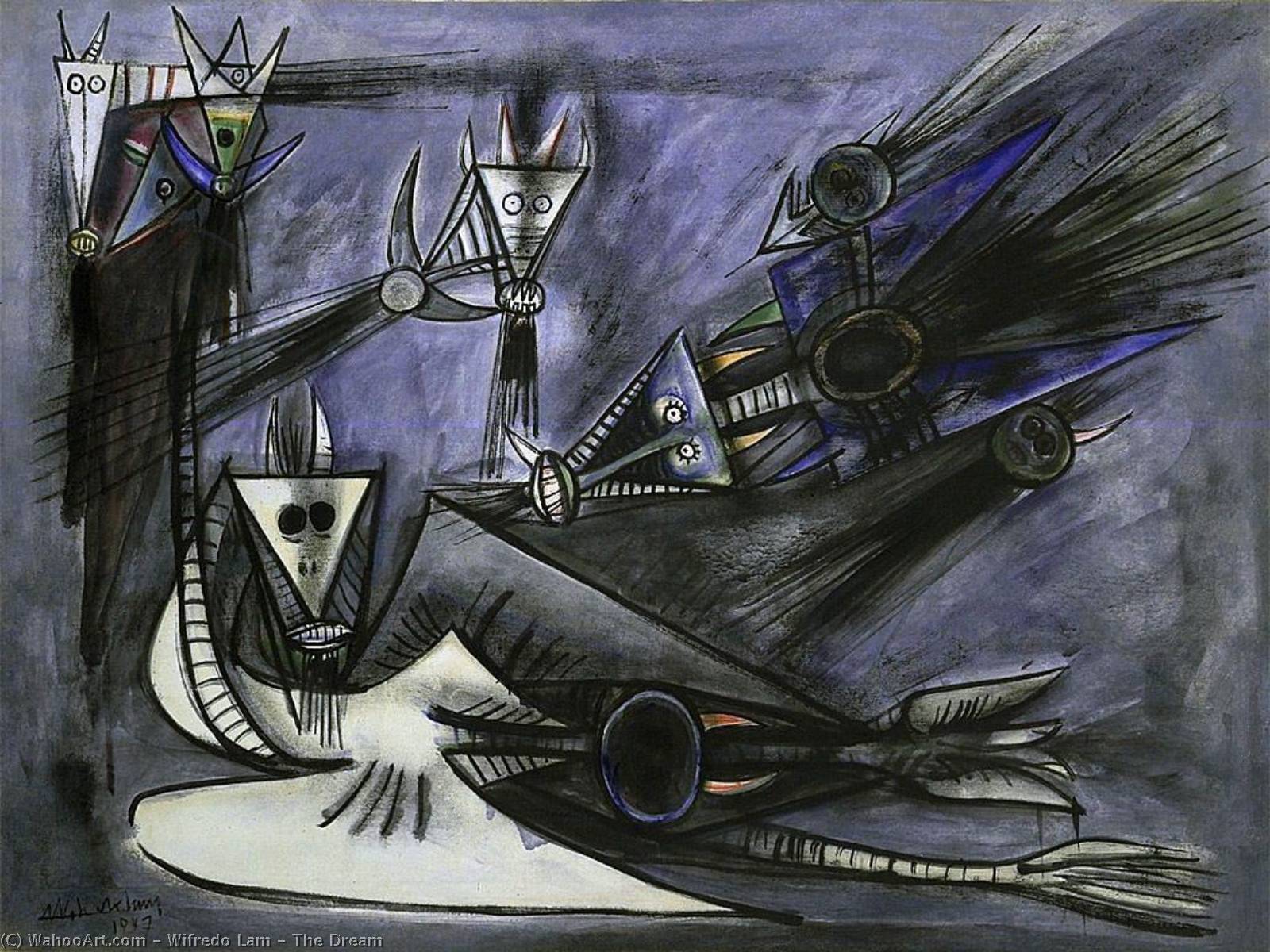
Following years spent navigating exile and artistic experimentation, Lam returned to Cuba in 1941 amidst the fervor of the Spanish Civil War—a period that profoundly impacted his worldview and fueled his artistic engagement. Witnessing firsthand the brutality of fascism solidified his commitment to social justice—inspiring him to confront political realities through art. He continued to develop his distinctive style—characterized by hybrid figures blending human, animal, and vegetal forms—drawing inspiration from Afro-Cuban rituals and beliefs—particularly Santería—which instilled in him a deep understanding of Yoruba spirituality and its symbolic language. Lam’s monumental painting *La Jungla* (1943)—a visceral depiction of the Cuban landscape infused with surrealist imagery—became his most celebrated masterpiece—solidifying his reputation as one of the foremost artists of the 20th century. His exploration of symbolism—particularly references to African motifs and spiritual traditions—challenged Western artistic conventions—promoting a vision of cultural hybridity that continues to resonate today. Lam died in Paris in 1982, leaving behind an enduring legacy—a testament to his unwavering dedication to artistic innovation and his profound engagement with the complexities of identity—culture, and history.