Portretul lui Théodore Géricault

The 100 Most Famous Théodore Géricault Paintings, Each One of a Kind

Actualizat Octombrie 2026 · clasat în funcție de scorul nostru de popularitate (căutări, vizite și comenzi pentru fiecare operă) · 183 lucrări ale lui Théodore Géricault în catalogul nostru

In short

Raftul Meduzei (1818) is the Théodore Géricault painting that draws the most eyes; the original belongs to the Muzeul Luvru, Paris. After it, the eye goes to Nymph and Satyr (Jupiter and Antiope) (1820) and The Oath of Brutus after the Death of Lucretia (1815). Among the 183 works of Théodore Géricault in our catalog, these 100 are the most famous, each a unique original presented with its year, its museum and the reason it endures.

1791 – 1824, Rouen Romantic painting Cele mai multe lucrări: Muzeul Luvru

Top 10 paintings by Théodore Géricault, through the gallery's eye

1
Raftul Meduzei (1818) de Théodore Géricault

Raftul Meduzei

1818 · Ulei pe pânză · Muzeul Luvru, Paris

Capodopera monumentală a lui Jean-Louis André Théodore Géricault este mult mai mult decât o simplă reprezentare a unui dezastru maritim; este o explorare viscerală a disperării umane, a scandalului politic și a puterii sublime a naturii. Finalizată în 1819, această pânză de dimensiuni colosale (491 x 716 cm) immortalizează consecințele terifiante ale naufragiului din 1816 al fregatului francez Méduse, o tragedie născută din neglijență și corupție care a șocat întreaga…

2
Nymph and Satyr (Jupiter and Antiope) (1820) de Théodore Géricault

Nymph and Satyr (Jupiter and Antiope)

1820 · Acrylic On Canvas · Musée des Beaux-Arts et de la Céramique, Rouen

The Allure of the Divine Encounter: Géricault’s *Nymph and Satyr* Jean-Louis André Théodore Géricault's *Nymph and Satyr*, painted in 1819, isn’t merely a depiction of a mythological scene; it’s a profound exploration of desire, transgression, and the inherent tension between innocence and primal instinct. Born amidst the tumultuous backdrop of post-revolutionary France, Géricault, already recognized for his dramatic intensity, sought to capture not just a narrative but an emotional truth—a…

4
Lions in a Mountainous Landscape (1818) de Théodore Géricault

Lions in a Mountainous Landscape

1818 · Acrylic On Canvas · Metropolitan Museum of Art, New York

This vigorous painting of six lions in a remote, spectrally illuminated lair—possibly intended to evoke the Atlas Mountains of Morocco—is an extraordinary example of Gericault’s spontaneous handling of paint. Rather than applying finishing touches to make a polished cabinet picture, the artist left the painting in a state known as an esquisse, or sketch, a work prized by fellow artists for its strength of directly capturing a subject or effect.…

5
The Kiss (1822) de Théodore Géricault

The Kiss

1822 · Acrylic On Canvas · Muzeul Thyssen-Bornemisza, Madrid

Théodore Géricault's "The Kiss," painted in 1816, isn’t merely a depiction of lovers entwined; it’s a visceral embodiment of the burgeoning Romantic movement’s fascination with raw emotion, dramatic intensity, and the sublime. This arresting work, housed within the Thyssen-Bornemisza Museum in Madrid, transcends simple representation to become a profound meditation on passion, vulnerability, and the very essence of human connection. Géricault, already a figure known for his unflinching portrayals of…

6
Wounded Soldiers Retrating from Russia (1814) de Théodore Géricault

Wounded Soldiers Retrating from Russia

1814 · Acrylic On Canvas · Musée des Beaux-Arts, Rouen

A Symphony of Suffering: Géricault’s “Wounded Soldiers Retrating from Russia” Jean-Louis André Théodore Géricault's "Wounded Soldiers Retrating from Russia" is not merely a painting; it’s a visceral embodiment of the horrors and human cost of war, rendered with an unprecedented level of realism and emotional intensity for its time. Completed in 1814, this monumental canvas—measuring a commanding 250 x 206 cm—captures a pivotal moment during Napoleon's disastrous invasion of Russia,…

7
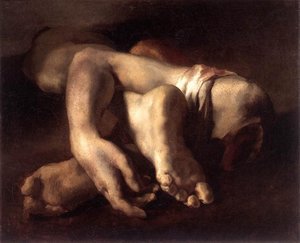
Study of Feet and Hands (1818) de Théodore Géricault

Study of Feet and Hands

1818 · Oil On Canvas · Musée Fabre, Montpellier

Jean-Louis André Théodore Géricault's "Study of Feet and Hands," painted in 1818, isn’t a grand statement of Romantic drama like his monumental “The Raft of the Medusa.” Instead, it offers a profoundly intimate glimpse into the artist’s meticulous process and a poignant meditation on the human form. This unassuming oil painting—measuring a modest 52 x 64 cm—is far more than just a preparatory sketch; it's a concentrated distillation of Géricault’s…

8
The Raft of the Medusa (detail) (1818) de Théodore Géricault

The Raft of the Medusa (detail)

1818 · Oil On Canvas · Muzeul Luvru, Paris

Jean-Louis André Théodore Géricault's "The Raft of the Medusa," a monumental detail from his 1818 painting, isn’t merely a depiction of shipwreck; it’s a visceral plunge into the depths of human suffering and political indictment. The scene, rendered with a dramatic intensity characteristic of Romanticism, captures the harrowing aftermath of the French frigate *Medusa*'s wreck off the coast of Mauritania in 1816. This disaster, largely attributed to the incompetence and…

10
The Wreck (1821) de Théodore Géricault

The Wreck

1821 · Oil On Canvas · Muzeul Luvru, Paris

Théodore Géricault's "The Wreck," painted in 1821, isn’t merely a seascape; it’s a visceral confrontation with the sublime—a raw depiction of humanity’s vulnerability against the overwhelming force of nature. Born amidst the turbulent currents of post-revolutionary France, Géricault, a figure both lauded and controversial within the burgeoning Romantic movement, channeled his own anxieties and the era's fascination with dramatic events into this monumental canvas. The painting immediately commands attention not…

Théodore Géricault's famous paintings, numbers 11 to 100

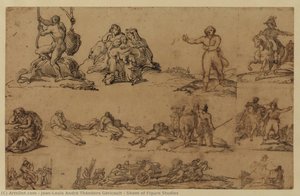
11The Horse Race (1816) de Théodore GéricaultThe Horse Race1816 · Muzeul Thyssen-Bornemisza 12Swiss Guard and Wounded Veteran (1819) de Théodore GéricaultSwiss Guard and Wounded Veteran1819 · Muzeul Luvru 13Mazeppa (1823) de Théodore GéricaultMazeppa1823 · Castelul Chantilly 14Two Horses (1809) de Théodore GéricaultTwo Horses1809 · The Phillips Collection 15A Turk (Mustapha) (1820) de Théodore GéricaultA Turk (Mustapha)1820 · Muzeul Luvru 16A Carabinier with his Horse (1814) de Théodore GéricaultA Carabinier with his Horse1814 · Musée des Beaux-Arts 17Riderless Horse Races (detail) (1817) de Théodore GéricaultRiderless Horse Races (detail)1817 · Muzeul Luvru 18Boxers (1818) de Théodore GéricaultBoxers1818 · Castelul Chantilly 19Horse Market: Five Horses at the Stake (1816) de Théodore GéricaultHorse Market: Five Horses at the Stake1816 · Muzeul Luvru 20The Epsom Derby (1821) de Théodore GéricaultThe Epsom Derby1821 · Muzeul Luvru 21Mounted Trumpeters of Napoleon's Imperial Guard (1813) de Théodore GéricaultMounted Trumpeters of Napoleon's Imperial Guard1813 · National Gallery of Art 22Three Lovers (1817) de Théodore GéricaultThree Lovers1817 · J. Paul Getty Museum 23Portrait of Simon Bonnesoeur-Bourginire (1812) de Théodore GéricaultPortrait of Simon Bonnesoeur-Bourginire1812 · Minneapolis Institute of Art 24Equestrian portrait of Wincenty Krasiński. (1814) de Théodore GéricaultEquestrian portrait of Wincenty Krasiński.1814 · Muzeul Național din Varșovia 25The Wounded Cuirassier, study (1814) de Théodore GéricaultThe Wounded Cuirassier, study1814 · Muzeul Brooklyn 26Lion devouring a horse de Théodore GéricaultLion devouring a horseCastelul Chantilly 27Français Étude de bras et de main realisé par Géricault por son oeuvre Le Radeau de la Méduse (1819) de Théodore GéricaultFrançais Étude de bras et de main realisé par Géricault por son oeuvre Le Radeau de la Méduse1819 28Untitled (ARJCHM) de Théodore GéricaultUntitled (ARJCHM)Muzeul Luvru 29Scene from the Epidemic of Yellow Fever in Cadiz (1819) de Théodore GéricaultScene from the Epidemic of Yellow Fever in Cadiz1819 · Virginia Museum of Fine Arts 30The Raft of the Medusa, Louvre (1819) de Théodore GéricaultThe Raft of the Medusa, Louvre1819 31Head of a Drowned Man (1819) de Théodore GéricaultHead of a Drowned Man1819 32Portrait of a Young Man (1818) de Théodore GéricaultPortrait of a Young Man1818 · Minneapolis Institute of Art 33A study for a nude. (1801) de Théodore GéricaultA study for a nude.1801 · Muzeul Național din Varșovia 34Study of a Model (1818) de Théodore GéricaultStudy of a Model1818 · J. Paul Getty Museum 35The Martyrdom of Saint Peter (1814) de Théodore GéricaultThe Martyrdom of Saint Peter1814 · Kunstmuseum Basel 36The Wreck (1824) de Théodore GéricaultThe Wreck1824 · Muzeul Luvru 37The Scotsman (1801) de Théodore GéricaultThe Scotsman1801 · Petit Palais 38Mater dolorosa, Copy after Ribera (1811) de Théodore GéricaultMater dolorosa, Copy after Ribera1811 · Kunstmuseum Basel 39Lion in Repose de Théodore GéricaultLion in ReposeWalters Art Museum 40Equestrian Portrait of Jérôme Bonaparte, after Antoine-Jean GROS (1813) de Théodore GéricaultEquestrian Portrait of Jérôme Bonaparte, after Antoine-Jean GROS1813 · Musée Eugène Delacroix 41Justice and Divine Vengeance Pursuing Crime (1811) de Théodore GéricaultJustice and Divine Vengeance Pursuing Crime1811 42Lying Lions (1812) de Théodore GéricaultLying Lions1812 43The Trumpeter of the Orleans Hussars (1813) de Théodore GéricaultThe Trumpeter of the Orleans Hussars1813 44The Trumpeter of the Lancers of the Guard (1813) de Théodore GéricaultThe Trumpeter of the Lancers of the Guard1813 · Burrell Collection 45The horse is out of the stable (1810) de Théodore GéricaultThe horse is out of the stable1810 · Muzeul Condé 46Un carabinier, vu à mi-corps (1814) de Théodore GéricaultUn carabinier, vu à mi-corps1814 47Portrait of Louise Vernet (1812) de Théodore GéricaultPortrait of Louise Vernet1812 48Head of a woundet Man (1814) de Théodore GéricaultHead of a woundet Man1814 · Muzeul Wallraf-Richartz 49Untitled (ARJCJD) (1814) de Théodore GéricaultUntitled (ARJCJD)1814 50The Monomaniac of Child Abduction (1822) de Théodore GéricaultThe Monomaniac of Child Abduction1822 51Horse Race, Moving to the Right (1820) de Théodore GéricaultHorse Race, Moving to the Right1820 · Musée des Beaux-Arts de Caen 52The Raft of the Medusa (1818) de Théodore GéricaultThe Raft of the Medusa1818 53Etude d'un homme nu (Study of a Nude Man) (1817) de Théodore GéricaultEtude d'un homme nu (Study of a Nude Man)1817 · The New Art Gallery Walsall 54Mounted Jockey (1821) de Théodore GéricaultMounted Jockey1821 · Virginia Museum of Fine Arts 55Portrait of a Negro (1822) de Théodore GéricaultPortrait of a Negro1822 · Buffalo AKG Art Museum 56Portrait Study of a Youth (1819) de Théodore GéricaultPortrait Study of a Youth1819 · Muzeul de Artă Kimbell 57The White Horse Tavern (1821) de Théodore GéricaultThe White Horse Tavern1821 · Fogg Museum 58Cattle Market (1817) de Théodore GéricaultCattle Market1817 · Fogg Museum 59Fighting Horses (1820) de Théodore GéricaultFighting Horses1820 · Muzeul de Artă din Cleveland 60Wounded Soldiers in a Cart (1815) de Théodore GéricaultWounded Soldiers in a Cart1815 · Fitzwilliam Museum 61Shipwrecked on a Beach (The Tempest) (1822) de Théodore GéricaultShipwrecked on a Beach (The Tempest)1822 · Yale University Art Gallery 62Alexandre Colin (1815) de Théodore GéricaultAlexandre Colin1815 63The Raft of the Medusa (1818) de Théodore GéricaultThe Raft of the Medusa1818 64Course de Chevaux montés allant à gauche, au moment du départ (1822) de Théodore GéricaultCourse de Chevaux montés allant à gauche, au moment du départ1822 65Francisco de Moncada Marqués d'Aytona (1815) de Théodore GéricaultFrancisco de Moncada Marqués d'Aytona1815 · Amsterdam Museum 66Riderless Racers at Rome (1817) de Théodore GéricaultRiderless Racers at Rome1817 · Walters Art Museum 67Trumpeter of the Hussars (1817) de Théodore GéricaultTrumpeter of the Hussars1817 68Nude Warrior with a Spear (1816) de Théodore GéricaultNude Warrior with a Spear1816 · National Gallery of Art 69The Wild Horse Race at Rome (1817) de Théodore GéricaultThe Wild Horse Race at Rome1817 70The Raft of the Medusa, Detalj, (1819) de Théodore GéricaultThe Raft of the Medusa, Detalj,1819 71Portrait of a Negro (1800) de Théodore GéricaultPortrait of a Negro1800 · Palácio Nacional da Ajuda 72Head of a Youth (1824) de Théodore GéricaultHead of a Youth1824 · Art Gallery of South Australia 73Portrait d'homme (1825) de Théodore GéricaultPortrait d'homme1825 · Musée Fabre 74Equestrian Portrait of Charles V (1814) de Théodore GéricaultEquestrian Portrait of Charles V1814 · Fine Arts Museums of San Francisco 75Chestnut horse in a stable (1814) de Théodore GéricaultChestnut horse in a stable1814 · Cantor Arts Center at Stanford University 76Horses of the Auvergne (1822) de Théodore GéricaultHorses of the Auvergne1822 · University of Michigan Museum of Art 77A Prancing Grey Horse (1812) de Théodore GéricaultA Prancing Grey Horse1812 · Burrell Collection 78Sheet of Figure Studies (1818) de Théodore GéricaultSheet of Figure Studies1818 · Courtauld Gallery 79Portrait of an Artist in His Studio (1820) de Théodore GéricaultPortrait of an Artist in His Studio1820 · Muzeul Luvru 80An Officer of the Chasseurs Commanding a Charge (1812) de Théodore GéricaultAn Officer of the Chasseurs Commanding a Charge1812 · Muzeul Luvru 81Study of a nude man de Théodore GéricaultStudy of a nude manMuzeul Național din Varșovia 82The Plaster Kiln (1823) de Théodore GéricaultThe Plaster Kiln1823 · Muzeul Luvru 83Officer of Chasseurs à Cheval of the Imperial Guard Charging (1812) de Théodore GéricaultOfficer of Chasseurs à Cheval of the Imperial Guard Charging1812 84Dogs Fighting Bears (1814) de Théodore GéricaultDogs Fighting Bears1814 · Foundation E.G. Bührle Collection 85Cheval gris au râtelier (1811) de Théodore GéricaultCheval gris au râtelier1811 86Untitled (ARJCGT) (1814) de Théodore GéricaultUntitled (ARJCGT)1814 87The Woman with Gambling Mania, ca (1822) de Théodore GéricaultThe Woman with Gambling Mania, ca1822 88Deutsch Firmenschild für einen Hufschmied, Detail (1814) de Théodore GéricaultDeutsch Firmenschild für einen Hufschmied, Detail1814 89Italian Landscape with Tomb (1818) de Théodore GéricaultItalian Landscape with Tomb1818 · Petit Palais 90A Cart Loaded with Kegs (1822) de Théodore GéricaultA Cart Loaded with Kegs1822 · Rhode Island School of Design Museum of Art 91Cinq chevaux vus par la croupe (1821) de Théodore GéricaultCinq chevaux vus par la croupe1821 92The Race of the Riderless Horses (1817) de Théodore GéricaultThe Race of the Riderless Horses1817 · J. Paul Getty Museum 93Dervish in His Stall (1820) de Théodore GéricaultDervish in His Stall1820 94Untitled (ARJCHB) (1819) de Théodore GéricaultUntitled (ARJCHB)1819 95Untitled (ARJCJF) (1818) de Théodore GéricaultUntitled (ARJCJF)1818 96Untitled (ARJCHV) (1817) de Théodore GéricaultUntitled (ARJCHV)1817 · Palais des Beaux-Arts de Lille 97German Der Page Mazeppa (1820) de Théodore GéricaultGerman Der Page Mazeppa1820 98English Anatomical Pieces (1819) de Théodore GéricaultEnglish Anatomical Pieces1819 · Musée des Beaux-Arts de Rouen 99A Shipwreck (1817) de Théodore GéricaultA Shipwreck1817 100Français Têtes coupées English Cut heads Português Cabeças cortadas (1818) de Théodore GéricaultFrançais Têtes coupées English Cut heads Português Cabeças cortadas1818

Théodore Géricault's famous paintings, period by period

The subjects that held Théodore Géricault's eye

The four subjects that come back most often in these originals, each with its finest example.

The museums that keep Théodore Géricault's originals

Cele 8 muzee care dețin cele mai multe dintre picturile de pe această pagină.

Muzeu Oraș Lucrări lui Théodore Géricault Picturi din această listă
Muzeul Luvru, ParisMuzeul Luvru Paris 20 Raftul Meduzei, The Raft of the Medusa (detail), Leda and the Swan
Castelul Chantilly, ChantillyCastelul Chantilly Chantilly 6 Mazeppa, Boxers, Lion devouring a horse
J. Paul Getty Museum, Los AngelesJ. Paul Getty Museum Los Angeles 3 Three Lovers, Study of a Model, The Race of the Riderless Horses
Muzeul Național din Varșovia, VarșoviaMuzeul Național din Varșovia Varșovia 3 Equestrian portrait of Wincenty Krasiński., A study for a nude., Study of a nude man
Burrell Collection, GlasgowBurrell Collection Glasgow 8 The Trumpeter of the Lancers of the Guard, A Prancing Grey Horse
Musée Fabre, MontpellierMusée Fabre Montpellier 4 Study of Feet and Hands, Portrait d'homme
Petit Palais, ParisPetit Palais Paris 3 The Scotsman, Italian Landscape with Tomb
Muzeul Thyssen-Bornemisza, MadridMuzeul Thyssen-Bornemisza Madrid 2 The Kiss, The Horse Race

Théodore Géricault across the decades: one unique original for each

Lucrări pe deceniu

Pick a decade to see the original that defines it.

Théodore Géricault's paintings: questions for the gallery

What is the single most famous work of Théodore Géricault?Reveal the answer

Raftul Meduzei (1818), Muzeul Luvru, Paris. Nymph and Satyr (Jupiter and Antiope) (1820) and The Oath of Brutus after the Death of Lucretia (1815) come next.

At what age did Théodore Géricault create Raftul Meduzei?Reveal the answer

27 years old: Raftul Meduzei dates from 1818, and Théodore Géricault was born in 1791.

Which ten paintings by Théodore Géricault are the most famous?Reveal the answer

Raftul Meduzei, Nymph and Satyr (Jupiter and Antiope), The Oath of Brutus after the Death of Lucretia, Lions in a Mountainous Landscape, The Kiss, Wounded Soldiers Retrating from Russia, Study of Feet and Hands, The Raft of the Medusa (detail), Leda and the Swan și The Wreck. The ranking above gives each one's year and museum.

How many works by Théodore Géricault are known?Reveal the answer

Our catalog holds 183 works by Théodore Géricault, dated from 1800 to 1824.

Where can the most famous Théodore Géricault originals be seen?Reveal the answer

Mostly in Muzeul Luvru (Paris), Castelul Chantilly (Chantilly) și J. Paul Getty Museum (Los Angeles). The museum table above lists them all.

During which period did Théodore Géricault create the best-known paintings?Reveal the answer

In 1810s: 67 of the 100 works on this page were made then, Raftul Meduzei among them.

Which famous Théodore Géricault painting is the earliest, and which the latest?Reveal the answer

On this page, the earliest is Portrait of a Negro (1800) and the latest The Wreck (1824).

What subjects did Théodore Géricault favour?Reveal the answer

Man (12), Portrait (9) și Horse (8), across the 100 works on this page.

What materials did Théodore Géricault paint with most?Reveal the answer

Oil On Canvas, for 25 of the 100 works on this page.

Which movement does the work of Théodore Géricault belong to?Reveal the answer

Romantic painting, judging by the originals on this page.

What Théodore Géricault originals can I see at the Muzeul Luvru?Reveal the answer

Raftul Meduzei, The Raft of the Medusa (detail) și Leda and the Swan: the Muzeul Luvru, Paris holds 14 of the works on this page.

Where can I order a hand-painted Théodore Géricault reproduction?Reveal the answer

Yes, as a reproduction: the original stays in its museum, but any painting on this page can be painted by hand for you, made to order one at a time, from the painting's own page.

Théodore Géricault: a portrait of the artist

Jean-Louis André Théodore Géricault: Un Pionier al Romantismului Francez

Jean-Louis André Théodore Géricault, un nume care rezonează cu spiritul înfloritor al Romantismului francez, s-a născut într-o lume aflată la balanță, pe marginea unor schimbări dramatice. A ajuns în Rouen, Franța, în 1791, doi ani după izbucnirea Revoluției Franceze, un moment care a modelat profund viziunea sa asupra lumii și a artei. Deși a moștenit o existență confortabilă prin intermediul activităților sale legale și comerciale – inclusiv o afacere cu tutun –, destinul lui Géricault nu se afla în drept sau comerț, ci în domeniul expresiei artistice. Inițial, a fost antrenat de Carle Vernet, un maestru al artei sportive engleze, care i-a insuflat ochiuri acute pentru anatomie și mișcare, evidente în reprezentările sale ale cailor. Cu toate acestea, studiile sale ulterioare cu Pierre-Narcisse Guérin au oferit o bază în compoziția clasică, deși spiritul său neliniștit l-a condus curând să caute cunoștințe independent în sălile sacre ale Louvre.

Louvre-ul ca Academie: Un Dialog cu Maestrul

Între 1810 și 1815, Louvre-ul a devenit adevărata academie a lui Géricault. S-a scufundat în operele maeștrilor din trecut – Rubens, Titian, Velázquez și Rembrandt – nu doar copind tehnicile lor, ci și angajându-se într-un dialog profund cu filozofia artistică a acestora. Această perioadă a fost crucială pentru modelarea stilului său distinctiv, caracterizat de claroscuro dramatic, compoziții dinamice și o emoționalitate intensă care îl diferențiau de contemporanii săi. Nu se limita doar la reproducere; absorbea esența acestor maeștri, internalizând abordările lor privind lumina, umbra și forma umană. Această educație auto-dirijată a cultivat o voce artistică unică, care avea să sfideze în curând convențiile neoclasice predominante. Lucrările sale timpurii, precum *The Charging Chasseur* (1812), au sugerat deja această sensibilitate emergentă, prezentând o audacitate execuțională și o fascinație pentru mișcare reminiscentă de energia picturilor lui Rubens. A continuat să exploreze teme ecvestre, perfecționându-și abilitățile în reprezentarea puterii și grației cailor – un subiect care a rămas o temă recurentă pe parcursul carierei sale.

Raftul Meduzei: Un Monument al Suferinței Umane

Numele lui Géricault este inextricabil legat de *Raftul Meduzei* (1818-1819), o panzea monumentală care transcende simpla reprezentare istorică și devine o indictare puternică a erorii umane și a nedreptății sociale. Inspirată de povestea reală terifiantă a naufragierilor din fregata franceză *Méduse* în 1816, unde neglijența și incompetenta au dus la suferință inimaginabilă pentru pasageri, pictura este o reprezentare viscerală a disperării, speranței și disperării. Géricault a efectuat cercetări minuțioase, interviind supraviețuitori, studiind cadavre în spitale și chiar construind un model la scară a bărcii pentru a asigura acuratețea. Lucrarea rezultată nu este doar o reprezentare a tragediei; este o experiență imersivă care confruntă privitorii cu realitatea crudă a suferinței umane. Compoziția, construită în jurul a două structuri piramidale – una reprezentând disperarea și moartea, cealaltă embodyând speranța și potențialul de salvare – creează o tensiune dinamică care atrage privirea pe întregul tablou. *Raftul Meduzei* a fost controversat la expunerea sa la Salonul din 1819, declanșând dezbateri politice și consolidând reputația lui Géricault ca artist îndrăzneț și neconvențional. Impactul picturii s-a extins dincolo de lumea artei, devenind un simbol al incompetenței guvernamentale și al rezilienței umane în fața suferinței inimaginabile.

Dincolo de Tragedie: Tematici Militare și Moștenire Artistică

Deși *Raftul Meduzei* rămâne cea mai celebrată realizare a sa, producția artistică a lui Géricault s-a extins dincolo de această capodoperă unică. A continuat să exploreze teme militare, evidente în lucrări precum *Wounded Cuirassier* (1814) și *The Derby of Epsom* (1821), demonstrând o fascinație pentru dramă și forța expresivă. Aceste picturi dezvăluie explorarea sa continuă a emoțiilor umane sub presiune, concentrându-se adesea pe consecințele fizice și psihologice ale conflictului. A intrat și în portretizare și litografie, extinzând astfel repertoriul său artistic. Din păcate, viața lui Géricault s-a scurtat din cauza unei boli, la vârsta de 32 de ani, după ani de suferință cauzată de accidente cu calul și o infecție cronică pulmonară. Moartea sa prematură a privat lumea artei unui talent prodigios, dar influența sa asupra generațiilor ulterioare de artiști – în special Eugène Delacroix – a fost profundă. Este amintit ca pionier al Romantismului, un artist care a îndrăznit să confrunte adevăruri dificile și să imbue opera sa cu o rezonanță emoțională puternică care captivează încă astăzi privitorii. Statuia sa de bronz se odihnește pe mormânt la Cimitirul Père Lachaise din Paris, deasupra unui panou relief care reprezintă scena terifiantă din *Raftul Meduzei*, o onoare potrivită pentru un artist care s-a dedicat în întregime capturării complexităților și contradicțiilor condiției umane.

Caracteristici Cheie & Influențe

  • Romantism: Géricault este considerat unul dintre primii pictori francezi romantici, mutându-se dincolo de idealurile neoclasice către intensitatea emoțională și compoziția dramatică.
  • Compoziție Dramatică: Picturile sale sunt cunoscute pentru compozițiile lor dinamice, utilizând adesea linii diagonale și contraste de lumină și umbră pentru a crea un sentiment de mișcare și tensiune.
  • Realism & Cercetare: Géricault s-a angajat în realism, efectuând cercetări amănunțite – inclusiv studiind cadavre și intervievând supraviețuitori – pentru a asigura acuratețea și impactul emoțional al lucrărilor sale.
  • Influența maeștrilor din trecut: A fost inspirat de maeștrii barocați precum Rubens, Titian și Velázquez, adoptând tehnicile lor pentru iluminarea dramatică și expresia picturală.
  • Concentrare pe suferință umană: Arta sa adesea reprezintă scene de tragedie, disperare și aspectele mai întunecate ale condiției umane.

Toate cele 183 de lucrări ale lui Théodore Géricault →