Portretul lui Simon Vouet

Cele 100 cele mai faimoase picturi ale lui Simon Vouet, o selecție de galerie

Actualizat Octombrie 2026 · clasat în funcție de scorul nostru de popularitate (căutări, vizite și comenzi pentru fiecare operă) · 166 lucrări ale lui Simon Vouet în catalogul nostru

Pe scurt

Dintre toate originalele lăsate de Simon Vouet, cea mai faimoasă este Venus și Adonis (1642), din colecția J. Paul Getty Museum, Los Angeles. Imediat după acestea urmează The Muses of Urania and Calliope (1634) și Annunciation (1640). Catalogul nostru cuprinde 166 lucrări ale lui Simon Vouet; galeria a păstrat cele 100 pe care lumea le admiră cel mai mult, fiecare fiind prezentată împreună cu data, muzeul și povestea sa.

1590 – 1649, Paris French baroque Cele mai multe lucrări: Muzeul Luvru

Cele mai importante 10 picturi ale lui Simon Vouet: selecția galeriei

1
Venus și Adonis (1642) de Simon Vouet

Venus și Adonis

1642 · Acrilic pe pânză întinsă · J. Paul Getty Museum, Los Angeles

Venus and Adonis – A Baroque Symphony of Desire and Mortality Simon Vouet’s “Venus and Adonis,” completed in 1642, transcends mere depiction; it embodies the very essence of French Baroque art—a masterful fusion of Italian influences and profound emotional resonance. This iconic scene draws directly from Ovid's *Metamorphoses*, capturing the pivotal moment where Venus relentlessly pursues Adonis despite his steadfast rejection, foreshadowing a tragic fate that underscores the vulnerability inherent…

2
The Muses of Urania and Calliope (1634) de Simon Vouet

The Muses of Urania and Calliope

1634 · Acrylic On Canvas · National Gallery of Art, Washington

Simon Vouet’s “The Muses Urania and Calliope”: A Symphony of Baroque Grace Simon Vouet (1590-1649) stands as a pivotal figure in the artistic landscape of 17th-century France, marking the decisive transition from Mannerism to the opulent grandeur of the Baroque style. His legacy resides not merely in his prolific output but also in his unwavering dedication to mastering Italian influences—a pursuit that fundamentally reshaped French painting and cemented Vouet’s place…

3
Annunciation (1640) de Simon Vouet

Annunciation

1640 · Oil On Canvas · Galleria degli Uffizi, Florența

Simon Vouet's "Annunciation," painted in 1640, is more than just a religious depiction; it’s a masterful orchestration of light, shadow, and human emotion. This captivating work transports the viewer to an intimate interior space, where the momentous announcement of Mary’s divine conception unfolds with breathtaking drama. The painting immediately draws the eye to the kneeling figure of the Virgin Mary, bathed in a warm, golden glow emanating from the right…

4
The Fortuneteller (detail) (1617) de Simon Vouet

The Fortuneteller (detail)

1617 · Oil On Canvas · Galleria Nazionale d'Arte Antica, Roma

In the heart of 1617, amidst the vibrant and transformative atmosphere of Roman artistic circles, Simon Vouet captured a moment of profound human connection in his masterpiece, The Fortuneteller. This work, particularly when viewed in its intimate details, serves as much more than a mere portrait; it is an emblem of the burgeoning Baroque style that was beginning to reshape the visual landscape of Europe. The scene unfolds with a…

5
Sleeping Venus (1630) de Simon Vouet

Sleeping Venus

1630 · Acrylic On Canvas · Muzeul de Artă Fine din Budapesta, Budapesta

Simon Vouet's "Sleeping Venus," painted around 1630, is not merely a depiction of a reclining nude; it’s an exquisite distillation of Renaissance ideals and the burgeoning Baroque aesthetic. This captivating work transcends simple portraiture, offering instead a profound meditation on beauty, repose, and the delicate balance between earthly pleasure and spiritual contemplation. The painting immediately draws the viewer into a world of hushed tranquility, inviting us to share in the…

6
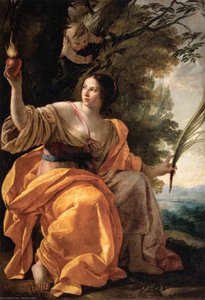
Allegory of Virtue (1634) de Simon Vouet

Allegory of Virtue

1634 · Acrylic On Canvas · Muzeul Luvru, Paris

Simon Vouet’s “Allegory of Virtue,” completed around 1634, stands as a testament to the burgeoning Baroque aesthetic infiltrating French artistic circles during Louis XIII's reign. More than just a portrait—though it undeniably depicts a woman radiating grace and authority—the painting delves into profound philosophical concepts rooted in humanist ideals prevalent at the time.

7
The Entombment (1638) de Simon Vouet

The Entombment

1638 · Oil On Canvas · Muzeul Fitzwilliam din Cambridge, Cambridge

Simon Vouet's "The Entombment," painted in 1635–1638, is not merely a depiction of a biblical scene; it’s an exquisitely rendered meditation on grief, faith, and the profound dignity of sacrifice. This monumental work, currently residing within the collection of the Fitzwilliam Museum in Cambridge, transcends its subject matter to become a powerful testament to the Baroque era's ability to evoke intense emotion through masterful technique and carefully considered symbolism. Vouet,…

8
Angels with Attributes of the Passion: Angel Holding the Vessel and Towel for washing the hands of Pontius Pilate (1624) de Simon Vouet

Angels with Attributes of the Passion: Angel Holding the Vessel and Towel for washing the hands of Pontius Pilate

1624 · Oil · Minneapolis Institute of Art, Minneapolis

A single celestial figure emerges from a deep, near-black void, commanding the space with an intimate and monumental presence. This angel, caught in a moment of profound spiritual devotion, gazes upward with eyes full of soulful contemplation or sorrow. The light descends from the upper left, carving the figure out of the darkness and casting soft, tender shadows across a face etched with emotion. Every detail feels immediate, from the…

9
Saint John (1623) de Simon Vouet

Saint John

1623 · Oil On Canvas · Philadelphia Museum of Art, Philadelphia

A young man turns his face toward a light that remains unseen. His eyes, wide and searching, catch a glimmer that pulls his gaze upward, away from the dark, murky depths of the background. Thick, dark curls frame a pale face, creating a sharp contrast against the heavy shadows that swallow the space around him. He is caught in a moment of sudden, quiet realization. The light does not merely…

10
Virgin and Child, with an Angel (1642) de Simon Vouet

Virgin and Child, with an Angel

1642 · Oil On Panel · Philadelphia Museum of Art, Philadelphia

The light falls softly upon the skin of the Virgin Mary, catching the curve of her cheek and the small, smooth hands of the Christ Child. They sit within a triangular arrangement that anchors the composition, surrounded by the deep shadows of a dense woodland. An angel leans into this intimate circle, its robes glowing with warm yellows and golds that contrast against the heavy, dark trees behind them. At…

Selecția pentru Simon Vouet continuă, de la 11 la 100

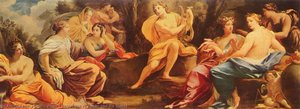
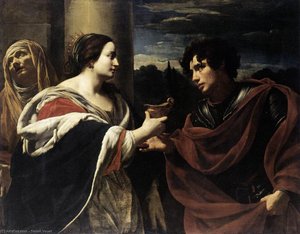
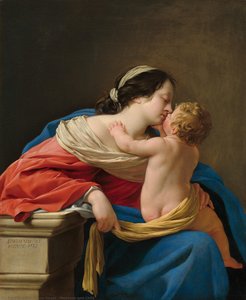
11Madonna with Child (1625) de Simon VouetMadonna with Child1625 · Muzeul Ermitaj 12Time Discovering the Love of Venus and Mars (1640) de Simon VouetTime Discovering the Love of Venus and Mars1640 · Muzeul John și Mable Ringling 13The Rapture of Saint Theodore (1627) de Simon VouetThe Rapture of Saint Theodore1627 · Staatliche Kunstsammlungen Dresden 14Heavenly Charity (1640) de Simon VouetHeavenly Charity1640 · Muzeul Luvru 15Allegory (1640) de Simon VouetAllegory1640 · Musei Capitolini 16Parnassus or Apollo and the Muses (1640) de Simon VouetParnassus or Apollo and the Muses1640 · Muzeul de Artă Fine din Budapesta 17Sacrifice of Isaac (1642) de Simon VouetSacrifice of Isaac1642 · Milwaukee Art Museum 18Angels with Attributes of the Passion, the Superscription from the Cross (1624) de Simon VouetAngels with Attributes of the Passion, the Superscription from the Cross1624 · Minneapolis Institute of Art 19The Holy Family with the Infant Saint John the Baptist (1626) de Simon VouetThe Holy Family with the Infant Saint John the Baptist1626 · Fine Arts Museums of San Francisco 20Ceres and Harvesting Cupids (1634) de Simon VouetCeres and Harvesting Cupids1634 · National Gallery 21Suicide of Lucrece (1625) de Simon VouetSuicide of Lucrece1625 · National Gallery Prague 22The Muse Clio (1640) de Simon VouetThe Muse Clio1640 · Staatliche Kunsthalle Karlsruhe 23Allegory with Venus, Mars, Cupid, and Time (1626) de Simon VouetAllegory with Venus, Mars, Cupid, and Time1626 · Muzeul John și Mable Ringling 24Vanitas (1621) de Simon VouetVanitas1621 · Muzeul Național din Varșovia 25Lovers (1614) de Simon VouetLovers1614 · Muzeul de Artă Fine Pushkin 26Martyrdom of Saint Catherine (1620) de Simon VouetMartyrdom of Saint Catherine1620 · Musée des Beaux-Arts de Strasbourg 27The Halberdier (1617) de Simon VouetThe Halberdier1617 · Institutul de Artă din Chicago 28Saint Jerome (c.347–420) (1620) de Simon VouetSaint Jerome (c.347–420)1620 · National Library of Wales 29self-portrait (1620) de Simon Vouetself-portrait1620 30Saint Agnes (1618) de Simon VouetSaint Agnes1618 · Blanton Museum of Art 31Annunciation to Mary (1617) de Simon VouetAnnunciation to Mary1617 · Gemäldegalerie 32Psyche and Cupid (1626) de Simon VouetPsyche and Cupid1626 · Musée des Beaux-Arts de Lyon 33The Nativity (1632) de Simon VouetThe Nativity1632 34Squire-at-arms - Saint Guillaume d'Aquitaine (1625) de Simon VouetSquire-at-arms - Saint Guillaume d'Aquitaine1625 · The Art Museum RIGA BOURSE 35The Entombment (1635) de Simon VouetThe Entombment1635 · Fitzwilliam Museum 36Saint Catherine (1625) de Simon VouetSaint Catherine1625 · Slovak National Gallery 37Saint Sebastian (1625) de Simon VouetSaint Sebastian1625 · Museum of Fine Arts 38Model for Altarpiece in St. Peter's (1625) de Simon VouetModel for Altarpiece in St. Peter's1625 · Los Angeles County Museum of Art 39Model for Altarpiece in St. Peter's (1625) de Simon VouetModel for Altarpiece in St. Peter's1625 · Los Angeles County Museum of Art 40Saint Cecilia (1626) de Simon VouetSaint Cecilia1626 · Blanton Museum of Art 41Portrait of Virginia da Vezzo (1625) de Simon VouetPortrait of Virginia da Vezzo1625 · Gemäldegalerie 42The Charity (1635) de Simon VouetThe Charity1635 43Saint Sebastian (1623) de Simon VouetSaint Sebastian1623 44Christ at the Column (1637) de Simon VouetChrist at the Column1637 45The Holy Family with Saint Elizabeth and the young Saint John (1642) de Simon VouetThe Holy Family with Saint Elizabeth and the young Saint John1642 46The Four Seasons (1644) de Simon VouetThe Four Seasons1644 · National Gallery of Ireland 47Head of a Bearded Man (1639) de Simon VouetHead of a Bearded Man1639 · Hatchlands Park 48The Entombment (1637) de Simon VouetThe Entombment1637 · Musée d'Art Roger-Quilliot 49Artemisia Building the Mausolaeum (1640) de Simon VouetArtemisia Building the Mausolaeum1640 · Nationalmuseum 50Allegory of Prudence (1645) de Simon VouetAllegory of Prudence1645 · Musée Fabre 51The Rest of the Holy Family (1650) de Simon VouetThe Rest of the Holy Family1650 · Musée de Grenoble 52Christ Appearing to Saint Anthony Abbot, Falsely Called Christ Healing a Possessed Person (1650) de Simon VouetChrist Appearing to Saint Anthony Abbot, Falsely Called Christ Healing a Possessed Person1650 · Musée de Grenoble 53The Virgin Taking the Society of Jesus Under Her Protection (1650) de Simon VouetThe Virgin Taking the Society of Jesus Under Her Protection1650 54Olivier de Clisson (1650) de Simon VouetOlivier de Clisson1650 · Musée Départemental Dobrée 55The Muses Urania and Calliope (1634) de Simon VouetThe Muses Urania and Calliope1634 · National Gallery of Art 56Time Vanquished by Love, Hope and Fame, 1640-1645 de Simon VouetTime Vanquished by Love, Hope and Fame, 1640-1645Grand Palais 57Portrait of a Young Man (Le Spadassin) (1617) de Simon VouetPortrait of a Young Man (Le Spadassin)1617 · Herzog Anton Ulrich Museum 58POLYMNIE, MUSE DE L'ELOQUENCE de Simon VouetPOLYMNIE, MUSE DE L'ELOQUENCEMuzeul Luvru 59Angel with dice and tunic (1620) de Simon VouetAngel with dice and tunic1620 · Museo di Capodimonte 60Saint Catherine of Alexandria (1620) de Simon VouetSaint Catherine of Alexandria1620 · Muzeul Național de Artă Occidentală 61Mary Adoring the Christ child (1623) de Simon VouetMary Adoring the Christ child1623 · Museum Boijmans Van Beuningen 62The Virgin and Child (of the Column) (1640) de Simon VouetThe Virgin and Child (of the Column)1640 · Muzeul Ashmolean de Artă și Arheologie 63Parnassus or Apollo and the Muses (detail) (1640) de Simon VouetParnassus or Apollo and the Muses (detail)1640 · Muzeul de Artă Fine din Budapesta 64Toilet of Venus (1628) de Simon VouetToilet of Venus1628 · Cincinnati Art Museum 65Self-Portrait (1615) de Simon VouetSelf-Portrait1615 · Musée Réattu 66LA VICTOIRE de Simon VouetLA VICTOIREMuzeul Luvru 67The Rape of Europa (1640) de Simon VouetThe Rape of Europa1640 · Muzeul Thyssen-Bornemisza 68Sophonisba Primirea Chalice-ului otrăvit (1623) de Simon VouetSophonisba Primirea Chalice-ului otrăvit1623 · Muzeele Statale din Kassel 69St Catherine (1614) de Simon VouetSt Catherine1614 · Palatul Quirinale 70Prince Marcantonio Doria (1621) de Simon VouetPrince Marcantonio Doria1621 · Muzeul Luvru 71The Holy Family with Sts Elizabeth, John the Baptist and Catherine (1614) de Simon VouetThe Holy Family with Sts Elizabeth, John the Baptist and Catherine1614 · Muzeul Prado 72Diana on the Hunt (1619) de Simon VouetDiana on the Hunt1619 · Colecțiile Statale de Pictură din Bavaria 73The Last Supper (1615) de Simon VouetThe Last Supper1615 · Palazzo Apostolico 74Birth of the Virgin (1620) de Simon VouetBirth of the Virgin1620 · San Francesco a Ripa 75The Triumph of Galatea (1642) de Simon VouetThe Triumph of Galatea1642 · National Gallery of Canada 76Ecaterina cea Mare de Simon VouetEcaterina cea MareMusée des Beaux-Arts de Lyon 77Saturn, Conquered by Amor, Venus and Hope (1645) de Simon VouetSaturn, Conquered by Amor, Venus and Hope1645 · Musée du Berry 78Self-Portrait (1699) de Simon VouetSelf-Portrait1699 · Museum de Fundatie 79The Holy Family (1630) de Simon VouetThe Holy Family1630 · Kunsthalle Bremen 80Madonna and Child (1633) de Simon VouetMadonna and Child1633 · National Gallery of Art 81LA MISE AU TOMBEAU de Simon VouetLA MISE AU TOMBEAUMuzeul Luvru 82Allegory of Peace (1627) de Simon VouetAllegory of Peace1627 · Galleria Nazionale d'Arte Antica 83Allegory of Wealth (1630) de Simon VouetAllegory of Wealth1630 · Muzeul Luvru 84Eight Satyrs Admiring the Anamorphosis of an Elephant (1625) de Simon VouetEight Satyrs Admiring the Anamorphosis of an Elephant1625 · Hessisches Landesmuseum 85LA PRESENTATION AU TEMPLE de Simon VouetLA PRESENTATION AU TEMPLEMuzeul Luvru 86Parnassus or Apollo and the Muses (detail) (1640) de Simon VouetParnassus or Apollo and the Muses (detail)1640 · Muzeul de Artă Fine din Budapesta 87The Fortune Teller (1618) de Simon VouetThe Fortune Teller1618 · National Gallery of Canada 88Saint Guillaume d'Aquitaine ( ) de Simon VouetSaint Guillaume d'Aquitaine ( )Muzeul Luvru 89Apollo and the Muses (1875) de Simon VouetApollo and the Muses1875 · Bratislava City Gallery 90LA PRUDENCE AMENE LA PAIX ET L'ABONDANCE de Simon VouetLA PRUDENCE AMENE LA PAIX ET L'ABONDANCEMuzeul Luvru 91Gaucher de Châtillon, Connétable (1632) de Simon VouetGaucher de Châtillon, Connétable1632 · Muzeul Luvru 92Caritas Romana de Simon VouetCaritas RomanaMuzeul Național din Varșovia 93St Jerome and the Angel (1622) de Simon VouetSt Jerome and the Angel1622 · National Gallery of Art 94The Fortune Teller (1617) de Simon VouetThe Fortune Teller1617 · Galleria Nazionale d'Arte Antica 95LE CHRIST EN CROIX de Simon VouetLE CHRIST EN CROIXMuzeul Luvru 96Adoration of the Shepherds (Adoration des bergers) de Simon VouetAdoration of the Shepherds (Adoration des bergers)La Sauvegarde de l'Art Français 97David with the head of Goliath de Simon VouetDavid with the head of GoliathPalazzo Bianco 98The Continence of Scipio de Simon VouetThe Continence of ScipioShipley Art Gallery 99Phaethon in His Chariot with Time de Simon VouetPhaethon in His Chariot with TimeMuzeul de Artă Manchester 100The Conversion of the Magdalen de Simon VouetThe Conversion of the MagdalenThe Hunterian Museum and Art Gallery

Piesele celebre ale lui Simon Vouet, perioadă cu perioadă

Subiectele care i-au captivat privirea lui Simon Vouet

Cele patru teme care revin cel mai des în aceste opere originale, fiecare având cel mai sublim exemplu.

Muzeele care păstrează originalele lui Simon Vouet

Cele 8 muzee care dețin cele mai multe dintre picturile de pe această pagină.

Muzeu Oraș Lucrări lui Simon Vouet Picturi din această listă
Muzeul Luvru, ParisMuzeul Luvru Paris 20 Allegory of Virtue, Heavenly Charity, POLYMNIE, MUSE DE L'ELOQUENCE
Muzeul de Artă Fine din Budapesta, BudapestaMuzeul de Artă Fine din Budapesta Budapesta 5 Sleeping Venus, Parnassus or Apollo and the Muses, Parnassus or Apollo and the Muses (detail)
National Gallery of Art, WashingtonNational Gallery of Art Washington 4 The Muses of Urania and Calliope, The Muses Urania and Calliope, Madonna and Child
Galleria Nazionale d'Arte Antica, RomaGalleria Nazionale d'Arte Antica Roma 4 The Fortuneteller (detail), Allegory of Peace, The Fortune Teller
Muzeul Național din Varșovia, VarșoviaMuzeul Național din Varșovia Varșovia 4 Vanitas, Caritas Romana
Los Angeles County Museum of Art, Los AngelesLos Angeles County Museum of Art Los Angeles 3 Model for Altarpiece in St. Peter's, Model for Altarpiece in St. Peter's
Minneapolis Institute of Art, MinneapolisMinneapolis Institute of Art Minneapolis 2 Angels with Attributes of the Passion: Angel Holding the Vessel and Towel for washing the hands of Pontius Pilate, Angels with Attributes of the Passion, the Superscription from the Cross
Philadelphia Museum of Art, PhiladelphiaPhiladelphia Museum of Art Philadelphia 2 Saint John, Virgin and Child, with an Angel

Simon Vouet deceniu cu deceniu: originalul care definește fiecare

Lucrări pe deceniu

Alege o deceniu pentru a descoperi opera originală care îl definește.

Întrebări ale colecționarilor despre picturile lui Simon Vouet

Pentru ce operă este cel mai cunoscut Simon Vouet?Află răspunsul

Venus și Adonis (1642), J. Paul Getty Museum, Los Angeles. Urmează The Muses of Urania and Calliope (1634) și Annunciation (1640).

Ce vârstă avea Simon Vouet când a fost creată Venus și Adonis?Află răspunsul

52 ani: Venus și Adonis datează din 1642, iar Simon Vouet s-a născut în 1590.

Care sunt cele mai celebre zece picturi ale lui Simon Vouet?Află răspunsul

Venus și Adonis, The Muses of Urania and Calliope, Annunciation, The Fortuneteller (detail), Sleeping Venus, Allegory of Virtue, The Entombment, Angels with Attributes of the Passion: Angel Holding the Vessel and Towel for washing the hands of Pontius Pilate, Saint John și Virgin and Child, with an Angel. Clasamentul de mai sus indică anul și muzeul pentru fiecare piesă.

Câte picturi a lăsat Simon Vouet?Află răspunsul

Catalogul nostru cuprinde 166 lucrări ale lui Simon Vouet, datate între 1614 și 1645.

În ce muzee sunt expuse capodoperele lui Simon Vouet?Află răspunsul

În principal în Muzeul Luvru (Paris), Muzeul de Artă Fine din Budapesta (Budapesta) și National Gallery of Art (Washington). Tabelul cu muzee de mai sus le enumeră pe toate.

În ce ani a pictat Simon Vouet cele mai cunoscute opere?Află răspunsul

În 1620s: 31 dintre cele 100 lucrări de pe această pagină au fost realizate atunci, fiind Angels with Attributes of the Passion: Angel Holding the Vessel and Towel for washing the hands of Pontius Pilate dintre acestea.

Care sunt prima și ultima pictură originală celebră a lui Simon Vouet?Află răspunsul

Pe această pagină, cea mai veche lucrare datează din Lovers (1614), iar cea mai recentă este din Allegory of Prudence (1645).

Ce subiecte a ales cel mai des Simon Vouet?Află răspunsul

Woman (15), Renaissance (12) și Man (9), din cele 100 lucrări de pe această pagină.

Ce tehnică a folosit cel mai des Simon Vouet?Află răspunsul

Oil On Canvas, pentru 40 dintre cele 100 lucrări de pe această pagină.

Din ce mișcare artistică face parte Simon Vouet?Află răspunsul

French baroque, judecând după originalele de pe această pagină.

Ce lucrări ale lui Simon Vouet sunt expuse la Muzeul Luvru?Află răspunsul

Allegory of Virtue, Heavenly Charity și POLYMNIE, MUSE DE L'ELOQUENCE: Muzeul Luvru, Paris deține 12 dintre lucrările de pe această pagină.

Pot comanda o reproducere a unei picturi a lui Simon Vouet?Află răspunsul

Da, ca reproducere: originalul rămâne în muzeu, însă orice pictură de pe această pagină poate fi pictată manual pentru tine, la comandă, unic pentru tine, direct de pe pagina proprie a picturii.

Simon Vouet: viață și operă

Simon Vouet: Un Pasionat Al Renașterii Târzie și Pionier al Barocului Francez

Simon Vouet, născut în Paris pe 9 ianuarie 1590 și decedat tot acolo pe 30 iunie 1649, este o figură esențială în istoria artei franceze. El marchează tranziția subtilă, dar profundă, de la manierismul sofisticat al Renașterii târzie către exuberanța și dramatismul barocului. Provenind dintr-o familie cu tradiție artistică – tatăl său, Laurent Vouet, fiind un pictor respectat, iar fratele său, Aubin, urmând o carieră similară – Simon a beneficiat de o educație timpurie solidă, care i-a pus bazele succesului viitor. Chiar și nepotul său, Ludovico Dorigny, a continuat tradiția familială, demonstrând longevitatea impactului Vouet asupra artei.

De La Portrete Timpurii la Influențe Italiene: O Călătorie de Formare

Cariera lui Simon Vouet a debutat cu portrete, o specializare care i-a permis să își demonstreze rapid talentul și să câștige recunoaștere. La vârsta de doar 14 ani, a fost trimis în Anglia pentru a picta un portret comandat, un semn al reputației sale emergente. O aventură neobișnuită l-a purtat apoi în Imperiul Otoman, unde a lucrat ca portretist în anturajul Baronului de Sancy, ambasadorul francez la Constantinopol. Această călătorie exotică, urmată de o vizită la Veneția în 1612, i-a deschis ochii asupra unor noi orizonturi artistice și culturale. Dar cea mai importantă perioadă a formării sale a fost petrecută la Roma, între 1614 și 1627. Aici, timp de treisprezece ani, s-a scufundat în atmosfera vibrantă a scenei artistice romane, aflată în plină expansiune barocă.

Roma a fost un teren fertil pentru asimilarea influențelor diverse. Vouet a studiat cu atenție tehnica dramatică a luminii utilizată de Caravaggio, a îmbrățișat elemente ale manierismului italian, dar și a analizat meticulos paletele de culori și perspectiva di sotto in su (perspectiva văzută de jos în sus) folosite de Paolo Veronese. Nu s-a oprit aici; a căutat inspirație în operele lui Carracci, Guercino, Lanfranco și Guido Reni, sintetizând aceste stiluri disparate într-o viziune artistică unică și personală. Această perioadă romană nu doar l-a format ca artist, ci i-a adus și recunoaștere internațională.

Crearea unui Stil Distinctiv și Introducerea Barocului în Franța

Succesul său la Roma a culminat cu alegerea sa ca președinte al prestigioasei Accademia di San Luca în 1624, o dovadă incontestabilă a abilităților sale artistice și a respectului de care se bucura în lumea artei italiene. Stilul lui Vouet era caracterizat prin capacitatea sa de a absorbi și de a distila diverse influențe artistice. El nu copia pur și simplu, ci integra aceste elemente într-o estetică barocă distinctivă, cu o puternică amprentă italiană. La întoarcerea sa în Franța în 1627, Vouet a jucat un rol crucial în introducerea stilului baroc italian în pictura franceză, transformând peisajul artistic al țării.

Moștenire și Influență: Un Pod Între Culturi

Simon Vouet a fost numit Premier peintre du Roi (Pictul Principal al Regelui), o poziție de prestigiu și influență considerabilă. A condus un atelier prolific, formând numeroși artiști care au modelat generația următoare de pictori francezi. Printre cei mai importanți elevi ai săi se numără Charles Le Brun (care a organizat ulterior toată pictura decorativă de la Versailles), Valentin de Boulogne, Charles Alphonse du Fresnoy, Pierre Mignard, Eustache Le Sueur și Claude Mellan. Influența lui Vouet s-a extins dincolo de propriile sale opere; elevii săi au răspândit stilul și tehnicile sale în toată Franța, stabilind o școală distinctivă de pictură barocă. Impactul său este vizibil mai ales în schemele decorative grandioase comandate de Ludovic al XIV-lea.

Moștenirea lui Simon Vouet rezidă în rolul său esențial ca punte între arta italiană și cea franceză. A importat cu succes dinamismul și măreția barocului italian, transformându-l într-un stil care a rezonat cu gusturile curții regale și ale aristocrației franceze. Contribuțiile sale sunt recunoscute de istoricii artei până în prezent, iar impactul său asupra dezvoltării picturii franceze din secolul al XVII-lea este incontestabil.

Toate cele 166 de lucrări ale lui Simon Vouet →