Portretul lui Sigmar Polke

Cele 51 cele mai faimoase picturi ale lui Sigmar Polke, fiecare unică în felul ei

Actualizat Octombrie 2026 · clasat în funcție de scorul nostru de popularitate (căutări, vizite și comenzi pentru fiecare operă) · 54 lucrări ale lui Sigmar Polke în catalogul nostru

Pe scurt

Levitation (2005) este pictura lui Sigmar Polke care atrage cele mai multe priviri; originalul aparține Kunsthaus Zürich, Zurich. După aceasta, privirea se îndreaptă către Sem título (1968) și Sem título (1965). Dintre cele 54 opere ale lui Sigmar Polke din catalogul nostru, acestea 51 sunt cele mai celebre, fiecare fiind o piesă unică, prezentată împreună cu anul creării, muzeul deținător și motivul pentru care aceasta rămâne memorabilă.

1941 – 2010, Oleśnica Pop art Cele mai multe lucrări: Colecțiile Statale de Pictură din Bavaria

Cele mai importante 10 picturi ale lui Sigmar Polke, prin ochii galeriei

1
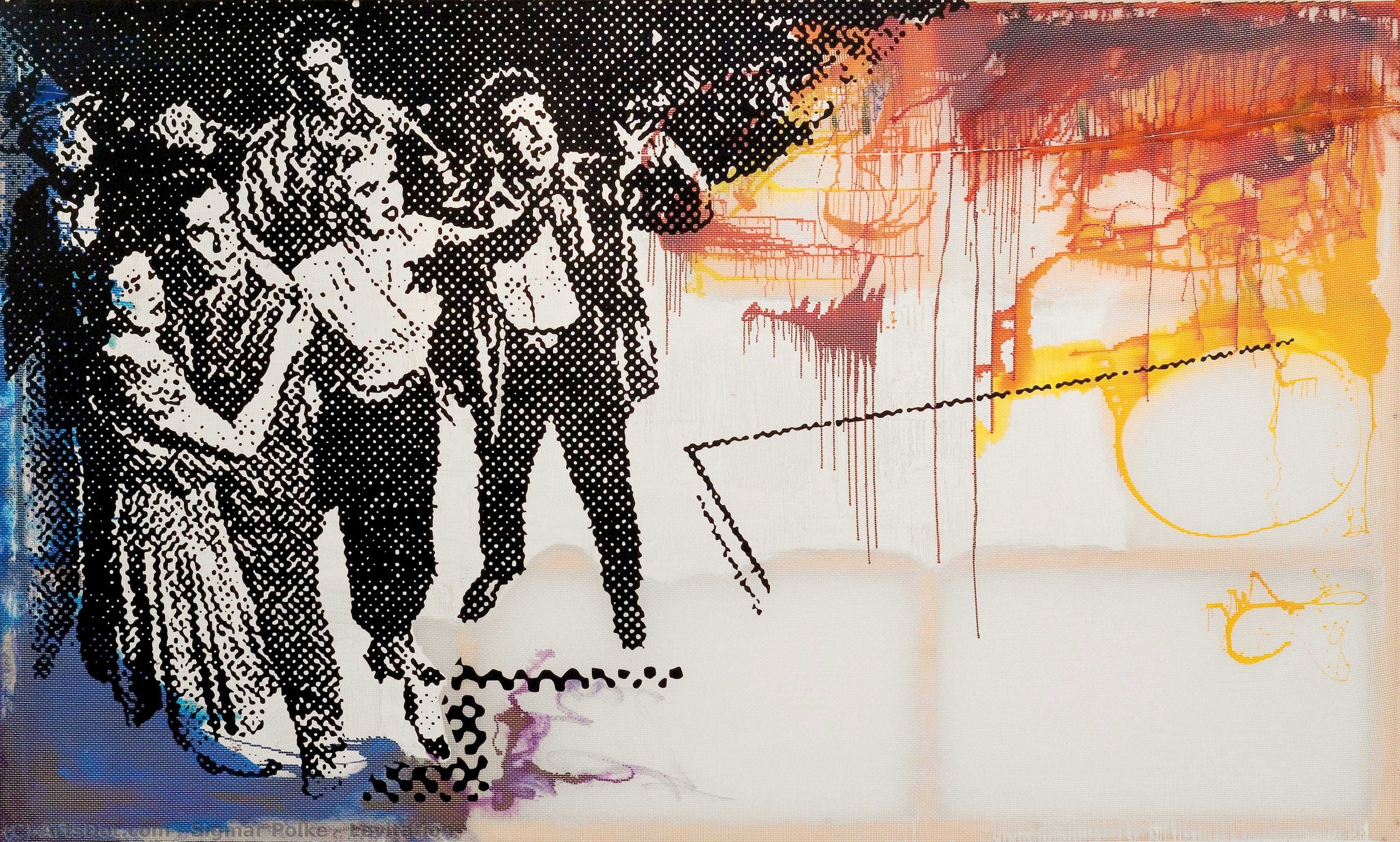
Levitation (2005) de Sigmar Polke

Levitation

2005 · Encaustic · Kunsthaus Zürich, Zurich

In the vast landscape of contemporary art, few names resonate with as much mystery and technical audacity as Sigmar Polke. His masterpiece, Levitation, created in 2005, serves as a profound meditation on the very nature of perception. At first glance, the viewer is met with a seemingly banal tableau—a table laden with objects that ground the scene in reality—yet this familiarity is quickly subverted by an underlying sense of existential…

2
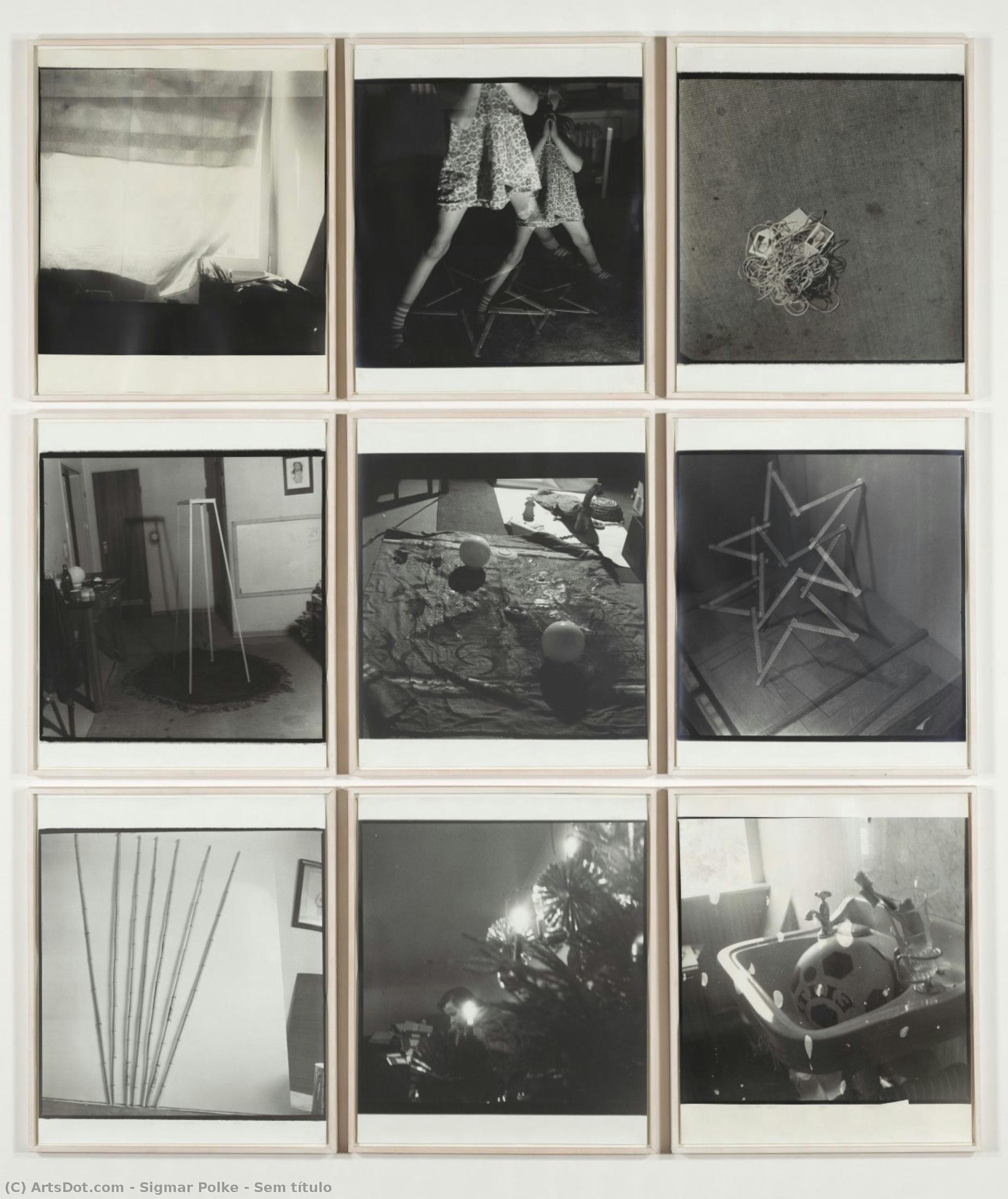
Sem título (1968) de Sigmar Polke

Sem título

1968 · Acrylic On Canvas · Fundația Serralves, Porto

Sigmar Polke's "Sem título" (1968) isn’t merely a photograph; it’s a carefully constructed meditation on observation, displacement, and the unsettling beauty of everyday objects. This seminal work, housed within a stark grid of black-and-white frames, immediately draws the viewer into a world both familiar and profoundly strange. The arrangement—nine individual photographs presented as a unified whole—evokes a sense of systematic collection, almost like a meticulously documented survey of the mundane.…

3
Sem título (1965) de Sigmar Polke

Sem título

1965 · Acrylic On Canvas · Fundația Serralves, Porto

Sigmar Polke’s “Sem título,” created in 1968, stands as an arresting testament to the burgeoning aesthetic of capitalist realism—a movement that sought to depict everyday life with unflinching honesty, mirroring the visual language of advertising and documentary filmmaking. More than just a photographic collage, it's a carefully constructed puzzle designed to challenge our assumptions about how we perceive the world around us.

4
Sem título (1968) de Sigmar Polke

Sem título

1968 · Acrylic On Canvas · Fundația Serralves, Porto

Sigmar Polke's "Sem título" (1968), a deceptively simple grid of black and white photographs, is far more than just a collection of meticulously arranged objects. It’s a profound exploration of memory, displacement, and the inherent instability of visual perception – themes deeply rooted in the artist’s own turbulent personal history. Born in Poland amidst the upheaval of World War II and subsequently forced to flee to Germany as a child,…

Păiți celebrele picturi ale lui Sigmar Polke, de la numărul 11 la 51

Subiectele care i-au captivat privirea lui Sigmar Polke

Cele patru teme care revin cel mai des în aceste opere originale, fiecare având cel mai sublim exemplu.

Muzeele care păstrează originalele lui Sigmar Polke

Cele 5 muzee care dețin cele mai multe dintre picturile de pe această pagină.

Muzee Oraș Lucrări lui Sigmar Polke Picturi din această listă
Colecțiile Statale de Pictură din Bavaria, MunchenColecțiile Statale de Pictură din Bavaria Munchen 8 Ice Skater, Audatia, Double Portrait Fabiola
Fundația Serralves, PortoFundația Serralves Porto 3 Sem título, Sem título, Sem título
Kunsthaus Zürich, ZurichKunsthaus Zürich Zurich 1 Levitation
Institut Valencià d'Art Modern, ValenciaInstitut Valencià d'Art Modern Valencia 1 Sin título (Hochstand) / Torre de vigilancia
Buffalo AKG Art Museum, BuffaloBuffalo AKG Art Museum Buffalo 1 Break Domination

Sigmar Polke de-a lungul deceniilor: o piesă unică pentru fiecare

Lucrări pe deceniu

Alege o deceniu pentru a descoperi opera originală care îl definește.

Picturile lui Sigmar Polke: întrebări pentru galerie

Care este cea mai celebră operă a lui Sigmar Polke?Află răspunsul

Levitation (2005), Kunsthaus Zürich, Zurich. Urmează Sem título (1968) și Sem título (1965).

La ce vârstă a creat Sigmar Polke Levitation?Află răspunsul

64 ani: Levitation datează din 2005, iar Sigmar Polke s-a născut în 1941.

Care sunt cele mai celebre zece picturi ale lui Sigmar Polke?Află răspunsul

Levitation, Sem título, Sem título, Sem título, Woman at mirror, Ice Skater, Audatia, Untitled, Sit correctly și Sunday. Clasamentul de mai sus indică anul și muzeul pentru fiecare piesă.
Câte lucrări ale lui Sigmar Polke sunt cunoscute?Află răspunsul

Catalogul nostru cuprinde 54 lucrări ale lui Sigmar Polke, datate între 1965 și 2005.

Unde pot fi vizualizate originalele celor mai faimoși Sigmar Polke?Află răspunsul

În principal în Colecțiile Statale de Pictură din Bavaria (Munchen), Fundația Serralves (Porto) și Kunsthaus Zürich (Zurich). Tabelul cu muzee de mai sus le enumeră pe toate.

În ce perioadă a creat Sigmar Polke cele mai cunoscute picturi?Află răspunsul

În 1960s: 8 dintre cele 51 lucrări de pe această pagină au fost realizate atunci, fiind Sem título dintre acestea.

Care este cea mai veche și care este cea mai recentă pictură a lui Sigmar Polke?Află răspunsul

Pe această pagină, cea mai veche lucrare datează din Sem título (1965), iar cea mai recentă este din Levitation (2005).

Ce teme prefera Sigmar Polke?Află răspunsul

Fragmentation (5), Photography (3) și Collage (3), din cele 51 lucrări de pe această pagină.

Cu ce materiale a pictat cel mai des Sigmar Polke?Află răspunsul

Acrylic On Canvas, pentru 3 dintre cele 51 lucrări de pe această pagină.

Din ce curent artistic face parte opera lui Sigmar Polke?Află răspunsul

Pop art și Capitalist realism, judecând după originalele de pe această pagină.

Ce originale de Sigmar Polke pot vedea la Colecțiile Statale de Pictură din Bavaria?Află răspunsul

Ice Skater, Audatia și Double Portrait Fabiola: Colecțiile Statale de Pictură din Bavaria, Munchen deține 8 dintre lucrările de pe această pagină.

Sigmar Polke: un portret al artistului

Sigmar Polke - A Life Forged in Displacement: The Early Years and Artistic Formation of Sigmar Polke

Sigmar Polke’s artistic journey was profoundly shaped by the tumultuous currents of 20th-century history, beginning with his birth in Olsztyn, Poland, in 1941. His early life was marked by displacement; as a child, he fled with his family first to Thuringia and then, seeking refuge from Communist rule, to West Germany in 1953. This experience of being uprooted, of existing between worlds, instilled within him a lifelong skepticism towards fixed ideologies and a fascination with the instability of perception – themes that would become central to his art. Before dedicating himself fully to painting, Polke underwent an apprenticeship as a stained glass worker in Düsseldorf (1959-1960), a formative experience that honed his technical skill and introduced him to the possibilities of manipulating light and color. He then formally studied at the Kunstakademie Düsseldorf (1961-1967) under a constellation of influential figures: Karl Otto Götz, Gerhard Hoehme, and most significantly, Joseph Beuys. It was within this environment that Polke began to forge his unique artistic voice, one characterized by experimentation, irony, and a relentless questioning of established norms.

Early Influences and Artistic Beginnings

The formative years of Sigmar Polke’s artistic development were deeply impacted by the geopolitical landscape of postwar Germany. Growing up in Olsztyn—then Poznań—Poland—under Nazi occupation—and subsequently relocating to West Germany amidst the anxieties of the Cold War, instilled a profound awareness of displacement and instability. This experience permeated his worldview and fueled his artistic impulse. His apprenticeship as a stained glass worker provided him with invaluable technical training and an understanding of how light interacts with color – skills that would prove crucial in shaping his later explorations of visual materiality. Crucially, he enrolled at the Kunstakademie Düsseldorf in 1961, where he encountered the intellectual ferment surrounding German Art Informel and was profoundly influenced by Joseph Beuys’s radical vision of art as a tool for social transformation. Beuys's emphasis on shamanistic rituals and his belief in the transformative power of artistic gesture resonated deeply with Polke, shaping his approach to experimentation and challenging conventional notions of artistic expression.

Capitalist Realism and Critique of Ideology

Emerging in the early 1960s, Polke swiftly aligned himself with a burgeoning countercultural movement. In 1963, alongside Gerhard Richter, Konrad Lueg, and Manfred Kuttner, he co-founded *Kapitalistischer Realismus* (Capitalist Realism). This was not an artistic style in the traditional sense but rather a deliberate provocation—a critique of both Western consumer culture and the rigid dogma of Soviet Socialist Realism. The movement’s name itself was deliberately ambiguous, suggesting that both systems were equally capable of producing artificial realities. Polke's early paintings from this period often appropriated imagery from advertising, comics, and popular media, presenting them with a detached irony that exposed their underlying ideological structures. He wasn’t simply rejecting capitalism; he was demonstrating its pervasive influence on perception itself. This initial foray into critical commentary established a pattern of subversive engagement that would define his career. The group's manifesto declared: “We want to show the world that we are not interested in any ideology.”

Photography and Material Alchemy

The 1970s witnessed Polke’s decisive shift towards photography, driven by an unwavering curiosity about the visual world and a desire to push the boundaries of artistic representation. He embarked on extensive travels—to Pakistan, Afghanistan, Brazil, France, and the United States—documenting everyday life with meticulous detail and capturing fleeting moments of beauty and absurdity. However, Polke didn’t treat photography as merely a recording device; he subjected his images to radical chemical manipulation – dissolving prints in solvents, bleaching them with ultraviolet light, and applying abrasive pastes – transforming them into unpredictable textures and altering their chromatic palettes. This process mirrored his broader artistic preoccupation with chance operations and material alchemy—the deliberate introduction of imperfections and the exploration of how materials interact under unforeseen conditions. He famously stated: “I want to make paintings that are like photographs.”

Legacy and Recognition

Sigmar Polke’s oeuvre spanned decades, encompassing painting, photography, film, sculpture, and installation art. His work consistently interrogated notions of authenticity, representation, and the relationship between art and society—themes that continue to resonate with contemporary artists. He received the Golden Lion at the Venice Biennale in 1986, recognizing his contribution to the revitalization of German art after decades of ideological repression. Throughout his career, Polke maintained a steadfast commitment to experimentation and intellectual rigor, refusing to conform to stylistic conventions or artistic trends. His influence can be seen in the work of numerous artists who followed him—those who embrace ambiguity as a source of creative power and who challenge established norms with uncompromising conviction. Sigmar Polke passed away in Cologne in June 2010 after a long battle with cancer, leaving behind an unparalleled body of work that secures his place among the most important figures in postwar art. His legacy resides not only in his distinctive visual language but also in his unwavering belief in the transformative potential of artistic inquiry.