Portretul lui Paula Modersohn-Becker

Picturi Paula Modersohn-Becker: Cele 100 de cele mai faimoase, prin ochii unei galerii

Actualizat Octombrie 2026 · clasat în funcție de scorul nostru de popularitate (căutări, vizite și comenzi pentru fiecare operă) · 245 lucrări ale lui Paula Modersohn-Becker în catalogul nostru

Pe scurt

În ochii galeriei, cea mai celebră pictură a lui Paula Modersohn-Becker este Portrait of a young woman with red hat (1900), a cărei originală este expusă la Kunsthalle Bremen, Bremen. Half-length portrait of an old farmer (1903) și View from the studio window of the artist in Paris (1900) completează trioul pe care orice ochi îl recunoaște. Dintre cele 245 opere ale lui Paula Modersohn-Becker din catalogul nostru, galeria prezintă mai jos cele 100 cele mai faimoase, fiecare fiind originală, cu anul creării, muzeul de păstrare și elementul care o face unică.

1876 – 1907, Dresda Expressionism Cele mai multe lucrări: Böttcherstraße Museums

Cele mai apreciate 10 picturi ale lui Paula Modersohn-Becker din galerie

1
Portrait of a young woman with red hat (1900) de Paula Modersohn-Becker

Portrait of a young woman with red hat

1900 · Oil On Canvas · Kunsthalle Bremen, Bremen

This arresting portrait, rendered in 1900 and measuring 68 x 45 cm, offers a poignant glimpse into the world of Paula Modersohn-Becker, a pivotal figure at the dawn of modern art. More than just a likeness, it's an intensely personal exploration of identity and emotion, characteristic of her groundbreaking work. The subject, a young woman with a striking red hat – a bold statement against the muted tones of the…

2
Half-length portrait of an old farmer (1903) de Paula Modersohn-Becker

Half-length portrait of an old farmer

1903 · Acrylic On Canvas · Kunsthalle Bremen, Bremen

Paula Modersohn-Becker's 1903 painting, “Half-Length Portrait of an Old Farmer,” isn’t merely a depiction of a weathered face; it’s a profound meditation on aging, memory, and the quiet dignity of rural life. Painted in tempera on canvas with a remarkable intimacy, the work immediately draws you into the subject's world – a world etched with lines of experience and imbued with an almost palpable sense of melancholy. The painting transcends…

3
View from the studio window of the artist in Paris (1900) de Paula Modersohn-Becker

View from the studio window of the artist in Paris

1900 · Oil On Canvas · Kunsthalle Bremen, Bremen

Painted in 1900, during a pivotal period in her artistic development, Paula Modersohn-Becker's "View from the Studio Window of the Artist in Paris" is more than just a landscape; it’s a profound meditation on selfhood, observation, and the burgeoning currents of early Expressionism. The painting captures a hazy Parisian vista seen through the open window of her studio – a space that served as both sanctuary and crucible for her…

4
Still life with plant, lemon and orange (1906) de Paula Modersohn-Becker

Still life with plant, lemon and orange

1906 · Tempera

In this 1906 tempera on canvas, a collection of objects is arranged within a shallow space. A plant with dark green foliage rises in the background, its leaves partially contained by a red pot. In the foreground, the composition centers on the textures of fruit and vessels. A bright yellow lemon and a saturated orange sit near the center, their skins providing a sharp contrast to the surrounding tones. To…

5
Self Portrait with Camellia Branch de Paula Modersohn-Becker

Self Portrait with Camellia Branch

Oil · Museum Folkwang, Essen

In the intimate realm of early twentieth-century modernism, few works possess the haunting, quiet power of Paula Modersohn-Becker’s Self Portrait with Camellia Branch. Painted between 1906 and 1907, this masterpiece serves as a profound meditation on the intersection of femininity, mortality, and the natural world. As one gazes upon the artist's likeness, there is an immediate sense of encountering a private moment of introspection. The painting does not merely capture…

6
Old poor woman, sitting in the garden (1905) de Paula Modersohn-Becker

Old poor woman, sitting in the garden

1905 · Oil · Von der Heydt Museum, Wuppertal

The canvas presents "Old poor woman, sitting in the garden," a work painted by Paula Modersohn-Becker about 1905. The figure before us is Mother Schröder, a woman known to the local community by the name Dreebeen. She exists here as an Almshäuslerin, a resident of the local almshouse, captured in a moment of stillness. The artist finds her subject through regular visits to the Worpswede Almshouse, a practice she has…

7
Bust of a Seated Old Peasant Woman (1903) de Paula Modersohn-Becker

Bust of a Seated Old Peasant Woman

1903 · Oil · Kunstmuseum Basel, Basel

This oil portrait presents a somber and intimate bust-length view of an elderly woman, captured in profile as she faces toward the left. The composition positions the subject slightly off-center, creating a direct emotional connection through an eye-level perspective. The color palette is defined by muted, earthy, and desaturated tones, featuring dark forest green in the subject's clothing and a background of charcoal and slate grey. Warm, weathered flesh tones…

8
Title in Original Language: Blinde Frau im Walde (1902) de Paula Modersohn-Becker

Title in Original Language: Blinde Frau im Walde

1902 · Etching · Oklahoma City Museum of Art, Oklahoma City

This monochrome etching depicts a blind woman standing within a forest. The composition is vertically oriented, focusing on the woman positioned slightly off-center to the right. She stands before a large tree trunk, reaching out with her hands as if to feel its texture. The background consists of a dense forest with numerous slender trees that create a layered effect, receding into the distance. Two birds are incorporated into the…

9
Old Peasant Woman (1903) de Paula Modersohn-Becker

Old Peasant Woman

1903 · Oil On Canvas · Hamburger Kunsthalle, Hamburg

is an oil on canvas created by Paula Modersohn-Becker in 1903. The portrait focuses on an elderly subject who rests her face in her hand, a posture suggesting weariness. Her hair is tied back with a headscarf, framing a face marked by large, unadorned eyes. The work is held in the collection of the Kunsthalle Hamburg.

10
Self-portrait With Two Flowers de Paula Modersohn-Becker

Self-portrait With Two Flowers

Oil

The woman stares out from the canvas, her expression caught in a moment of quiet contemplation. She wears a blue dress that holds its color with a certain weight, grounding her presence against the background. In her hands, she cradles two flowers, their delicate forms held with a gentle, deliberate intention. There is a stillness here, a sense of a person pausing to acknowledge her own existence. Her eyes do…

Picturi cu Paula Modersohn-Becker, clasate de la 11 la 100

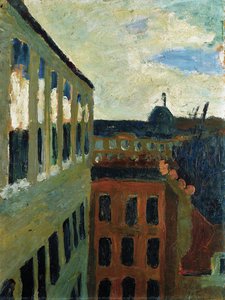
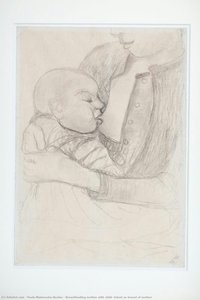
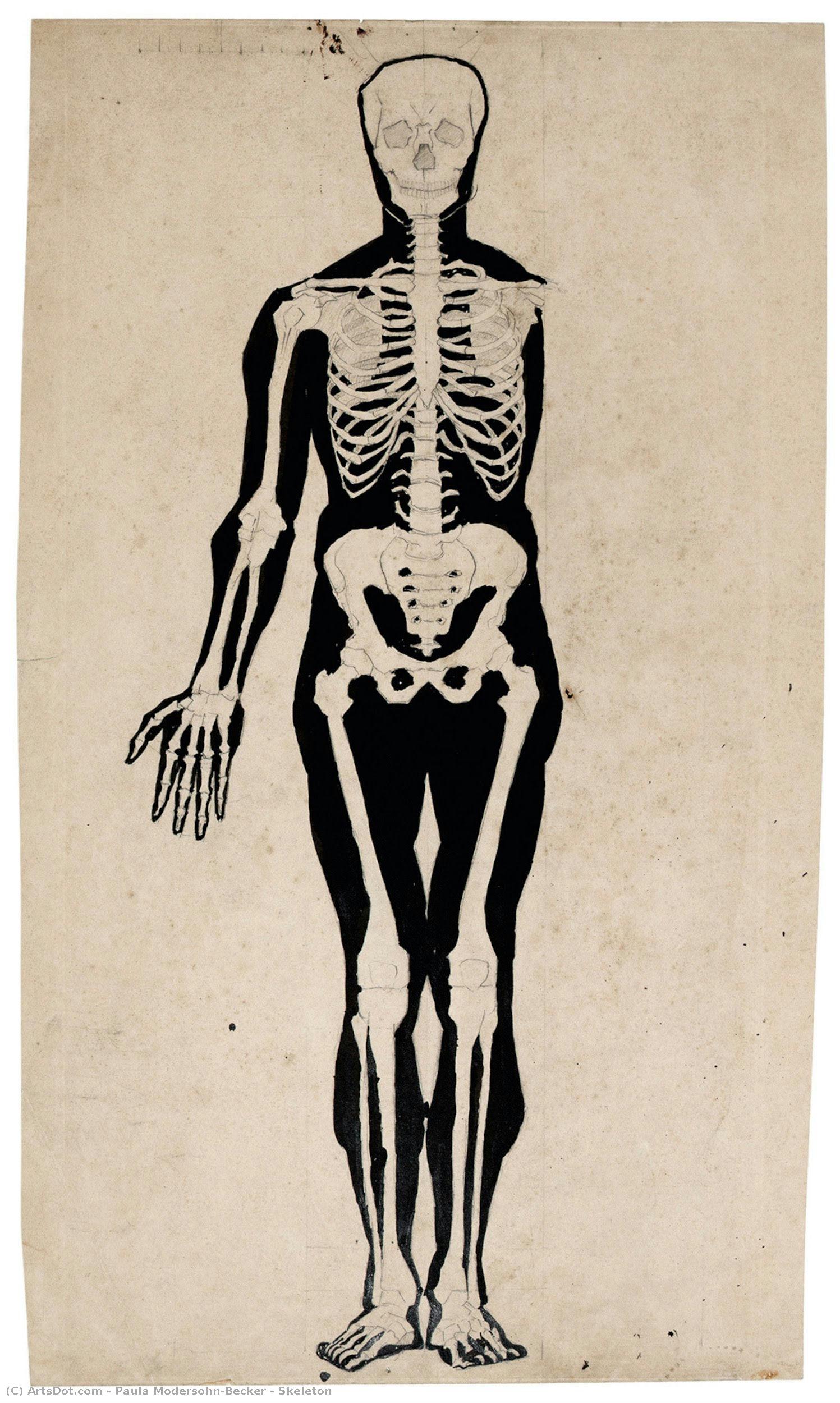
11Mother with baby at her breast, and child in landscape (1905) de Paula Modersohn-BeckerMother with baby at her breast, and child in landscape1905 12Self portrait in front of flowering trees (1902) de Paula Modersohn-BeckerSelf portrait in front of flowering trees1902 13Self-portrait de Paula Modersohn-BeckerSelf-portraitPaula Modersohn-Becker Museum 14Boy with Cat (1903) de Paula Modersohn-BeckerBoy with Cat1903 · Kunstmuseum Basel 15Mother and Child (1903) de Paula Modersohn-BeckerMother and Child1903 · Hamburger Kunsthalle 16Girl With Tiger Lilies de Paula Modersohn-BeckerGirl With Tiger Lilies 17Seated girl with a green chain (1904) de Paula Modersohn-BeckerSeated girl with a green chain1904 · Kunsthalle Mannheim 18Girl with Flower Wreath in Her Hair (1901) de Paula Modersohn-BeckerGirl with Flower Wreath in Her Hair1901 19The Old von Bredow (1902) de Paula Modersohn-BeckerThe Old von Bredow1902 · Colecțiile Statale de Pictură din Bavaria 20East Frisian girl in the dunes, Frisian woman sitting in the dunes with windmill, (1903) de Paula Modersohn-BeckerEast Frisian girl in the dunes, Frisian woman sitting in the dunes with windmill,1903 · Groninger Museum 21Child in the Cradle (1904) de Paula Modersohn-BeckerChild in the Cradle1904 · Von der Heydt Museum 22Worpswede Girl (1900) de Paula Modersohn-BeckerWorpswede Girl1900 23Three Bathing Boys by the Canal (1901) de Paula Modersohn-BeckerThree Bathing Boys by the Canal1901 · Worcester Art Museum 24Two Girls in Front of Birch Trees (1905) de Paula Modersohn-BeckerTwo Girls in Front of Birch Trees1905 · Saint Louis Art Museum 25Girl sitting on a chair with child on lap in front of countryside (1904) de Paula Modersohn-BeckerGirl sitting on a chair with child on lap in front of countryside1904 26Girl with flower wreath (1901) de Paula Modersohn-BeckerGirl with flower wreath1901 27Girl between the Birch Trees (1904) de Paula Modersohn-BeckerGirl between the Birch Trees1904 28Girl with Rabbit (1904) de Paula Modersohn-BeckerGirl with Rabbit1904 29Worpswede Farmer's Child, sitting in a Chair (1905) de Paula Modersohn-BeckerWorpswede Farmer's Child, sitting in a Chair1905 30Girl with Lamb (1904) de Paula Modersohn-BeckerGirl with Lamb1904 31Self-portrait with red Rose (1905) de Paula Modersohn-BeckerSelf-portrait with red Rose1905 32Head of a Girl (1905) de Paula Modersohn-BeckerHead of a Girl1905 · Kunsthaus Zürich 33Sitting child in an armchair (1903) de Paula Modersohn-BeckerSitting child in an armchair1903 · Böttcherstraße Museums 34Portrait of Hedwig Hagemann (1903) de Paula Modersohn-BeckerPortrait of Hedwig Hagemann1903 · Böttcherstraße Museums 35Nursing Mother and Child (1902) de Paula Modersohn-BeckerNursing Mother and Child1902 36Study for Portrait of Clara Rilke-Westhoff (1905) de Paula Modersohn-BeckerStudy for Portrait of Clara Rilke-Westhoff1905 37Two women in the garden with fountain (1905) de Paula Modersohn-BeckerTwo women in the garden with fountain1905 38Nude Girl Standing, arms folded behind his head (1899) de Paula Modersohn-BeckerNude Girl Standing, arms folded behind his head1899 39Male nude standing (1899) de Paula Modersohn-BeckerMale nude standing1899 40Cowshed (1901) de Paula Modersohn-BeckerCowshed1901 41Seated girl in a landscape, to the right (1902) de Paula Modersohn-BeckerSeated girl in a landscape, to the right1902 42Portrait of a Woman with pitcher (1902) de Paula Modersohn-BeckerPortrait of a Woman with pitcher1902 43Portrait of Clara Rilke-Westhoff (1902) de Paula Modersohn-BeckerPortrait of Clara Rilke-Westhoff1902 44Infant in seat (1902) de Paula Modersohn-BeckerInfant in seat1902 45Self-Portrait as Standing Nude with Hat (1906) de Paula Modersohn-BeckerSelf-Portrait as Standing Nude with Hat1906 46Self-Portrait Turned Halfway Left (1906) de Paula Modersohn-BeckerSelf-Portrait Turned Halfway Left1906 47Sitting Girl and Nude (1906) de Paula Modersohn-BeckerSitting Girl and Nude1906 48Portrait of Lee Hoetger with Flowers (1906) de Paula Modersohn-BeckerPortrait of Lee Hoetger with Flowers1906 49Italian woman with a plate in her raised hand (1906) de Paula Modersohn-BeckerItalian woman with a plate in her raised hand1906 50Two Nude, Seated Children (1906) de Paula Modersohn-BeckerTwo Nude, Seated Children1906 51Self-Portrait as a Half-Length Nude with Amber Necklace II (1906) de Paula Modersohn-BeckerSelf-Portrait as a Half-Length Nude with Amber Necklace II1906 · Kunstmuseum Basel 52Nude Girl standing (1906) de Paula Modersohn-BeckerNude Girl standing1906 53Girl act on the ground (1906) de Paula Modersohn-BeckerGirl act on the ground1906 · Böttcherstraße Museums 54Three women at a market stall (1906) de Paula Modersohn-BeckerThree women at a market stall1906 55Reclining Mother and Child (1906) de Paula Modersohn-BeckerReclining Mother and Child1906 56Figures with his dog on a bridge in Paris (1906) de Paula Modersohn-BeckerFigures with his dog on a bridge in Paris1906 57The Good Samaritan de Paula Modersohn-BeckerThe Good Samaritan 58Landschaft mit drei Kindern und Ziege (1902) de Paula Modersohn-BeckerLandschaft mit drei Kindern und Ziege1902 · Lentos Kunstmuseum Linz 59Young girl with yellow flowers in the glass (1902) de Paula Modersohn-BeckerYoung girl with yellow flowers in the glass1902 · Kunsthalle Bremen 60Head of a Girl (1906) de Paula Modersohn-BeckerHead of a Girl1906 · Städel Museum 61Children Playing Horseriders in the Jardin du Luxembourg (1905) de Paula Modersohn-BeckerChildren Playing Horseriders in the Jardin du Luxembourg1905 · Böttcherstraße Museums 62Mother And Child de Paula Modersohn-BeckerMother And Child 63Self-portrait de Paula Modersohn-BeckerSelf-portrait 64Still-life With Flowers In A Landscape de Paula Modersohn-BeckerStill-life With Flowers In A Landscape 65Still life with sunflowers, hollyhocks and georgines (1907) de Paula Modersohn-BeckerStill life with sunflowers, hollyhocks and georgines1907 · Kunsthalle Bremen 66Reclining Mother And Child de Paula Modersohn-BeckerReclining Mother And Child 67Self-portrait de Paula Modersohn-BeckerSelf-portrait 68Child In The Cradle de Paula Modersohn-BeckerChild In The Cradle 69Elsbeth between Fire Lilies (1907) de Paula Modersohn-BeckerElsbeth between Fire Lilies1907 · Böttcherstraße Museums 70Girl with a Baby Among Birch Trees (1905) de Paula Modersohn-BeckerGirl with a Baby Among Birch Trees1905 · Chrysler Museum of Art 71Old Factory (1900) de Paula Modersohn-BeckerOld Factory1900 · National Gallery of Art 72Skeleton (1898) de Paula Modersohn-BeckerSkeleton1898 · Böttcherstraße Museums 73Female head, self portrait (1905) de Paula Modersohn-BeckerFemale head, self portrait1905 · Kunsthalle Bremen 74Man lying beneath a Blossoming Tree (1903) de Paula Modersohn-BeckerMan lying beneath a Blossoming Tree1903 · Städel Museum 75Children with Lanterns (1901) de Paula Modersohn-BeckerChildren with Lanterns1901 76Still life with Apples (1903) de Paula Modersohn-BeckerStill life with Apples1903 77Birches (1904) de Paula Modersohn-BeckerBirches1904 · Carnegie Museum of Art 78Cow in the meadow (1904) de Paula Modersohn-BeckerCow in the meadow1904 · Groninger Museum 79Shooting festival with carousel II (Schützenfest mit Karussell II) (1904) de Paula Modersohn-BeckerShooting festival with carousel II (Schützenfest mit Karussell II)1904 · Paula Modersohn-Becker Museum 80Still Life with Fried Eggs in a Pan (1905) de Paula Modersohn-BeckerStill Life with Fried Eggs in a Pan1905 81Birch Tree in a Landscape (1899) de Paula Modersohn-BeckerBirch Tree in a Landscape1899 · Harvard Art Museums 82Seated Female Nude (1905) de Paula Modersohn-BeckerSeated Female Nude1905 83Two boys on Moorkanal (1900) de Paula Modersohn-BeckerTwo boys on Moorkanal1900 84Head of a little girl (Elsbeth) (1902) de Paula Modersohn-BeckerHead of a little girl (Elsbeth)1902 85Two girls seated in the birch forest (1905) de Paula Modersohn-BeckerTwo girls seated in the birch forest1905 86Five children on the edge of the meadow (1903) de Paula Modersohn-BeckerFive children on the edge of the meadow1903 87Still life with sugar bowl and hyacinth in a glass (1905) de Paula Modersohn-BeckerStill life with sugar bowl and hyacinth in a glass1905 88Breastfeeding mother with child, infant on breast of mother (1902) de Paula Modersohn-BeckerBreastfeeding mother with child, infant on breast of mother1902 · Böttcherstraße Museums 89Parisian Street Scene (1905) de Paula Modersohn-BeckerParisian Street Scene1905 · Böttcherstraße Museums 90Sitting Old Woman with Fire Grill (1902) de Paula Modersohn-BeckerSitting Old Woman with Fire Grill1902 · Böttcherstraße Museums 91Still Life with Oranges, Bananas, Lemon and Tomato (1906) de Paula Modersohn-BeckerStill Life with Oranges, Bananas, Lemon and Tomato1906 · Staatliche Kunsthalle Karlsruhe 92Still-Life with Yellow Bowl and Earthenware Pitcher (1906) de Paula Modersohn-BeckerStill-Life with Yellow Bowl and Earthenware Pitcher1906 93Mieke Vogeler With Pearl Necklace de Paula Modersohn-BeckerMieke Vogeler With Pearl Necklace 94Breast Feeding Mother de Paula Modersohn-BeckerBreast Feeding Mother 95Self-portrait de Paula Modersohn-BeckerSelf-portrait 96Children In The Sun de Paula Modersohn-BeckerChildren In The Sun 97Back View of a Standing Male Nude, Hands on Hips (1906) de Paula Modersohn-BeckerBack View of a Standing Male Nude, Hands on Hips1906 · Böttcherstraße Museums 98Reclining Female Nude with a Seated Child (1906) de Paula Modersohn-BeckerReclining Female Nude with a Seated Child1906 · Böttcherstraße Museums 99Woman Sitting on Stool, Wrapped in a Cloak (1896) de Paula Modersohn-BeckerWoman Sitting on Stool, Wrapped in a Cloak1896 · Böttcherstraße Museums 100Otto Modersohn with straw hat in profile to the right (1905) de Paula Modersohn-BeckerOtto Modersohn with straw hat in profile to the right1905 · Kunsthalle Bremen

Piesele celebre ale lui Paula Modersohn-Becker, perioadă cu perioadă

Subiectele care i-au captivat privirea lui Paula Modersohn-Becker

Cele patru teme care revin cel mai des în aceste opere originale, fiecare având cel mai sublim exemplu.

Muzeele care păstrează originalele lui Paula Modersohn-Becker

Cele 8 muzee care dețin cele mai multe dintre picturile de pe această pagină.

Muzee Oraș Lucrări lui Paula Modersohn-Becker Picturi din această listă
Böttcherstraße Museums, BremenBöttcherstraße Museums Bremen 27 Sitting child in an armchair, Portrait of Hedwig Hagemann, Girl act on the ground
Kunsthalle Bremen, BremenKunsthalle Bremen Bremen 28 Portrait of a young woman with red hat, Half-length portrait of an old farmer, View from the studio window of the artist in Paris
Kunstmuseum Basel, BaselKunstmuseum Basel Basel 3 Bust of a Seated Old Peasant Woman, Boy with Cat, Self-Portrait as a Half-Length Nude with Amber Necklace II
Paula Modersohn-Becker Museum, BremenPaula Modersohn-Becker Museum Bremen 6 Self-portrait, Shooting festival with carousel II (Schützenfest mit Karussell II)
Von der Heydt Museum, WuppertalVon der Heydt Museum Wuppertal 4 Old poor woman, sitting in the garden, Child in the Cradle
Hamburger Kunsthalle, HamburgHamburger Kunsthalle Hamburg 2 Old Peasant Woman, Mother and Child
Groninger Museum, GroningenGroninger Museum Groningen 2 East Frisian girl in the dunes, Frisian woman sitting in the dunes with windmill,, Cow in the meadow
Städel Museum, Frankfurt pe MainStädel Museum Frankfurt pe Main 2 Head of a Girl, Man lying beneath a Blossoming Tree

Paula Modersohn-Becker, picturile emblematice ale fiecărei ani

Cariera lui Paula Modersohn-Becker pe această pagină se întinde pe 12 ani, de la 1896 la 1907: fiecare an este prezentat împreună cu cele mai faimoase opere originale.

Lucrări pe an

Alege un an pentru a vedea originalele acestuia.

Picturile lui Paula Modersohn-Becker: răspunsurile galeriei

Care este cea mai celebră pictură a lui Paula Modersohn-Becker?Află răspunsul

Portrait of a young woman with red hat (1900), Kunsthalle Bremen, Bremen. Urmează Half-length portrait of an old farmer (1903) și View from the studio window of the artist in Paris (1900).

Ce vârstă avea Paula Modersohn-Becker când a finalizat Portrait of a young woman with red hat?Află răspunsul

24 ani: Portrait of a young woman with red hat datează din 1900, iar Paula Modersohn-Becker s-a născut în 1876.

Care sunt cele mai importante 10 picturi ale lui Paula Modersohn-Becker?Află răspunsul

Portrait of a young woman with red hat, Half-length portrait of an old farmer, View from the studio window of the artist in Paris, Still life with plant, lemon and orange, Self Portrait with Camellia Branch, Old poor woman, sitting in the garden, Bust of a Seated Old Peasant Woman, Title in Original Language: Blinde Frau im Walde, Old Peasant Woman și Self-portrait With Two Flowers. Clasamentul de mai sus indică anul și muzeul pentru fiecare piesă.

Câte lucrări a creat Paula Modersohn-Becker?Află răspunsul

Catalogul nostru cuprinde 245 lucrări ale lui Paula Modersohn-Becker, datate între 1896 și 1907.

Unde sunt expuse cele mai celebrele opere originale ale lui Paula Modersohn-Becker?Află răspunsul

În principal în Böttcherstraße Museums (Bremen), Kunsthalle Bremen (Bremen) și Kunstmuseum Basel (Basel). Tabelul cu muzee de mai sus le enumeră pe toate.

Când a creat Paula Modersohn-Becker cele mai faimoase picturi?Află răspunsul

În 1906: 18 dintre cele 100 lucrări de pe această pagină au fost realizate atunci, fiind Still life with plant, lemon and orange dintre acestea.

Care sunt cele mai vechi și cele mai recente opere celebre ale lui Paula Modersohn-Becker?Află răspunsul

Pe această pagină, cea mai veche lucrare datează din Woman Sitting on Stool, Wrapped in a Cloak (1896), iar cea mai recentă este din Still life with sunflowers, hollyhocks and georgines (1907).

La ce subiecte s-a întors cel mai des Paula Modersohn-Becker?Află răspunsul

Woman (9), Portrait (7) și Motherhood (7), din cele 100 lucrări de pe această pagină.

În ce tehnică a lucrat cel mai mult Paula Modersohn-Becker?Află răspunsul

Oil On Canvas, pentru 13 dintre cele 100 lucrări de pe această pagină.

Cu ce mișcare este asociat(ă) Paula Modersohn-Becker?Află răspunsul

Expressionism, judecând după originalele de pe această pagină.

Ce opere originale ale lui Paula Modersohn-Becker deține Böttcherstraße Museums?Află răspunsul

Sitting child in an armchair, Portrait of Hedwig Hagemann și Girl act on the ground: Böttcherstraße Museums, Bremen deține 12 dintre lucrările de pe această pagină.

Paula Modersohn-Becker: artistul

O Viziune Interioară Revoluționară: Viața și Arta Paulei Modersohn-Becker

Paula Modersohn-Becker, un nume care rezonează cu o putere liniștită în analele artei moderne timpurii, a fost o artistă care a îndrăznit să privească în interior. Născută Minna Hermine Paula Becker pe 8 februarie 1876, în Dresda, Germania, viața ei a fost tragic de scurtă – s-a stins din viață pe 30 noiembrie 1907, în Worpswede – dar în acele trei decenii, a croit o cale de inovație artistică remarcabilă și curaj personal. Povestea ei nu este una de aclamație imediată sau recunoaștere pe scară largă în timpul vieții; ci mai degrabă, un testament al forței durabile a unei voci individuale care a sfidat convențiile și a explorat profunzimile experienței umane cu o onestitate neînfricată. Provenind dintr-o familie relativ privilegiată, dar umbrită de o subtilă dramă – unchiul ei încercase să asasineze regele Prusiei – înclinațiile artistice ale Paulei au fost cultivate, deși nu fără așteptările societale care apăsau asupra lor. A primit pregătire timpurie la Londra și Berlin, dar atmosfera din Worpswede, o colonie de artiști situată la nord de Bremen, i-a aprins cu adevărat spiritul creativ. Acolo, în mijlocul unei comunități de indivizi cu gândiri similare, a început să se elibereze de constrângerile tradiției academice și să pornească într-o călătorie spre un limbaj artistic unic personal.

Calea Spre Expresie: Influențe și Evoluție Artistică

Evoluția artistică a Paulei Modersohn-Becker nu a fost liniară; a fost un proces de întrebări constante, experimentare și rafinament. Inițial influențată de impresionism, peisajele și portretele ei timpurii au demonstrat o sensibilitate la lumină și atmosferă, dar s-a simțit curând constrânsă de limitele acestuia. Un moment crucial a venit odată cu călătoriile sale la Paris în 1899 și vizitele ulterioare din 1903 și 1905. Cufundându-se în scena artistică vibrantă a capitalei franceze, a întâlnit operele lui Paul Cézanne, Paul Gauguin, Vincent van Gogh și alți maeștri postimpresioniști. Acești artiști au eliberat-o de urmărirea unei simple reprezentări, încurajând-o să exploreze potențialul expresiv al culorii, formei și compoziției. Influența acestor pictori este evidentă în pensulațiile ei din ce în ce mai îndrăznețe și formele simplificate. Cu toate acestea, Paula Modersohn-Becker nu a imitat pur și simplu; ea a sintetizat aceste influențe cu propriile emoții profunde și observații. Întâlnirile sale cu artiști precum Emil Nolde și Franz Crumbach în cadrul cercului Worpswede au propulsat-o mai departe spre un stil mai încărcat emoțional și subiectiv. A început să se concentreze intens pe portrete, în special cele ale femeilor și mamelor, căutând să surprindă nu doar asemănarea lor fizică, ci și viețile lor interioare – vulnerabilitățile, punctele forte și complexitățile lor. Ea a urmărit să descopere esența subiecților ei, depășind aparențele superficiale pentru a dezvălui profunzimea psihologică de dedesubt.

Depășirea Granițelor: Autoportrete și Explorarea Identității

Poate cel mai revoluționar aspect al operei Paulei Modersohn-Becker este seria ei de autoportrete, în special cele care o înfățișează goală sau însărcinată. Aceste lucrări au fost revoluționare pentru timpul lor, sfidând normele sociale și convențiile artistice care dictau modul în care femeile ar trebui reprezentate – sau mai degrabă, *nu* ar trebui reprezentate într-un mod atât de direct și neînfricat. Ea nu se prezenta ca un obiect al dorinței; în schimb, își folosea propriul corp ca pe un vehicul pentru a explora teme precum identitatea, feminitatea, maternitatea și condiția umană. Autoportret cu colier, Autoportret de ziua a șasea a nunții și numeroase alte autoreprezentări nu sunt doar studii de formă și culoare; ele sunt investigații psihologice profunde. Ele dezvăluie o femeie care se luptă cu propriul simț al sinelui, punând la îndoială așteptările societale și afirmându-și agenția artistică. Aceste picturi au fost acte îndrăznețe de autoexprimare, deschizând calea generațiilor viitoare de artiste pentru a-și explora propriile identități și experiențe prin artă. Dispoziția ei de a confrunta subiecte tabu și de a contesta noțiunile convenționale de frumusețe i-a consolidat poziția de adevărat pionier. S-a uitat la ea însăși cu o onestitate rar întâlnită în portretistică, mai ales din partea unei artiste femei, creând imagini care erau atât vulnerabile, cât și puternic stăpânite pe sine.

Moștenirea și Impactul Durabil

Cariera tragic de scurtă a Paulei Modersohn-Becker a dat naștere unui corp uimitor de lucrări – peste 700 de picturi și 1.000 de desene. În ciuda recunoașterii limitate în timpul vieții, influența ei asupra dezvoltării expresionismului german este acum pe larg recunoscută. Ea este considerată o figură cheie în legarea decalajului dintre impresionism și expresionism, punând bazele pentru artiști precum Ernst Ludwig Kirchner și Emil Nolde. În 1927, un eveniment important i-a consolidat locul în istoria artei: fondarea Muzeului Paula Modersohn-Becker din Bremen – primul muzeu dedicat exclusiv operei unei artiste femei. Acest act nu a fost doar un omagiu adus realizărilor ei artistice; a fost o recunoaștere a semnificației sale ca femeie artistă și un simbol al progresului pentru femei în arte. Picturile ei continuă să rezoneze cu publicul de astăzi, oferind perspective atemporale asupra condiției umane, maternității, identității și căutării sensului. Moștenirea ei se extinde dincolo de domeniul istoriei artei; ea rămâne o inspirație pentru artiști și indivizi care aspiră să trăiască autentic și să se exprime fără teamă. A fost o femeie cu mult înaintea timpului său, a cărei viziune artistică continuă să ne provoace și să ne inspire astăzi.

Teme Cheie în Opera Sa

  • Maternitatea: Reprezentările Paulei Modersohn-Becker ale mamelor și copiilor sunt deosebit de emoționante, surprinzând complexitățile iubirii materne, vulnerabilitatea și așteptările societale.
  • Autoportretistica: Autoportretele ei reprezintă un act radical de autoexplorare și sfidează reprezentările tradiționale ale femeilor în artă.
  • Identitatea: Artista s-a confruntat cu întrebări legate de identitate pe tot parcursul vieții, explorând teme precum feminitatea, căsătoria și independența artistică.
  • Condiția Umană: Opera ei reflectă adesea o empatie profundă pentru experiența umană, portretizând subiecții cu onestitate și profunzime psihologică.
  • Căutarea Spirituală: Un sentiment de dorință spirituală pătrunde în mare parte din arta ei, reflectând căutarea sensului și a conexiunii într-o lume aflată în rapidă schimbare.