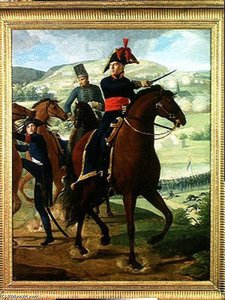
Portretul lui Louis Hersent

Cele 37 cele mai faimoase picturi ale lui Louis Hersent, o selecție de galerie

Actualizat Octombrie 2026 · clasat în funcție de scorul nostru de popularitate (căutări, vizite și comenzi pentru fiecare operă) · 37 lucrări ale lui Louis Hersent în catalogul nostru

Pe scurt

Dintre toate originalele lăsate de Louis Hersent, cea mai faimoasă este Sophie Crouzet (1801), din colecția Cleveland Museum of Art, Cleveland. Imediat după acestea urmează Henri-Charles-Ferdinand of Artois Duke of Bordeaux and his Sister Louise-Marie-Therese of (1820) și Portrait of Madame Le Doyen (1825). Catalogul nostru cuprinde 37 lucrări ale lui Louis Hersent; galeria a păstrat cele 37 pe care lumea le admiră cel mai mult, fiecare fiind prezentată împreună cu data, muzeul și povestea sa.

1777 – 1860, Paris Neoclassicism Cele mai multe lucrări: Muzeul Carnavalet

Cele mai importante 10 picturi ale lui Louis Hersent: selecția galeriei

Selecția pentru Louis Hersent continuă, de la 11 la 37

Subiectele care i-au captivat privirea lui Louis Hersent

Cele patru teme care revin cel mai des în aceste opere originale, fiecare având cel mai sublim exemplu.

Muzeele care păstrează originalele lui Louis Hersent

Cele 8 muzee care dețin cele mai multe dintre picturile de pe această pagină.

Muzee Oraș Lucrări lui Louis Hersent Picturi din această listă
Muzeul Carnavalet, ParisMuzeul Carnavalet Paris 3 Portrait of Madame Arachequesne, Portrait of Romain de Bourge, General Louis Marie Turreau De Garambouville At The Gravieres Affair
Opera House, VersaillesOpera House Versailles 3 Louise-Adélaïde Desnos, Queen Maria Amalia Of The French, Delphine De Girardin
Cleveland Museum of Art, ClevelandCleveland Museum of Art Cleveland 1 Sophie Crouzet
Musée de la Vie Romantique, ParisMusée de la Vie Romantique Paris 1 Portrait of Madame Le Doyen
Château de Versailles, VersaillesChâteau de Versailles Versailles 1 Portrait of Sophie Gay
Museum of the French Revolution, VizilleMuseum of the French Revolution Vizille 1 The Battle Of Landschut, 21st April
Musée Condé, ChantillyMusée Condé Chantilly 1 Marie-amelie De Bourbon -
Nationalmuseum, StockholmNationalmuseum Stockholm 1 Fénélon Returns A Stolen Cow To A Peasant

Louis Hersent deceniu cu deceniu: originalul care definește fiecare

Lucrări pe deceniu

Alege o deceniu pentru a descoperi opera originală care îl definește.

Întrebări ale colecționarilor despre picturile lui Louis Hersent

Pentru ce operă este cel mai cunoscut Louis Hersent?Află răspunsul

Sophie Crouzet (1801), Cleveland Museum of Art, Cleveland. Urmează Henri-Charles-Ferdinand of Artois Duke of Bordeaux and his Sister Louise-Marie-Therese of (1820) și Portrait of Madame Le Doyen (1825).

Ce vârstă avea Louis Hersent când a fost creată Sophie Crouzet?Află răspunsul

24 ani: Sophie Crouzet datează din 1801, iar Louis Hersent s-a născut în 1777.

Care sunt cele mai celebre zece picturi ale lui Louis Hersent?Află răspunsul

Sophie Crouzet, Henri-Charles-Ferdinand of Artois Duke of Bordeaux and his Sister Louise-Marie-Therese of, Portrait of Madame Le Doyen, Portrait of Madame Arachequesne, Portrait of Sophie Gay, Portrait of Madame Demetz in a red sofa, Religieux de l'hospice du mont Saint Gothard, Portrait of Sophie Legrand, comtesse Walsh de Serrant, and her children, Self-portrait și Louise-Adélaïde Desnos. Clasamentul de mai sus indică anul și muzeul pentru fiecare piesă.

Câte picturi a lăsat Louis Hersent?Află răspunsul

Catalogul nostru cuprinde 37 lucrări ale lui Louis Hersent, datate între 1801 și 1854.

În ce muzee sunt expuse capodoperele lui Louis Hersent?Află răspunsul

În principal în Muzeul Carnavalet (Paris), Opera House (Versailles) și Cleveland Museum of Art (Cleveland). Tabelul cu muzee de mai sus le enumeră pe toate.

În ce ani a pictat Louis Hersent cele mai cunoscute opere?Află răspunsul

În 1820s: 5 dintre cele 37 lucrări de pe această pagină au fost realizate atunci, fiind Henri-Charles-Ferdinand of Artois Duke of Bordeaux and his Sister Louise-Marie-Therese of dintre acestea.

Care sunt prima și ultima pictură originală celebră a lui Louis Hersent?Află răspunsul

Pe această pagină, cea mai veche lucrare datează din Sophie Crouzet (1801), iar cea mai recentă este din Self-portrait (1854).

Ce subiecte a ales cel mai des Louis Hersent?Află răspunsul

Portraiture (4), Royalty (3) și Neoclassical style (2), din cele 37 lucrări de pe această pagină.

Din ce mișcare artistică face parte Louis Hersent?Află răspunsul

Neoclassicism, judecând după originalele de pe această pagină.

Ce lucrări ale lui Louis Hersent sunt expuse la Muzeul Carnavalet?Află răspunsul

Portrait of Madame Arachequesne, Portrait of Romain de Bourge și General Louis Marie Turreau De Garambouville At The Gravieres Affair: Muzeul Carnavalet, Paris deține 3 dintre lucrările de pe această pagină.

Louis Hersent: viață și operă

A Legacy in Portraiture: The Life and Art of Louis Hersent

Louis Hersent, a name resonating with the elegance of the French Restoration era, was more than just a painter; he was a chronicler of his time. Born in Paris in 1777, Hersent’s artistic journey unfolded against a backdrop of revolutionary upheaval and imperial grandeur, ultimately solidifying his place as a master of Neoclassical portraiture and historical painting. His canvases offer not merely likenesses but insightful glimpses into the personalities and societal currents of early 19th-century France. From an early age, Hersent demonstrated a keen aptitude for art, leading him to the studio of Jacques-Louis David – a pivotal moment that would indelibly shape his aesthetic sensibilities. David, the preeminent Neoclassical painter and official artist of Napoleon Bonaparte, instilled in Hersent a rigorous approach to draftsmanship, composition, and form. This foundational training emphasized clarity, balance, and a restrained palette—hallmarks that would define Hersent’s mature style. Winning the prestigious Prix de Rome in 1797 further cemented his commitment to classical ideals, providing him with invaluable exposure to the artistic heritage of Italy. ## Life and Career: From David's Influence to Salon Recognition Hersent’s formative years were marked by an immersion in the artistic principles championed by Jacques-Louis David. David’s unwavering dedication to idealized form and balanced composition profoundly impacted Hersent’s artistic vision, shaping his technique and informing his stylistic choices. The Prix de Rome, awarded in 1797, served as a springboard for Hersent's career, granting him access to the Florentine academies and fostering an appreciation for antiquity—a cornerstone of Neoclassical aesthetics. This exposure instilled in him a meticulous attention to detail, mirroring David’s exacting standards and ensuring that Hersent’s paintings possessed both intellectual rigor and visual beauty. Throughout his life, Hersent remained active within the Parisian artistic milieu, participating regularly at the Salon – France's premier art exhibition—where he garnered critical acclaim and established himself as one of the era’s most respected painters. His consistent success reflected not only his talent but also his astute understanding of the tastes and expectations of the discerning public. ## The Embrace of Neoclassicism: Style and Technique Hersent’s artistic style embodies the core tenets of Neoclassicism, prioritizing order, reason, and idealized representation. Like David before him, Hersent rejected the expressive excesses of Romanticism in favor of a restrained palette and carefully considered compositions—a deliberate choice that underscored his commitment to classical ideals. His portraits are characterized by dignified poses, conveying composure and gravitas; these figures are rendered with meticulous attention to drapery and texture, capturing subtle nuances of expression that reveal inner character. Hersent’s masterful draftsmanship ensured that every brushstroke conveyed precision and clarity—a hallmark of David's artistic legacy. He skillfully employed chiaroscuro – the dramatic interplay of light and shadow – to heighten emotional impact without sacrificing formal balance. ## Notable Works: Capturing History and Nobility Hersent produced a diverse body of work encompassing both portraiture and historical painting, demonstrating his versatility as an artist. Among his most celebrated canvases are depictions of prominent figures from the French aristocracy and military leadership—individuals who sought to project an image of strength and authority during the turbulent years following the Napoleonic Wars. The Duc D'Orléans exemplifies Hersent’s ability to capture aristocratic grandeur with understated elegance, presenting a portrait imbued with dignity and refinement. Similarly, his portrayal of Marshal André Masséna conveys both physical presence and strategic brilliance—a testament to Hersent’s skill in conveying complex narratives through visual imagery. Furthermore, Peter I Of Russia And Louis XV Of France stands as an impressive achievement in historical painting, skillfully reconstructing a pivotal moment in European history while adhering to Neoclassical principles of composition and form. ## Legacy and Influence: A Painter's Enduring Impact Louis Hersent passed away in 1860, leaving behind a substantial oeuvre that continues to inspire admiration for its technical excellence and artistic sensitivity. His influence extended beyond his own lifetime, shaping the careers of numerous aspiring artists who sought to emulate his mastery of Neoclassicism. Hersent’s unwavering dedication to classical ideals—clarity, balance, and idealized form—served as an enduring model for generations of painters—a testament to his lasting contribution to French art history. His paintings remain valuable documents of a bygone era—capturing not only the outward appearance but also the inner character of those who inhabited it—solidifying Hersent’s place among the most distinguished artists of the 19th century.