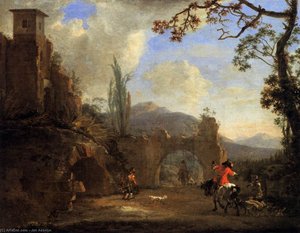
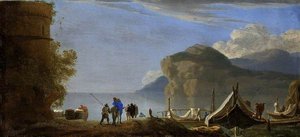
Portretul lui Jan Asselijn

Picturi Jan Asselijn: Cele 76 de cele mai faimoase, prin ochii unei galerii

Actualizat Octombrie 2026 · clasat în funcție de scorul nostru de popularitate (căutări, vizite și comenzi pentru fiecare operă) · 84 lucrări ale lui Jan Asselijn în catalogul nostru

Pe scurt

În ochii galeriei, cea mai celebră pictură a lui Jan Asselijn este Lebedul amenințat (1652), a cărei originală este expusă la Rijksmuseum, Amsterdam. King Gustav Adolf II of Sweden in the Battle of Lutzen, 1632 (1634) și Landscape with a Bridge in the Italian Countryside (1652) completează trioul pe care orice ochi îl recunoaște. Dintre cele 84 opere ale lui Jan Asselijn din catalogul nostru, galeria prezintă mai jos cele 76 cele mai faimoase, fiecare fiind originală, cu anul creării, muzeul de păstrare și elementul care o face unică.

1610 – 1652, Dieppe Dutch golden age Cele mai multe lucrări: Rijksmuseum

Cele mai apreciate 10 picturi ale lui Jan Asselijn din galerie

1
Lebedul amenințat (1652) de Jan Asselijn

Lebedul amenințat

1652 · Ulei pe pânză · Rijksmuseum, Amsterdam

este o pictură în ulei pe pânză realizată de artistul Jan Asselijn. Finalizată în jurul anului 1650, această operă surprinde un lebădă mut într-un moment de apărare feroce. Pasărea își întinde aripile și scoate un sâsâit, păstrându-și cuvântul cuștii în fața avântului unui câine. Această luptă dintre penajul alb și amenințarea care se apropie definește tensiunea centrală a imaginii.

2
King Gustav Adolf II of Sweden in the Battle of Lutzen, 1632 (1634) de Jan Asselijn

King Gustav Adolf II of Sweden in the Battle of Lutzen, 1632

1634 · Oil On Canvas · Statens Museum For Kunst, Copenhaga

Jan Asselijn's “King Gustav Adolf II of Sweden in the Battle of Lutzen, 1632” isn’t merely a painting; it’s a visceral plunge into the heart of a pivotal moment in European history. Completed in 1634, this monumental work captures the chaotic fury and strategic brilliance of the Battle of Lutzen, fought on August 17th of that year, a clash that cemented Gustav Adolf II's reputation as a military genius and…

3
Landscape with a Bridge in the Italian Countryside (1652) de Jan Asselijn

Landscape with a Bridge in the Italian Countryside

1652 · Oil On Canvas · Cannon Hall Museum, Barnsley

A stone bridge with arched spans anchors this serene landscape, crossing a calm body of water that reflects the soft, overcast sky. To the left, a solitary figure sits upon a barrel, watching the quiet movement of the scene. On the right, the composition gathers around a horse and carriage; a person guides the animal toward the water's edge while another observer stands nearby. A dog occupies the foreground, grounding…

4
King Gustav Adolf II in the Battle of Lutzen on November 6,1632 (1632) de Jan Asselijn

King Gustav Adolf II in the Battle of Lutzen on November 6,1632

The air is thick with the scent of wet earth and sulfur. In the center of the chaos, King Gustav Adolf II of Sweden rides a horse through the fray, his sword a flash of cold light against the darkening sky. The Battle of Lutzen is not a quiet affair; it is a collision of muscle and metal. Soldiers on foot and mounted on horseback press against one another in…

5
Four Figures (1615) de Jan Asselijn

Four Figures

1615 · Oil · Groeningemuseum, Bruges

In Four Figures, Jan Asselijn organizes a group of men in period attire within a dimly lit, atmospheric setting. The composition centers on this cluster of figures, who are arranged in a loose, triangular formation. This structural choice draws the viewer's eye toward the middle of the group, where the subjects interact in a moment of quietude. One man is captured drinking from a vessel, while another stands holding a…

6
King Gustav Adolf II of Sweden, Battle near Lutzen 1632 (1635) de Jan Asselijn

King Gustav Adolf II of Sweden, Battle near Lutzen 1632

1635 · Oil On Panel · Gemäldegalerie, Berlin

The artwork titled King Gustav Adolf II of Sweden, Battle near Lutzen 1632 is a work by the artist Jan Asselijn. Dated about 1635, this oil on panel painting belongs to the genre of military history. The subject matter focuses on the Battle of Lützen, a significant conflict from the Thirty Years' War. The scene captures the king amidst the movement of a large-scale military engagement.

7
The Tiber River with the Ponte Molle at Sunset (1650) de Jan Asselijn

The Tiber River with the Ponte Molle at Sunset

1650 · Oil · National Gallery of Art, Washington

The sun hangs low over the horizon, casting a sharp, golden light through the four massive stone arches of the Ponte Molle. This light slices through the atmosphere, painting the sky in a gradient that shifts from a warm, glowing amber on the right to a pale, tranquil aquamarine as the eye moves toward the left. The river below remains placid, reflecting the changing colors of the sky, while the…

8
Ruined Building with Shepherd and Sheep (1646) de Jan Asselijn

Ruined Building with Shepherd and Sheep

1646 · Oil On Panel

Ruined Building with Shepherd and Sheep is an artwork by Jan Asselijn. This piece belongs to the Dutch Golden Age and the Italianate landscape style of the Early Modern period. The subject matter focuses on a pastoral landscape that incorporates ruins and sheep. The composition integrates elements of nature, shepherds, and weathered stone structures within a single scene.

9
Italian Landscape (1638) de Jan Asselijn

Italian Landscape

1638 · Oil On Canvas · Statens Museum For Kunst, Copenhaga

The artwork titled Italian Landscape is a painting by the Dutch Golden Age painter Jan Asselijn. Created in 1638, this work represents a specific period in the artist's career. Asselijn was born in Dieppe, France, around 1610, before his family relocated to Amsterdam. His development as a painter was shaped by the artistic environment of the Dutch Golden Age, a time when landscape painting was evolving toward more atmospheric depictions.

10
Fight against Robbers (1638) de Jan Asselijn

Fight against Robbers

1638 · Oil On Panel · Statens Museum For Kunst, Copenhaga

A violent skirmish unfolds across a rugged, rocky landscape, captured in a dramatic monochrome palette. The composition relies on a sharp diagonal arrangement, pulling the eye from the foreground into a chaotic center-right where figures engage in combat. Mounted riders and infantrymen clash amidst dense foliage and spindly, skeletal trees. The atmosphere is heavy with mist and swirling smoke, creating a sense of tension and movement. Light filters through an…

Picturi cu Jan Asselijn, clasate de la 11 la 76

11Lion Hunting (1640) de Jan AsselijnLion Hunting1640 · Musée Fabre 12Italianate landscape with travellers by a stream with cattle (1652) de Jan AsselijnItalianate landscape with travellers by a stream with cattle1652 13Italian Landscape with a view from a Grotto (1639) de Jan AsselijnItalian Landscape with a view from a Grotto1639 · Nationalmuseum 14Landscape with Ruins and Hunting Party (1645) de Jan AsselijnLandscape with Ruins and Hunting Party1645 · Academy of Fine Arts Vienna 15PAYSAGE AVEC UN TROUPEAU TRAVERSANT UNE RIVIERE de Jan AsselijnPAYSAGE AVEC UN TROUPEAU TRAVERSANT UNE RIVIEREMuzeul Luvru 16River Bank with Herdsmen (1650) de Jan AsselijnRiver Bank with Herdsmen1650 · Academy of Fine Arts Vienna 17Coastal Scene with Resting Riders (detail) (1652) de Jan AsselijnCoastal Scene with Resting Riders (detail)1652 · Academy of Fine Arts Vienna 18Imaginary Italian Landscape (1652) de Jan AsselijnImaginary Italian Landscape1652 · Mauritshuis Royal Picture Gallery 19Landscape with a Cowherd (1594) de Jan AsselijnLandscape with a Cowherd1594 20Italianate Landscape (1631) de Jan AsselijnItalianate Landscape1631 · Colecțiile Statale de Pictură din Bavaria 21Cavalry Engagement (1635) de Jan AsselijnCavalry Engagement1635 22Peasants by a River Bank (1639) de Jan AsselijnPeasants by a River Bank1639 · Yale University Art Gallery 23Mountain - landscape (1639) de Jan AsselijnMountain - landscape1639 24Riders Gallopping towards the Gates of the Fortress (1645) de Jan AsselijnRiders Gallopping towards the Gates of the Fortress1645 · Muzeul Ermitaj 25Winter Landscape (1645) de Jan AsselijnWinter Landscape1645 · Muzeul Ermitaj 26Nocturnal Crayfishing (1638) de Jan AsselijnNocturnal Crayfishing1638 · Statens Museum For Kunst 27Vesuvius Erupting at Nightfall (1638) de Jan AsselijnVesuvius Erupting at Nightfall1638 · Statens Museum For Kunst 28Head of an Ox (1647) de Jan AsselijnHead of an Ox1647 · Musée des Beaux-Arts 29Catching Crayfish (1645) de Jan AsselijnCatching Crayfish1645 · Muzeum Palacu Króla Jana Iii w Wilanowie 30Ford between High Cliffs (1644) de Jan AsselijnFord between High Cliffs1644 · National Gallery Prague 31Peasants and Cattle beside a Tower (1646) de Jan AsselijnPeasants and Cattle beside a Tower1646 32Winter landscape with huntsmen on a bridge (1647) de Jan AsselijnWinter landscape with huntsmen on a bridge1647 · Fondation Custodia 33A rocky mountain valley with shepherds and cattle (1645) de Jan AsselijnA rocky mountain valley with shepherds and cattle1645 · Staatliche Kunsthalle Karlsruhe 34Italian Landscape (1640) de Jan AsselijnItalian Landscape1640 · Muzeul de Artă Fine Pushkin 35Frozen Moat outside City Walls (1647) de Jan AsselijnFrozen Moat outside City Walls1647 · Worcester Art Museum 36Italianate Landscape with Drovers, Cattle and Sheep beside Ruins (1647) de Jan AsselijnItalianate Landscape with Drovers, Cattle and Sheep beside Ruins1647 · Fogg Museum of Art 37Italianate Landscape with a River and an Arched Bridge (1648) de Jan AsselijnItalianate Landscape with a River and an Arched Bridge1648 · Staatsgalerie Schleissheim 38Southern Landscape with Cattle near Ruins (1650) de Jan AsselijnSouthern Landscape with Cattle near Ruins1650 · National Museum in Wrocław 39View of the Solario Bridge on the Teverone (1650) de Jan AsselijnView of the Solario Bridge on the Teverone1650 40Head of a lowing Ox (1650) de Jan AsselijnHead of a lowing Ox1650 · Staatliches Museum Schwerin 41Italianate landscape with bridge near Tivoli (1649) de Jan AsselijnItalianate landscape with bridge near Tivoli1649 42River Landscape with the Fort Saint-Jean and the Chateau Pierre-Scize in Lyon (1650) de Jan AsselijnRiver Landscape with the Fort Saint-Jean and the Chateau Pierre-Scize in Lyon1650 · Yale University Art Gallery 43The restoration of the Diemerdijk or Muiderdijk near Amsterdam in 1651 (1651) de Jan AsselijnThe restoration of the Diemerdijk or Muiderdijk near Amsterdam in 16511651 · Gemäldegalerie 44Breach of a Dyke by Storm Surge on March 5 1651 (1651) de Jan AsselijnBreach of a Dyke by Storm Surge on March 5 16511651 · Gemäldegalerie 45The Breach of the Sint Anthonisdijk in 1651 (1652) de Jan AsselijnThe Breach of the Sint Anthonisdijk in 16511652 · Amsterdam Museum 46The Breach of the Saint Anthony’s Dike near Amsterdam, Jan Asselijn, 1651 (1651) de Jan AsselijnThe Breach of the Saint Anthony’s Dike near Amsterdam, Jan Asselijn, 16511651 47Drovers with Cattle under an Arch of the Colosseum in Rome, Jan Asselijn, 1640 - 1652 (1652) de Jan AsselijnDrovers with Cattle under an Arch of the Colosseum in Rome, Jan Asselijn, 1640 - 16521652 · Rijksmuseum 48A Mediterranean Coastal View with Shipping and Mariners by a Fort (1650) de Jan AsselijnA Mediterranean Coastal View with Shipping and Mariners by a Fort1650 49A Mediterranean Coastal View with Shipping and Mariners by a Fort (1650) de Jan AsselijnA Mediterranean Coastal View with Shipping and Mariners by a Fort1650 50River Landscape with the Church of Santi Giovanni e Paolo (1650) de Jan AsselijnRiver Landscape with the Church of Santi Giovanni e Paolo1650 51Landscape with a Drover (1649) de Jan AsselijnLandscape with a Drover1649 · Holburne Museum 52Landscape with a Bridge in the Italian Countryside (1652) de Jan AsselijnLandscape with a Bridge in the Italian Countryside1652 · Cannon Hall Museum 53Coastal Scene with Resting Riders (1652) de Jan AsselijnCoastal Scene with Resting Riders1652 · Academy of Fine Arts Vienna 54PAYSAGE AVEC UNE TOUR de Jan AsselijnPAYSAGE AVEC UNE TOURMuzeul Luvru 55RUINE ET CABANE DE BERGERS de Jan AsselijnRUINE ET CABANE DE BERGERSMuzeul Luvru 56LANDSCAPE WITH A DEPARTURE FOR A HUNT de Jan AsselijnLANDSCAPE WITH A DEPARTURE FOR A HUNT 57Muleteers beside an Italian Ruin (1650) de Jan AsselijnMuleteers beside an Italian Ruin1650 · Rijksmuseum 58Hangout in Italy (1620) de Jan AsselijnHangout in Italy1620 · Rijksmuseum 59Herders with Their Animals under an Arch of the Colosseum in Rome (1652) de Jan AsselijnHerders with Their Animals under an Arch of the Colosseum in Rome1652 · Rijksmuseum 60Hunting Company out of Rome (1652) de Jan AsselijnHunting Company out of Rome1652 · Rijksmuseum 61Beggars în fața unei cărări românești (1638) de Jan AsselijnBeggars în fața unei cărări românești1638 · Academy of Fine Arts Vienna 62Asselijn - (50Riverbank) de Jan AsselijnAsselijn - (50Riverbank) 63Asselijn ruin de Jan AsselijnAsselijn ruinRijksmuseum 64Italian Coast Scene de Jan AsselijnItalian Coast Scene 65Italian Landscape with Two Horsemen and Figures on a Road de Jan AsselijnItalian Landscape with Two Horsemen and Figures on a Road 66Italian Landscape with the Church of Sts. Giovanni e Paolo in Rome de Jan AsselijnItalian Landscape with the Church of Sts. Giovanni e Paolo in RomeMuzeul de Artă Fine din Budapesta 67Mountainous Landscape de Jan AsselijnMountainous Landscape 68A rocky river landscape with travellers in the foreground and ships beyond de Jan AsselijnA rocky river landscape with travellers in the foreground and ships beyond 69A Landscape with Peasants (also known as Landscape with Herdsmen Fording a River) de Jan AsselijnA Landscape with Peasants (also known as Landscape with Herdsmen Fording a River)Ascott House 70A Cavalier on Horseback Before a Landscape de Jan AsselijnA Cavalier on Horseback Before a Landscape 71Landscape with shepherds and their flock crossing the Ponte Acquoria near Tivoli de Jan AsselijnLandscape with shepherds and their flock crossing the Ponte Acquoria near Tivoli 72an italianate river landscape with herders on a path with their flock and donkeys, classical ruins on a hilltop beyond de Jan Asselijnan italianate river landscape with herders on a path with their flock and donkeys, classical ruins on a hilltop beyondMinneapolis Institute of Art 73Italian Coast Scene de Jan AsselijnItalian Coast SceneMuzeul Fitzwilliam din Cambridge 74Italian Landscape de Jan AsselijnItalian LandscapeMuzeul Fitzwilliam din Cambridge 75Italian Landscape with the Ruins of a Roman Bridge and Aqueduct de Jan AsselijnItalian Landscape with the Ruins of a Roman Bridge and AqueductRijksmuseum 76Cavalry Attack at Sunset, Jan Asselijn, 1646 (1646) de Jan AsselijnCavalry Attack at Sunset, Jan Asselijn, 16461646 · Rijksmuseum

Piesele celebre ale lui Jan Asselijn, perioadă cu perioadă

Subiectele care i-au captivat privirea lui Jan Asselijn

Cele patru teme care revin cel mai des în aceste opere originale, fiecare având cel mai sublim exemplu.

Muzeele care păstrează originalele lui Jan Asselijn

Cele 8 muzee care dețin cele mai multe dintre picturile de pe această pagină.

Muzee Oraș Lucrări lui Jan Asselijn Picturi din această listă
Rijksmuseum, AmsterdamRijksmuseum Amsterdam 9 Lebedul amenințat, Drovers with Cattle under an Arch of the Colosseum in Rome, Jan Asselijn, 1640 - 1652, Muleteers beside an Italian Ruin
Statens Museum For Kunst, CopenhagaStatens Museum For Kunst Copenhaga 5 King Gustav Adolf II of Sweden in the Battle of Lutzen, 1632, Italian Landscape, Fight against Robbers
Academy of Fine Arts Vienna, VienaAcademy of Fine Arts Vienna Viena 5 Landscape with Ruins and Hunting Party, River Bank with Herdsmen, Coastal Scene with Resting Riders (detail)
Gemäldegalerie, BerlinGemäldegalerie Berlin 3 King Gustav Adolf II of Sweden, Battle near Lutzen 1632, The restoration of the Diemerdijk or Muiderdijk near Amsterdam in 1651, Breach of a Dyke by Storm Surge on March 5 1651
Muzeul Luvru, ParisMuzeul Luvru Paris 3 PAYSAGE AVEC UN TROUPEAU TRAVERSANT UNE RIVIERE, PAYSAGE AVEC UNE TOUR, RUINE ET CABANE DE BERGERS
Cannon Hall Museum, BarnsleyCannon Hall Museum Barnsley 2 Landscape with a Bridge in the Italian Countryside, Landscape with a Bridge in the Italian Countryside
Yale University Art Gallery, New HavenYale University Art Gallery New Haven 2 Peasants by a River Bank, River Landscape with the Fort Saint-Jean and the Chateau Pierre-Scize in Lyon
Muzeul Ermitaj, Sankt PetersburgMuzeul Ermitaj Sankt Petersburg 2 Riders Gallopping towards the Gates of the Fortress, Winter Landscape

Jan Asselijn, o pictură emblematică pe deceniu

Lucrări pe deceniu

Alege o deceniu pentru a descoperi opera originală care îl definește.

Picturile lui Jan Asselijn: răspunsurile galeriei

Care este cea mai celebră pictură a lui Jan Asselijn?Află răspunsul

Lebedul amenințat (1652), Rijksmuseum, Amsterdam. Urmează King Gustav Adolf II of Sweden in the Battle of Lutzen, 1632 (1634) și Landscape with a Bridge in the Italian Countryside (1652).

Ce vârstă avea Jan Asselijn când a finalizat Lebedul amenințat?Află răspunsul

42 ani: Lebedul amenințat datează din 1652, iar Jan Asselijn s-a născut în 1610.

Care sunt cele mai importante 10 picturi ale lui Jan Asselijn?Află răspunsul

Lebedul amenințat, King Gustav Adolf II of Sweden in the Battle of Lutzen, 1632, Landscape with a Bridge in the Italian Countryside, King Gustav Adolf II in the Battle of Lutzen on November 6,1632, Four Figures, King Gustav Adolf II of Sweden, Battle near Lutzen 1632, The Tiber River with the Ponte Molle at Sunset, Ruined Building with Shepherd and Sheep, Italian Landscape și Fight against Robbers. Clasamentul de mai sus indică anul și muzeul pentru fiecare piesă.

Câte lucrări a creat Jan Asselijn?Află răspunsul

Catalogul nostru cuprinde 84 lucrări ale lui Jan Asselijn, datate între 1620 și 1652.

Unde sunt expuse cele mai celebrele opere originale ale lui Jan Asselijn?Află răspunsul

În principal în Rijksmuseum (Amsterdam), Statens Museum For Kunst (Copenhaga) și Academy of Fine Arts Vienna (Viena). Tabelul cu muzee de mai sus le enumeră pe toate.

Când a creat Jan Asselijn cele mai faimoase picturi?Află răspunsul

În 1650s: 24 dintre cele 76 lucrări de pe această pagină au fost realizate atunci, fiind Lebedul amenințat dintre acestea.

Care sunt cele mai vechi și cele mai recente opere celebre ale lui Jan Asselijn?Află răspunsul

Pe această pagină, cea mai veche lucrare datează din Hangout in Italy (1620), iar cea mai recentă este din Lebedul amenințat (1652).

La ce subiecte s-a întors cel mai des Jan Asselijn?Află răspunsul

Landscape (26), Ruins (7) și Figures (6), din cele 76 lucrări de pe această pagină.

În ce tehnică a lucrat cel mai mult Jan Asselijn?Află răspunsul

Oil On Canvas, pentru 11 dintre cele 76 lucrări de pe această pagină.

Cu ce mișcare este asociat(ă) Jan Asselijn?Află răspunsul

Dutch golden age și Baroque, judecând după originalele de pe această pagină.

Ce opere originale ale lui Jan Asselijn deține Rijksmuseum?Află răspunsul

Lebedul amenințat, Drovers with Cattle under an Arch of the Colosseum in Rome, Jan Asselijn, 1640 - 1652 și Muleteers beside an Italian Ruin: Rijksmuseum, Amsterdam deține 9 dintre lucrările de pe această pagină.

Jan Asselijn: artistul

A Life Forged in Landscape: The World of Jan Asselijn

Born Jean Asselin around 1610 in Dieppe, France, Jan Asselijn’s life unfolded against the backdrop of turbulent religious times and a burgeoning artistic revolution. His family, Huguenots fleeing persecution, relocated to Amsterdam in 1621 – a city pulsating with commercial energy and brimming with creative fervor during the Dutch Golden Age. This move proved transformative, immersing young Jean into an environment where landscape painting was undergoing a dramatic metamorphosis, moving beyond mere representation toward scenes imbued with palpable atmosphere and profound emotional resonance. Initially apprenticed under Jan Martszen the Younger, he honed his skills in battle paintings before discovering his true passion: capturing the splendor of both natural vistas and animal life – pursuits that would define his artistic trajectory.

Early Training & The Influence of Martszen

Jan Martszen the Younger’s tutelage instilled in Asselijn a disciplined approach to technique, particularly evident in his masterful depictions of military engagements. However, it was Martszen's emphasis on capturing dynamic movement and conveying psychological intensity that truly ignited Asselijn’s imagination. This formative experience prepared him for his subsequent exploration of landscape painting – an art form increasingly concerned with portraying not just what was seen but also how it felt to be present in the natural world. The Dutch light, characterized by its diffused brilliance and expansive skies, quickly became a cornerstone of Asselijn's artistic vision—a characteristic that would distinguish his oeuvre from many of his contemporaries.

The Italianate Journey & The Bentvueghels

Driven by an ambition to refine his craft and absorb the stylistic innovations of Italy’s leading artists, Asselijn embarked on a pilgrimage around 1635. He joined the *Bentvueghels*, a remarkable society comprised of Dutch and Flemish painters operating in Rome – individuals who defied convention with their unorthodox behavior, playful nicknames, and unwavering commitment to painting directly from observation. Rejecting studio practice altogether, they embraced spontaneity and sought inspiration in the immediacy of life itself. Within this vibrant community, Asselijn earned the moniker “Krabbetje” (“little crab”) due to a congenital deformity affecting his hand—a physical impediment that paradoxically fueled his creativity. He absorbed the influence of artists like Pieter van Laer (Bamboccio), whose depictions of Roman peasant life and landscapes resonated deeply with Asselijn’s evolving aesthetic sensibilities. This period solidified his ability to convey emotion and atmosphere, shaping him into a master of visual storytelling.

Style & Technique: Light, Color & Narrative

Asselijn's artistic style is instantly recognizable for its luminous quality—a hallmark of the Italianate tradition that he wholeheartedly embraced. He skillfully manipulated light and color to create scenes brimming with drama and imbued with psychological depth. His brushstrokes are precise yet fluid, conveying both textural detail and subtle nuances of emotion. Like Rembrandt, Asselijn prioritized capturing the essence of his subjects rather than merely replicating their appearance—a testament to his profound understanding of artistic principles. He excelled in portraying animals with remarkable accuracy and sensitivity, demonstrating a keen observational skill honed through years of meticulous study.

Notable Works & Legacy

Jan Asselijn’s oeuvre comprises numerous masterpieces that continue to captivate audiences today. Among the most celebrated is The Threatened Swan (circa 1640), an allegorical depiction of Dutch resistance against external threats—a painting imbued with symbolic significance and interpreted as a powerful emblem of national fortitude. Its dramatic composition, masterful use of light, and evocative portrayal of vulnerability cemented Asselijn’s reputation as one of the era's foremost landscape painters. Other significant works include Cavalry Charge at Sunset (circa 1638), showcasing his early training in battle painting with impressive dynamism; and The Breach of the Saint Anthony’s Dike near Amsterdam (circa 1650), which powerfully conveys the anxieties surrounding water management during a period of crisis—a testament to Asselijn's ability to capture pivotal moments in history. His influence extended beyond his own output, inspiring subsequent generations of artists and establishing him as a cornerstone of Dutch Baroque art. He died prematurely in Amsterdam in 1652, leaving behind an enduring legacy—one characterized by beauty, innovation, and a profound engagement with the human condition.