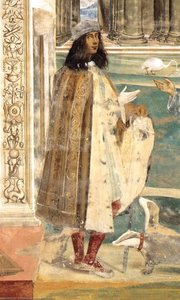
Portretul lui Il Sodoma

Cele 69 cele mai faimoase picturi ale lui Il Sodoma, o selecție de galerie

Actualizat Noiembrie 2026 · clasat în funcție de scorul nostru de popularitate (căutări, vizite și comenzi pentru fiecare operă) · 71 lucrări ale lui Il Sodoma în catalogul nostru

Pe scurt

Dintre toate originalele lăsate de Il Sodoma, cea mai faimoasă este Rapirea Sabinei (1506), din colecția Galleria Nazionale d'Arte Antica, Roma. Imediat după acestea urmează Head of Christ (1537) și The Holy Family with Saint Elizabeth and the Infant Saint John the Baptist (1527). Catalogul nostru cuprinde 71 lucrări ale lui Il Sodoma; galeria a păstrat cele 69 pe care lumea le admiră cel mai mult, fiecare fiind prezentată împreună cu data, muzeul și povestea sa.

1477 – 1549, Vercelli Renaștere Cele mai multe lucrări: National Gallery

Cele mai importante 10 picturi ale lui Il Sodoma: selecția galeriei

1
Rapirea Sabinei (1506) de Il Sodoma

Rapirea Sabinei

1506 · Ulei pe panou rigid · Galleria Nazionale d'Arte Antica, Roma

Il Sodoma și „Rapirea Sabinei”: O Dramă Clasică În Culori Vibrante „Rapirea Sabinei” de Il Sodoma este mai mult decât o simplă ilustrare a unui episod din mitologia romana; este o operă artistică care transcende timpul, capturând esența unei perioade istorice și emoții puternice. Creată în anul 1506 și prezentată în Galeria Națională de Artă Antică din Roma, această pictură reprezintă punctul culminant al stilului său manierist, oferind o perspectivă…

2
Head of Christ (1537) de Il Sodoma

Head of Christ

1537 · Oil · National Gallery, Londra

In "Head of Christ" by Giovanni Gerolamo Savoldo, the viewer is met with a close-up portrait that focuses tightly on the face and upper shoulders. The subject is framed by long, dark, wavy hair and a full beard. A crown of thorns rests upon the brow, rendered through textured, dark lines that press against the skin. The eyes are cast downward, heavy with a sense of sadness or exhaustion. This…

3
The Holy Family with Saint Elizabeth and the Infant Saint John the Baptist (1527) de Il Sodoma

The Holy Family with Saint Elizabeth and the Infant Saint John the Baptist

1527 · Oil · Walters Art Museum, Baltimore

Within the circular confines of this tondo, a quiet intimacy unfolds. The air feels heavy with the warmth of a Mediterranean afternoon, filtered through a soft, directional light that carves the figures out of the surrounding landscape. We find ourselves watching a tender moment of familial connection, where the boundaries between the divine and the human seem to blur. The Holy Family gathers closely, their forms wrapped in heavy, tactile…

4
The Ecstasy of Saint Catherine of Siena (1532) de Il Sodoma

The Ecstasy of Saint Catherine of Siena

1532 · Oil · Yale University Art Gallery, New Haven

The spiritual intensity of The Ecstasy of Saint Catherine of Siena unfolds before us through the hand of Il Sodoma. This religious art piece captures a profound moment of divine connection, centering entirely on the figure of Catherine of Siena. The scene invites a sense of wonder as the saint experiences a celestial encounter, her presence anchoring the composition amidst a swirling, sacred atmosphere. Every brushstroke seeks to translate the…

5
The Holy Family and St. John (1477) de Il Sodoma

The Holy Family and St. John

1477 · Oil On Panel · Detroit Institute of Arts, Detroit

The Holy Family and St. John is a devotional work by the Italian artist Il Sodoma. This oil on wood panel depicts a sacred grouping of figures, centering on the intimate connection between Mary, Joseph, and the young Saint John the Baptist. The composition focuses on the quiet, tender interactions shared between the holy figures, presented in a manner that invites a sense of spiritual closeness.

6
The Madonna and Child with Saints and a Donor (1530) de Il Sodoma

The Madonna and Child with Saints and a Donor

1530 · Oil On Panel · National Gallery, Londra

Step closer to observe the way the light settles upon these figures. In this composition from around 1530, we find a sense of stability born from a pyramidal arrangement. At the apex sits the Virgin Mary, her presence anchoring the group. She holds the Christ Child with a natural, unforced tenderness that grounds the divine subject in something deeply human. The palette relies on deep ultramarine blue in her mantle…

7
Saint Jerome in Penitence (1540) de Il Sodoma

Saint Jerome in Penitence

1540 · Oil On Canvas · National Gallery, Londra

A muscular, semi-nude figure occupies the center of this 1540 oil painting, captured in a dynamic, crouching pose that cuts a diagonal path across the canvas. The subject, Saint Jerome, is immersed in a moment of intense religious devotion and physical hardship. Deep, earthy tones of brown and dark green dominate the composition, grounded by the heavy textures of a rugged, rocky landscape. A strong directional light source, characteristic of…

8
Death of Lucretia (1515) de Il Sodoma

Death of Lucretia

1515 · Oil On Panel · Galleria Sabauda, Torino

In this work, we find ourselves witnessing the final, harrowing moments of Lucretia, a woman whose life is being extinguished in a flash of steel and sorrow. The scene freezes a moment of profound tragedy, capturing the climactic end of a Roman noblewoman whose life was defined by virtue and ended by violence. The composition is thick with tension; the stillness of her form contrasts sharply with the looming presence…

9
Holy Family with St. John the Baptist as child (1525) de Il Sodoma

Holy Family with St. John the Baptist as child

This oil painting, dated 1525, is presented within an arched lunette format. The scene focuses on a group of four figures: the Virgin Mary, the Christ Child, Saint Joseph, and a young Saint John the Baptist. Mary is positioned centrally, wearing a red tunic beneath a deep blue mantle. Her pale skin and the skin of the infants are illuminated by a soft, directional light that emerges from the side,…

10
The Madonna and Child (1525) de Il Sodoma

The Madonna and Child

1525 · Oil On Panel · National Gallery, Londra

The composition centers on the Virgin Mary and the infant Jesus, set against an atmospheric landscape of distant hills and trees. A soft, directional light illuminates the faces of the subjects and the child's body, while much of the background remains in shadow. This use of chiaroscuro creates a sense of three-dimensionality, sculpting the figures through subtle gradations of tone.
Selecția pentru Il Sodoma continuă, de la 11 la 69

11charity (1504) de Il Sodomacharity1504 · Gemäldegalerie 12Benedict Presents the Olivetan Monks with His Rule (1505) de Il SodomaBenedict Presents the Olivetan Monks with His Rule1505 13Life of St Benedict, Scene 13: Benedict Frees a Monk (1505) de Il SodomaLife of St Benedict, Scene 13: Benedict Frees a Monk1505 14Life of St Benedict, Scene 12: Benedict Receives Maurus and Placidus (1505) de Il SodomaLife of St Benedict, Scene 12: Benedict Receives Maurus and Placidus1505 15Life of St Benedict, Scene 32: Benedict Appears in the Dreams of Two Monks (1505) de Il SodomaLife of St Benedict, Scene 32: Benedict Appears in the Dreams of Two Monks1505 16Holy Family with young Saint John (1525) de Il SodomaHoly Family with young Saint John1525 17Terrestrial Venus with Eros and Celestial Venus with Anteros and Two Cupids (1525) de Il SodomaTerrestrial Venus with Eros and Celestial Venus with Anteros and Two Cupids1525 18St Sebastian (1525) de Il SodomaSt Sebastian1525 · Palazzo Pitti 19Christ Carrying the Cross (1545) de Il SodomaChrist Carrying the Cross1545 · Gemäldegalerie 20The Crucifixion (1549) de Il SodomaThe Crucifixion1549 · Cleveland Museum of Art 21The Presentation of the Virgin in the Temple (1518) de Il SodomaThe Presentation of the Virgin in the Temple1518 · Oratory of San Bernardino 22The Holy Family (1511) de Il SodomaThe Holy Family1511 · Colecțiile Statale de Pictură din Bavaria 23The Death of Lucretia (1513) de Il SodomaThe Death of Lucretia1513 · Muzeul de Artă Fine din Budapesta 24The Mystic Marriage of St Catherine (1539) de Il SodomaThe Mystic Marriage of St Catherine1539 · Galleria Nazionale d'Arte Antica 25Pietà (1540) de Il SodomaPietà1540 · Galleria Borghese 26Holy Family with the Infant Saint John the Baptist (1530) de Il SodomaHoly Family with the Infant Saint John the Baptist1530 27Ecce Homo (1510) de Il SodomaEcce Homo1510 · Pinacoteca di Brera 28The Confirmation of the Olivetan Order by the Bishop of Arezzo (1503) de Il SodomaThe Confirmation of the Olivetan Order by the Bishop of Arezzo1503 29Man of Sorrow (1505) de Il SodomaMan of Sorrow1505 30Life of St Benedict, Scene 5: The Devil Destroys the Little Bell (1505) de Il SodomaLife of St Benedict, Scene 5: The Devil Destroys the Little Bell1505 31The Road to Calvary (1510) de Il SodomaThe Road to Calvary1510 · Muzeul de Artă Fine din Budapesta 32Life of St Benedict, Scene 6: A Priest Shares His Easter Meal with Benedict (1505) de Il SodomaLife of St Benedict, Scene 6: A Priest Shares His Easter Meal with Benedict1505 33Life of St Benedict, Scene 3: Benedict Repairs a Broken Colander through Prayer (detail) (1505) de Il SodomaLife of St Benedict, Scene 3: Benedict Repairs a Broken Colander through Prayer (detail)1505 34Deposition from the Cross (detail) (1510) de Il SodomaDeposition from the Cross (detail)1510 · Pinacoteca Nazionale 35Life of St Benedict, Scene 8: Benedict is Tempted (detail) (1505) de Il SodomaLife of St Benedict, Scene 8: Benedict is Tempted (detail)1505 36Life of St Benedict, Scene 19: Benedict Sends away the Harlots (1505) de Il SodomaLife of St Benedict, Scene 19: Benedict Sends away the Harlots1505 37Life of St Benedict, Scene 4: The Monk Romanus Dresses Benedict (detail) (1505) de Il SodomaLife of St Benedict, Scene 4: The Monk Romanus Dresses Benedict (detail)1505 38The Women of Darius's Family before Alexander the Great (1517) de Il SodomaThe Women of Darius's Family before Alexander the Great1517 · Villa Farnesina 39Life of St Benedict, Scene 19: Benedict Sends away the Harlots (detail) (1505) de Il SodomaLife of St Benedict, Scene 19: Benedict Sends away the Harlots (detail)1505 40Life of St Benedict, Scene 3: Benedict Repairs a Broken Colander through Prayer (1505) de Il SodomaLife of St Benedict, Scene 3: Benedict Repairs a Broken Colander through Prayer1505 41Life of St Benedict, Scene 15: Benedict Fishes the Pieces of a Broken Ax (detail) (1505) de Il SodomaLife of St Benedict, Scene 15: Benedict Fishes the Pieces of a Broken Ax (detail)1505 42Deposition from the Cross (1510) de Il SodomaDeposition from the Cross1510 · Pinacoteca Nazionale 43Life of St Benedict, Scene 1: Benedict Leaves His Parent's House (1505) de Il SodomaLife of St Benedict, Scene 1: Benedict Leaves His Parent's House1505 44Life of St Benedict, Scene 12: Benedict Receives Maurus and Placidus (detail) (1505) de Il SodomaLife of St Benedict, Scene 12: Benedict Receives Maurus and Placidus (detail)1505 45Life of St Benedict, Scene 11: Benedict Founds Twelve Monasteries (1505) de Il SodomaLife of St Benedict, Scene 11: Benedict Founds Twelve Monasteries1505 46Life of St Benedict, Scene 33: Benedict Gives Posthumous Absolution to Two Nuns (1505) de Il SodomaLife of St Benedict, Scene 33: Benedict Gives Posthumous Absolution to Two Nuns1505 47Life of St Benedict, Scene 31: Benedict Feeds the Monk (1505) de Il SodomaLife of St Benedict, Scene 31: Benedict Feeds the Monk1505 48Life of St Benedict, Scene 30: Benedict Foretells the Destruction of Montecassino (1505) de Il SodomaLife of St Benedict, Scene 30: Benedict Foretells the Destruction of Montecassino1505 49Life of St Benedict, Scene 30: Benedict Foretells the Destruction of Montecassino (detail) (1505) de Il SodomaLife of St Benedict, Scene 30: Benedict Foretells the Destruction of Montecassino (detail)1505 50Life of St Benedict, Scene 7: Benedict Instructs the Peasants (1505) de Il SodomaLife of St Benedict, Scene 7: Benedict Instructs the Peasants1505 51Saint George and the Dragon (1518) de Il SodomaSaint George and the Dragon1518 · National Gallery of Art 52The Beheading of Niccolò di Tuldo (1526) de Il SodomaThe Beheading of Niccolò di Tuldo1526 · San Domenico 53View of the Oratory (1520) de Il SodomaView of the Oratory1520 · Oratory of San Bernardino 54View of the Cappella di Santa Caterina (1526) de Il SodomaView of the Cappella di Santa Caterina1526 · San Domenico 55Wedding of Alexander and Roxane (detail) (1517) de Il SodomaWedding of Alexander and Roxane (detail)1517 · Villa Farnesina 56The Death of Lucretia (1535) de Il SodomaThe Death of Lucretia1535 · Muzeul de Artă Fine din Budapesta 57Cupid in a Landscape (1510) de Il SodomaCupid in a Landscape1510 · Muzeul Ermitaj 58Flagellationarea lui Cristos (1510) de Il SodomaFlagellationarea lui Cristos1510 · Muzeul de Artă Fine din Budapesta 59Mary Magdalene de Il SodomaMary Magdalene 60Christ Carrying the Cross de Il SodomaChrist Carrying the CrossPalazzo d'Arco 61St George and the Dragon de Il SodomaSt George and the DragonNational Gallery of Art 62A Scene from the Vita of Saint Catherine of Siena / The Execution of Niccolò Tuldo de Il SodomaA Scene from the Vita of Saint Catherine of Siena / The Execution of Niccolò TuldoGemäldegalerie 63self-portrait de Il Sodomaself-portrait 64Allegory of Celestial Love de Il SodomaAllegory of Celestial LoveChigi Saracini Collection 65Christ Presented to the People (Ecce Homo) (1544) de Il SodomaChrist Presented to the People (Ecce Homo)1544 · Metropolitan Museum of Art 66Wedding of Alexander and Roxane (1517) de Il SodomaWedding of Alexander and Roxane1517 · Villa Farnesina 67Man of Sorrows (1500) de Il SodomaMan of Sorrows1500 68Holy Family with Saint John the Baptist and an Angel (1530) de Il SodomaHoly Family with Saint John the Baptist and an Angel1530 · Musée des Beaux-Arts de Strasbourg 69Pietà (1533) de Il SodomaPietà1533

Piesele celebre ale lui Il Sodoma, perioadă cu perioadă

Subiectele care i-au captivat privirea lui Il Sodoma

Cele patru teme care revin cel mai des în aceste opere originale, fiecare având cel mai sublim exemplu.

Muzeele care păstrează originalele lui Il Sodoma

Cele 8 muzee care dețin cele mai multe dintre picturile de pe această pagină.

Muzee Oraș Lucrări lui Il Sodoma Picturi din această listă
National Gallery, LondraNational Gallery Londra 4 Head of Christ, The Madonna and Child with Saints and a Donor, Saint Jerome in Penitence
Muzeul de Artă Fine din Budapesta, BudapestaMuzeul de Artă Fine din Budapesta Budapesta 4 The Death of Lucretia, The Road to Calvary, The Death of Lucretia
Gemäldegalerie, BerlinGemäldegalerie Berlin 3 charity, Christ Carrying the Cross, A Scene from the Vita of Saint Catherine of Siena / The Execution of Niccolò Tuldo
Villa Farnesina, RomaVilla Farnesina Roma 3 The Women of Darius's Family before Alexander the Great, Wedding of Alexander and Roxane (detail), Wedding of Alexander and Roxane
Galleria Nazionale d'Arte Antica, RomaGalleria Nazionale d'Arte Antica Roma 2 Rapirea Sabinei, The Mystic Marriage of St Catherine
Oratory of San Bernardino, SienaOratory of San Bernardino Siena 2 The Presentation of the Virgin in the Temple, View of the Oratory
Pinacoteca Nazionale, SienaPinacoteca Nazionale Siena 2 Deposition from the Cross (detail), Deposition from the Cross
National Gallery of Art, WashingtonNational Gallery of Art Washington 2 Saint George and the Dragon, St George and the Dragon

Il Sodoma deceniu cu deceniu: originalul care definește fiecare

Lucrări pe deceniu

Alege o deceniu pentru a descoperi opera originală care îl definește.

Întrebări ale colecționarilor despre picturile lui Il Sodoma

Pentru ce operă este cel mai cunoscut Il Sodoma?Află răspunsul

Rapirea Sabinei (1506), Galleria Nazionale d'Arte Antica, Roma. Urmează Head of Christ (1537) și The Holy Family with Saint Elizabeth and the Infant Saint John the Baptist (1527).

Ce vârstă avea Il Sodoma când a fost creată Rapirea Sabinei?Află răspunsul

29 ani: Rapirea Sabinei datează din 1506, iar Il Sodoma s-a născut în 1477.

Care sunt cele mai celebre zece picturi ale lui Il Sodoma?Află răspunsul

Rapirea Sabinei, Head of Christ, The Holy Family with Saint Elizabeth and the Infant Saint John the Baptist, The Ecstasy of Saint Catherine of Siena, The Holy Family and St. John, The Madonna and Child with Saints and a Donor, Saint Jerome in Penitence, Death of Lucretia, Holy Family with St. John the Baptist as child și The Madonna and Child. Clasamentul de mai sus indică anul și muzeul pentru fiecare piesă.

Câte picturi a lăsat Il Sodoma?Află răspunsul

Catalogul nostru cuprinde 71 lucrări ale lui Il Sodoma, datate între 1500 și 1549.

În ce muzee sunt expuse capodoperele lui Il Sodoma?Află răspunsul

În principal în National Gallery (Londra), Muzeul de Artă Fine din Budapesta (Budapesta) și Gemäldegalerie (Berlin). Tabelul cu muzee de mai sus le enumeră pe toate.

În ce ani a pictat Il Sodoma cele mai cunoscute opere?Află răspunsul

În 1500s: 26 dintre cele 69 lucrări de pe această pagină au fost realizate atunci, fiind Rapirea Sabinei dintre acestea.

Care sunt prima și ultima pictură originală celebră a lui Il Sodoma?Află răspunsul

Pe această pagină, cea mai veche lucrare datează din Man of Sorrows (1500), iar cea mai recentă este din The Crucifixion (1549).

Ce subiecte a ales cel mai des Il Sodoma?Află răspunsul

Man (21), People (21) și Woman (14), din cele 69 lucrări de pe această pagină.

Ce tehnică a folosit cel mai des Il Sodoma?Află răspunsul

Fresco, pentru 29 dintre cele 69 lucrări de pe această pagină.

Din ce mișcare artistică face parte Il Sodoma?Află răspunsul

Renaștere, judecând după originalele de pe această pagină.

Ce lucrări ale lui Il Sodoma sunt expuse la National Gallery?Află răspunsul

Head of Christ, The Madonna and Child with Saints and a Donor și Saint Jerome in Penitence: National Gallery, Londra deține 4 dintre lucrările de pe această pagină.

Il Sodoma: viață și operă

Sufletul Enigmatic al Renașterii Seneze

În tapiseria vibrantă a Renașterii italiene, puține figuri posedă un nume atât de provocator sau o moștenire atât de multifacetată precum Giovanni Antonio Bazzi, cunoscut istoriei prin apelativul evocar, Il Sodoma. Născut la Vercelli în jurul anului 1477, Bazzi a apărut nu doar ca un pictor, ci ca o forță transformatoare care a construit puntea între idealismul luminos și echilibrat al Înaltei Renașteri și drama emoționantă, adesea tulburătoare, a manierismului. Călătoria sa artistică a fost una de o sinteză profundă, unde tradițiile disciplinate ale școlii seneze s-au întâlnă cu inovațiile atmosferice și impunătoare ale stilului lombard și cu profunzimea psihologică subtilă inspirată de Leonardo da Vinci.

Primii ani ai vieții lui Bazzi au fost marcați de un ucenicie riguroasă care a pus bazele măiestriei sale tehnice. Sub îndrumarea unor maeștri precum „arhaicul” Martino Spanzotti și Giovenone, el a absorbit o înțelegere fundamentală a formei și culorii. Pe măsură ce s-a mutat în epicentrul cultural al Sienei, opera sa a început să reflecte o evoluție stilistică unică. El poseda o capacitate rară de a suprapune grația clasică și sofisticată a Romei de la începutul secolului al XVI-lea peste tradițiile mai provinciale și decorative ale Toscanei. Această fuziune i-a permis să creeze lucrări care păreau atât ancorate în patrimoniul local, cât și parte dintr-o revoluție artistică mult mai amplă, pan-italiană.

Măiestria Luminii, a Emoției și a Formei

A observa o operă a lui Il Sodoma înseamnă a fi martor la un dans delicat între serenitate și tensiune. Tehnica sa era caracterizată printr-un control exquisit asupra sfumato și printr-o utilizare bogată, emoționantă a culorii, care putea trece de la căldura tandră a unui obraz de Madonă la umbrele dramatice ale unei lupte mitologice. Această versatilitate este poate cea mai evidentă în gama sa diversă de subiecte, care au cuprins sfântul și profanul cu aceeași ardoare.

Contribuțiile sale la tradiția frescodelor sunt nimic mai puțin decât monumentale. În Oratoriul Sfântului Bernardino din Siena, Bazzi și-a demonstrat capacitatea de a stăpâni spații arhitecturale vaste, țesând narațiuni complexe prin compoziții echilibrate care, totuși, pulsează de emoție umană. Lucrările sale religioase, precum Prezentarea Fecioarei în Templu, prezintă o grație spirituală profundă, în timp ce piesele sale seculare și mitologice, precum încântătorul Cupid într-un peisaj, dezvăluie o fascinație pentru senzual și idilic. În aceste peisaje, se regăsește o vedere italiană sobră, care servește drept scenă pentru divin sau mitologic, redată cu o claritate ce invită privitorul într-o stare onirică.

Moștenirea unui Maestru al Tranziției

Semnificația istorică a lui Il Sodoma rezidă în rolul său de conductor stilistic. El nu s-a limitat doar la a urma tendințele epocii sale; el a ajutat la modelarea tranziției de la stabilitatea armonioasă a Înaltei Renașteri către limbajul mai experimental, distorsionat și expresiv al manierismului. Introducând gesturi exagerate și o emoționalitate crescută în cadrul stabilit al școlii seneze, el a pregătit calea pentru următoarea generație de artiști de a explora complexitățile psihicului uman.

Chiar și atunci când numele său purta o anumită notorietate, producția sa artistică a rămas o dovadă a strălucirii tehnice și a profunzimii intelectuale. Capacitatea sa de a gestiona comenzi prestigioase ale papilor și ale unor patroni puternici — inclusiv conexiunile cu influentul Agostino Chigi — s-a asigurat că influența sa va răsuna mult dincolo de zidurile Sienei. Astăzi, Bazzi rămâne o figură esențială a cărei operă continuă să captive, amintindu-ne de o perioadă în care arta era o explorare profundă atât a frumuseții pământești, cât și a misterelor spirituale ale condiției umane.