Portretul lui Cosimo Rosselli

The 25 Most Famous Cosimo Rosselli Paintings, Each One of a Kind

Actualizat Octombrie 2026 · clasat în funcție de scorul nostru de popularitate (căutări, vizite și comenzi pentru fiecare operă) · 25 lucrări ale lui Cosimo Rosselli în catalogul nostru

In short

The Last Supper (detail) (8) (1481) is the Cosimo Rosselli painting that draws the most eyes; the original belongs to the Cappella Sistina, Vatican City. After it, the eye goes to The Last Supper (1481) and The Last Supper (detail) (1481). Among the 25 works of Cosimo Rosselli in our catalog, these 25 are the most famous, each a unique original presented with its year, its museum and the reason it endures.

1439 – 1507, Florența Renaissance Cele mai multe lucrări: Cappella Sistina

Top 10 paintings by Cosimo Rosselli, through the gallery's eye

1
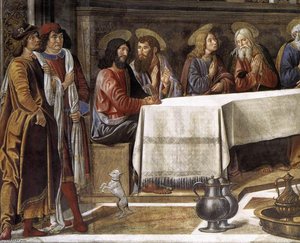
The Last Supper (detail) (8) (1481) de Cosimo Rosselli

The Last Supper (detail) (8)

1481 · Fresco · Cappella Sistina, Vatican City

Cosimo Rosselli's “The Last Supper,” completed in 1481-82 during the High Renaissance, stands as one of the most iconic depictions of Christianity. More than just a painting; it’s a testament to artistic innovation and spiritual contemplation—a scene meticulously rendered by Rosselli and his collaborators within the grandeur of Michelangelo's Sistine Chapel.

2
The Last Supper (1481) de Cosimo Rosselli

The Last Supper

1481 · Acrylic On Canvas · Cappella Sistina, Vatican City

Cosimo Rosselli’s “The Last Supper,” painted in 1481–82 for the Sistine Chapel in Rome, isn't merely a depiction of a biblical meal; it’s a profound meditation on faith, betrayal, and the human condition. Commissioned during a period of immense artistic innovation—a time when Leonardo da Vinci was laying the groundwork for modern painting—Rosselli’s fresco stands as a testament to the Florentine Renaissance’s vibrant spirit and its masterful command of perspective…

3
The Last Supper (detail) (1481) de Cosimo Rosselli

The Last Supper (detail)

1481 · Fresco · Cappella Sistina, Vatican City

To gaze upon this detail from Cosimo Rosselli's rendition of The Last Supper is to be transported across the centuries, into a moment suspended between profound intimacy and monumental destiny. This scene, painted in 1481 within the sacred confines of the Cappella Sistina, transcends mere depiction; it captures the very breath of human drama set against the backdrop of divine revelation. Rosselli masterfully frames the final meal shared by Jesus…

4
The Last Supper (detail) (1481) de Cosimo Rosselli

The Last Supper (detail)

1481 · Acrylic · Cappella Sistina, Vatican City

Cosimo Rosselli’s “The Last Supper,” a breathtaking detail from his monumental fresco cycle within the Cappella Sistina, offers an unparalleled glimpse into the heart of the late 15th century. Completed in 1481-82 amidst a complex political reconciliation between Florence and Rome, this work transcends mere biblical narrative; it’s a profound meditation on faith, betrayal, and the human condition. More than just a depiction of Christ's final meal with his disciples,…

5
The Last Supper (detail) (1481) de Cosimo Rosselli

The Last Supper (detail)

1481 · Fresco · Cappella Sistina, Vatican City

Cosimo Rosselli’s “The Last Supper (Detail),” painted in 1481 as part of the monumental fresco cycle adorning the Sistine Chapel, is more than just a depiction of a biblical event; it's a vibrant testament to the burgeoning artistic spirit of the High Renaissance. This intimate detail captures a pivotal moment – the announcement of betrayal – with an intensity and emotional resonance that continues to captivate viewers centuries later. Commissioned…

6
Portrait of a Man (1481) de Cosimo Rosselli

Portrait of a Man

1481 · Acrylic On Canvas · Metropolitan Museum of Art, New York

Cosimo Rosselli’s “Portrait of a Man,” painted around 1481 in Florence, is far more than a simple likeness; it's a carefully constructed tableau of status, ambition, and the burgeoning artistic currents of the High Renaissance. This remarkably preserved panel painting offers a rare window into the world of Florentine nobility, capturing not just a man’s appearance but also his projected persona – a testament to the era’s fascination with portraiture…

7
The Last Supper (after restauration) (1481) de Cosimo Rosselli

The Last Supper (after restauration)

1481 · Acrylic On Canvas · Cappella Sistina, Vatican City

Artist and Title Cosimo Rosselli was an Italian Renaissance painter born in Florence in 1439. He is best known for his frescoes, including the one we will discuss here: The Last Supper. Size and Media This masterpiece measures 349 cm x 570 cm and was created using the fresco technique. Fresco is a painting method in which pigments are applied to wet plaster, allowing them to become part of the…

8
Saint Catherine of Siena as Spiritual Mother of the Second and Third Orders of Saint Dominic (1499) de Cosimo Rosselli

Saint Catherine of Siena as Spiritual Mother of the Second and Third Orders of Saint Dominic

1499 · Tempera On Panel · Scottish National Gallery, Edinburgh

In this formal altarpiece from 1499, we find ourselves within a highly structured sacred space. The composition is centered upon Saint Catherine of Siena, who sits enthroned with a quiet, commanding presence. She is flanked by standing saints and surrounded by kneeling nuns, arranged in a pyramidal formation that directs the eye upward toward her figure. The scene is one of profound solemnity, a moment of communal devotion captured through…

9
Madonna and Child with the Young Saint John the Baptist (1490) de Cosimo Rosselli

Madonna and Child with the Young Saint John the Baptist

1490 · Tempera On Panel · Metropolitan Museum of Art, New York

The composition centers on a tender, vertical arrangement of three figures: the Madonna, the Christ Child, and a young Saint John the Baptist. Set against a split background of ornate gold patterning and a distant, atmospheric landscape, the scene focuses on the intimate act of nursing. The Virgin wears a deep crimson tunic beneath a mantle of rich ultramarine blue, her features rendered with soft, fluid lines that define the…

10
The Adoration of the Christ Child (1500) de Cosimo Rosselli

The Adoration of the Christ Child

1500 · Oil On Panel · Rijksmuseum, Amsterdam

The world settles into a quiet, circular hush within this tondo painting. At the very heart of the composition, the Virgin Mary kneels in prayer, her form anchored by the deep ultramarine blue of her mantle. Before her, the infant Jesus rests upon the earth, a small and precious focal point that draws every gaze toward the ground. Around them, the air feels soft and diffused, as if an overcast…

Cosimo Rosselli's famous paintings, numbers 11 to 25

Cosimo Rosselli's famous paintings, period by period

The subjects that held Cosimo Rosselli's eye

The four subjects that come back most often in these originals, each with its finest example.

The museums that keep Cosimo Rosselli's originals

Cele 8 muzee care dețin cele mai multe dintre picturile de pe această pagină.

Muzeu Oraș Lucrări lui Cosimo Rosselli Picturi din această listă
Cappella Sistina, Vatican CityCappella Sistina Vatican City 10 The Last Supper (detail) (8), The Last Supper, The Last Supper (detail)
Metropolitan Museum of Art, New YorkMetropolitan Museum of Art New York 3 Portrait of a Man, Madonna and Child with the Young Saint John the Baptist, Madonna and Child with Angels
Gemäldegalerie, BerlinGemäldegalerie Berlin 3 The Virgin and Blessing Child Enthroned with Sts. John, Augustine, Dominic, Peter and Victims of the bethemitic Child Murder, The Virgin with the Blessing Child in Glory, adored by Angels, Saints, Prayers and a Donor, The Domination of Christ
Muzeul de Artă Plastică din Boston, BostonMuzeul de Artă Plastică din Boston Boston 2 Virgin and Child with an Angel, The Descent From the Cross
Scottish National Gallery, EdinburghScottish National Gallery Edinburgh 1 Saint Catherine of Siena as Spiritual Mother of the Second and Third Orders of Saint Dominic
Rijksmuseum, AmsterdamRijksmuseum Amsterdam 1 The Adoration of the Christ Child
Musée de Tessé, Le MansMusée de Tessé Le Mans 1 Portrait of Bartolomeo di Giovanni Berzichelli
Musée du Petit Palais, AvignonMusée du Petit Palais Avignon 1 The Annunciation between Four Saints

Cosimo Rosselli across the decades: one unique original for each

Lucrări pe deceniu

Pick a decade to see the original that defines it.

Cosimo Rosselli's paintings: questions for the gallery

What is the single most famous work of Cosimo Rosselli?Reveal the answer

The Last Supper (detail) (8) (1481), Cappella Sistina, Vatican City. The Last Supper (1481) and The Last Supper (detail) (1481) come next.

At what age did Cosimo Rosselli create The Last Supper (detail) (8)?Reveal the answer

42 years old: The Last Supper (detail) (8) dates from 1481, and Cosimo Rosselli was born in 1439.

Which ten paintings by Cosimo Rosselli are the most famous?Reveal the answer

The Last Supper (detail) (8), The Last Supper, The Last Supper (detail), The Last Supper (detail), The Last Supper (detail), Portrait of a Man, The Last Supper (after restauration), Saint Catherine of Siena as Spiritual Mother of the Second and Third Orders of Saint Dominic, Madonna and Child with the Young Saint John the Baptist și The Adoration of the Christ Child. The ranking above gives each one's year and museum.

How many works by Cosimo Rosselli are known?Reveal the answer

Our catalog holds 25 works by Cosimo Rosselli, dated from 1450 to 1500.

Where can the most famous Cosimo Rosselli originals be seen?Reveal the answer

Mostly in Cappella Sistina (Vatican City), Metropolitan Museum of Art (New York) și Gemäldegalerie (Berlin). The museum table above lists them all.

During which period did Cosimo Rosselli create the best-known paintings?Reveal the answer

In 1480s: 12 of the 25 works on this page were made then, The Last Supper (detail) (8) among them.

Which famous Cosimo Rosselli painting is the earliest, and which the latest?Reveal the answer

On this page, the earliest is Portrait of Bartolomeo di Giovanni Berzichelli (1450) and the latest The Adoration of the Christ Child (1500).

What subjects did Cosimo Rosselli favour?Reveal the answer

Last supper (5), Apostles (4) și Religious art (3), across the 25 works on this page.

What materials did Cosimo Rosselli paint with most?Reveal the answer

Fresco, for 6 of the 25 works on this page.

Which movement does the work of Cosimo Rosselli belong to?Reveal the answer

Renaissance, judging by the originals on this page.

What Cosimo Rosselli originals can I see at the Cappella Sistina?Reveal the answer

The Last Supper (detail) (8), The Last Supper și The Last Supper (detail): the Cappella Sistina, Vatican City holds 10 of the works on this page.

Where can I order a hand-painted Cosimo Rosselli reproduction?Reveal the answer

Yes, as a reproduction: the original stays in its museum, but any painting on this page can be painted by hand for you, made to order one at a time, from the painting's own page.

Cosimo Rosselli: a portrait of the artist

O Mână Florentină în Roma: Viața și Arta lui Cosimo Rosselli

Cosimo Rosselli, născut în jurul anului 1439 în inima vibrantă a Florentinței, a apărut dintr-o familie de comercianți de renume – un context care i-a oferit o creștere stabilă și acces la viața culturală în plină expansiune a Renașterii. Spre deosebire de mulți artiști care și-au început formarea încă din tinerețe, călătoria artistică a lui Rosselli a început relativ târziu, în jurul vârstei de douăzeci de ani. El a intrat în atelierul lui Domenico Ghirlandaio, o figură de prim-plan în pictura florentină, renumit pentru frescele sale maestruale și pentru altari cele cu detalii exquisite. Acest mediu nu a fost doar un ucenicie; a fost o imersiune într-un centru creativ aglomerat, unde numeroși asistenți contribuiau la un flux constant de comenzi. Aici, Rosselli a absorbit fundamentele desenului, compoziției și tehnicile meticuloase care i-au definit stilul incipient. Influența lui Ghirlaghiano a fost profundă, instilându-i o precizie liniară, o paletă vibrantă și o claritate narativă ce a caracterizat o mare parte din opera sa. Totuși, chiar și în această perioadă formativă, Rosselli a început să demonstreze o sensibilitate individuală, absorbind subtil elemente de la maeștri anteriori precum Masaccio și Fra Angelico – artiști care revoluționaseră deja reprezentarea spațiului, a luminii și a emoției în pictură.

Capela Sistină și un Moment de Favor Papal

Un moment crucial a sosit în 1481, când Rosselli a primit invitația de a participa la ciclul monumental de fresce care decora pereții Capelei Sistine din Roma. Această comandă, alături de lumini strălucitoare precum Pietro Perugino și Sandro Botticelli, a marcat un punct de cotitură semnificativ în cariera sa, catapultându-l pe scena internațională. Tema centrală a acestor fresce era un paralel construit cu grijă între poveștile lui Moise și ale lui Hristos – o încercare deliberată de a legitima autoritatea papală și de a sublinia continuitatea legii divine. Contribuțiile lui Rosselli s-au concentrat pe scene din Viața lui Iisus, demonstrând capacitatea sa de a traduce narațiuni complexe în compoziții vizual captivante. Deși relatările ulterioare, în special cele scrise de Giorgio Vasari, l-au portretizat ca fiind unul dintre artiștii mai puțin talentați implicați în proiect – fiind subiect chiar și de ridicul din partea colegilor săi – s-a înregistrat că utilizarea sa îndrăzneață a culorii și aplicarea generoasă a foii de aur l-au încântat în mod special pe Papa Sixtus al IV-lea. Acest favoritism papal sugerează o înțelegere fină a efectului decorativ și o abilitate de a satisface gusturile patronului său, calități esențiale pentru succes în lumea competitivă a artei Renașterii. *Ultima Cină* din cadrul capelei rămâne o mărturie a acestei perioade, afișând o compoziție dinamică și o atenție la detalii care dezvăluită măiestria sa în creștere.

Comenzile Florentine și un Stil în Evoluție

La întoarcerea din Roma în Florența, Rosselli a continuat să primească un flux constant de comenzi pentru altari, fresce și picturi pe panou. Stilul său matur a înflorit în această perioadă, fiind caracterizat prin compoziții rafinate, figuri elegante și peisaje tot mai detaliate. El a păstrat precizia liniară și culorile vibrante învățate de la Ghirlandaio, dar a început să incorpore elemente din estetica mai grațioasă și armonioasă a lui Perugino. Lucrări notabile din această vreme includ frescele pentru biserica Santissima Annunziata – o comandă semnificativă ce i-a permis să își prezinte stilul în evoluție la o scară grandioasă – și numeroase altari care ornează capetele de altar din întreaga Florență. Rosselli a dezvoltat o abordare distinctivă în reprezentarea scenelor religioase, punând accent pe emoțiile și interacțiunile umane, menținând în același timp o atmosferă de venerație și pioșitate. El poseda un talent pentru portretarea stărilor psihologice ale personajelor sale, dotându-le cu un sentiment de viață interioară care rezonează cu publicul contemporan. Includerea portretelor contemporane în narațiunile sale biblice a adăugat, de asemenea, un strat de realism și implicare, conectând poveștile sacre cu viața de zi cu zi a celor care le priveau.

Moștenire și Semnificație Istorică

Cosimo Rosselli a continuat să lucreze cu sârguință pe tot parcursul începutului secolului al XVI-lea, asigurându-și comenzi de la familii florentine importante și instituții religioase. Totuși, pe măsură ce noi stele artistice au apărut – Rafael și Michelangelo fiind printre cele mai strălucitoare – notorietatea sa a scăzut treptat. A decedat în Florența în jurul anului 1520, lăsând în urmă o operă care reflectă îndemânarea sa de pictor și dedicarea sa de a reprezenta temele religioase cu claritate și eleganță. Astăzi, Rosselli este reținut ca un artist florentin priceput, care a jucat un rol important în dezvoltarea artei Renașterii. Participarea sa la frescele Capelei Sistine a ajutat la consolidarea poziției Florenței de centru principal al inovației artistice, iar propriile sale lucrări demonstrează capacitatea sa de a sintetiza diverse influențe într-un stil distinctiv și rafinat. Deși poate nu a atins același nivel de faimă ca unii dintre contemporanii săi, contribuțiile lui Cosimo Rosselli rămân semnificative – o mărturie a talentului, dedicării și moștenirii sale durabile în cadrul bogatei tapiserii a artei Renașterii.

Influențe și Dezvoltare Artistică

  • Fundamentele timpurii: Atelierul lui Domenico Ghirlandaio i-a oferit lui Rosselli o bază crucială în tehnicile de pictură și principiile compoziționale, modelându-i sensibilitățile estetice primare.
  • Experiența romană: Lucrul alături de alți artiști de prim rang ai Renașterii în Capela Sistină l-a expus la stiluri și abordări noi, largindu-i orizonturile artistice și influențându-i munca ulterioară. Mediul colaborativ a încurajat un schimb de idei și o conștientizare sporită a tendințelor contemporane.
  • Grația lui Perugino: Stilul grațios și compozițiile armonioase ale lui Pietro Perugino au exercitat o influență vizibilă asupra dezvoltării artistice a lui Rosselli, încurajându-l să își rafineze figurile și să creeze aranjamente mai echilibrate.
  • Ecouri din trecut: El a absorbit elemente de la maeștrii anteriori, precum Masaccio și Fra Angelico, încorporând inovațiile lor – cum ar fi reprezentările realiste ale spațiului și expresia emoțională – în propriul său stil distinctiv. Acest lucru demonstrează o înțelegere profundă a istoriei artei și o dorință de a învăța de la cei care l-au precedat.
Călătoria artistică a lui Rosselli este un exemplu convingător al modului în care artiștii Renașterii au navigat prin interacțiunea complexă dintre tradiție, inovație și patronaj, lăsând în urmă o moștenire care continuă să inspire și să captiveze publicul de astăzi.

Toate cele 25 de lucrări ale lui Cosimo Rosselli →