Portretul lui Bartholomeus Spranger

Cele 74 cele mai faimoase picturi ale lui Bartholomeus Spranger, fiecare unică în felul ei

Actualizat Noiembrie 2026 · clasat în funcție de scorul nostru de popularitate (căutări, vizite și comenzi pentru fiecare operă) · 76 lucrări ale lui Bartholomeus Spranger în catalogul nostru

Pe scurt

Adoration of the Magi (1606) este pictură lui Bartholomeus Spranger care atrage cele mai multe priviri. După aceasta, privirea se îndreaptă către Ulysses and Circe (1586) și Allegory of Emperor Rudolf II (1592). Dintre cele 76 opere ale lui Bartholomeus Spranger din catalogul nostru, acestea 74 sunt cele mai celebre, fiecare fiind o piesă unică, prezentată împreună cu anul creării, muzeul deținător și motivul pentru care aceasta rămâne memorabilă.

1546 – 1611, Antwerp Northern mannerism Cele mai multe lucrări: Muzeul Kunsthistorisches din Viena

Cele mai importante 10 picturi ale lui Bartholomeus Spranger, prin ochii galeriei

1
Adoration of the Magi (1606) de Bartholomeus Spranger

Adoration of the Magi

1606 · Engraving

The work titled Adoration of the Magi, also recognized as The Adoration of the Kings, is a creation of the artist Bartholomeus Spranger. Born in Antwerp, Belgium, in 1546, Spranger brought a specific Northern sensibility to the religious scene. He remained active in his craft until his death in 1611. This specific piece emerged from his hand during a period of intense creative output, dated around 1590 or around 1595-6.

2
Ulysses and Circe (1586) de Bartholomeus Spranger

Ulysses and Circe

1586 · Oil On Canvas · Muzeul Kunsthistorisches din Viena, Viena

The air in the room feels heavy, thick with the scent of old stone and spilled wine. In this Mannerist encounter, the bodies do not merely exist; they twist. Circe, seen from behind, turns her torso in a serpentine arc, her pale skin catching a sharp, luminous light that cuts through the gloom. Her form is a curve of white against the deep, dark shadows of the background. Opposite her,…

3
Allegory of Emperor Rudolf II (1592) de Bartholomeus Spranger

Allegory of Emperor Rudolf II

The Allegory of Emperor Rudolf II emerges from the brush of Bartholomeus Spranger, a painter who captures a moment of intense, swirling movement. Created in 1592, this work presents a complex arrangement of figures that seem to dance through a bright, open sky. The composition draws the eye upward toward a winged figure, while below, a pyramidal structure of deities and warriors creates a sense of layered depth. Every line…

4
Hercules, Deianira, and Nessus (1580) de Bartholomeus Spranger

Hercules, Deianira, and Nessus

The air in this scene feels heavy, thick with the sudden, violent shift of fate. In a swirling composition of interlocking limbs and muscular torsos, the figures of Hercules, Deianira, and Nessus collide in a moment of profound struggle. The movement is restless, a serpentine energy that pulls the eye through a tangle of bodies. Hercules dominates the center, his form rendered with a powerful anatomical precision that catches the…

5
Minerva Victorious over Ignorance (1591) de Bartholomeus Spranger

Minerva Victorious over Ignorance

1591 · Oil On Canvas · Muzeul Kunsthistorisches din Viena, Viena

In this dynamic Mannerist oil painting, the goddess Minerva Victorious over Ignorance emerges as a central force of triumph. Created by Bartholomeus Spranger around 1591, the scene captures a moment of intense movement and theatrical energy. Minerva dominates the vertical space, her body held in an elegant, elongated contrapposto pose that suggests both grace and power. She wears a gleaming silver breastplate with a golden relief, paired with a light…

6
Self-portrait (1585) de Bartholomeus Spranger

Self-portrait

1585 · Oil On Canvas · Muzeul Kunsthistorisches din Viena, Viena

This oil portrait, titled Self-portrait, was executed by the artist Bartholomeus Spranger in 1585. It offers a direct encounter with the painter himself, captured during a period of significant professional development. The work measures 45 x 63 cm, providing an intimate scale for such a personal study of identity and presence.

7
Fall of Man (1595) de Bartholomeus Spranger

Fall of Man

1595 · Oil On Panel · Muzeul Kunsthistorisches din Viena, Viena

The religious art piece "Fall of Man" by Bartholomeus Spranger presents a scene centered on the biblical narrative of the expulsion from Paradise. The composition focuses on the figures of Adam and Eve in the immediate aftermath of their transgression. These two figures occupy the central space of the work, positioned within a landscape that reflects the consequences of their actions. The subject matter specifically addresses the moment of humanity's…

8
God the Father with the Holy Ghost and angels (1582) de Bartholomeus Spranger

God the Father with the Holy Ghost and angels

1582 · Oil On Panel · Muzeul Kunsthistorisches din Viena, Viena

A celestial hierarchy unfolds within an oval composition, capturing a moment of profound spiritual descent. At the apex, God the Father gazes downward with a solemn expression, one hand raised in blessing while the other rests upon a luminous orb that represents the universe. Beneath him, the Holy Ghost descends as a white dove, enveloped in radiant golden light. The scene is populated by cherubic angel faces emerging from soft,…

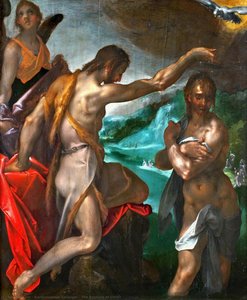
9
Apollo and the Muses (1590) de Bartholomeus Spranger

Apollo and the Muses

In this Mannerist oil painting, we find ourselves drawn into a crowded, dynamic scene where mythology meets a lush, hilly landscape. Apollo sits at the center of this movement, a radiant figure distinguished by a halo, his fingers engaged with a stringed instrument. He is not alone; he is surrounded by several female Muses, each caught in a moment of music or quiet conversation. The composition feels intentional yet restless,…

Păiți celebrele picturi ale lui Bartholomeus Spranger, de la numărul 11 la 74

11The Fragrance (1578) de Bartholomeus SprangerThe Fragrance1578 · Colecțiile Statale de Pictură din Bavaria 12Saint Mary Magdalene (1578) de Bartholomeus SprangerSaint Mary Magdalene1578 · Colecțiile Statale de Pictură din Bavaria 13Holy Family (1578) de Bartholomeus SprangerHoly Family1578 · Colecțiile Statale de Pictură din Bavaria 14Lamentation of Christ (1576) de Bartholomeus SprangerLamentation of Christ1576 · Colecțiile Statale de Pictură din Bavaria 15Sine Cerere et Baccho friget Venus (1590) de Bartholomeus SprangerSine Cerere et Baccho friget Venus1590 · Muzeul Kunsthistorisches din Viena 16Mountain landscape with a scene of the early history of man (1569) de Bartholomeus SprangerMountain landscape with a scene of the early history of man1569 · Staatliche Kunsthalle Karlsruhe 17The contest between Apollo and Pan (1587) de Bartholomeus SprangerThe contest between Apollo and Pan1587 · Colecțiile Statale de Pictură din Bavaria 18Saint Luke painting the Virgin (1582) de Bartholomeus SprangerSaint Luke painting the Virgin1582 · Colecțiile Statale de Pictură din Bavaria 19The Flagellation of Christ (1586) de Bartholomeus SprangerThe Flagellation of Christ1586 · Statens Museum For Kunst 20Jael Kills Sisera (1586) de Bartholomeus SprangerJael Kills Sisera1586 · Statens Museum For Kunst 21Ecce Homo (1580) de Bartholomeus SprangerEcce Homo1580 22God the father with the holy spirit and angels (1582) de Bartholomeus SprangerGod the father with the holy spirit and angels1582 23Diana Resting after Hunt (1597) de Bartholomeus SprangerDiana Resting after Hunt1597 · Muzeul de Artă Fine din Budapesta 24Diana - Luna (1600) de Bartholomeus SprangerDiana - Luna1600 · Muzeul de Artă Fine din Budapesta 25Venus and Mercury put a blindfold over Cupid's eyes (1597) de Bartholomeus SprangerVenus and Mercury put a blindfold over Cupid's eyes1597 · Germanisches Nationalmuseum 26Portrait of Zdenko Adalbert Popel, 1st Prince Lobkowicz (1568-1628) (1600) de Bartholomeus SprangerPortrait of Zdenko Adalbert Popel, 1st Prince Lobkowicz (1568-1628)1600 · National Gallery Prague 27The Suicide of Sophonisba (1605) de Bartholomeus SprangerThe Suicide of Sophonisba1605 · National Gallery Prague 28Amor fleeing Psyche (1599) de Bartholomeus SprangerAmor fleeing Psyche1599 29Standing Nude Man (Bacchus) (1600) de Bartholomeus SprangerStanding Nude Man (Bacchus)1600 30Diana and Actaeon (1600) de Bartholomeus SprangerDiana and Actaeon1600 31Saint Barbara (1611) de Bartholomeus SprangerSaint Barbara1611 · Muzeul de Artă Fine din Budapesta 32Venus and Mercury (1585) de Bartholomeus SprangerVenus and Mercury1585 · Muzeul Kunsthistorisches din Viena 33Jupiter and Antiope (1596) de Bartholomeus SprangerJupiter and Antiope1596 · Muzeul Kunsthistorisches din Viena 34Allegory of Justice and Prudence (1599) de Bartholomeus SprangerAllegory of Justice and Prudence1599 · Muzeul Luvru 35Venus and Adonis (1587) de Bartholomeus SprangerVenus and Adonis1587 · Rijksmuseum 36Venus and Mars warned by Mercury (1587) de Bartholomeus SprangerVenus and Mars warned by Mercury1587 · Muzeul Kunsthistorisches din Viena 37Hermes and Athena (1585) de Bartholomeus SprangerHermes and Athena1585 · Castelul Praga 38Venus and Vulcan (1610) de Bartholomeus SprangerVenus and Vulcan1610 · Muzeul Kunsthistorisches din Viena 39Mountain landscape with a hermit (1567) de Bartholomeus SprangerMountain landscape with a hermit1567 · Staatliche Kunsthalle Karlsruhe 40Figure Studies (1575) de Bartholomeus SprangerFigure Studies1575 41Glaucus and Scylla (1582) de Bartholomeus SprangerGlaucus and Scylla1582 · Muzeul Kunsthistorisches din Viena 42Diana and Actaeon (1585) de Bartholomeus SprangerDiana and Actaeon1585 43Saint Margaret (1583) de Bartholomeus SprangerSaint Margaret1583 44Engelen dragen het lichaam van Christus (Engelenpietà), Bartholomeus Spranger, c. 1587 (1587) de Bartholomeus SprangerEngelen dragen het lichaam van Christus (Engelenpietà), Bartholomeus Spranger, c. 15871587 · Rijksmuseum 45The Baptism of Christ (1603) de Bartholomeus SprangerThe Baptism of Christ1603 · National Museum in Wrocław 46The Triumph of Venus (1600) de Bartholomeus SprangerThe Triumph of Venus1600 47Study of a Female Nude (Venus in a Drapery) (1605) de Bartholomeus SprangerStudy of a Female Nude (Venus in a Drapery)1605 · Muzeul Național din Varșovia 48Achelous and Deianeira (1600) de Bartholomeus SprangerAchelous and Deianeira1600 49The Adoration of the Kings (1595) de Bartholomeus SprangerThe Adoration of the Kings1595 · National Gallery 50Adoration of the Kings (1595) de Bartholomeus SprangerAdoration of the Kings1595 · National Gallery 51Mercury Carrying Psyche to Mount Olympus (1611) de Bartholomeus SprangerMercury Carrying Psyche to Mount Olympus1611 52Odysseus and Circe (1585) de Bartholomeus SprangerOdysseus and Circe1585 · Muzeul Kunsthistorisches din Viena 53St Wenceslas and St Vitus de Bartholomeus SprangerSt Wenceslas and St VitusNational Gallery Prague 54St Sigismund and St Adalbert de Bartholomeus SprangerSt Sigismund and St AdalbertNational Gallery Prague 55Vulcan and Maia (1575) de Bartholomeus SprangerVulcan and Maia1575 · Muzeul Kunsthistorisches din Viena 56Ceres and Bacchus de Bartholomeus SprangerCeres and Bacchus 57Allegory de Bartholomeus SprangerAllegoryMusée des Beaux-Arts 58Apotheosis of the Arts (Fame leading the Arts to Olympus) de Bartholomeus SprangerApotheosis of the Arts (Fame leading the Arts to Olympus)National Gallery Prague 59Faun with Wounded Foot de Bartholomeus SprangerFaun with Wounded Foot 60La Peinture, la Sculpture et l'Architecture de Bartholomeus SprangerLa Peinture, la Sculpture et l'Architecture 61Le Christ sauveur du monde de Bartholomeus SprangerLe Christ sauveur du monde 62ALLEGORIA DE LA JUSTICIA de Bartholomeus SprangerALLEGORIA DE LA JUSTICIAMuzeul Luvru 63Venus + Mercury und Amus de Bartholomeus SprangerVenus + Mercury und Amus 64Peter and John Heal a Cripple at the Gate of the Temple de Bartholomeus SprangerPeter and John Heal a Cripple at the Gate of the Temple 65Salvator Mundi de Bartholomeus SprangerSalvator Mundi 66Faith, Hope and Charity de Bartholomeus SprangerFaith, Hope and Charity 67Sarah Presenting Hagar to Abraham de Bartholomeus SprangerSarah Presenting Hagar to Abraham 68Christ blessing little children de Bartholomeus SprangerChrist blessing little children 69Female Warrior Crushing a Satyr de Bartholomeus SprangerFemale Warrior Crushing a Satyr 70Venus and Adonis (1597) de Bartholomeus SprangerVenus and Adonis1597 · Muzeul Kunsthistorisches din Viena 71Epitaph of Goldsmith Nicolas Müller of Prague (1592) de Bartholomeus SprangerEpitaph of Goldsmith Nicolas Müller of Prague1592 · National Gallery Prague 72Angelica and Medoro (1600) de Bartholomeus SprangerAngelica and Medoro1600 · Alte Pinakothek 73Hermaphrodite and the nymph Salmacis (1582) de Bartholomeus SprangerHermaphrodite and the nymph Salmacis1582 · Muzeul Kunsthistorisches din Viena 74Herakles and Omphale (1585) de Bartholomeus SprangerHerakles and Omphale1585 · Muzeul Kunsthistorisches din Viena

Piesele celebre ale lui Bartholomeus Spranger, perioadă cu perioadă

Subiectele care i-au captivat privirea lui Bartholomeus Spranger

Cele patru teme care revin cel mai des în aceste opere originale, fiecare având cel mai sublim exemplu.

Muzeele care păstrează originalele lui Bartholomeus Spranger

Cele 8 muzee care dețin cele mai multe dintre picturile de pe această pagină.

Muzee Oraș Lucrări lui Bartholomeus Spranger Picturi din această listă
Muzeul Kunsthistorisches din Viena, VienaMuzeul Kunsthistorisches din Viena Viena 19 Ulysses and Circe, Allegory of Emperor Rudolf II, Hercules, Deianira, and Nessus
Colecțiile Statale de Pictură din Bavaria, MunchenColecțiile Statale de Pictură din Bavaria Munchen 7 Mercury and Venus, The Fragrance, Saint Mary Magdalene
National Gallery Prague, PragaNational Gallery Prague Praga 6 Portrait of Zdenko Adalbert Popel, 1st Prince Lobkowicz (1568-1628), The Suicide of Sophonisba, St Wenceslas and St Vitus
Muzeul de Artă Fine din Budapesta, BudapestaMuzeul de Artă Fine din Budapesta Budapesta 3 Diana Resting after Hunt, Diana - Luna, Saint Barbara
Staatliche Kunsthalle Karlsruhe, KarlsruheStaatliche Kunsthalle Karlsruhe Karlsruhe 2 Mountain landscape with a scene of the early history of man, Mountain landscape with a hermit
Statens Museum For Kunst, CopenhagaStatens Museum For Kunst Copenhaga 2 The Flagellation of Christ, Jael Kills Sisera
Muzeul Luvru, ParisMuzeul Luvru Paris 2 Allegory of Justice and Prudence, ALLEGORIA DE LA JUSTICIA
Rijksmuseum, AmsterdamRijksmuseum Amsterdam 2 Venus and Adonis, Engelen dragen het lichaam van Christus (Engelenpietà), Bartholomeus Spranger, c. 1587

Bartholomeus Spranger de-a lungul deceniilor: o piesă unică pentru fiecare

Lucrări pe deceniu

Alege o deceniu pentru a descoperi opera originală care îl definește.

Picturile lui Bartholomeus Spranger: întrebări pentru galerie

Care este cea mai celebră operă a lui Bartholomeus Spranger?Află răspunsul

Adoration of the Magi (1606). Urmează Ulysses and Circe (1586) și Allegory of Emperor Rudolf II (1592).

La ce vârstă a creat Bartholomeus Spranger Adoration of the Magi?Află răspunsul

60 ani: Adoration of the Magi datează din 1606, iar Bartholomeus Spranger s-a născut în 1546.

Care sunt cele mai celebre zece picturi ale lui Bartholomeus Spranger?Află răspunsul

Adoration of the Magi, Ulysses and Circe, Allegory of Emperor Rudolf II, Hercules, Deianira, and Nessus, Minerva Victorious over Ignorance, Self-portrait, Fall of Man, God the Father with the Holy Ghost and angels, Apollo and the Muses și Mercury and Venus. Clasamentul de mai sus indică anul și muzeul pentru fiecare piesă.

Câte lucrări ale lui Bartholomeus Spranger sunt cunoscute?Află răspunsul

Catalogul nostru cuprinde 76 lucrări ale lui Bartholomeus Spranger, datate între 1567 și 1611.

Unde pot fi vizualizate originalele celor mai faimoși Bartholomeus Spranger?Află răspunsul

În principal în Muzeul Kunsthistorisches din Viena (Viena), Colecțiile Statale de Pictură din Bavaria (Munchen) și National Gallery Prague (Praga). Tabelul cu muzee de mai sus le enumeră pe toate.

În ce perioadă a creat Bartholomeus Spranger cele mai cunoscute picturi?Află răspunsul

În 1580s: 21 dintre cele 74 lucrări de pe această pagină au fost realizate atunci, fiind Ulysses and Circe dintre acestea.

Care este cea mai veche și care este cea mai recentă pictură a lui Bartholomeus Spranger?Află răspunsul

Pe această pagină, cea mai veche lucrare datează din Mountain landscape with a hermit (1567), iar cea mai recentă este din Saint Barbara (1611).

Ce teme prefera Bartholomeus Spranger?Află răspunsul

Woman (34), Man (32) și Skin (13), din cele 74 lucrări de pe această pagină.

Cu ce materiale a pictat cel mai des Bartholomeus Spranger?Află răspunsul

Oil, pentru 26 dintre cele 74 lucrări de pe această pagină.

Din ce curent artistic face parte opera lui Bartholomeus Spranger?Află răspunsul

Northern mannerism, judecând după originalele de pe această pagină.

Ce originale de Bartholomeus Spranger pot vedea la Muzeul Kunsthistorisches din Viena?Află răspunsul

Ulysses and Circe, Allegory of Emperor Rudolf II și Hercules, Deianira, and Nessus: Muzeul Kunsthistorisches din Viena, Viena deține 19 dintre lucrările de pe această pagină.

Bartholomeus Spranger: un portret al artistului

Bartholomeus Spranger: Pictorul Curții Erotismului și al Majestății

Bartholomäus Spranger (1546-1611), un nume care rezonează prin sălile Manierismului Nordic, a fost mai mult decât un simplu pictor; a fost o figură pivotantă în modelarea sensibilităților artistice ale epocii sale. Născut în Antwerpen, fiul unui comerciant cu numeroase călătorii, viața timpurie a lui Spranger a lăsat să se prevestească un viitor îmbibat de artă și influențe străine. Învățarea sa inițială sub îndrumarea lui Jan Mandijn, Frans Mostaert și Cornelis van Dalem i-a oferit o bază solidă în pictura de peisaj – un punct de plecare surprinzător pentru un artist care, ulterior, urma să devină renumit pentru reprezentările sale intens senzuale ale nudului. Totuși, a fost șederea sa la Paris în 1565, lucrând în atelierul lui Marc Duval, cea care i-a aprins cu adevărat traiectoria artistică, expunându-l la tehnici și perspective noi.

Influențe timpurii și călătoriile italiene

Evoluția artistică a lui Bartholomeus Spranger nu s-a limitat la granițele Țărilor de Jos. Acesta a studiat cu rigoare gravurile realizate de Frans Floris și Parmigianino, absorbind liniile elegante și compozițiile sofisticate ale acestora. Un moment crucial în formarea sa a fost extinderea călătoriilor sale în Italia, unde a petrecut opt luni în Milano și trei luni în Parma, oferindu-i posibilitatea de a-l asista pe Bernardino Gatti în ambitiosul proiect de frescă pentru cupola Bisericii Santa Maria della Steccata. Această experiență i-a oferit o perspectivă neprețuită asupra tehnicilor de pictură la scară largă și l-a expus scenei artistice vibrante a Renașterii italiene. Perioada petrecută la Roma s-a dovedit a fi una de o importanță formativă deosebită, permițându-i să stabilească o legătură cu Giulio Clovio, pictor și designer manierist de renume, care a devenit protejatul său. Tocmai aici, artistul l-a întâlnit pe Karel van Mander, a cărui operă Schilder-boeck va oferi ulterior o relatare detaliată a vieții și activității lui Spranger – o dovadă incontestabilă a importanței artistului în cadrul comunității de atunci.

Curtea Imperială de la Praga

Cariera lui Bartholomeus Spranger a atins adevărata sa apogeu atunci când a fost numit pictor oficial al Papei Pius al V-lea în anul 1570. Totuși, cea mai durabilă moștenire a sa rezidă în serviciul prestărit Sfântului Împărat Roman Rudolf al II-lea, un colecționar pasionat de artă și de cunoștințe esoterice. Mutarea curții imperiale la Praga în 1581 a marcat un punct de cotitură decisiv pentru Spranger. Fascinarea împăratului pentru antichitatea clasică, mitologie și alchimie a influențat profund opera artistului. Spranger a răspuns direct acestor preferințe, creând un corpus de picturi dominate de figuri nude randate cu o excepțională finețe – adesea prezentate din spate, emanând o aură de mister și senzualitate. Acestea nu erau simple studii decorative, ci alegorii atent construite, care reflectau inclinațiile filozofice ale lui Rudolf al II-lea și dorința sa de a proiecta o imagine a puterii și a sofisticării.

Stil și Tehnică: Apogeul Manierismului Nordic

Stilul lui Bartholomeus Spranger reprezintă un exemplu esențial al Manierismului Nordic, fiind definit prin figuri alungite, posturi complexe și o accentuare deliberată a eleganței și a rafinamentului. Picturile sale se remarcă prin modelarea fină a formelor, prin detaliul meticulos și printr-un utilizare subtilă a culorii. El a reușit să îmbine cu măiestrie realismul flamand cu influențele manieriste italiene, în special cu tradiția romană de a reprezenta mitologia clasică. Desenile sale, în mod special, posedă o energie și o libertate remarcabile – o dovadă a unei tehnici de desen impecabile. Opera lui Spranger este remarcabilă prin dinamismul său, obținut prin diagonale atent orchestrate și printr-un sentiment de mișcare care pulsează în interiorul fiecărei compoziții. Influența primelor sale studii în pictura de peisaj poate fi observată în fundalurile atmosferice pe care le-a utilizat adesea, oferind profunzime și context figurilor sale.

Moștenire și Influență

Impactul lui Bartholomeus Spranger asupra artei europene este unul considerabil. Pătrimea picturilor sale, în special a celor găzduite de Muzeul de Istorie Artei din Viena (Kunsthistorisches Museum), reprezintă un apogeu al Manierismului Nordic. Opera sa a servit drept inspirație pentru generații ulterioare de artiști, inclusiv în Republica Olandeză, unde stilul său a fost amplu răspândit prin printuri și prin intermediul artiștilor care colaboraseră cu el. Detaliul meticulos și atractivitatea senzuală a nudurilor sale continuă să captiveze privitorii de astăzi, consolidând locul lui Spranger ca maestru al artei sale și figură semnificativă în istoria artei occidentale. Povestea sa este una a evoluției artistice, modelată de influențe diverse și definită, în cele din urmă, de viziunea sa unică — o viziune care a împletit armonios erotismul, alegoria și măreția imperială.