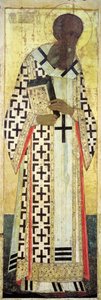
Portretul lui Andrei Rubliov

The 35 Most Famous Andrei Rubliov Paintings, a Gallery Selection

Actualizat Octombrie 2026 · clasat în funcție de scorul nostru de popularitate (căutări, vizite și comenzi pentru fiecare operă) · 35 lucrări ale lui Andrei Rubliov în catalogul nostru

In short

Of all the originals Andrei Rubliov left, the most famous is Holy Trinity (1411), in the collection of the Galeria Tretyakov, Moscova. Close behind it come Deesis Range: The Archangel Michael (1410) and Deesis Range: The Saviour (1410). Our catalog holds 35 works by Andrei Rubliov; the gallery has kept the 35 the world admires most, each shown with its date, its museum and its story.

1360 – 1430, Cnezatul Moscovei Byzantine Cele mai multe lucrări: Catedrala Adunción

Andrei Rubliov's top 10 paintings: the gallery's choice

1
Holy Trinity (1411) de Andrei Rubliov

Holy Trinity

1411 · Oil On Panel · Galeria Tretyakov, Moscova

Andrei Rublev’s “Holy Trinity,” painted circa 1411, stands as an unparalleled testament to the spiritual heart of medieval Russia and a cornerstone of its artistic heritage. This iconic icon, meticulously crafted in the early 15th century, transcends mere representation; it is a profound meditation on divine unity, peace, and humility – values deeply ingrained within the Russian Orthodox tradition. Commissioned for the Trinity Lavra of St. Sergius, the monastery’s spiritual…

2
Deesis Range: The Archangel Michael (1410) de Andrei Rubliov

Deesis Range: The Archangel Michael

1410 · Oil On Canvas · Galeria Tretyakov, Moscova

To stand before a work echoing the spirit of Andrei Rublev is not merely to observe paint on wood; it is to step across the threshold into a realm of profound spiritual contemplation. This piece, evocative of his masterful period around 1410, captures a moment of sublime divine communion. The central figure, the Virgin Mary, radiates an ethereal stillness, her hands clasped in an attitude of perfect prayer. Draped in…

3
Deesis Range: The Saviour (1410) de Andrei Rubliov

Deesis Range: The Saviour

1410 · Oil On Canvas · Galeria Tretyakov, Moscova

To stand before an image evocative of Andrei Rublev’s profound spiritual vision is to step across the threshold of time itself. This depiction, echoing the solemnity of a Deesis grouping, centers on a figure whose gaze seems to penetrate the veil between worlds. The subject, bearing the unmistakable gravitas associated with Christ or a deeply contemplative saint, commands attention through sheer emotional resonance. It is not merely a portrait; it…

4
Deesis Range: The Apostle Paul (1410) de Andrei Rubliov

Deesis Range: The Apostle Paul

1410 · Tempera On Panel · Galeria Tretyakov, Moscova

In the quiet, hallowed halls of art history, few figures command as much spiritual reverence as Andrei Rublev, the master whose brush breathed life into the very soul of Russian iconography. His work, Deesis Range: The Apostle Paul, stands as a profound testament to this era of mystical devotion. This painting is not merely a depiction of a saint; it is an invitation into a celestial dialogue. The figure of…

6
The Last Judgement: Jesus Christ (1408) de Andrei Rubliov

The Last Judgement: Jesus Christ

1408 · Fresco · Catedrala Adunción, Vladimir

In the Assumption Cathedral in Vladimir, Russia, a fresco remains fixed upon the stone. It is a window into 1408, a moment where the air feels heavy with the weight of eternity. At the center, Jesus Christ emerges from an oval mandorla, a shape that contains the heavens. He does not look down in anger. His expression is serene, a quiet stillness that settles the soul. One hand is raised…

7
The Virgin of Vladimir (1400) de Andrei Rubliov

The Virgin of Vladimir

1400 · Tempera On Panel · Rezervația Muzeală Vladimir-Suzdal, Vladimir

In The Virgin of Vladimir, Andrei Rublev presents a profound study of intimacy through the Eleusa style. The composition centers on the tender connection between the Mother of God and the Christ Child. Their faces are pressed together in a quiet embrace, a detail that emphasizes their shared humanity. The Child’s arm is wrapped around her neck, pulling her closer, while he appears to be nursing from his mother. This…

8
Himmelfahrt christi de Andrei Rubliov

Himmelfahrt christi

Tempera On Panel

The religious painting and icon titled Himmelfahrt christi was executed by the artist Andrei Rublev. This work belongs to a specific series of paintings created for the Assumption Cathedral in Vladimir. The piece is rendered as a religious icon, a form of art central to the spiritual traditions of the region.

10
The Last Judgement (1408) de Andrei Rubliov

The Last Judgement

1408 · Fresco · Catedrala Adunción, Vladimir

The Last Judgement is a religious fresco painted by Andrei Rublev. This work was created in 1408. It belongs to the Byzantine and Moscow School of icon painting movements. The composition depicts the final judgement day as described in Christian theology. The imagery includes a central Christ figure and an assembly of holy figures, such as angels and saints, who bear books.

The Andrei Rubliov selection continues, 11 to 35

The subjects that held Andrei Rubliov's eye

The four subjects that come back most often in these originals, each with its finest example.

The museums that keep Andrei Rubliov's originals

Cele 5 muzee care dețin cele mai multe dintre picturile de pe această pagină.

Muzeu Oraș Lucrări lui Andrei Rubliov Picturi din această listă
Catedrala Adunción, VladimirCatedrala Adunción Vladimir 16 The Last Judgement: Procession of the righteous to heaven, The Last Judgement: Jesus Christ, The Last Judgement
Galeria Tretyakov, MoscovaGaleria Tretyakov Moscova 4 Holy Trinity, Deesis Range: The Archangel Michael, Deesis Range: The Saviour
The Cathedral of the Dormition in Gorodok, ZvenigorodThe Cathedral of the Dormition in Gorodok Zvenigorod 2 St. Laurus, Venerable Barlaam and his disciple prince Josaphat
Rezervația Muzeală Vladimir-Suzdal, VladimirRezervația Muzeală Vladimir-Suzdal Vladimir 1 The Virgin of Vladimir
Catedrala Anunțului, MoscovaCatedrala Anunțului Moscova 1 Annunciation

Andrei Rubliov decade by decade: the original that defines each

Lucrări pe deceniu

Pick a decade to see the original that defines it.

Collectors' questions about Andrei Rubliov's paintings

Which work is Andrei Rubliov most famous for?Reveal the answer

Holy Trinity (1411), Galeria Tretyakov, Moscova. Deesis Range: The Archangel Michael (1410) and Deesis Range: The Saviour (1410) come next.

What age was Andrei Rubliov when Holy Trinity was made?Reveal the answer

51 years old: Holy Trinity dates from 1411, and Andrei Rubliov was born in 1360.

What are the ten most famous Andrei Rubliov paintings?Reveal the answer

Holy Trinity, Deesis Range: The Archangel Michael, Deesis Range: The Saviour, Deesis Range: The Apostle Paul, The Last Judgement: Procession of the righteous to heaven, The Last Judgement: Jesus Christ, The Virgin of Vladimir, Himmelfahrt christi, St. Laurus și The Last Judgement. The ranking above gives each one's year and museum.

How many paintings did Andrei Rubliov leave?Reveal the answer

Our catalog holds 35 works by Andrei Rubliov, dated from 1400 to 1427.

In which museums do Andrei Rubliov's masterpieces hang?Reveal the answer

Mostly in Catedrala Adunción (Vladimir), Galeria Tretyakov (Moscova) și The Cathedral of the Dormition in Gorodok (Zvenigorod). The museum table above lists them all.

In which years did Andrei Rubliov paint the most famous works?Reveal the answer

In 1400s: 24 of the 35 works on this page were made then, The Last Judgement: Procession of the righteous to heaven among them.

What are the first and the last famous originals of Andrei Rubliov?Reveal the answer

On this page, the earliest is The Virgin of Vladimir (1400) and the latest St. Demetrius of Thessalonica (1427).

Which subjects did Andrei Rubliov choose most often?Reveal the answer

Medieval art (7), Religious iconography (7) și Angels (5), across the 35 works on this page.

Which technique did Andrei Rubliov use most?Reveal the answer

Tempera On Panel, for 7 of the 35 works on this page.

To which art movement does Andrei Rubliov belong?Reveal the answer

Byzantine, judging by the originals on this page.

Which Andrei Rubliov works hang at the Catedrala Adunción?Reveal the answer

The Last Judgement: Procession of the righteous to heaven, The Last Judgement: Jesus Christ și The Last Judgement: the Catedrala Adunción, Vladimir holds 16 of the works on this page.

Can I commission a reproduction of a Andrei Rubliov painting?Reveal the answer

Yes, as a reproduction: the original stays in its museum, but any painting on this page can be painted by hand for you, made to order one at a time, from the painting's own page.

Andrei Rubliov: life and work

Andrei Rublev: Sufletul Iconografiei Russe

Andrei Rublev (aprox. 1360 – aprox. 1430) rămâne una dintre cele mai enigmatice și profund influente figuri din istoria artei ruse. Mai mult decât un simplu pictor, el întruchipează o confluență de devotament spiritual, măiestrie artistică și însăși esența Rusiei medievale — o națiune care își căuta identitatea în mijlocul influențelor bizantine și al unei conștiință naționale incipiente. Deși detaliile vieții sale rămân învăluite în mister, moștenirea sa de prim iconograf al erei sale este incontestabilă, modelând nu doar limbajul vizual al artei ortodoxe ruse, ci influențând profund și generațiile ulterioare de artiști.

Puține informații concrete au supraviețuit cu privire la primii ani ai lui Rublev. Se crede că s-a născut la Moscova, deși unele relatări sugerează o posibilă origine în Mănăstirea Trinity-St. Sergius din apropierea orașului — un loc care i-ar fi modelat profund dezvoltarea artistică. Ucenicia sa sub Teofan cel Grecul, un pictor de icoane bizantin renumit care emigrase în Rusia, i-a oferit o bază inestimabilă în tehnicile și convențiile stilistice ale epocii. Totuși, Rublev a depășit rapid simpla imitație, îmbâna aceste forme consacrate cu o sensibilitate unică rusă — un sentiment palpabil de umilință, profunzime spirituală și rezonanță emoțională care i-a distingus opera de predecesorii săi bizantini.

  • Cariera timpurie la Kremlin: Primii ani ai carierei lui Rublev sunt indisolubil legate de Kremlinul Moscovei. În 1405, el a colaborat cu Teofan și Prokhor din Gorodets pentru a decora Catedrala Anunțării, un moment crucial în pictura de icoane rusă. Această colaborare l-a expus lui Rublev la cele mai înalte cercuri de putere și i-a oferit o experiență neprețuită lucrând la o scară monumentală.
  • <Icoana Troiței: Probabil cea mai celebrată lucrare a lui Rublev, icoana „Troița” (aprox. 1420-1428), este o mărturie a geniului său artistic. Această capodoperă, găzduită acum în Galeria Tretiakov din Moscova, derivă subtil de la iconografia bizantină tradițională. Figurile lui Avraam și Sarai sunt absente, fiind înlocuite de o reprezentare mai intimă a Troiței — Dumnezeu Tatăl, Dumnezeu Fiul și Sfântul Duh — o schimbare care a fost interpretată ca reflectarea propriei sale înțelegeri spirituale a unității divine.
  • <Mănăstirea Andronikov: După activitatea sa de la Kremlin, Rublev și-a petrecut ultima parte a carierei la Mănăstirea Andronikov din apropierea Moscovei. Aici, a continuat să picteze icoane și frescuri, inclusiv o serie de murale uimitoare în Catedrala Mântuitorului, evidențiind stilul său în evoluție și explorarea spirituală tot mai profundă.

Fuziunea Tradițiilor Bizantine și Rusă

Viziunea artistică a lui Rublev nu s-a născut izolat; ea era profund înrădăcinată atât în tradițiile bizantine, cât și în noile sensibilități rusești. Influența lui Teofan este incontestabilă — detaliul meticulos, culorile bogate și structura formală a compozițiilor sale sunt toate embleme ale picturii de icoane bizantine. Totuși, Rublev a integrat cu măiestrie aceste elemente cu o estetică distinct rusă — un sentiment profund de umilință, accentul pe expresia emoțională și o conexiune cu viața spirituală a comunității monahice.

  • Influența Bizantină: Influența iconografiei bizantine este evidentă în utilizarea de către Rublev a compoziției ierarhice, în reprezentarea atentă a draperiilor și în respectarea convențiilor iconografice stabilite. Opera sa demonstrează o înțelegere profundă a principiilor artistice bizantine, reflectând schimbul cultural și religios dintre Rusia și Bizanț.
  • Spiritualitatea Rusă: În același timp, Rublev și-a infuzat arta cu o perspectivă spirituală unică, rusă. Personajele sale nu sunt idealizate sau eroice; ele posedă o demnitate liniștită și o aură de profundă umilință. Acest accent pe spiritualitatea interioară a rezonat profund cu etosul monastic al timpului său — o perioadă marcată de un fervor religios intens și de dorința de uniune divină.
  • Iconografia Novgorodului: Stilul lui Rublev prezintă, de asemenea, urme ale picturii de icoane din Novgorod, cunoscută pentru fețele expresive și intensitatea emoțională. Această influență a contribuit la profunzimea psihologică și la rezonanța emoțională care caracterizează opera sa.

Simbolism și Profunzime Spirituală

Icoanele lui Rublev nu sunt doar imagini frumoase; ele sunt îmbibate cu straturi de semnificație simbolică, reflectând o înțelegere profundă a teologiei creștine și a practicii spirituale. Compozițiile sale prezintă adesea gesturi subtile, expresii faciale și aranjamente spațiale care transmit idei teologice complexe.

  • Icoana Troiței: Icoana „Troița” este deosebit de bogată în simbolism. Cei trei îngeri reprezintă pe Tatăl, Fiul și Sfântul Duh, în timp ce figura centrală — un țărani umil — simbolizează nevoia umanității de har divin. Absența lui Avraam și Sarai din compoziție sugerează o îndepărtare de narațiunile tradiționale către o înțelegere mai intimă și personală a relației lui Dumnezeu cu omenirea.
  • <Alte Elemente Iconografice: Rublev a folosit frecvent gesturi simbolice, precum mâinile împrecheate în rugăciune sau ochii îndreptați spre cer, pentru a transmite dorința spirituală și devotamentul. Utilizarea culorilor sale — în special albastru bogat și auriu — poartă, de asemenea, o greutate simbolică, evocând noțiuni de divinitate și transcendență.

Moștenire și Semnificație Istorică

În ciuda vieții sale relativ scurte, Andrei Rublev a lăsat o urmă indelibilă asupra artei și culturii ruse. Opera sa a influențat profund generațiile ulterioare de pictori de icoane, modelând dezvoltarea iconografiei ruse pentru secolele ce au urmat. Soborul Stoglavi din 1551 a proclamat oficial stilul lui Rublev ca fiind un model pentru pictura bisericească, consolidându-i statutul de erou artistic național.

  • Filmul lui Tarkovsky: Filmul lui Andrei Tarkovsky din 1966, Andrei Rublev, a jucat un rol crucial în revitalizarea interesului pentru viața și opera artistului. Deși bazat liber pe evenimente istorice, filmul a surprins profunzimea spirituală și geniul artistic al lui Rublev, prezentându-l unei audiențe mult mai largi.
  • <Recunoașterea Sfântului: În 1988, Biserica Ortodoxă Rusă l-a canonizat pe Rublev ca sfânt, recunoscând contribuția sa profundă la spiritualitatea și arta rusă. Ziua sa de sărbătoare este celebrată pe 29 ianuarie, comemorând atât moartea sa, cât și moștenirea sa durabilă.
  • <Influență Perpetuă: Astăzi, Andrei Rublev rămâne unul dintre cei mai iubiți artiști ai Rusiei — un simbol al devotamentului spiritual, al măiestriei artistice și al puterii nemuritoare a credinței. Icoanele sale continuă să inspire uimire și venerație, oferind o privire asupra sufletului Rusiei medievale și asupra frumuseții atemporale a iconografiei creștine.

Toate cele 35 de lucrări ale lui Andrei Rubliov →