Portretul lui Alexander Calder

Cele 98 cele mai faimoase picturi ale lui Alexander Calder, o selecție de galerie

Actualizat Octombrie 2026 · clasat în funcție de scorul nostru de popularitate (căutări, vizite și comenzi pentru fiecare operă) · 98 lucrări ale lui Alexander Calder în catalogul nostru

Pe scurt

Dintre toate originalele lăsate de Alexander Calder, cea mai faimoasă este Untitled, din colecția Biennale Internazionale dell'Antiquariato di Firenze, Florența. Imediat după acestea urmează Mobile (1932) și Romulus and Remus (1928). Catalogul nostru cuprinde 98 lucrări ale lui Alexander Calder; galeria a păstrat cele 98 pe care lumea le admiră cel mai mult, fiecare fiind prezentată împreună cu data, muzeul și povestea sa.

1898 – 1976, Aberdeen Abstract expressionism Cele mai multe lucrări: Biennale Internazionale dell'Antiquariato di Firenze

Cele mai importante 10 picturi ale lui Alexander Calder: selecția galeriei

3
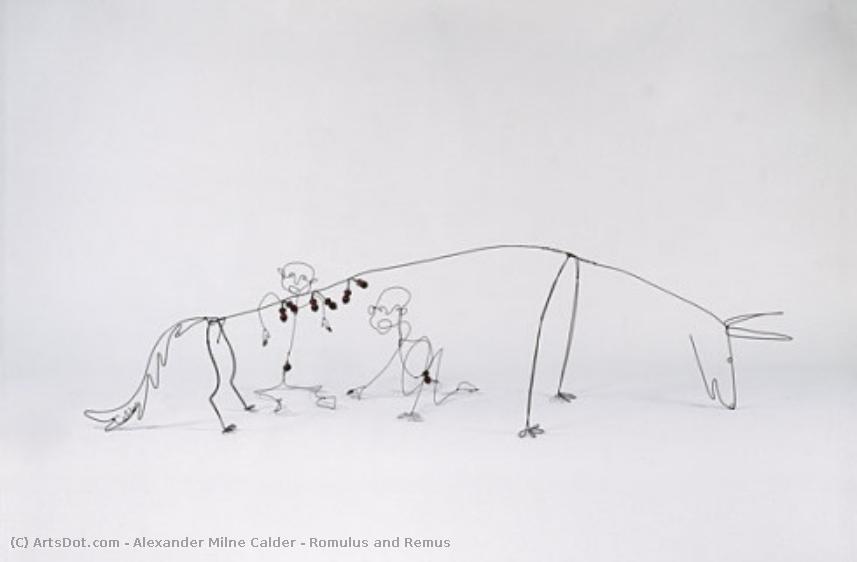
Romulus and Remus (1928) de Alexander Calder

Romulus and Remus

Alexander Milne Calder's "Romulus and Remus," crafted in 1928, isn’t merely a sculpture; it’s a distilled essence of myth rendered in delicate wire. This piece, a testament to the artist’s pioneering approach to three-dimensional form, transcends its subject matter – the legendary founders of Rome – to become a profound meditation on beginnings, brotherhood, and the very act of creation itself. Calder, deeply influenced by Constructivism and early Modernism, sought…

5
Red Lily Pads (Nénuphars rouges) (1956) de Alexander Calder

Red Lily Pads (Nénuphars rouges)

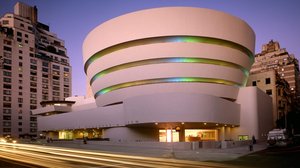
1956 · Acrylic · Muzeul Solomon R. Guggenheim, New York

Alexander Milne Calder's "Red Lily Pads (Nénuphars rouges)" isn’t merely a depiction of a serene pond; it’s an invitation to lose oneself in the delicate balance of form, color, and movement. Created in 1956, this captivating sculpture – captured through a masterful photograph – embodies Calder's signature approach: embracing chance and celebrating the ephemeral beauty of nature within a distinctly modern aesthetic. The piece resides within a contemporary architectural space,…

9
Black Sun (1953) de Alexander Calder

Black Sun

1953 · Acrylic On Canvas · Tate Britain, Londra

Alexander Milne Calder's "Black Sun," painted in 1953, isn’t merely a depiction of abstract forms; it’s an invitation to contemplate the interplay between chaos and order, darkness and light. Born in Aberdeen, Scotland, and later establishing himself as a pivotal figure in American sculpture alongside his son Alexander Stirling Calder and grandson Alexander ‘Sandy’ Calder, Milne Calder possessed a singular vision – one that sought to capture dynamic movement and…

10
Colored Spots (1970) de Alexander Calder

Colored Spots

1970 · Gouache

In Colored Spots, created in 1970, we encounter a moment of pure rhythmic energy. This gouache work moves away from the heavy permanence of sculpture to explore the lightness of color and shape. The composition is defined by a series of circles, varying in scale, that appear to drift across the surface. There is a specific tension in how these forms are placed; they do not sit static but seem…

Selecția pentru Alexander Calder continuă, de la 11 la 98

11Calder's Circus (1931) de Alexander CalderCalder's Circus1931 · Whitney Museum of American Art 12Red Sun (1968) de Alexander CalderRed Sun1968 · Des Moines Art Center 13Lobster Trap and Fish Tail (1939) de Alexander CalderLobster Trap and Fish Tail1939 · MoMA - Museum of Modern Art 14Violin (1960) de Alexander CalderViolin1960 15Untitled (400) de Alexander CalderUntitled (400) 16Untitled (2) de Alexander CalderUntitled (2) 17Untitled (362) de Alexander CalderUntitled (362) 18Sculpture in montreal de Alexander CalderSculpture in montreal 19Untitled (1937) de Alexander CalderUntitled1937 20Untitled (1948) de Alexander CalderUntitled1948 · The Phillips Collection 21Three Fingers (1944) de Alexander CalderThree Fingers1944 22The Antlers (1944) de Alexander CalderThe Antlers1944 23The Vine (1944) de Alexander CalderThe Vine1944 24The Fawn (1944) de Alexander CalderThe Fawn1944 25The Racket (1944) de Alexander CalderThe Racket1944 26The Flower (1944) de Alexander CalderThe Flower1944 27Yellow Tights (1945) de Alexander CalderYellow Tights1945 28Spiral Composition (1946) de Alexander CalderSpiral Composition1946 29Four Fish in Water (1947) de Alexander CalderFour Fish in Water1947 30The Acrobats (1944) de Alexander CalderThe Acrobats1944 31"Calder #1" Textile (Model No. 1-145) (1949) de Alexander Calder"Calder #1" Textile (Model No. 1-145)1949 · Metropolitan Museum of Art 32Antennae with Red and Blue Dots (1953) de Alexander CalderAntennae with Red and Blue Dots1953 33Reef Fringe (1953) de Alexander CalderReef Fringe1953 34Black Widow (1959) de Alexander CalderBlack Widow1959 35Chevrons Noir sur Rouge et Jaune (1960) de Alexander CalderChevrons Noir sur Rouge et Jaune1960 36Saucers (1965) de Alexander CalderSaucers1965 377 Circles Abstract (1966) de Alexander Calder7 Circles Abstract1966 38Grid with Symbols (1966) de Alexander CalderGrid with Symbols1966 39Like Two Discs Sculpture (1962) de Alexander CalderLike Two Discs Sculpture1962 40A R de Alexander CalderA R 41Red, Blue and Black Balls on a Yellow Ground (1967) de Alexander CalderRed, Blue and Black Balls on a Yellow Ground1967 · Dallas Museum of Art 42Untitled (1968) de Alexander CalderUntitled1968 · Buffalo AKG Art Museum 43Across the Orange Moons (1967) de Alexander CalderAcross the Orange Moons1967 · Smithsonian American Art Museum 44Model for Nenuphar (1968) de Alexander CalderModel for Nenuphar1968 45Nenuphar (1968) de Alexander CalderNenuphar1968 46Gwenfritz (1968) de Alexander CalderGwenfritz1968 47Across the Orange Moons (1967) de Alexander CalderAcross the Orange Moons1967 48Pryamids and Clouds (1970) de Alexander CalderPryamids and Clouds1970 49Maquette for Flamingo (1972) de Alexander CalderMaquette for Flamingo1972 50Spiral (1970) de Alexander CalderSpiral1970 51The Big Wheel (1970) de Alexander CalderThe Big Wheel1970 52Yellow, Red, Blue Flowers (1970) de Alexander CalderYellow, Red, Blue Flowers1970 53Tableau Noir (1970) de Alexander CalderTableau Noir1970 54Pyramids (1975) de Alexander CalderPyramids1975 55Crosshatch de Alexander CalderCrosshatch 56Fish at Sunrise (1974) de Alexander CalderFish at Sunrise1974 57Red Polygons de Alexander CalderRed PolygonsThe Phillips Collection 58Untitled (665) de Alexander CalderUntitled (665) 59Untitled (226) de Alexander CalderUntitled (226) 60Untitled (728) de Alexander CalderUntitled (728) 61Untitled (3) de Alexander CalderUntitled (3)New York Historical Society 62Untitled (227) de Alexander CalderUntitled (227) 63Untitled (230) de Alexander CalderUntitled (230) 64Untitled (391) de Alexander CalderUntitled (391) 65Untitled (208) de Alexander CalderUntitled (208) 66Untitled (121) de Alexander CalderUntitled (121) 67Untitled (778) de Alexander CalderUntitled (778) 68Untitled (527) de Alexander CalderUntitled (527) 69Untitled (4) de Alexander CalderUntitled (4) 70Untitled (890) de Alexander CalderUntitled (890) 71Untitled (647) de Alexander CalderUntitled (647) 72Untitled (282) de Alexander CalderUntitled (282) 73Untitled (318) de Alexander CalderUntitled (318) 74Flamingo de Alexander CalderFlamingo 75Untitled, (1976) de Alexander CalderUntitled, (1976) 76Untitled (5) de Alexander CalderUntitled (5) 77Hair Comb de Alexander CalderHair Comb 78Untitled (210) de Alexander CalderUntitled (210) 79Untitled (937) de Alexander CalderUntitled (937) 80Untitled (571) de Alexander CalderUntitled (571) 81Winter Landscape de Alexander CalderWinter Landscape 82Untitled de Alexander CalderUntitled 83The Boston Society of Architects de Alexander CalderThe Boston Society of Architects 84Red, Yellow, Blue de Alexander CalderRed, Yellow, Blue 85Baluster de Alexander CalderBaluster 86Pin de Alexander CalderPin 87Boney de Alexander CalderBoney 88Four wings, (1972) de Alexander CalderFour wings, (1972) 89Necklace de Alexander CalderNecklace 90Smoke Rings de Alexander CalderSmoke Rings 91Untitled (6) de Alexander CalderUntitled (6) 92Bracelet de Alexander CalderBracelet 93Trois Spirales de Alexander CalderTrois Spirales 94On Yellow de Alexander CalderOn Yellow 95Nemo de Alexander CalderNemoBiennale Internazionale dell'Antiquariato di Firenze 96Red, Yelloe and Blue Gongs de Alexander CalderRed, Yelloe and Blue GongsCa' Pesaro - Galeria Internațională de Artă Modernă 97Tache Bleu de Alexander CalderTache Bleu 98Red Mobile de Alexander CalderRed MobileGalleria Civica di Arte Moderna e Contemporanea Torino

Piesele celebre ale lui Alexander Calder, perioadă cu perioadă

Contemporary

3 lucrări în această listă

Subiectele care i-au captivat privirea lui Alexander Calder

Cele patru teme care revin cel mai des în aceste opere originale, fiecare având cel mai sublim exemplu.

Muzeele care păstrează originalele lui Alexander Calder

Cele 8 muzee care dețin cele mai multe dintre picturile de pe această pagină.

Muzeu Oraș Lucrări lui Alexander Calder Picturi din această listă
Biennale Internazionale dell'Antiquariato di Firenze, FlorențaBiennale Internazionale dell'Antiquariato di Firenze Florența 2 Untitled, Nemo
Muzeul Solomon R. Guggenheim, New YorkMuzeul Solomon R. Guggenheim New York 2 Romulus and Remus, Red Lily Pads (Nénuphars rouges)
The Phillips Collection, Washington, D.C.The Phillips Collection Washington, D.C. 2 Untitled, Red Polygons
Tate Britain, LondraTate Britain Londra 1 Black Sun
Whitney Museum of American Art, New YorkWhitney Museum of American Art New York 1 Calder's Circus
Des Moines Art Center, Des MoinesDes Moines Art Center Des Moines 1 Red Sun
MoMA - Museum of Modern Art, New York CityMoMA - Museum of Modern Art New York City 1 Lobster Trap and Fish Tail
Metropolitan Museum of Art, New YorkMetropolitan Museum of Art New York 1 "Calder #1" Textile (Model No. 1-145)

Alexander Calder deceniu cu deceniu: originalul care definește fiecare

Lucrări pe deceniu

Alege o deceniu pentru a descoperi opera originală care îl definește.

Întrebări ale colecționarilor despre picturile lui Alexander Calder

Pentru ce operă este cel mai cunoscut Alexander Calder?Află răspunsul

Untitled, Biennale Internazionale dell'Antiquariato di Firenze, Florența. Urmează Mobile (1932) și Romulus and Remus (1928).

Care sunt cele mai celebre zece picturi ale lui Alexander Calder?Află răspunsul

Untitled, Mobile, Romulus and Remus, Abstraction, Red Lily Pads (Nénuphars rouges), Orange and Black Composition, Puppet Man, Slanting Red Nose, Black Sun și Colored Spots. Clasamentul de mai sus indică anul și muzeul pentru fiecare piesă.

Câte picturi a lăsat Alexander Calder?Află răspunsul

Catalogul nostru cuprinde 98 lucrări ale lui Alexander Calder, datate între 1928 și 1975.

În ce muzee sunt expuse capodoperele lui Alexander Calder?Află răspunsul

În principal în Biennale Internazionale dell'Antiquariato di Firenze (Florența), Muzeul Solomon R. Guggenheim (New York) și The Phillips Collection (Washington, D.C.). Tabelul cu muzee de mai sus le enumeră pe toate.

În ce ani a pictat Alexander Calder cele mai cunoscute opere?Află răspunsul

În 1960s: 17 dintre cele 98 lucrări de pe această pagină au fost realizate atunci, fiind Abstraction dintre acestea.

Care sunt prima și ultima pictură originală celebră a lui Alexander Calder?Află răspunsul

Pe această pagină, cea mai veche lucrare datează din Romulus and Remus (1928), iar cea mai recentă este din Pyramids (1975).

Ce subiecte a ales cel mai des Alexander Calder?Află răspunsul

Sculpture (6), Geometric (5) și Geometric design (5), din cele 98 lucrări de pe această pagină.

Ce tehnică a folosit cel mai des Alexander Calder?Află răspunsul

Acrylic On Canvas, pentru 4 dintre cele 98 lucrări de pe această pagină.

Din ce mișcare artistică face parte Alexander Calder?Află răspunsul

Abstract expressionism, judecând după originalele de pe această pagină.

Ce lucrări ale lui Alexander Calder sunt expuse la Biennale Internazionale dell'Antiquariato di Firenze?Află răspunsul

Untitled și Nemo: Biennale Internazionale dell'Antiquariato di Firenze, Florența deține 2 dintre lucrările de pe această pagină.

Alexander Calder: viață și operă

Introduction to Alexander Milne Calder

Alexander Milne Calder (MILL-nee) was a Scottish American sculptor born in Aberdeen, Scotland, on August 23, 1846. He is best known for his architectural sculpture of Philadelphia City Hall and both his son, Alexander Stirling Calder, and grandson, Alexander ‘Sandy’ Calder, became significant sculptors in the 20th century. His artistic journey began with a formative influence from his father, John Rhind, a sculptor who instilled in him an early appreciation for stone carving during his childhood years. Calder attended the Royal Academy in Edinburgh where he honed his skills and studied alongside fellow artists, shaping his understanding of classical sculpture traditions. He subsequently moved to London and collaborated on monumental projects like the Albert Memorial, demonstrating his versatility and ambition as a craftsman.
  • Early Life and Education: Calder’s upbringing in Aberdeen exposed him to the craft of stone carving from a young age, profoundly impacting his artistic sensibilities.
  • Royal Academy Training: His studies at the Royal Academy provided foundational knowledge in sculpture techniques and broadened his artistic horizons.
  • London Collaborations: Calder’s involvement with the Albert Memorial showcased his ability to execute large-scale architectural sculptures, cementing his reputation as a skilled artist.

Career Highlights

Calder's professional life unfolded in stages marked by pivotal commissions and collaborations. He secured a prominent role on the construction of Philadelphia City Hall, undertaking an ambitious project that demanded meticulous attention to detail and involved crafting over 250 pieces—primarily marble and bronze—spanning two decades. This monumental endeavor solidified his position as one of Scotland’s foremost sculptors. Furthermore, he was entrusted with creating William Penn, a colossal statue honoring Pennsylvania's founder atop City Hall’s tower, showcasing his mastery of sculptural form and symbolism. Calder’s artistic vision extended beyond architectural projects; he produced striking sculptures like *Indian Figure*, reflecting his engagement with indigenous cultures and artistic experimentation.
  • Philadelphia City Hall Commission: Calder’s dedication to this project resulted in a masterpiece of architectural sculpture, demonstrating his commitment to ambitious artistic endeavors.
  • William Penn Statue: The creation of William Penn exemplifies Calder's ability to convey historical significance through monumental sculptural representations.
  • *Indian Figure*: This sculpture embodies Calder’s exploration of cultural influences and innovative artistic techniques.

Notable Sculptures

Calder’s oeuvre encompasses a diverse range of artworks characterized by both static and kinetic forms. Among his most celebrated creations are the illuminated portals of Philadelphia City Hall, adorned with colored lights—a testament to Calder's meticulous craftsmanship and artistic flair. He also produced *Spirale*, a towering sculpture commissioned for UNESCO headquarters in Paris, reflecting his engagement with contemporary art trends and architectural innovation. His final masterpiece, *Flamingo*, stands proudly at Chicago’s Federal Center Plaza, symbolizing Calder’s enduring legacy as one of America's most influential sculptors.
  • Philadelphia City Hall Portals: Calder’s incorporation of colored lights into these portals exemplifies his artistic attention to detail and visual impact.
  • *Spirale*: This monumental sculpture commissioned for UNESCO headquarters demonstrates Calder’s ability to create impactful artworks that resonate with global audiences.
  • *Flamingo*: Calder's final sculpture at Chicago’s Federal Center Plaza represents his enduring contribution to American art history.

Legacy and Influence

Alexander Milne Calder’s impact on the artistic landscape extends beyond his own creations. His son, Alexander Stirling Calder, and grandson, Alexander ‘Sandy’ Calder, followed in his footsteps as sculptors, perpetuating a lineage of artistic excellence. Calder's pioneering approach to sculpture—particularly his exploration of kinetic art and chance—inspired generations of artists and continues to influence contemporary sculptural practices. He remains revered for his unwavering dedication to artistic innovation and his profound contribution to the visual arts. “Theories may be all very well for the artist himself, but they shouldn't be broadcast to other people.”

Toate cele 98 de lucrări ale lui Alexander Calder →