Portretul lui Alexander Archipenko

Cele 43 cele mai faimoase picturi ale lui Alexander Archipenko, o selecție de galerie

Actualizat Octombrie 2026 · clasat în funcție de scorul nostru de popularitate (căutări, vizite și comenzi pentru fiecare operă) · 43 lucrări ale lui Alexander Archipenko în catalogul nostru

Pe scurt

Dintre toate originalele lăsate de Alexander Archipenko, cea mai faimoasă este The Boxers (La Lutte) (1914). Imediat după acestea urmează Mask (1911) și Woman combing her hair (1914). Catalogul nostru cuprinde 43 lucrări ale lui Alexander Archipenko; galeria a păstrat cele 43 pe care lumea le admiră cel mai mult, fiecare fiind prezentată împreună cu data, muzeul și povestea sa.

1887 – 1964, Kiev Cubism Cele mai multe lucrări: The Phillips Collection

Cele mai importante 10 picturi ale lui Alexander Archipenko: selecția galeriei

Selecția pentru Alexander Archipenko continuă, de la 11 la 43

Subiectele care i-au captivat privirea lui Alexander Archipenko

Cele patru teme care revin cel mai des în aceste opere originale, fiecare având cel mai sublim exemplu.

Muzeele care păstrează originalele lui Alexander Archipenko

Cele 3 muzee care dețin cele mai multe dintre picturile de pe această pagină.

Muzeu Oraș Lucrări lui Alexander Archipenko Picturi din această listă
The Phillips Collection, Washington, D.C.The Phillips Collection Washington, D.C. 1 Standing Woman
Art Gallery of Hamilton, HamiltonArt Gallery of Hamilton Hamilton 1 Woman with Fan
Oldenburg State Museum for Art and Cultural History, OldenburgOldenburg State Museum for Art and Cultural History Oldenburg 1 Geometry

Alexander Archipenko deceniu cu deceniu: originalul care definește fiecare

Lucrări pe deceniu

Alege o deceniu pentru a descoperi opera originală care îl definește.

Întrebări ale colecționarilor despre picturile lui Alexander Archipenko

Pentru ce operă este cel mai cunoscut Alexander Archipenko?Află răspunsul

The Boxers (La Lutte) (1914). Urmează Mask (1911) și Woman combing her hair (1914).

Ce vârstă avea Alexander Archipenko când a fost creată The Boxers (La Lutte)?Află răspunsul

27 ani: The Boxers (La Lutte) datează din 1914, iar Alexander Archipenko s-a născut în 1887.

Care sunt cele mai celebre zece picturi ale lui Alexander Archipenko?Află răspunsul

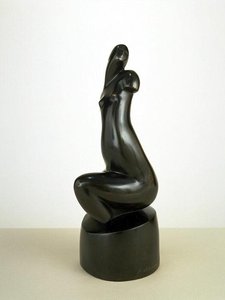
The Boxers (La Lutte), Mask, Woman combing her hair, Standing Woman, Carafe, The Past, Nude, Seated Female Nude (Black Torso), Sorrow și The Gondolier. Clasamentul de mai sus indică anul și muzeul pentru fiecare piesă.

Câte picturi a lăsat Alexander Archipenko?Află răspunsul

Catalogul nostru cuprinde 43 lucrări ale lui Alexander Archipenko, datate între 1909 și 1963.

În ce muzee sunt expuse capodoperele lui Alexander Archipenko?Află răspunsul

În principal în The Phillips Collection (Washington, D.C.), Art Gallery of Hamilton (Hamilton) și Oldenburg State Museum for Art and Cultural History (Oldenburg). Tabelul cu muzee de mai sus le enumeră pe toate.

În ce ani a pictat Alexander Archipenko cele mai cunoscute opere?Află răspunsul

În 1910s: 12 dintre cele 43 lucrări de pe această pagină au fost realizate atunci, fiind The Boxers (La Lutte) dintre acestea.

Care sunt prima și ultima pictură originală celebră a lui Alexander Archipenko?Află răspunsul

Pe această pagină, cea mai veche lucrare datează din Sorrow (1909), iar cea mai recentă este din King Solomon (1963).

Ce subiecte a ales cel mai des Alexander Archipenko?Află răspunsul

Women (11), Nudes (7) și Royalty (3), din cele 43 lucrări de pe această pagină.

Din ce mișcare artistică face parte Alexander Archipenko?Află răspunsul

Cubism, judecând după originalele de pe această pagină.
Alexander Archipenko: viață și operă

A Pioneer of Cubist Sculpture: The Life and Art of Alexander Archipenko

Alexander Archipenko, a name synonymous with the radical transformation of sculpture in the early 20th century, was born in Kyiv, Ukraine, on May 30, 1887. His life’s journey, marked by artistic evolution and profound cultural shifts, ultimately led him to become one of America's most influential sculptors. From his formative years amidst the vibrant artistic scene of his native city to his eventual embrace of American modernism, Archipenko’s career was a testament to his unwavering commitment to pushing the boundaries of artistic expression. His legacy rests not only in the iconic sculptures he created but also in the revolutionary ideas he brought forth about form, space, and the very nature of three-dimensional art.

Early Years and Artistic Training

Archipenko’s early life was steeped in a rich cultural environment. He received his initial artistic training at the Kyiv Art School from 1902 to 1905, where he honed his skills in painting and sculpture. This foundational period exposed him to traditional Ukrainian art forms while simultaneously nurturing an inquisitive spirit that yearned for something beyond convention. A pivotal moment arrived in 1906 when he began studying under Serhiy Svetoslavsky, a renowned sculptor known for his dynamic and expressive works. This mentorship proved crucial, providing Archipenko with invaluable insights into the technical aspects of sculpting while also encouraging him to develop his own unique artistic voice. His early exhibitions, alongside Alexander Bogomazov in 1906, signaled a nascent independence and a willingness to challenge established norms within the Ukrainian art community. It was this spirit of experimentation that would define much of his subsequent career.

Parisian Avant-Garde and Cubist Influence

The year 1908 marked a decisive turning point in Archipenko’s artistic trajectory: his relocation to Paris, the epicenter of European avant-garde movements. Rejecting the rigid structures of the École des Beaux-Arts, he immersed himself in the bohemian circles surrounding La Ruche, a collective of artists dedicated to exploring new forms of expression. This environment exposed him to a diverse range of influences – Fernand Léger’s geometric abstraction, Vladimir Baranoff-Rossiné’s dynamic sculptures, and the revolutionary ideas circulating within the broader Cubist movement. It was in Paris that Archipenko truly began to develop his signature style, characterized by a deliberate deconstruction of form and an exploration of negative space. He embraced the fragmented perspectives championed by Picasso and Braque, but rather than simply replicating these techniques in three dimensions, he sought to fundamentally redefine sculpture itself.

Sculpting Space: The Innovation of Negative Space

Archipenko’s artistic vision was profoundly shaped by his groundbreaking approach to *negative space*. Unlike traditional sculptors who focused on solid mass and volume, Archipenko recognized the inherent power of emptiness – voids that could become integral components of a sculpture's composition. This radical concept challenged the very definition of form, suggesting that a work of art could be defined as much by what wasn’t there as by what was. He masterfully manipulated convex and concave surfaces, creating dynamic interplay of light and shadow, imbuing his works with an unprecedented sense of movement and energy. This innovative spirit led to the creation of “sculpto-paintings,” where he boldly incorporated painted color onto intersecting planes, blurring the lines between sculpture and painting – a testament to his desire to break down traditional artistic boundaries.

Major Works and Lasting Contributions

Throughout the 1910s, Archipenko produced a series of seminal works that cemented his reputation as a leading figure in modern sculpture. *Family Life (1912)*, an early example of his Cubist approach to the human form, showcases fragmented planes and abstracted figures, capturing a sense of domestic intimacy through geometric deconstruction. *Walking Woman (1912)* exemplifies his innovative use of voids, creating a dynamic impression of movement as if the figure is perpetually in motion. *Boxing Match (1913)*, with its abstract cubic and ovoid forms, powerfully conveys the energy and brutality of the sport. The “Medrano” series, inspired by the vibrant world of the circus, stands out for its unconventional use of materials – glass, metal, and painted wood – creating a collage-like effect that further blurred the boundaries between sculpture and other art forms. Later in his career, Archipenko undertook monumental projects like the *King Solomon Statue (University of Pennsylvania)*, demonstrating his continued exploration of abstract forms and geometric principles on a grand scale. These works weren’t merely aesthetic statements; they were intellectual explorations into the nature of perception and representation.

Emigration to America and Continued Innovation

In 1923, Archipenko emigrated to the United States, becoming a citizen in 1928. This move marked a new chapter in his artistic career, allowing him to engage with the burgeoning American art scene and continue to experiment with innovative techniques. He held teaching positions at various institutions, including the New Bauhaus, further disseminating his artistic philosophy. His election to the American Academy of Arts and Letters in 1962 served as a formal recognition of his significant contribution to art history. Archipenko’s legacy extends beyond specific artworks; it lies in his unwavering commitment to innovation and his willingness to question fundamental assumptions about what sculpture could be. He left behind not just a body of work, but a new language for artistic expression – one that continues to resonate with artists and audiences today.

Toate cele 43 de lucrări ale lui Alexander Archipenko →