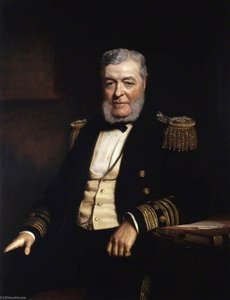
Portretul lui Stephen Pearce

Cele 56 cele mai faimoase picturi ale lui Stephen Pearce, fiecare unică în felul ei

Actualizat Octombrie 2026 · clasat în funcție de scorul nostru de popularitate (căutări, vizite și comenzi pentru fiecare operă) · 57 lucrări ale lui Stephen Pearce în catalogul nostru

Pe scurt

Alexander Stewart (1854) este pictură lui Stephen Pearce care atrage cele mai multe priviri. După aceasta, privirea se îndreaptă către Robert Brown (1773–1858), DCL, LLD, FRS, PLS (1856) și "Antler" with Grey Petty (1840). Dintre cele 57 opere ale lui Stephen Pearce din catalogul nostru, acestea 56 sunt cele mai celebre, fiecare fiind o piesă unică, prezentată împreună cu anul creării, muzeul deținător și motivul pentru care aceasta rămâne memorabilă.

1819 – 1904, Londra Academic realism Cele mai multe lucrări: National Portrait Gallery

Cele mai importante 10 picturi ale lui Stephen Pearce, prin ochii galeriei

1
Alexander Stewart (1854) de Stephen Pearce

Alexander Stewart

1854 · Oil On Canvas

Stephen Pearce painted Alexander Stewart in 1854. This oil on canvas portrait measures 38 x 32 cm and is currently held in the collection of the National Portrait Gallery (United States).

2
Robert Brown (1773–1858), DCL, LLD, FRS, PLS (1856) de Stephen Pearce

Robert Brown (1773–1858), DCL, LLD, FRS, PLS

1856 · Oil On Canvas · Colecția Herbariului, Richmond

The man stares directly through the veil of years, his gaze meeting the viewer with a heavy, unyielding seriousness. He sits in a space where the background has dissolved into a deep, indistinct darkness, leaving nothing to distract from the weight of his presence. This is Robert Brown, captured in a moment of quiet, intellectual intensity. The light falls from above and slightly to the left, carving out the contours…

Păiți celebrele picturi ale lui Stephen Pearce, de la numărul 11 la 56

11Robert McCormick (1856) de Stephen PearceRobert McCormick1856 · National Portrait Gallery 12Stephen Pearce (1860) de Stephen PearceStephen Pearce1860 · National Portrait Gallery 13Sir Horatio Thomas Austin (1860) de Stephen PearceSir Horatio Thomas Austin1860 · National Portrait Gallery 14Rochfort Maguire (1860) de Stephen PearceRochfort Maguire1860 · National Portrait Gallery 15Sir (Francis) Leopold McClintock (1859) de Stephen PearceSir (Francis) Leopold McClintock1859 · National Portrait Gallery 16HRH Henry Frederick (1745–1790), 1st Duke of Cumberland and Strathearn (1884) de Stephen PearceHRH Henry Frederick (1745–1790), 1st Duke of Cumberland and Strathearn1884 · The Library And Museum of Freemasonry 17John Barrow (1764–1848) (1846) de Stephen PearceJohn Barrow (1764–1848)1846 · Royal Society 18William Philip (1835–1897), 4th Earl of Sefton at Ashdown Park (1864) de Stephen PearceWilliam Philip (1835–1897), 4th Earl of Sefton at Ashdown Park1864 · Walker Art Gallery 19Francis (1754–1826), 2nd Earl of Moira, afterwards 1st Marquess of Hastings, KG (copy after Martin Archer Shee) (1884) de Stephen PearceFrancis (1754–1826), 2nd Earl of Moira, afterwards 1st Marquess of Hastings, KG (copy after Martin Archer Shee)1884 · The Library And Museum of Freemasonry 20Sherard Osborn (1847) de Stephen PearceSherard Osborn1847 · National Portrait Gallery 21George Payne Rainsford James (1846) de Stephen PearceGeorge Payne Rainsford James1846 · National Portrait Gallery 22Sir Francis Beaufort (1850) de Stephen PearceSir Francis Beaufort1850 · National Portrait Gallery 23Sir James Clark Ross (1850) de Stephen PearceSir James Clark Ross1850 · National Portrait Gallery 24John Rae (1813–1893), Arctic Explorer (1853) de Stephen PearceJohn Rae (1813–1893), Arctic Explorer1853 · Galeria Națională a Scottei 25Frederick William Beechey (1850) de Stephen PearceFrederick William Beechey1850 · National Portrait Gallery 26William Penny (1853) de Stephen PearceWilliam Penny1853 · National Portrait Gallery 27Joseph René Bellot (1851) de Stephen PearceJoseph René Bellot1851 · National Portrait Gallery 28William Alexander Baillie Hamilton (1850) de Stephen PearceWilliam Alexander Baillie Hamilton1850 · National Portrait Gallery 29Sir John Richardson (1850) de Stephen PearceSir John Richardson1850 · National Portrait Gallery 30Sir Richard Collinson (1855) de Stephen PearceSir Richard Collinson1855 · National Portrait Gallery 31Sir Edward Sabine (1850) de Stephen PearceSir Edward Sabine1850 · National Portrait Gallery 32Somerset Richard Lowry Corry (1835–1913), 4th Earl Belmore (1857) de Stephen PearceSomerset Richard Lowry Corry (1835–1913), 4th Earl Belmore1857 33David Walker (1860) de Stephen PearceDavid Walker1860 · National Portrait Gallery 34Sir Henry Kellett (1856) de Stephen PearceSir Henry Kellett1856 · National Portrait Gallery 35Thomas Edward Laws Moore (1860) de Stephen PearceThomas Edward Laws Moore1860 · National Portrait Gallery 36Sir (Francis) Leopold McClintock (1859) de Stephen PearceSir (Francis) Leopold McClintock1859 · National Portrait Gallery 37Sir Roderick Impey Murchison, 1st Bt (1856) de Stephen PearceSir Roderick Impey Murchison, 1st Bt1856 · National Portrait Gallery 38Rear Admiral Sir Francis Beaufort (1774–1857) (1856) de Stephen PearceRear Admiral Sir Francis Beaufort (1774–1857)1856 · National Maritime Museum 39William Robert Hobson (1860) de Stephen PearceWilliam Robert Hobson1860 · National Portrait Gallery 40Sir Edward Belcher (1859) de Stephen PearceSir Edward Belcher1859 · National Portrait Gallery 41Sir Erasmus Ommanney (1861) de Stephen PearceSir Erasmus Ommanney1861 · National Portrait Gallery 42Daniel Robert Scratton of Prittlewell Priory, Essex (1867) de Stephen PearceDaniel Robert Scratton of Prittlewell Priory, Essex1867 43William Seppings, Mayor (1848) (1869) de Stephen PearceWilliam Seppings, Mayor (1848)1869 44Lord Kesteven on a Horse, with Hounds (1871) de Stephen PearceLord Kesteven on a Horse, with Hounds1871 · Usher Gallery 45Captain Sir James Clark Ross (1871) de Stephen PearceCaptain Sir James Clark Ross1871 · National Maritime Museum 46Sir George Henry Richards (1865) de Stephen PearceSir George Henry Richards1865 · National Portrait Gallery 47Sir George Strong Nares (1877) de Stephen PearceSir George Strong Nares1877 · National Portrait Gallery 48Edward Sabine (1788–1883) (1855) de Stephen PearceEdward Sabine (1788–1883)1855 · Royal Society 49Sir Allen William Young (1876) de Stephen PearceSir Allen William Young1876 · National Portrait Gallery 50Philip Wykeham Martin, MP (1880) de Stephen PearcePhilip Wykeham Martin, MP1880 · Guildhall Museum 51Sir Erasmus Wilson (1809–1884) (1882) de Stephen PearceSir Erasmus Wilson (1809–1884)1882 52Admiral John Lort Stokes (1812–1885) (1879) de Stephen PearceAdmiral John Lort Stokes (1812–1885)1879 · National Maritime Museum 53Benjamin Leigh Smith (1886) de Stephen PearceBenjamin Leigh Smith1886 · National Portrait Gallery 54John Franklin (1786–1847) (after Joseph Mathias Negelen) de Stephen PearceJohn Franklin (1786–1847) (after Joseph Mathias Negelen)Scott Polar Research Institute 55Sir Edward Augustus Inglefield (copy after an original of c.1853 by the artist) de Stephen PearceSir Edward Augustus Inglefield (copy after an original of c.1853 by the artist) 56The Arctic Council planning a search for Sir John Franklin (1851) de Stephen PearceThe Arctic Council planning a search for Sir John Franklin1851 · National Portrait Gallery

Subiectele care i-au captivat privirea lui Stephen Pearce

Cele patru teme care revin cel mai des în aceste opere originale, fiecare având cel mai sublim exemplu.

Muzeele care păstrează originalele lui Stephen Pearce

Cele 8 muzee care dețin cele mai multe dintre picturile de pe această pagină.

Muzee Oraș Lucrări lui Stephen Pearce Picturi din această listă
National Portrait Gallery, LondraNational Portrait Gallery Londra 35 John Rae, Sir Robert McClure, William Kennedy
National Maritime Museum, LondraNational Maritime Museum Londra 3 Rear Admiral Sir Francis Beaufort (1774–1857), Captain Sir James Clark Ross, Admiral John Lort Stokes (1812–1885)
The Library And Museum of Freemasonry, LondonThe Library And Museum of Freemasonry London 2 HRH Henry Frederick (1745–1790), 1st Duke of Cumberland and Strathearn, Francis (1754–1826), 2nd Earl of Moira, afterwards 1st Marquess of Hastings, KG (copy after Martin Archer Shee)
Royal Society, LondraRoyal Society Londra 2 John Barrow (1764–1848), Edward Sabine (1788–1883)
Colecția Herbariului, RichmondColecția Herbariului Richmond 1 Robert Brown (1773–1858), DCL, LLD, FRS, PLS
Colecția Regală, LondraColecția Regală Londra 1 "Antler" with Grey Petty
Walker Art Gallery, LiverpoolWalker Art Gallery Liverpool 1 William Philip (1835–1897), 4th Earl of Sefton at Ashdown Park
Galeria Națională a Scottei, EdinburghGaleria Națională a Scottei Edinburgh 1 John Rae (1813–1893), Arctic Explorer

Stephen Pearce de-a lungul deceniilor: o piesă unică pentru fiecare

Lucrări pe deceniu

Alege o deceniu pentru a descoperi opera originală care îl definește.

Picturile lui Stephen Pearce: întrebări pentru galerie

Care este cea mai celebră operă a lui Stephen Pearce?Află răspunsul

Alexander Stewart (1854). Urmează Robert Brown (1773–1858), DCL, LLD, FRS, PLS (1856) și "Antler" with Grey Petty (1840).

La ce vârstă a creat Stephen Pearce Alexander Stewart?Află răspunsul

35 ani: Alexander Stewart datează din 1854, iar Stephen Pearce s-a născut în 1819.

Care sunt cele mai celebre zece picturi ale lui Stephen Pearce?Află răspunsul

Alexander Stewart, Robert Brown (1773–1858), DCL, LLD, FRS, PLS, "Antler" with Grey Petty, John Rae, Sir Robert McClure, William Kennedy, Sir Edward Augustus Inglefield, Sir William Edward Parry, John Barrow și Emily Louise Shepherd (1814–1904), Countess Belmore. Clasamentul de mai sus indică anul și muzeul pentru fiecare piesă.

Câte lucrări ale lui Stephen Pearce sunt cunoscute?Află răspunsul

Catalogul nostru cuprinde 57 lucrări ale lui Stephen Pearce, datate între 1840 și 1886.

Unde pot fi vizualizate originalele celor mai faimoși Stephen Pearce?Află răspunsul

În principal în National Portrait Gallery (Londra), National Maritime Museum (Londra) și The Library And Museum of Freemasonry (London). Tabelul cu muzee de mai sus le enumeră pe toate.

În ce perioadă a creat Stephen Pearce cele mai cunoscute picturi?Află răspunsul

În 1850s: 29 dintre cele 56 lucrări de pe această pagină au fost realizate atunci, fiind Alexander Stewart dintre acestea.

Care este cea mai veche și care este cea mai recentă pictură a lui Stephen Pearce?Află răspunsul

Pe această pagină, cea mai veche lucrare datează din "Antler" with Grey Petty (1840), iar cea mai recentă este din Benjamin Leigh Smith (1886).

Ce teme prefera Stephen Pearce?Află răspunsul

Victorian era (9), Formal attire (8) și Portrait (8), din cele 56 lucrări de pe această pagină.

Cu ce materiale a pictat cel mai des Stephen Pearce?Află răspunsul

Oil On Canvas, pentru 5 dintre cele 56 lucrări de pe această pagină.

Din ce curent artistic face parte opera lui Stephen Pearce?Află răspunsul

Academic realism, judecând după originalele de pe această pagină.

Ce originale de Stephen Pearce pot vedea la National Portrait Gallery?Află răspunsul

John Rae, Sir Robert McClure și William Kennedy: National Portrait Gallery, Londra deține 35 dintre lucrările de pe această pagină.

Stephen Pearce: un portret al artistului

Early Life and Artistic Foundations

Stephen Pearce, born in the heart of London on November 16, 1819, at King’s Mews, Charing Cross, entered a world subtly interwoven with England’s regal fabric. As the sole child of Stephen Pearce, a clerk within the Department of the Master of Horse, and Ann Whittington, his upbringing was steeped in service to the Crown—a connection that would profoundly resonate throughout his artistic journey. This proximity instilled not merely decorum but access to subjects that defined much of his early career: the magnificent horses of the Royal Mews. Formal training commenced at Sass’s Academy in Charlotte Street, a respected institution for aspiring artists, followed by rigorous study at the prestigious Royal Academy Schools beginning in 1840. A pivotal moment arrived in 1841 when he became a pupil of Sir Martin Archer Shee, a prominent portraitist whose influence shaped Pearce's approach to capturing likeness and character—a meticulous technique rooted in observation and anatomical precision. These formative years instilled within him not merely artistic skill but an understanding of the visual language necessary for conveying psychological depth and emotional nuance.

A Versatile Career: Portraiture, Equine Art, and Literary Circles

Pearce’s professional life unfolded across decades, marked by remarkable versatility. From 1842 to 1846, he served as an amanuensis—a secretary—to the celebrated novelist Charles Lever. This period offered unique immersion into literary circles, broadening his understanding of narrative and character development – skills that subtly informed the psychological depth of his portraiture. His initial artistic successes centered on paintings of favored horses within the Royal Mews, exhibited at the Royal Academy in 1839 and again in 1841, establishing him as a skilled animalier. He possessed an innate ability to depict animals with remarkable realism—capturing their musculature, posture, and expressions with painstaking detail. A sojourn to Italy around 1849 proved transformative, refining his aesthetic sensibilities before he resumed regular contributions to Burlington House exhibitions upon his return to England. His style underwent noticeable evolution; early works displayed metronomic precision with pronounced shadowing, reflecting the influence of academic tradition—a deliberate choice aimed at achieving a harmonious balance between form and substance. He wasn’t confined by genre, moving seamlessly between capturing the nobility of a prized stallion and the nuanced personality of a prominent Victorian gentleman.

The Arctic Chronicles: A Defining Commission

It was through a unique confluence of artistic talent and historical circumstance that Pearce truly distinguished himself: his involvement in documenting the era’s fervent interest in Arctic exploration. Perhaps most notable is “The Arctic Council discussing a plan of search for Sir John Franklin” (1851), commissioned by Colonel John Barrow—a monumental undertaking that cemented his reputation as one of Britain's foremost animal painters. This large-scale painting, depicting leading figures strategizing the rescue mission for the ill-fated explorer Sir John Franklin, captured the public’s imagination and served as a poignant reminder of the perils and heroism inherent in polar expeditions. The work is not merely a historical record but a carefully constructed drama, each figure rendered with individual character and contributing to the overall sense of anxious deliberation—a testament to Pearce's ability to translate narrative into visual form. Beyond this monumental commission, Pearce became renowned for his equestrian portraits, particularly those of masters of foxhounds, harriers, and prominent horse owners like the Earl of Craven and members of families such as the Dukes of Bedford. “Coursing at Ashdown Park” (1869), a sprawling landscape featuring approximately sixty equestrian figures, stands as a testament to his skill in depicting both human subjects and their noble steeds within a dynamic setting—a masterful blend of observation and artistic imagination. He also created numerous half-length portraits of Arctic explorers—Sir Robert McClure, Sir Leopold McClintock, Captain Penny—commissioned by Barrow and Lady Franklin, many residing today in the National Portrait Gallery.

Legacy and Historical Significance

Pearce’s artistic vision was shaped by 19th-century British art's prevailing currents. His training under Sir Martin Archer Shee firmly placed him within the tradition of formal, academic portraiture that dominated the era—a deliberate adherence to established conventions reflecting a deep respect for artistic heritage. The enduring popularity of equestrian subjects reflected a broader cultural fascination with horses and horsemanship, particularly among the aristocracy and landed gentry—a subject matter he embraced wholeheartedly throughout his career. His ability to capture accurate likenesses, combined with sensitivity and precision in portraying human figures and animals, earned him considerable acclaim within artistic circles—establishing him as a respected figure amongst his peers. The National Portrait Gallery holds an impressive collection of forty-four portraits by Pearce, including two self-portraits—a rare glimpse into the artist’s own introspection and creative process. His work provides invaluable insights into Victorian society, documenting the lives of prominent individuals and capturing the spirit of exploration that characterized the age—a chronicler of his time, translating social status, scientific endeavor, and personal narratives onto canvas.