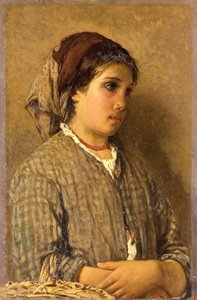
Portretul lui Silvestro Lega

Cele 65 cele mai faimoase picturi ale lui Silvestro Lega, fiecare unică în felul ei

Actualizat Noiembrie 2026 · clasat în funcție de scorul nostru de popularitate (căutări, vizite și comenzi pentru fiecare operă) · 65 lucrări ale lui Silvestro Lega în catalogul nostru

Pe scurt

Portrait of Giuseppe Garibaldi (1861) este pictură lui Silvestro Lega care atrage cele mai multe priviri. După aceasta, privirea se îndreaptă către Head of the Virgin Mary from Perugino (1845) și Portrait of his brother Ettore as a child (1855). Dintre cele 65 opere ale lui Silvestro Lega din catalogul nostru, acestea 65 sunt cele mai celebre, fiecare fiind o piesă unică, prezentată împreună cu anul creării, muzeul deținător și motivul pentru care aceasta rămâne memorabilă.

1826 – 1895, Modigliana Realism Cele mai multe lucrări: Palazzo Pitti

Cele mai importante 10 picturi ale lui Silvestro Lega, prin ochii galeriei

1
Portrait of Giuseppe Garibaldi (1861) de Silvestro Lega

Portrait of Giuseppe Garibaldi

1861 · Oil

Created in 1861, the portrait emerges from a period of intense political movement in Italy. The subject's attire and the presence of the rifle suggest a connection to the military campaigns and the rugged lifestyle associated with the era's political shifts. The painting reflects the 19th-century movement toward realism, prioritizing direct observation and the accurate depiction of the human form within a natural setting.

2
Head of the Virgin Mary from Perugino (1845) de Silvestro Lega

Head of the Virgin Mary from Perugino

1845 · Chalk

The artwork titled Head of the Virgin Mary from Perugino is a portrait created by the artist Silvestro Lega. This depiction focuses on the subject of the Virgin Mary, presented in a close-up view that emphasizes the head and shoulders. The work is dated to about 1845.

3
Portrait of his brother Ettore as a child (1855) de Silvestro Lega

Portrait of his brother Ettore as a child

1855 · Oil On Canvas · Pinacoteca di Brera, Milano

A young boy sits in a moment of profound stillness, his gaze meeting the viewer with a calm, somewhat melancholic expression. He is positioned slightly off-center, a bust-length figure that feels immediate and intimate. The soft light, descending from the upper left, brushes against the contours of his face, casting gentle shadows that grant his features a palpable three-dimensional volume. There is a sense of weight to his presence, as…

4
Among the flowers in the garden (1862) de Silvestro Lega

Among the flowers in the garden

1862 · Oil

The scene unfolds within the quiet confines of Among the flowers in the garden, an oil on canvas that captures a fleeting moment of stillness. Silvestro Lega, a significant figure in 19th-century Italian art, brings this garden to life through his careful observation of the natural world. The work dates to about 1862, a period when the artist's hand began to move toward a more profound engagement with the reality…

5
Camp of Zouaves (1861) de Silvestro Lega

Camp of Zouaves

1861 · Charcoal

In "Camp of Zouaves" by Silvestro Lega, the composition follows a horizontal format that emphasizes the breadth of the military encampment. A central tent dominates the middle ground, acting as a focal point for the surrounding activity. To the left, a soldier blowing a horn provides a strong vertical element that draws the eye through the scene. The foreground is characterized by rough terrain and various scattered details, establishing a…

6
The water wheel [sketch] (1863) de Silvestro Lega

The water wheel [sketch]

1863 · Charcoal

In The water wheel [sketch], Silvestro Lega organizes a horizontally oriented scene that emphasizes the structural length of the machinery. The water wheel dominates the central portion of the composition, acting as the primary anchor for the viewer's eye. A lone figure is positioned near the wheel, providing a sense of scale and human presence within the rural setting. This arrangement focuses the viewer's attention on the intersection of mechanical…

8
Reading (1864) de Silvestro Lega

Reading

1864 · Oil

Two figures sit anchored in a moment of stillness. They are caught in the soft, diffused light of a private afternoon, their bodies turned toward one another in a shared, silent communion. One figure wears a dress of pale blue, a cool note against the warmth of the surrounding world. They are engaged in the simple act of reading, a gesture that pulls the viewer into their intimate circle. The…

9
The reading (1867) de Silvestro Lega

The reading

The Reading by Silvestro Lega is an oil painting on canvas created about 1867. The work depicts a young woman seated upon a wooden bench. She is positioned in a state of quiet focus, her attention directed toward a book held in her hands. The scene is set against a backdrop of textured walls and a window with closed shutters, creating a contained, domestic environment.

10
The painter (1869) de Silvestro Lega

The painter

1869 · Oil On Canvas

In The painter, Silvestro Lega presents a young woman positioned slightly off-center within the confines of her studio. The vertical composition emphasizes her presence, focusing the viewer's attention on her figure as she gazes downward toward a painter's palette held in her hands. This downward gaze suggests a moment of quiet contemplation or intense focus on her craft. At the base of the scene, a rug provides a grounding element…

Păiți celebrele picturi ale lui Silvestro Lega, de la numărul 11 la 65

11The Dying Mazzini (Mazzini morente) (1873) de Silvestro LegaThe Dying Mazzini (Mazzini morente)1873 · Rhode Island School of Design Museum of Art 12Woman sitting by a window sewing (1872) de Silvestro LegaWoman sitting by a window sewing1872 13In the garden (1883) de Silvestro LegaIn the garden1883 14Pitcher painted with bust of a young woman and floral motifs (1885) de Silvestro LegaPitcher painted with bust of a young woman and floral motifs1885 15Man writing (1885) de Silvestro LegaMan writing1885 16Portrait of a peasant woman (1890) de Silvestro LegaPortrait of a peasant woman1890 17Head of a boy (1890) de Silvestro LegaHead of a boy1890 18Woman from Gabbro (1888) de Silvestro LegaWoman from Gabbro1888 19Bust of a young girl (1887) de Silvestro LegaBust of a young girl1887 20Peasant women from Gabbro (1889) de Silvestro LegaPeasant women from Gabbro1889 21Peasant woman at rest (1890) de Silvestro LegaPeasant woman at rest1890 22La visita (1868) de Silvestro LegaLa visita1868 · Galleria Nazionale d'Arte Moderna 23Bust of a peasant woman (1873) de Silvestro LegaBust of a peasant woman1873 · Palazzo Pitti 24Villa Batelli along the Affrico river (1863) de Silvestro LegaVilla Batelli along the Affrico river1863 25Il primo dolore (1863) de Silvestro LegaIl primo dolore1863 26Landscape (1860) de Silvestro LegaLandscape1860 27Portrait of a Child (1861) de Silvestro LegaPortrait of a Child1861 28Farmhouses (1864) de Silvestro LegaFarmhouses1864 29Courtyard entrance (1864) de Silvestro LegaCourtyard entrance1864 30Little country church (1874) de Silvestro LegaLittle country church1874 31Woman from Gabbro (1885) de Silvestro LegaWoman from Gabbro1885 32The house of Don Giovanni Verità (1885) de Silvestro LegaThe house of Don Giovanni Verità1885 33The hut on the farm (1880) de Silvestro LegaThe hut on the farm1880 34Garden in Bellariva (1884) de Silvestro LegaGarden in Bellariva1884 35Farmhouse with haystack (1880) de Silvestro LegaFarmhouse with haystack1880 36Country Girl Leaning against a Ladder (1885) de Silvestro LegaCountry Girl Leaning against a Ladder1885 37Farmhouse and haystacks (1888) de Silvestro LegaFarmhouse and haystacks1888 38Church of San Michele in Crespina (1886) de Silvestro LegaChurch of San Michele in Crespina1886 39Pagliai al sole (1890) de Silvestro LegaPagliai al sole1890 40Figure of a woman de Silvestro LegaFigure of a woman 41Seated man de Silvestro LegaSeated man 42Young peasant woman de Silvestro LegaYoung peasant woman 43The maid of the Bandini house de Silvestro LegaThe maid of the Bandini house 44Don Verità de Silvestro LegaDon Verità 45The spinner de Silvestro LegaThe spinner 46Young peasant woman de Silvestro LegaYoung peasant woman 47Peasant woman from Gabbro de Silvestro LegaPeasant woman from Gabbro 48The letter de Silvestro LegaThe letter 49Don Giovanni de Silvestro LegaDon Giovanni 50The stitcher of lace trimmings for women's dresses de Silvestro LegaThe stitcher of lace trimmings for women's dresses 51The Bandini sisters (1890) de Silvestro LegaThe Bandini sisters1890 · Museum of Modern and Contemporary Art of Trento and Rovereto 52The owner of the farm (1887) de Silvestro LegaThe owner of the farm1887 · Palazzo Pitti 53Ritorno dei bersaglieri italiani da una ricognizione (1861) de Silvestro LegaRitorno dei bersaglieri italiani da una ricognizione1861 · Palazzo Pitti 54Head of a woman (1885) de Silvestro LegaHead of a woman1885 · Pinacoteca di Brera 55Self-portrait (1861) de Silvestro LegaSelf-portrait1861 · Galleria degli Uffizi 56In the villa (1880) de Silvestro LegaIn the villa1880 · Palazzo Pitti 57A Walk in the Garden (1870) de Silvestro LegaA Walk in the Garden1870 58Woman with ivy (1887) de Silvestro LegaWoman with ivy1887 59The pergola (1864) de Silvestro LegaThe pergola1864 · Palazzo Pitti 60Signora al Pianoforte de Silvestro LegaSignora al Pianoforte 61The courier's horse de Silvestro LegaThe courier's horse 62Small village with battlements de Silvestro LegaSmall village with battlements 63Il pergolato (also known as Il dopopranzo) (1868) de Silvestro LegaIl pergolato (also known as Il dopopranzo)1868 · Civica Galleria d'Arte Moderna 64The painter Tommasi painting in the garden (1885) de Silvestro LegaThe painter Tommasi painting in the garden1885 65Il canto di uno stornello (1867) de Silvestro LegaIl canto di uno stornello1867 · Palazzo Pitti

Piesele celebre ale lui Silvestro Lega, perioadă cu perioadă

Subiectele care i-au captivat privirea lui Silvestro Lega

Cele patru teme care revin cel mai des în aceste opere originale, fiecare având cel mai sublim exemplu.

Muzeele care păstrează originalele lui Silvestro Lega

Cele 8 muzee care dețin cele mai multe dintre picturile de pe această pagină.

Muzee Oraș Lucrări lui Silvestro Lega Picturi din această listă
Palazzo Pitti, FlorențaPalazzo Pitti Florența 6 Bust of a peasant woman, The owner of the farm, Ritorno dei bersaglieri italiani da una ricognizione
Pinacoteca di Brera, MilanoPinacoteca di Brera Milano 2 Portrait of his brother Ettore as a child, Head of a woman
Pinacoteca metropolitana di Bari or Pinacoteca C. Giaquinto, BariPinacoteca metropolitana di Bari or Pinacoteca C. Giaquinto Bari 1 The reading
Rhode Island School of Design Museum of Art, ProvidenceRhode Island School of Design Museum of Art Providence 1 The Dying Mazzini (Mazzini morente)
Galleria Nazionale d'Arte Moderna, RomaGalleria Nazionale d'Arte Moderna Roma 1 La visita
Museum of Modern and Contemporary Art of Trento and RoveretoMuseum of Modern and Contemporary Art of Trento and Rovereto 1 The Bandini sisters
Galleria degli Uffizi, FlorențaGalleria degli Uffizi Florența 1 Self-portrait
Civica Galleria d'Arte Moderna, MilanoCivica Galleria d'Arte Moderna Milano 1 Il pergolato (also known as Il dopopranzo)

Silvestro Lega de-a lungul deceniilor: o piesă unică pentru fiecare

Lucrări pe deceniu

Alege o deceniu pentru a descoperi opera originală care îl definește.

Picturile lui Silvestro Lega: întrebări pentru galerie

Care este cea mai celebră operă a lui Silvestro Lega?Află răspunsul

Portrait of Giuseppe Garibaldi (1861). Urmează Head of the Virgin Mary from Perugino (1845) și Portrait of his brother Ettore as a child (1855).

La ce vârstă a creat Silvestro Lega Portrait of Giuseppe Garibaldi?Află răspunsul

35 ani: Portrait of Giuseppe Garibaldi datează din 1861, iar Silvestro Lega s-a născut în 1826.

Care sunt cele mai celebre zece picturi ale lui Silvestro Lega?Află răspunsul

Portrait of Giuseppe Garibaldi, Head of the Virgin Mary from Perugino, Portrait of his brother Ettore as a child, Among the flowers in the garden, Camp of Zouaves, The water wheel [sketch], In the cellar, Reading, The reading și The painter. Clasamentul de mai sus indică anul și muzeul pentru fiecare piesă.

Câte lucrări ale lui Silvestro Lega sunt cunoscute?Află răspunsul

Catalogul nostru cuprinde 65 lucrări ale lui Silvestro Lega, datate între 1845 și 1890.

Unde pot fi vizualizate originalele celor mai faimoși Silvestro Lega?Află răspunsul

În principal în Palazzo Pitti (Florența), Pinacoteca di Brera (Milano) și Pinacoteca metropolitana di Bari or Pinacoteca C. Giaquinto (Bari). Tabelul cu muzee de mai sus le enumeră pe toate.

În ce perioadă a creat Silvestro Lega cele mai cunoscute picturi?Află răspunsul

În 1860s: 19 dintre cele 65 lucrări de pe această pagină au fost realizate atunci, fiind Portrait of Giuseppe Garibaldi dintre acestea.

Care este cea mai veche și care este cea mai recentă pictură a lui Silvestro Lega?Află răspunsul

Pe această pagină, cea mai veche lucrare datează din Head of the Virgin Mary from Perugino (1845), iar cea mai recentă este din Portrait of a peasant woman (1890).

Ce teme prefera Silvestro Lega?Află răspunsul

Woman (11), Portrait (10) și Landscape (8), din cele 65 lucrări de pe această pagină.

Cu ce materiale a pictat cel mai des Silvestro Lega?Află răspunsul

Oil On Canvas, pentru 16 dintre cele 65 lucrări de pe această pagină.

Din ce curent artistic face parte opera lui Silvestro Lega?Află răspunsul

Realism, judecând după originalele de pe această pagină.

Ce originale de Silvestro Lega pot vedea la Palazzo Pitti?Află răspunsul

Bust of a peasant woman, The owner of the farm și Ritorno dei bersaglieri italiani da una ricognizione: Palazzo Pitti, Florența deține 6 dintre lucrările de pe această pagină.

Silvestro Lega: un portret al artistului

Silvestro Lega: O via în Realismul Italian

  • Născut: Modigliana, Italia (1826)
  • Decedat: 1895

Silvestro Lega a fost o figură de o importanță remarcabilă în arta italiană din secolul al XIX-lea, fiind recunoscut ca un artist de prim plan în cadrul mișcării Macchiaioli. Opera sa întruchipează un angajament profund față de realism și observația vieții cotidiene, elemente care se împletesc armonios cu implicarea sa în curentul politic al epocii.

Primii ani și formarea artistică

Născut într-o familie prosperă în Modigliana, lângă Forlì, Lega a început să își manifeste talentul încă din perioada studiilor la Colegiul Piarist, începând cu anul 1838, unde abilitățile sale de desen au devenit evidente. Călătoria sa artistică a căpătat contur prin studiile de la Accademia di Belle Arti din Florența (1843-1847), sub îndrumarea unor maeștri precum Benedetto Servolini și Tommaso Gazzarini pentru desen, și Giuseppe Bezzuoli pentru pictură. Formarea sa a fost profund marcată de influența lui Luigi Mussini, care i-a transmis principiile floreantine de desen și construcție din secolul al XV-lea, punând bazele unei abordări artistice riguroase. Dincolo de atelier, viața sa a fost definită de spiritul Risorgimento-ului; ca voluntar garibaldian, Lega a participat la campaniile militare pentru independența Italiei (1elab 1848–49), demonstrând o conexiune vie între pasiunea sa artistică și destinul națiunii. Ulterior, studiile sale au fost completate de experiența sub îndrumarea lui Antonio Ciseri.

Mișcarea Macchiaioli și evoluția stilistică

La început, stilul lui Lega a păstrat o notă academică, fiind observat de contemporanul său Diego Martelli ca având o participare mai rară la dezbaterile vibrante de la Caffè Michelangelo, un punct de întâlnire esențial pentru tinerii pictori. Totuși, spre sfârșitul anului 1859, opera sa a început să migreze spre realism, îndepărtându-se de abordarea puristă a lui Mussini, o evoluție vizibilă în lunetele pictate pentru Oratoriul Madonna del Cantone din Modigliana. Împreună cu colegii săi din grupul Macchiaioli – Odoardo Borrani, Giuseppe Abbati, Telemaco Signorini și Raffaello Sernesi – Lega a îmbrățișat tehnica picturii en plein air, capturând direct nuanțele peisajului prin observație directă. O perioadă de o profunzime emoțională aparte a fost cea petrecută alături de familia Batelli, lângă râul Affrico (1861-1870), unde picturile sale cu femeile și copiii acestei familii au reflectat o stare de liniște domestică și o intimitate neprecedată.

Capodopere și caracteristici ale stilului

Opera lui Lega este definită printr-un echilibru minuțios între compoziția tradițională și utilizarea contemporană a culorii, derivată din observația directă a naturii. Stilul său se remarcă prin forme atent definite și o atmosferă redată prin transparența culorilor, manifestând, în lucrările sale ulterioare, o influență impresionistă subtilă. Printre cele mai celebrate creații ale sale se numără „A Walk in the Garden” (1870), „Il Pergolato” (cunoscut și sub numele de „Il dopopranzo”) (1864), „The House of Don Giovanni Veritá” (1885) și „Garden in Bellariva” (1884). Tematic, picturile sale celebre sunt adesea oglinzi ale vieții rurale, întrunjirilor familiale și unor portrete care surprind cu empatie experiențele cotidiene ale oamenilor obișnuiți.

Anii de final și moștenirea artistică

Viața lui Lega a fost marcată de o tragedie personală profundă în anul 1870, când pierderea partenerii sale, Virginia Batelli, împreună cu pierderea a trei frați, l-au scufundat într-o tristețe și depresie care au dus la o pauză de patru ani din activitatea sa de pictor (1ដល់ 1874-1878). Cu toate acestea, pasiunea pentru artă nu i s-a stins; el a continuat să fie conectat la lumea artistică, admirându-i pe Camille Pissarro și încercând, alături de Odoardo Borrani, să fondeze o galerie de artă în Florența. În anii săi de final, găsind o nouă stabilitate ca tutore pentru fiii familiei Tommasi, a reușit să își mențină viziunea realistă chiar și atunci când vederea îi scădea, așa cum demonstrează lucrările sale finale, precum „The Gabbarigiane”. Contribuția lui Silvestro Lega rezidă în capacitatea sa de a sintetiza tehnici compoziționale tradiționale cu estetica realistă emergentă, capturând esența vieții italiene cu o sensibilitate care continuă să rezoneze cu publicul contemporan.