


1


Actualizat Noiembrie 2026 · clasat în funcție de scorul nostru de popularitate (căutări, vizite și comenzi pentru fiecare operă) · 60 lucrări ale lui Peter Jacob Horemans în catalogul nostru
Pe scurt
Dintre toate originalele lăsate de Peter Jacob Horemans, cea mai faimoasă este Portrait of Frau Heigl (1738), din colecția Colecțiile Statale de Pictură din Bavaria, Munchen. Imediat după acestea urmează Kitchen Still Life with Coffee Drinker (1765) și Musical Still Life with Horn Player (1765). Catalogul nostru cuprinde 60 lucrări ale lui Peter Jacob Horemans; galeria a păstrat cele 58 pe care lumea le admiră cel mai mult, fiecare fiind prezentată împreună cu data, muzeul și povestea sa.


 The Smoker1764 · Colecțiile Statale de Pictură din Bavaria
12
 Hunting Still Life with Hunter1765 · Colecțiile Statale de Pictură din Bavaria
13
 Hunting Still Life with Hunter1765 · Colecțiile Statale de Pictură din Bavaria
14
 Kitchen Interior with Beer Drinker1765 · Colecțiile Statale de Pictură din Bavaria
15
 Kitchen Still Life with Female Figure Counting Money and Parrot1760 · Colecțiile Statale de Pictură din Bavaria
16
 Still Life with Violinist1763 · Colecțiile Statale de Pictură din Bavaria
17
 The Tailor's Workshop1759
18
 Still life with a distinguished gentleman1762 · Colecțiile Statale de Pictură din Bavaria
19
 Fruit still life with a female figure drinking wine1764 · Colecțiile Statale de Pictură din Bavaria
20
 Kitchen still life with female figure and parrot (An allegory of feeling)1760 · Colecțiile Statale de Pictură din Bavaria
21
 Shoemakers-shop1759
22
 Still Life with Female Figure1770 · Colecțiile Statale de Pictură din Bavaria
23
 Kitchen Still Life with Female Figure and Parrot1771 · Colecțiile Statale de Pictură din Bavaria
24
 Court Musician Felix Reiner with Bassoon1774 · Colecțiile Statale de Pictură din Bavaria
25
 Court Musician with Violin (Johann Georg Holzbogen)1774 · Colecțiile Statale de Pictură din Bavaria
26
 Still Life "The Treasurer"1773 · Colecțiile Statale de Pictură din Bavaria
27
 Kitchen Still Life with Female Figure and Parrot1771 · Colecțiile Statale de Pictură din Bavaria
28
 Portrait of District Administrator Josef Heigl1768 · Colecțiile Statale de Pictură din Bavaria
29
 Spring (Johanna de Lasence Having Coffee in the Garden)1767 · Colecțiile Statale de Pictură din Bavaria
30
 Self-portrait in the artist's atelier1766 · Colecțiile Statale de Pictură din Bavaria
31
 Bildnis eines Silberdieners1772 · Colecțiile Statale de Pictură din Bavaria
32
 Portrait of court sculptor Roman Anton Boos (1730-1810) in his studio next to a bust of elector Maximilian III1766 · Colecțiile Statale de Pictură din Bavaria
33
 Hunting a wild boar1773 · Muzeul Național din Varșovia
34
 Hunting with falcons1773 · Muzeul Național din Varșovia
35
 Picnic in the park1776 · Lenbachhaus
36
 Concert in the garden1776 · Lenbachhaus
37
 Still Life with Plucked Chicken1764 · Colecțiile Statale de Pictură din Bavaria
38
 Still Life with Pork Knuckle and Squirrel1765 · Colecțiile Statale de Pictură din Bavaria
39
 Still Life with Dead Partridge1764 · Colecțiile Statale de Pictură din Bavaria
40
 Still Life with Fish1765 · Colecțiile Statale de Pictură din Bavaria
41
 Still Life with Pork Knuckle and Parrot1765 · Colecțiile Statale de Pictură din Bavaria
42
 Still Life with Fruit1765 · Colecțiile Statale de Pictură din Bavaria
43
 Still Life with Dead Lamb1765 · Colecțiile Statale de Pictură din Bavaria
44
 Still Life with Dead Hare1764 · Colecțiile Statale de Pictură din Bavaria
45
 Still Life with Fruit1765 · Colecțiile Statale de Pictură din Bavaria
46
 Still Life with Kitchen Utensils and Plucked Chicken1765 · Colecțiile Statale de Pictură din Bavaria
47
 Still Life with Kitchen Utensils and Dead Partridge1765 · Colecțiile Statale de Pictură din Bavaria
48
 Still Life with Lobster1765 · Colecțiile Statale de Pictură din Bavaria
49
 Still Life with Lobster1766 · Colecțiile Statale de Pictură din Bavaria
50
 Still Life with Grapes and Apples1768 · Colecțiile Statale de Pictură din Bavaria
51
 Fruit Still Life1770 · Colecțiile Statale de Pictură din Bavaria
52
 Still Life with Crabs1766 · Colecțiile Statale de Pictură din Bavaria
53
 Fruit Still Life1768 · Colecțiile Statale de Pictură din Bavaria
54
 Fruit Snack1770 · Colecțiile Statale de Pictură din Bavaria
55
 Still Life with Fruit and Dead Birds1771 · Colecțiile Statale de Pictură din Bavaria
56
 Still Life with Fruit and Dead Birds1771 · Colecțiile Statale de Pictură din Bavaria
57
 A Musical Gathering at the Court of the Elector Karl Albrecht of Bavaria1730 · Metropolitan Museum of Art
58
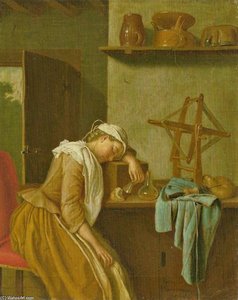 Schlafendes KüchenmädchenColecțiile Statale de Pictură din Bavaria
Cele 4 muzee care dețin cele mai multe dintre picturile de pe această pagină.
| Muzee | Oraș | Lucrări lui Peter Jacob Horemans | Picturi din această listă |
|---|---|---|---|
 Colecțiile Statale de Pictură din Bavaria |
Munchen | 51 | Portrait of Frau Heigl, Kitchen Still Life with Coffee Drinker, Musical Still Life with Horn Player |
 Muzeul Național din Varșovia |
Varșovia | 2 | Hunting a wild boar, Hunting with falcons |
 Lenbachhaus |
Munchen | 2 | Picnic in the park, Concert in the garden |
 Metropolitan Museum of Art |
New York | 1 | A Musical Gathering at the Court of the Elector Karl Albrecht of Bavaria |
Alege o deceniu pentru a descoperi opera originală care îl definește.

Portrait of Frau Heigl (1738), Colecțiile Statale de Pictură din Bavaria, Munchen. Urmează Kitchen Still Life with Coffee Drinker (1765) și Musical Still Life with Horn Player (1765).
38 ani: Portrait of Frau Heigl datează din 1738, iar Peter Jacob Horemans s-a născut în 1700.
Portrait of Frau Heigl, Kitchen Still Life with Coffee Drinker, Musical Still Life with Horn Player, Still Life with Female Figure with Flowers, Still Life with Elegant Lady, Still Life with Fruit and Female Figure, The Soup Eater, Still Life with Female Figure with Beer Glass, Still Life with Female Figure și Musical Still Life with Male Figure. Clasamentul de mai sus indică anul și muzeul pentru fiecare piesă.
Catalogul nostru cuprinde 60 lucrări ale lui Peter Jacob Horemans, datate între 1730 și 1776.
În principal în Colecțiile Statale de Pictură din Bavaria (Munchen), Muzeul Național din Varșovia (Varșovia) și Lenbachhaus (Munchen). Tabelul cu muzee de mai sus le enumeră pe toate.
În 1760s: 36 dintre cele 58 lucrări de pe această pagină au fost realizate atunci, fiind Kitchen Still Life with Coffee Drinker dintre acestea.
Pe această pagină, cea mai veche lucrare datează din A Musical Gathering at the Court of the Elector Karl Albrecht of Bavaria (1730), iar cea mai recentă este din Picnic in the park (1776).
Portrait of Frau Heigl, Kitchen Still Life with Coffee Drinker și Musical Still Life with Horn Player: Colecțiile Statale de Pictură din Bavaria, Munchen deține 51 dintre lucrările de pe această pagină.