Portretul lui Pedro Figari

Cele 56 cele mai faimoase picturi ale lui Pedro Figari, fiecare unică în felul ei

Actualizat Octombrie 2026 · clasat în funcție de scorul nostru de popularitate (căutări, vizite și comenzi pentru fiecare operă) · 56 lucrări ale lui Pedro Figari în catalogul nostru

Pe scurt

Tertulia at the inn before eating. The inn (1919) este pictura lui Pedro Figari care atrage cele mai multe priviri; originalul aparține Muzeul Național de Arte Fine din Buenos Aires, Buenos Aires. După aceasta, privirea se îndreaptă către Candombe carnival (1932) și Lavanderas En Los Medanos O Los Amigos. Dintre cele 56 opere ale lui Pedro Figari din catalogul nostru, acestea 56 sunt cele mai celebre, fiecare fiind o piesă unică, prezentată împreună cu anul creării, muzeul deținător și motivul pentru care aceasta rămâne memorabilă.

1861 – 1938, Montevideo Impressionism Cele mai multe lucrări: Muzeul Național de Arte Fine din Buenos Aires

Cele mai importante 10 picturi ale lui Pedro Figari, prin ochii galeriei

4
El Beso de Pedro Figari

El Beso

Oil On Canvas · Muzeul Național de Arte Fine din Buenos Aires, Buenos Aires

El Beso is an oil painting on canvas by Pedro Figari. Born in Montevideo in 1861, the artist lived until 1938, a period that saw him transition from a career in law and politics to a dedicated practice in the visual arts. His later years were defined by a shift toward a unique, intuitive approach to painting, often reconstructing scenes from memory rather than direct observation.

Păiți celebrele picturi ale lui Pedro Figari, de la numărul 11 la 56

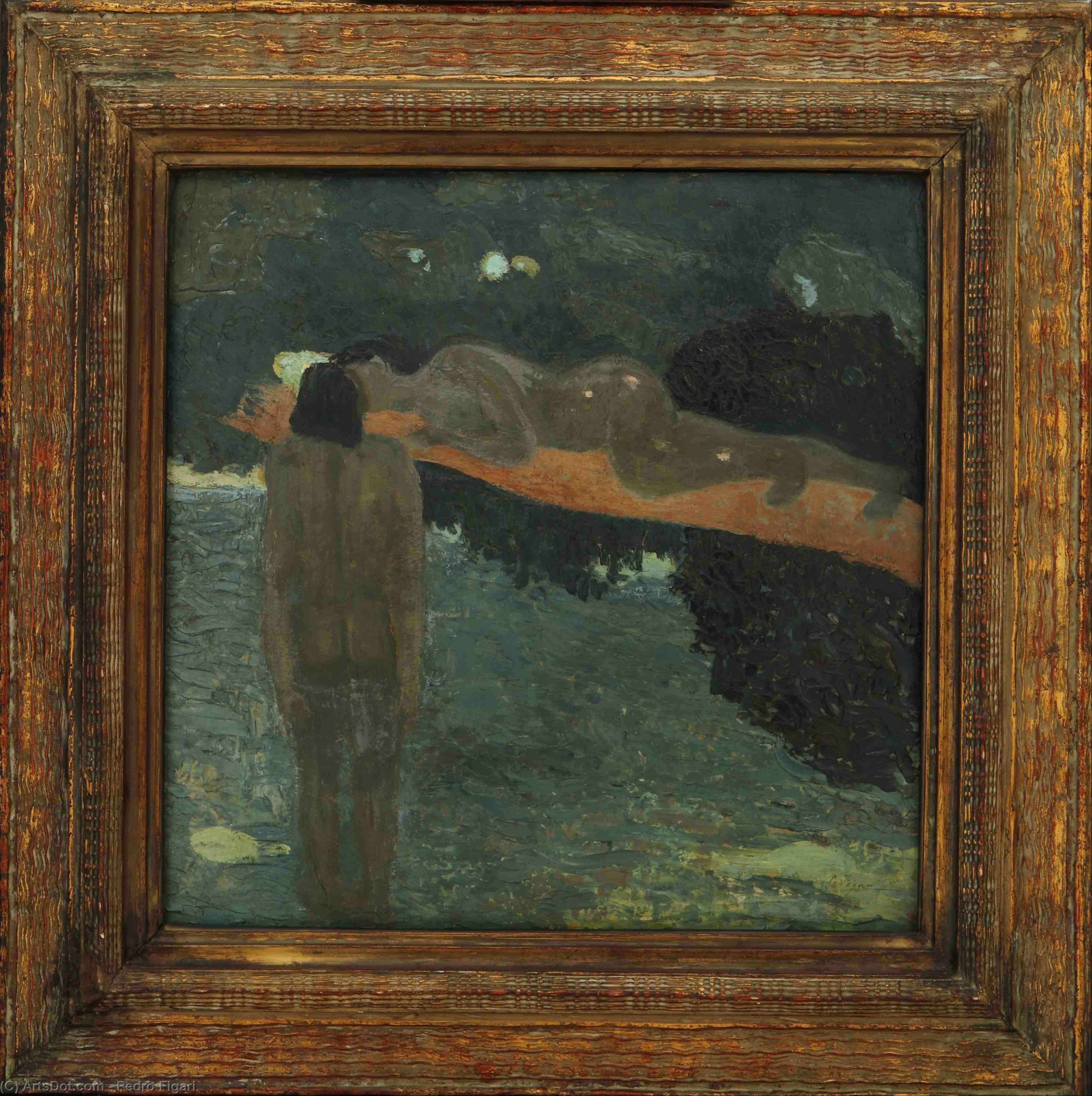
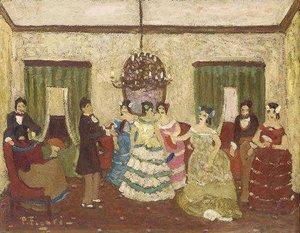
11La Vida de Pedro FigariLa Vida 12El Requiebro de Pedro FigariEl Requiebro 13El Patio O Patio Unitario de Pedro FigariEl Patio O Patio UnitarioMuzeul Național de Arte Fine din Buenos Aires 14El Gaucho Candioti de Pedro FigariEl Gaucho CandiotiMuzeul Național de Arte Fine din Buenos Aires 15Negras En La Puerta O Negras En Zaguán de Pedro FigariNegras En La Puerta O Negras En ZaguánMuzeul Național de Arte Fine din Buenos Aires 16The Dance (Bailongo) (1925) de Pedro FigariThe Dance (Bailongo)1925 17Creole Dance (1925) de Pedro FigariCreole Dance1925 18Peeling the pava (1925) de Pedro FigariPeeling the pava1925 · Muzeul Național de Arte Fine din Buenos Aires 19Off for the Honeymoon (1925) de Pedro FigariOff for the Honeymoon1925 20Double Wedding (1930) de Pedro FigariDouble Wedding1930 21Idilio campero (1935) de Pedro FigariIdilio campero1935 · Inter-American Development Bank 22Nocturne (1918) de Pedro FigariNocturne1918 · Colección de Arte Amalia Lacroze de Fortabat 23A Request to Rosas de Pedro FigariA Request to Rosas 24Mass departure de Pedro FigariMass departureMuzeul Național de Arte Fine din Buenos Aires 25The pampas or return of the dance de Pedro FigariThe pampas or return of the danceMuzeul Național de Arte Fine din Buenos Aires 26Injuria de Pedro FigariInjuria 27La Diligancia de Pedro FigariLa Diligancia 28Damas Antiguas de Pedro FigariDamas Antiguas 29Rincón De Negros de Pedro FigariRincón De Negros 30Las Visitas de Pedro FigariLas Visitas 31La Media Caña de Pedro FigariLa Media Caña 32Pericón - de Pedro FigariPericón -Muzeul Național de Arte Fine din Buenos Aires 33Jardín Bajo La Luna O Quietud En La Quinta de Pedro FigariJardín Bajo La Luna O Quietud En La QuintaMuzeul Național de Arte Fine din Buenos Aires 34El Pericón de Pedro FigariEl Pericón 35Negros Y Mulatas de Pedro FigariNegros Y Mulatas 36Patio de Pedro FigariPatioMuzeul Național de Arte Fine din Buenos Aires 37Cuestión De Razas de Pedro FigariCuestión De Razas 38Alevosía de Pedro FigariAlevosía 39Works Of Pedro Figari de Pedro FigariWorks Of Pedro Figari 40Los miriñaques de Pedro FigariLos miriñaques 41Reunión Colonial de Pedro FigariReunión Colonial 42Pampa de Pedro FigariPampaMuzeul Național de Arte Fine din Buenos Aires 43Deliberando de Pedro FigariDeliberando 44Hacia La Fiesta de Pedro FigariHacia La Fiesta 45Cuarteleras de Pedro FigariCuartelerasMuzeul Național de Arte Fine din Buenos Aires 46Confidencia de Pedro FigariConfidenciaMuzeul Național de Arte Fine din Buenos Aires 47Camelias Blancas de Pedro FigariCamelias Blancas 48Las Vecinas de Pedro FigariLas VecinasMuzeul Național de Arte Fine din Buenos Aires 49Candombe de Pedro FigariCandombeMuzeul Național de Arte Fine din Buenos Aires 50Candombe O Candombe Bajo La Luna de Pedro FigariCandombe O Candombe Bajo La LunaMuzeul Național de Arte Fine din Buenos Aires 51Lamento de Pedro FigariLamentoMuzeul Național de Arte Fine din Buenos Aires 52Cancha De Bochas de Pedro FigariCancha De BochasMuzeul Național de Arte Fine din Buenos Aires 53Pericón de Pedro FigariPericónMuzeul Național de Arte Fine din Buenos Aires 54Baile En El Rancho de Pedro FigariBaile En El RanchoMuzeul Național de Arte Fine din Buenos Aires 55Una Diligencia de Pedro FigariUna DiligenciaMuzeul Național de Arte Fine din Buenos Aires 56Tertulia de Pedro FigariTertuliaMuzeul Național de Arte Fine din Buenos Aires

Piesele celebre ale lui Pedro Figari, perioadă cu perioadă

Subiectele care i-au captivat privirea lui Pedro Figari

Cele patru teme care revin cel mai des în aceste opere originale, fiecare având cel mai sublim exemplu.

Muzeele care păstrează originalele lui Pedro Figari

Cele 3 muzee care dețin cele mai multe dintre picturile de pe această pagină.

Muzee Oraș Lucrări lui Pedro Figari Picturi din această listă
Muzeul Național de Arte Fine din Buenos Aires, Buenos AiresMuzeul Național de Arte Fine din Buenos Aires Buenos Aires 25 Tertulia at the inn before eating. The inn, Candombe carnival, Lavanderas En Los Medanos O Los Amigos
Inter-American Development Bank, Washington, D.C.Inter-American Development Bank Washington, D.C. 1 Idilio campero
Colección de Arte Amalia Lacroze de Fortabat, Buenos AiresColección de Arte Amalia Lacroze de Fortabat Buenos Aires 1 Nocturne

Pedro Figari de-a lungul deceniilor: o piesă unică pentru fiecare

Lucrări pe deceniu

Alege o deceniu pentru a descoperi opera originală care îl definește.

Picturile lui Pedro Figari: întrebări pentru galerie

Care este cea mai celebră operă a lui Pedro Figari?Află răspunsul

Tertulia at the inn before eating. The inn (1919), Muzeul Național de Arte Fine din Buenos Aires, Buenos Aires. Urmează Candombe carnival (1932) și Lavanderas En Los Medanos O Los Amigos.

La ce vârstă a creat Pedro Figari Tertulia at the inn before eating. The inn?Află răspunsul

58 ani: Tertulia at the inn before eating. The inn datează din 1919, iar Pedro Figari s-a născut în 1861.

Care sunt cele mai celebre zece picturi ale lui Pedro Figari?Află răspunsul

Tertulia at the inn before eating. The inn, Candombe carnival, Lavanderas En Los Medanos O Los Amigos, El Beso, While the Ball Rolls, El Maturrango, Encuentro En El Camino, Carreta, La Amita și Preparando El Candombe. Clasamentul de mai sus indică anul și muzeul pentru fiecare piesă.

Câte lucrări ale lui Pedro Figari sunt cunoscute?Află răspunsul

Catalogul nostru cuprinde 56 lucrări ale lui Pedro Figari, datate între 1918 și 1935.

Unde pot fi vizualizate originalele celor mai faimoși Pedro Figari?Află răspunsul

În principal în Muzeul Național de Arte Fine din Buenos Aires (Buenos Aires), Inter-American Development Bank (Washington, D.C.) și Colección de Arte Amalia Lacroze de Fortabat (Buenos Aires). Tabelul cu muzee de mai sus le enumeră pe toate.

În ce perioadă a creat Pedro Figari cele mai cunoscute picturi?Află răspunsul

În 1920s: 4 dintre cele 56 lucrări de pe această pagină au fost realizate atunci, fiind The Dance (Bailongo) dintre acestea.

Care este cea mai veche și care este cea mai recentă pictură a lui Pedro Figari?Află răspunsul

Pe această pagină, cea mai veche lucrare datează din Nocturne (1918), iar cea mai recentă este din Idilio campero (1935).

Ce teme prefera Pedro Figari?Află răspunsul

Social gathering (4), Uruguayan culture (3) și Uruguayan art (3), din cele 56 lucrări de pe această pagină.

Din ce curent artistic face parte opera lui Pedro Figari?Află răspunsul

Impressionism și Modernism, judecând după originalele de pe această pagină.

Ce originale de Pedro Figari pot vedea la Muzeul Național de Arte Fine din Buenos Aires?Află răspunsul

Tertulia at the inn before eating. The inn, Candombe carnival și Lavanderas En Los Medanos O Los Amigos: Muzeul Național de Arte Fine din Buenos Aires, Buenos Aires deține 25 dintre lucrările de pe această pagină.

Pedro Figari: un portret al artistului

A Life Imbued with Uruguayan Essence

Pedro Figari, a name that echoes through the halls of Latin American art history, was far more than simply a painter; he was a complex and multifaceted individual—a lawyer, writer, politician, and above all, an artist deeply rooted in the soul of Uruguay. Born in Montevideo in 1861, his life’s trajectory wasn't one of immediate artistic pursuit, but rather a gradual unfolding of creative expression shaped by diverse experiences and profound observations. Initially drawn to the legal profession, he earned his degree in 1886, a path that provided him with a keen understanding of society’s intricacies and injustices – insights that would later profoundly inform his art. His early career as a defense attorney, representing those often marginalized and forgotten by the system, exposed him to the raw realities of life, fostering a deep empathy for the human condition and fueling a desire to capture these experiences on canvas. A marriage in the same year led to travels in France, a pivotal moment that introduced him to the vibrant world of post-impressionism – an encounter that subtly yet significantly influenced his artistic direction, broadening his palette and challenging his established notions of representation. However, it was in 1921, at the age of sixty—a time when many would have retired—that Figari fully embraced painting as his primary vocation, unleashing a torrent of creativity that would forever alter the landscape of Latin American art.

From Legal Chambers to Artistic Visions

For decades prior, Figari had engaged in various intellectual and public endeavors, serving as a member of Parliament, directing the Escuela Nacional de Artes y Oficios (National School of Arts and Crafts), and contributing significantly to Uruguayan intellectual discourse through his writings on law, education, aesthetics, and even utopian ideals. These diverse pursuits weren’t distractions from his artistic aspirations; rather, they enriched them, providing him with a unique perspective and a deep understanding of human behavior. His legal training instilled in him a meticulous eye for detail and an acute awareness of social dynamics, while his literary explorations honed his ability to articulate complex ideas with nuance and clarity. The move to Buenos Aires in 1921 proved to be a catalyst, providing him with the space and freedom to shed the constraints of earlier, academically-influenced styles and to forge a truly distinctive artistic voice. He abandoned the rigid conventions of academic painting, opting instead for a more intuitive approach—a method that prioritized feeling and essence over strict realism. This shift was marked by a deliberate rejection of photographic accuracy, focusing instead on capturing the *memory* of experiences – translating fleeting moments into enduring visual representations.

A Pioneer’s Palette: Style and Subject Matter

Figari's artistic style is immediately recognizable for its vibrant color palettes, bold brushstrokes, and seemingly naïve simplicity. He wasn’t interested in creating illusions of depth or photographic realism; instead, he treated his canvases as studies in color and form, reconstructing Uruguayan scenes from the fragments of his memory. His subjects were drawn almost exclusively from the world he knew intimately—the gauchos roaming the vast pampas, lively carnival celebrations brimming with music and dance, the rituals and daily life of Montevideo’s black community, and the quiet intimacy of colonial patios bathed in golden light. These weren't merely picturesque depictions; they were poignant reflections on Uruguayan identity, social customs, and a disappearing way of life—a sense of nostalgia for a rapidly changing world. He captured fleeting moments – a dance in progress, a gathering of friends sharing stories, a street scene pulsating with energy – with an immediacy that felt both timeless and deeply rooted in place. His technique, often employing *impasto* (thickly applied paint) with visible brushstrokes, further emphasized the expressive power of color and texture, creating paintings that pulsated with life and emotion. The influence of post-impressionism is evident in his use of color and his focus on capturing subjective experience rather than objective reality.

Breaking with Tradition: A Latin American Voice

Pedro Figari emerged during a crucial period in Latin American art history—a time when artists were actively seeking to break free from European artistic dominance and define their own unique aesthetic identities. Traditional academic painting often focused on historical or religious subjects, prioritizing technical skill over genuine expression. Figari challenged this convention by embracing a more direct, unpretentious style that allowed him to subtly critique social norms and celebrate the vibrancy of Uruguayan culture. He believed in the power of art to connect with the everyday experiences of ordinary people, rejecting elitism in favor of authenticity. His work resonated with a growing sense of national pride and a desire to reclaim indigenous roots—a sentiment particularly relevant in a region grappling with its colonial past. He wasn’t alone in this endeavor; artists like Diego Rivera and Tarsila do Amaral were also forging new paths, contributing to a broader movement towards artistic independence. Figari's unique blend of memory, color, and social commentary established him as a pivotal figure in the development of Latin American modernism—a voice that spoke directly to the heart of his nation’s identity.

Legacy and Enduring Influence

Pedro Figari’s legacy extends far beyond his individual artistic achievements. He is remembered not simply as a painter, but as a pioneer who helped shape the course of Latin American art. His work continues to inspire artists and art lovers alike with its vibrant energy, emotional depth, and unwavering commitment to capturing the spirit of Uruguay. He demonstrated that true modernity wasn’t about imitating European trends but about finding one's own voice—a lesson that resonated throughout Latin America and beyond. He died in 1938, leaving behind a rich body of work that stands as a testament to his artistic vision, intellectual curiosity, and enduring love for his homeland – a legacy painted in the bold colors of memory and national pride.