A Tuscan Dawn: The Life and Art of Orazio Gentileschi
Born in 1563 amidst the rolling hills of Tuscany, Orazio Gentileschi embarked on a journey that would see him become a pivotal figure in the transition from Mannerism to Baroque painting. Initially known as Orazio Lomi, he gravitated towards Rome, then the epicenter of artistic innovation, where he honed his skills within the workshops of Cola dell’Amata and absorbed the architectural sensibilities of Francesco da Sangallo. These early influences instilled in him a meticulous attention to form and composition, characteristics that would remain hallmarks of his style even as it dramatically evolved. Gentileschi’s initial work often involved contributing figures to larger decorative schemes conceived by other artists – a formative experience that taught him collaboration and adaptability, yet also hinted at a burgeoning ambition for independent expression. He began his career assisting in the creation of frescoes for churches and palaces, learning the fundamentals of perspective, color theory, and composition under the tutelage of established masters. This period provided invaluable training, exposing him to diverse artistic styles and techniques, laying the groundwork for his future development as a painter.Embracing the Shadow: Caravaggio's Influence and Artistic Development
The turn of the 17th century marked a turning point in Gentileschi’s artistic trajectory. The revolutionary naturalism of Caravaggio burst onto the Roman art scene, challenging established conventions with its dramatic use of light and shadow – *tenebrism* – and unflinching realism. Gentileschi was profoundly affected by this seismic shift, adopting elements of Caravaggio's style into his own work. However, he wasn’t merely an imitator; rather, he filtered Caravaggio’s innovations through his existing artistic sensibilities. While retaining the dramatic intensity, Gentileschi softened the harshness of Caravaggio’s *tenebrism*, introducing a lighter palette and a more refined approach to detail. This resulted in paintings that possessed both emotional power and elegant grace – a unique synthesis that distinguished him from his contemporaries. Biblical scenes and mythological narratives became frequent subjects, allowing Gentileschi to explore themes of faith, heroism, and human vulnerability with compelling visual storytelling. He skillfully blended Caravaggio’s stark contrasts with his own penchant for nuanced color gradations, creating an atmosphere of both drama and serenity. His early works demonstrate a clear debt to Caravaggio, yet they also possess a distinct Tuscan lyricism that sets him apart.A Courtly Wanderer: From Paris to London
Gentileschi’s artistic reputation extended beyond Italy’s borders. His talent attracted the patronage of powerful figures, leading him on a peripatetic journey through Europe. He spent time at the court of Marie de' Medici in Paris, where his refined style resonated with the Queen’s taste for elegance and sophistication. This period saw a further evolution in his work, characterized by increasingly elaborate compositions and a heightened sense of decorum. He became known for his ability to capture the nuances of aristocratic life, depicting portraits and scenes of courtly intrigue with remarkable skill and sensitivity. However, it was his invitation to England in 1626 that would define the final chapter of his career. Appointed court painter to Charles I, Gentileschi became one of the first major exponents of Caravaggism in Britain, significantly influencing the development of English Baroque painting. He undertook ambitious projects, including a series of ceiling paintings for Greenwich Palace (now Marlborough House), showcasing his mastery of large-scale decorative schemes and solidifying his position as a leading artist of his time. His work in England reflected a shift towards greater formality and grandeur, aligning with the tastes of the royal court.Key Works and Artistic Style
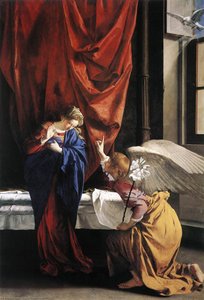
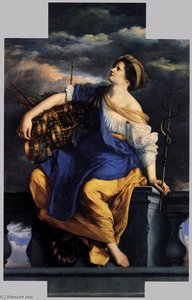
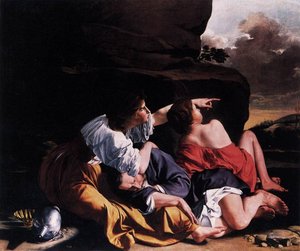
Gentileschi’s oeuvre encompasses a diverse range of subjects, including biblical scenes, mythological narratives, portraits, and allegorical compositions. His most celebrated works include “Danae,” a dramatic depiction of Zeus’s abduction of Danaë, showcasing his mastery of color and composition; "The Annunciation," a serene portrayal of the Virgin Mary receiving the news of her impending motherhood, demonstrating his ability to evoke spiritual emotion; and “The Virgin Mary with Child” – a testament to his skill in capturing the tenderness and grace of maternal love. His style is characterized by a harmonious blend of Mannerist precision and Caravaggesque dynamism. He employed a rich palette, often utilizing warm earth tones alongside vibrant blues and reds, creating a sense of depth and luminosity. Gentileschi’s compositions are typically balanced and symmetrical, yet they are infused with a dramatic tension that draws the viewer's eye to key figures and moments. His meticulous attention to detail—from the folds of drapery to the expressions on his subjects’ faces—contributes to the overall realism and emotional impact of his paintings.Legacy and Lasting Impact
Orazio Gentileschi’s contributions to the world of art are multifaceted. He bridged the gap between Mannerism and Baroque, absorbing the innovations of Caravaggio while forging his own distinctive style. His use of vibrant colors, dramatic compositions, and refined technique influenced a generation of artists across Europe. He was instrumental in introducing Caravaggism to England, leaving an indelible mark on the artistic landscape there. But perhaps his most enduring legacy lies in his daughter, Artemisia Gentileschi. Trained in her father’s studio, she emerged as one of the most celebrated female painters of the Baroque era, carrying forward the family's artistic tradition and achieving renown in her own right. Today, Gentileschi’s works are held in prestigious museums and galleries worldwide – from the Uffizi Gallery in Florence to the Accademia Gallery in Venice – testaments to his enduring brilliance and lasting impact on the history of art. His paintings continue to captivate viewers with their emotional depth, technical virtuosity, and timeless beauty.- Major Works: “Danae”, "The Annunciation", "The Virgin Mary"
- Key Influences: Mannerism, Caravaggio
- Artistic Style: Baroque, Dramatic compositions, Bright colors.
Întrebări și răspunsuri
Cum pot urmări evoluția creațiilor lui Orazio Gentileschi, an de an?
Operele lui Orazio Gentileschi pot fi vizualizate în ordine cronologică pe pagina Cronologia operelor de artă a artistului.
Pot să explorez lucrările lui Orazio Gentileschi în funcție de starea de spirit?
Lucrările lui Orazio Gentileschi pot fi explorate în funcție de starea de spirit pe pagina Galerie pe stări de spirit a artistului, unde operele sunt organizate după stările lor de spirit.
Pot vizita un muzeu virtual al lucrărilor lui Orazio Gentileschi?
Pagina Galerie 3D a lui Orazio Gentileschi prezintă operele de artă ale artistului într-o galerie virtuală tridimensională.